


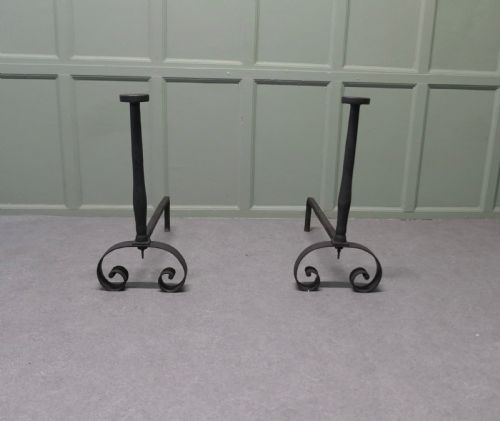
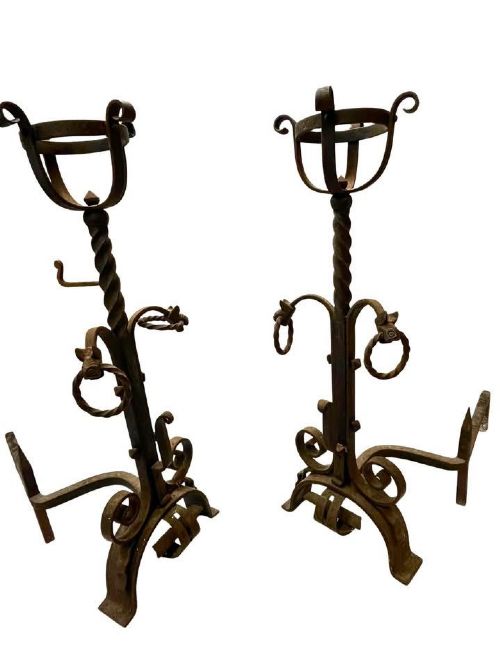
Antique Iron Firedogs
These antique iron firedogs support heavy logs above the hearth, bringing both sturdy utility and period character to an open fire.
Antique Iron Firedogs
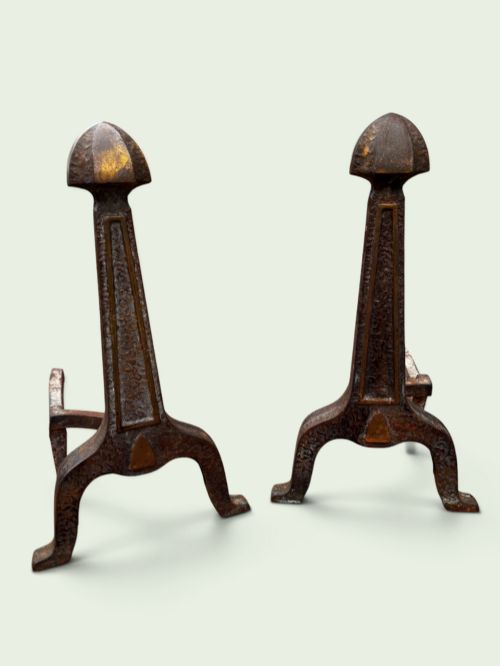
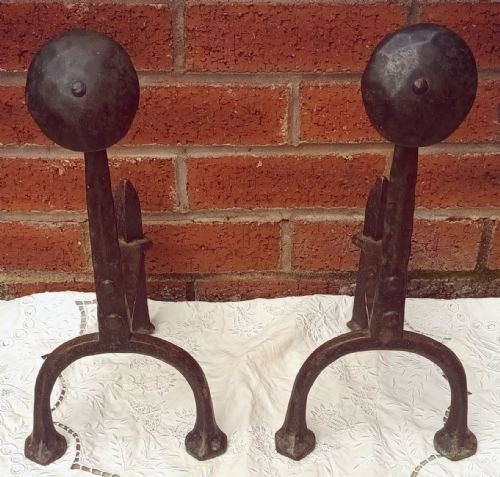
When you search for antique iron firedogs, you encounter sturdy hearth furniture designed to hold wood above the hearth floor for better combustion. The examples found here span centuries of domestic design, from utilitarian forged items to decorative hearth furniture.
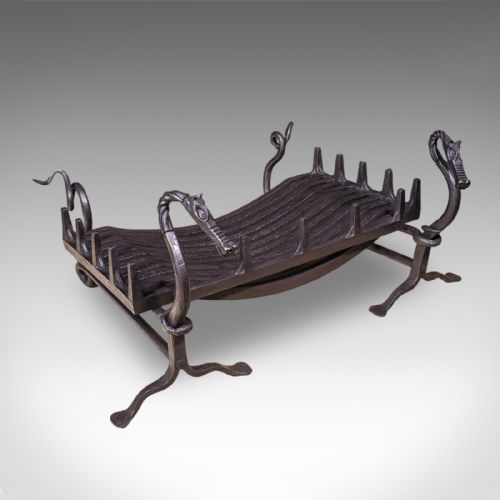
You are most likely to meet nineteenth-century and Victorian pieces in this collection, alongside earlier survivals and turn-of-the-century Arts and Crafts examples. These items often appear alongside grates, fire baskets, and matching tool sets.
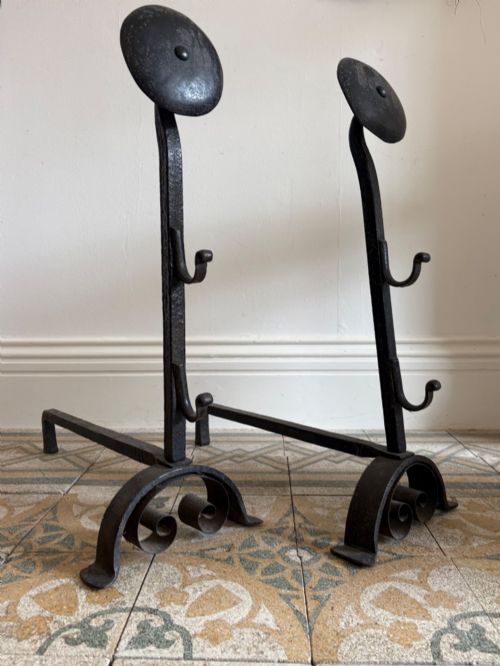
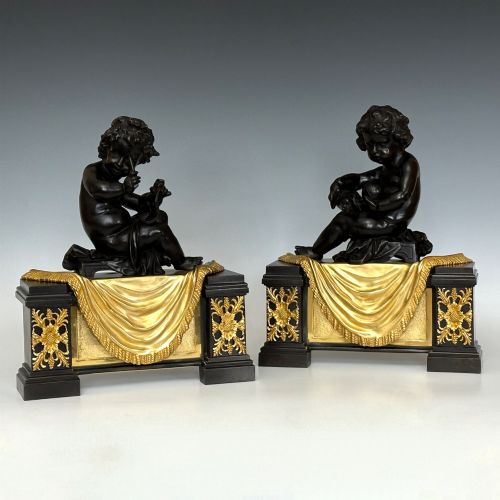
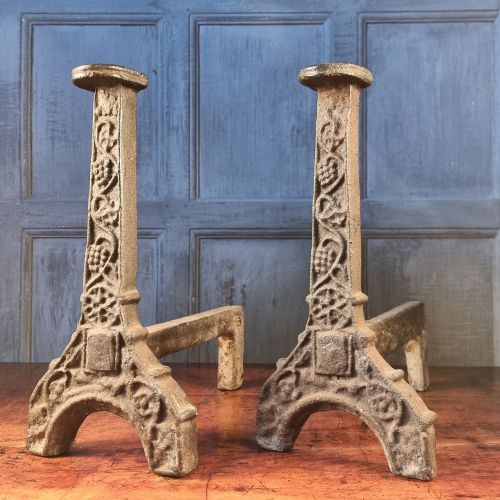
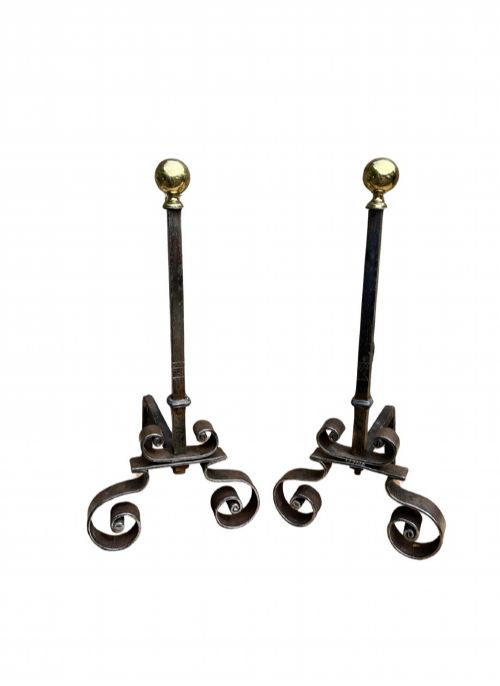
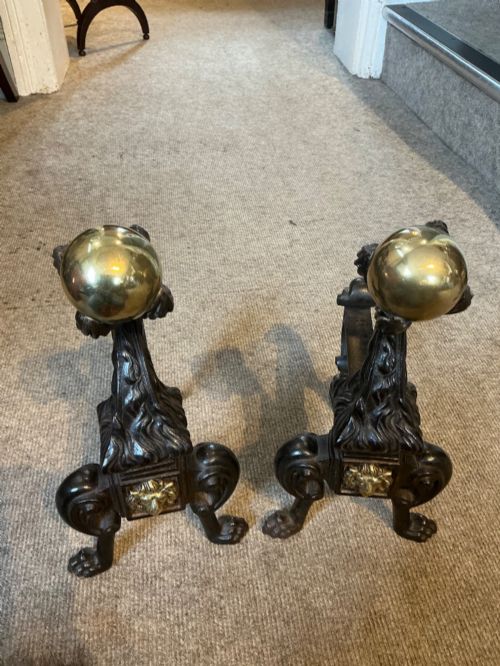
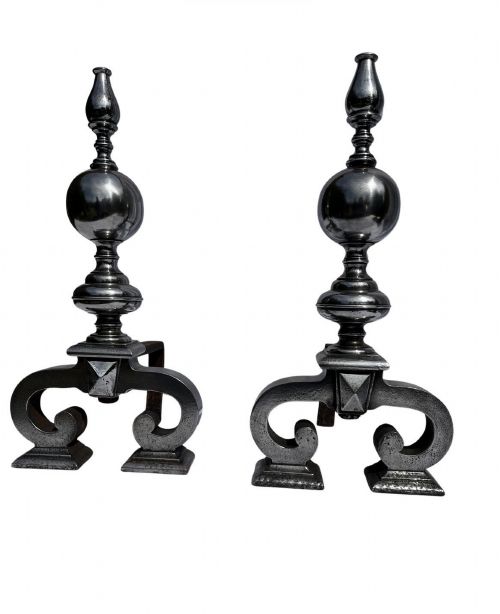
The forms range from simple upright standards with scrolled feet to elaborate revival styles incorporating bronze mounts or detailed motifs. Their primary purpose remains supporting logs, though many survive as decorative elements within period fireplaces.
Materials and construction methods
Blacksmiths shaped the iron components by hand, utilising traditional forging techniques to create robust wrought iron standards that could withstand intense heat. Cast iron also appears frequently, allowing for detailed motifs and heavier structural forms moulded in foundry settings.
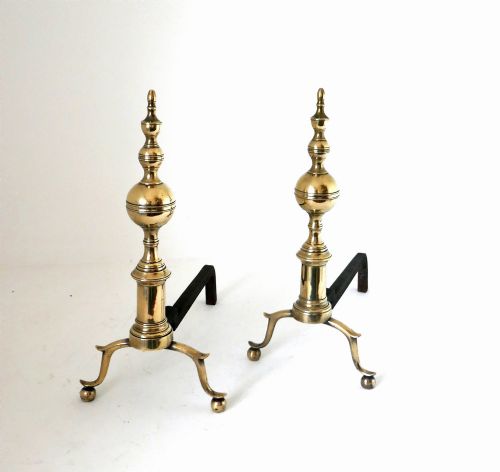
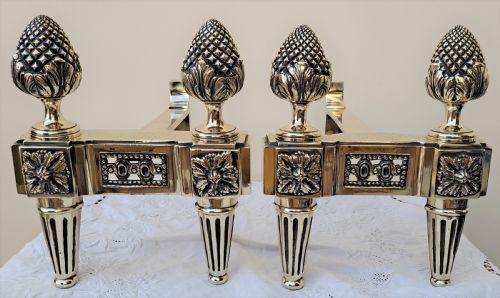
Many pairs combine iron bodies with brass finials, bronze mounts, or ormolu details to add visual contrast against the dark metal framework. These mixed-material approaches reflect the decorative priorities of Victorian and Edwardian hearth design.
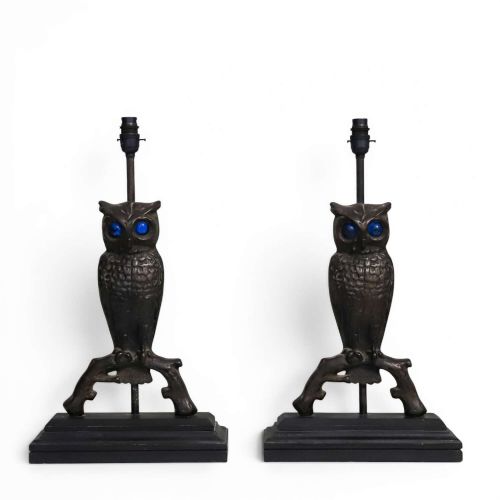
Several listings reveal clever domestic transformations, including sturdy nineteenth-century andiron standards successfully converted into heavy table lamps.
Assessing quality in hearth metalwork
The distinction between standard utility items and finer work lies in the crispness of hand-forging, the weight of the metal, and the integration of decorative elements. Superior pairs display careful finishing on visible surfaces, balanced proportions, and robust construction without excessive wear.
Detailing on mounted brass or bronze components further separates everyday foundry production from higher-status items commissioned for principal reception rooms. The structural integrity of the main iron bar and the stability of the feet remain central to the overall standard of any pair.
James Cartland and Sons
The Antique Iron Firedogs Glossary
- Andiron
- An alternative term for a firedog, used interchangeably in many historical inventories and listings.
- Chenet
- The French term for a firedog, frequently applied to decorative hearth furniture featuring bronze or ormolu mounts.
- Fire Basket
- A metal basket designed to hold coal or wood, often flanked or supported by matching firedogs.
- Mulling Andiron
- A specialised hearth standard featuring attachments or heated elements used for warming liquids.
- Spit Rack
- Horizontal brackets or notches incorporated into firedog standards to support cooking spits over the fire.
Antique Iron Firedogs: Frequently Asked Questions
How do I use antique firedogs?
These pieces sit within an open fireplace to elevate logs, allowing air to circulate underneath for a steadier burn.
They pair effectively with matching fire backs and grates to complete a traditional hearth arrangement.
Were iron firedogs painted originally?
Most working iron firedogs relied on natural dark metal finishes maintained with periodic applications of grate polish or oil.
Surviving surfaces often show the dull black or grey tones typical of traditional hearth maintenance.
Can I distinguish Victorian from earlier pieces?
Nineteenth-century examples frequently exhibit machine-assisted casting techniques and revival styles such as Gothic or Renaissance motifs.
Earlier pieces tend to show heavier hand-forged irregularities and simpler structural joints formed by blacksmiths.
What is the difference between firedogs and andirons?
There is no functional or physical difference between the two terms, as both describe the upright metal supports placed on hearths.
Regional preferences and dealer descriptions dictate which term appears on any given listing.