


Antique Iron Fire Dogs
These antique iron fire dogs support fuel within an open hearth while bringing structural weight and period design to the fireplace.
Antique Iron Fire Dogs
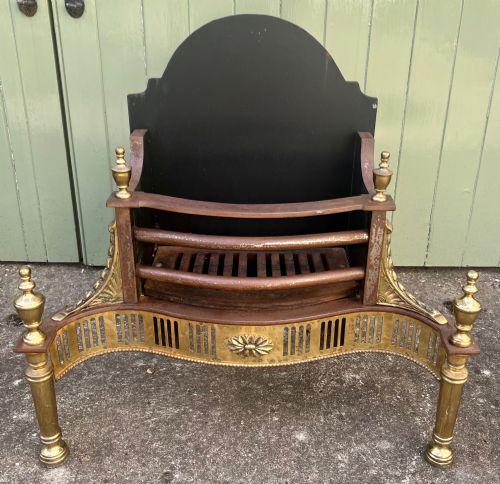
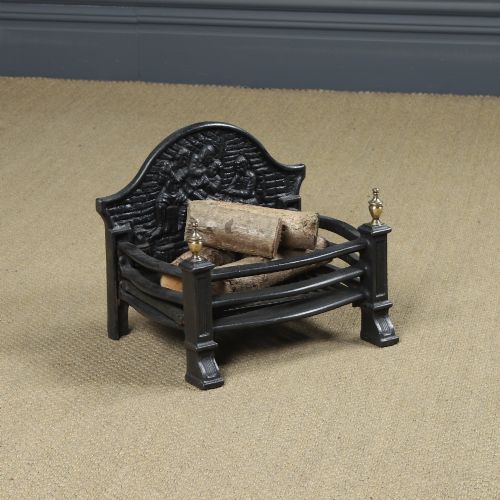
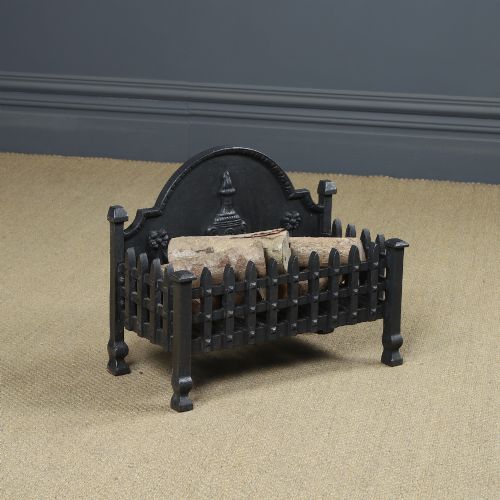
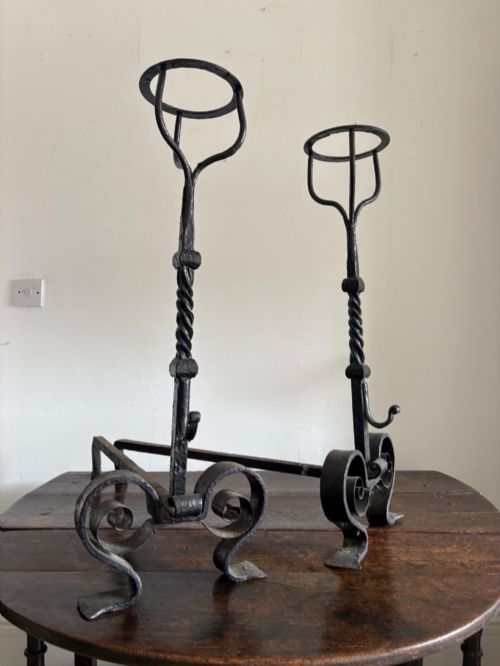
Antique iron fire dogs, also known as andirons or firedogs, serve as essential hearth furniture designed to hold logs and assist with open fires. They often appear paired with fire baskets, grates, or matching tool rests.
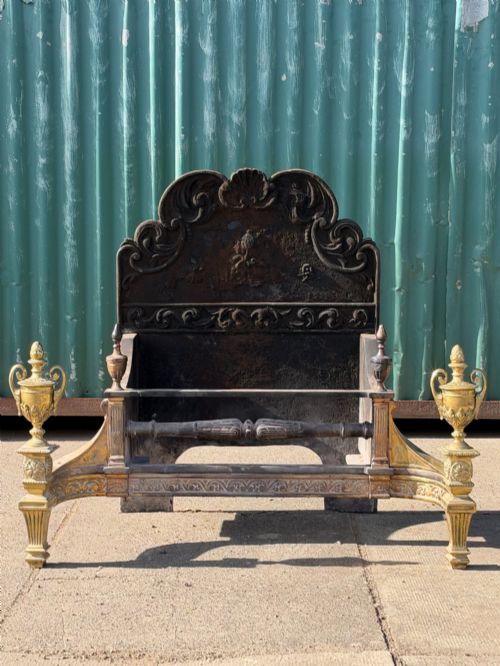
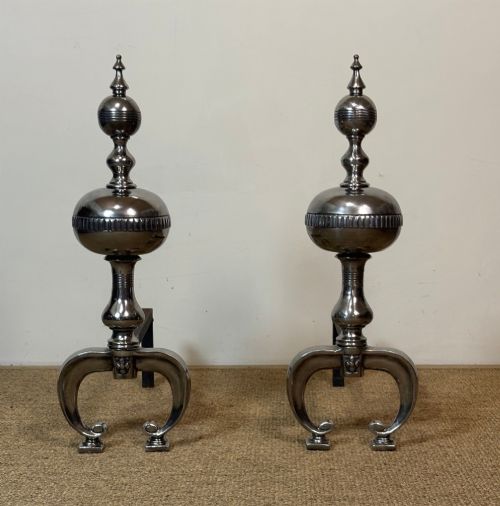
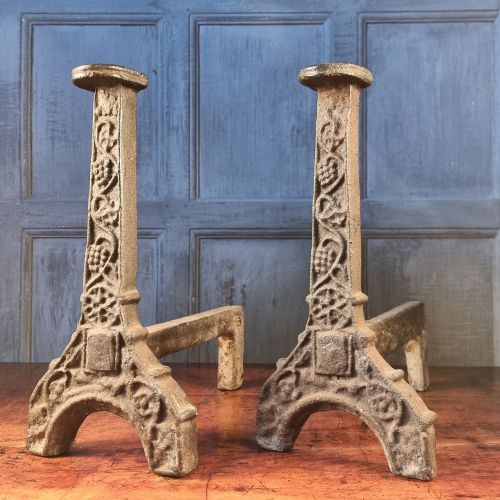
The pieces on this page span several centuries and styles, ranging from robust 19th-century Victorian examples to earlier Gothic Revival, Georgian, and Arts and Crafts interpretations. French regional variants also frequently appear in bronze, ormolu, and cast iron.
Buyers will find everything from simple hand-forged utilitarian supports to monumental decorative pairs standing over eighty centimetres tall. Many incorporate matching fire irons or integrate directly with larger fire grates and log baskets.
Materials and construction methods
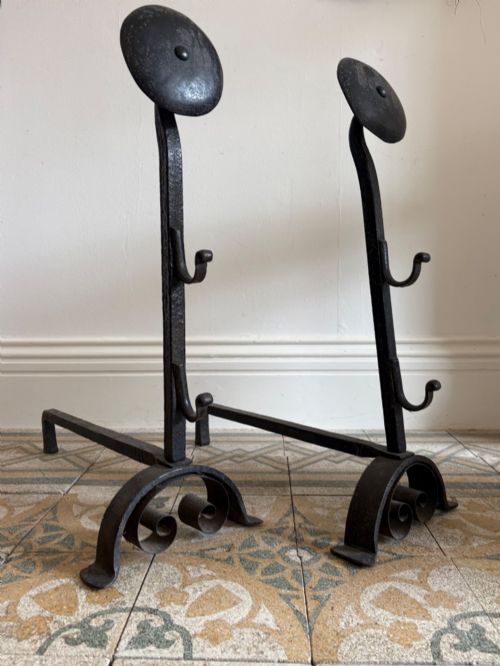
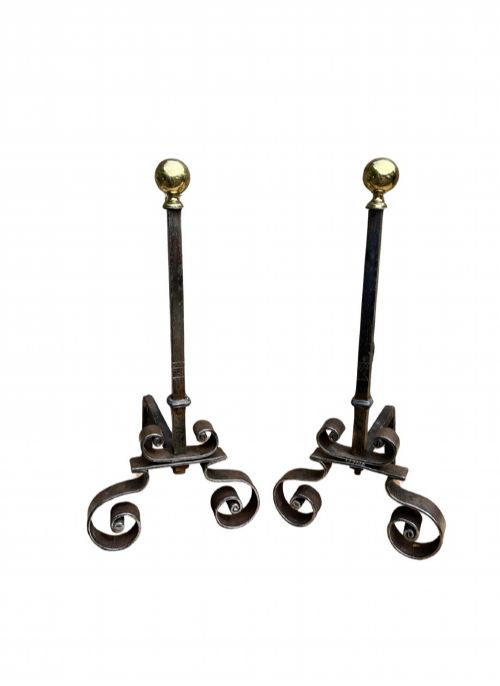
The primary metalwork relies on cast iron and hand-forged wrought iron, chosen for durability under intense heat. Black cast iron provides heavy, solid weight, while wrought iron allows for slender, hand-hammered linear forms.
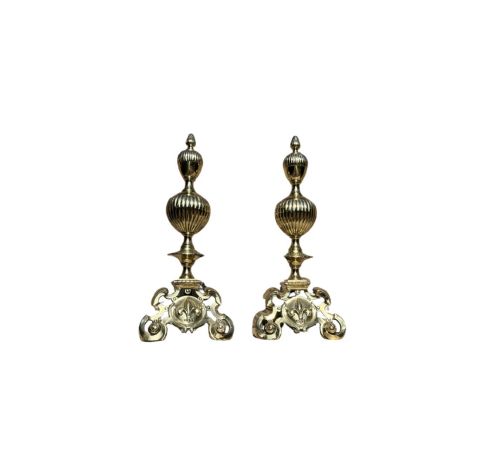
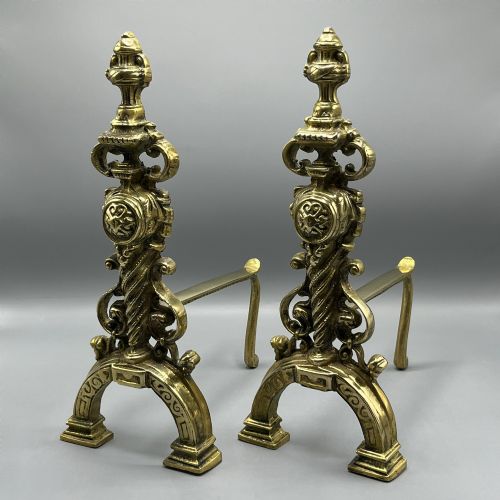
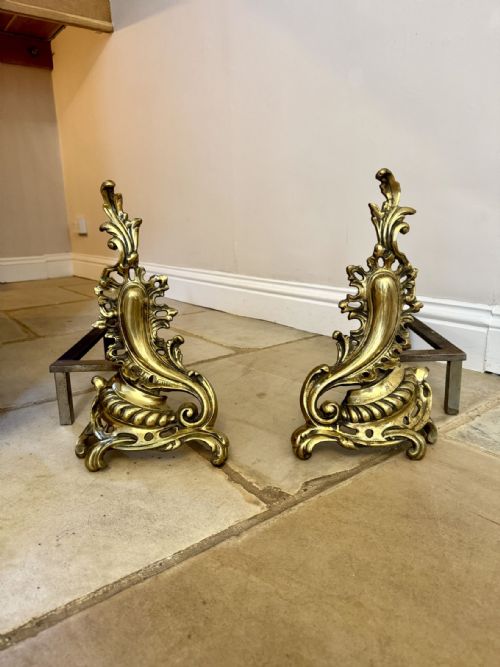
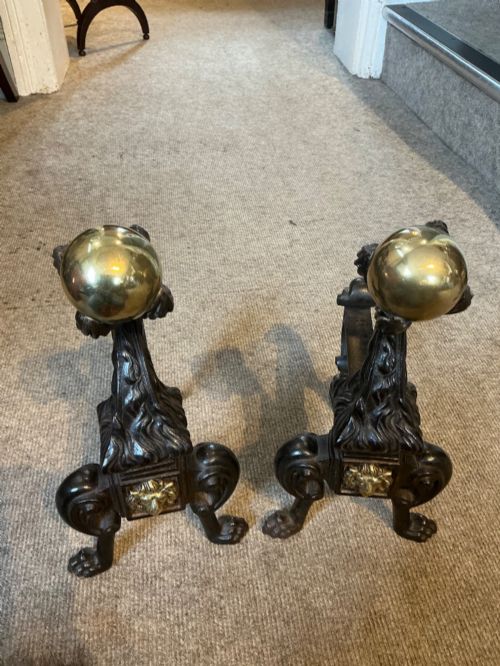
Many examples combine iron with brass, bronze, or ormolu details, particularly on decorative fronts and finials. Surface finishes vary from bright polished brass and shiny iron to patinated, dark forged metal surfaces.
Some fire dogs hide secret spit racks, ready to roast a Sunday joint right in the middle of the living room.
Evaluating craftsmanship and design
Quality rests in the integrity of the blacksmith's hand-forged details or the crispness of the cast iron ornamentation. Superior pairs demonstrate substantial weight, balanced proportions, and securely joined components rather than superficial decoration.
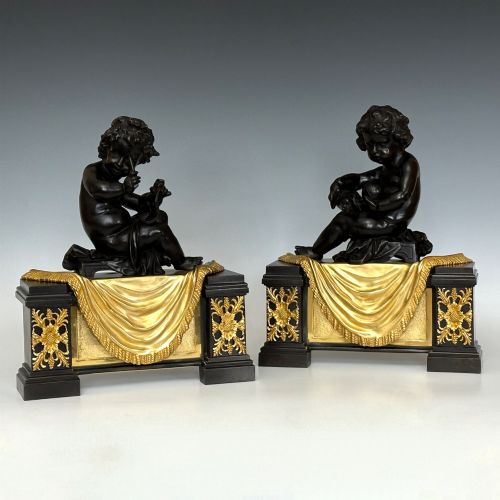
The distinction between ordinary utility items and exceptional pieces lies in sculptural elaboration, such as integrated dragon motifs, parcel-gilt cherubs, or refined brass rococo castings.
The Antique Iron Fire Dogs Glossary
- Andiron
- A horizontal support iron raised on legs, used in pairs to hold logs in an open fireplace.
- Fire Basket
- An iron grate or basket designed to contain coal or wood, frequently used in conjunction with andirons.
- Chenet
- The French term for an andiron, often highly decorative and cast in bronze or brass.
- Fender
- A low metal guard placed in front of the hearth to contain sparks and rolling embers.
- Spit Rack
- A support built into fire dogs allowing meat to be turned over the flames during cooking.
Antique Iron Fire Dogs: Frequently Asked Questions
How do I use fire dogs?
Fire dogs sit inside the hearth on either side of the fireplace to support logs above the floor. This elevation allows air to circulate underneath the wood, improving combustion and draft.
They can also support a fire basket or hold spits for cooking. When paired with tool rests or fire irons, they form a complete fireside arrangement.
Are these suitable for burning wood?
Most antique iron fire dogs are built from heavy cast iron or forged wrought iron designed to withstand high temperatures. Their robust construction makes them practical for functional open hearths.
Buyers should verify the dimensions and stability of each pair to ensure they fit the specific depth and width of their fireplace opening.
How do I date an andiron?
Dating relies on stylistic clues, manufacturing techniques, and material combinations seen across different periods. For instance, hand-forged wrought iron with linear simplicity often points towards Arts and Crafts or earlier periods, while ornate cast brass rococo details suggest Victorian or French 19th-century preferences.
Construction marks, such as hand-riveting or specific casting textures, help distinguish older hand-forged examples from later revival pieces.
What is the difference between fire dogs and andirons?
The terms are generally interchangeable names for the same hearth furniture. Both refer to the metal supports that hold logs inside an open fireplace.
Regional preferences often dictate the term used, with French pieces frequently catalogued as chenets and older English examples commonly listed as firedogs or andirons.