



Antique French Hearth Dogs
Antique French hearth dogs are functional fireplace supports crafted in bronze, brass, and iron that anchor wood fires and define a hearth.
Antique French Hearth Dogs
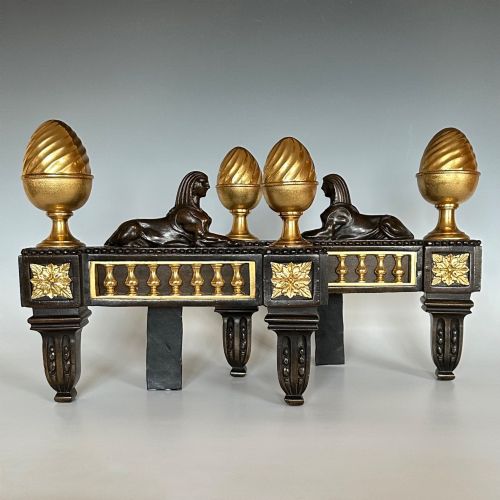
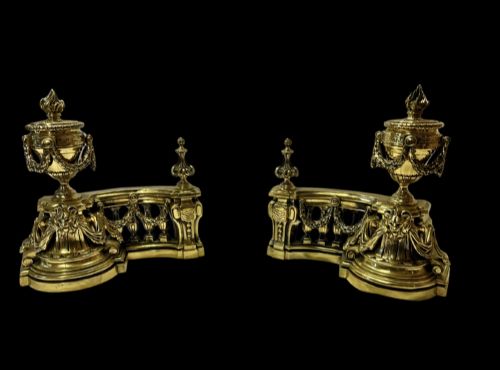
When you search for antique French hearth dogs, you encounter pairs of decorative iron, brass, and bronze supports designed to hold logs inside a fireplace. The pieces on this page span the nineteenth century, including specific periods like the Regency era and the Georgian era.
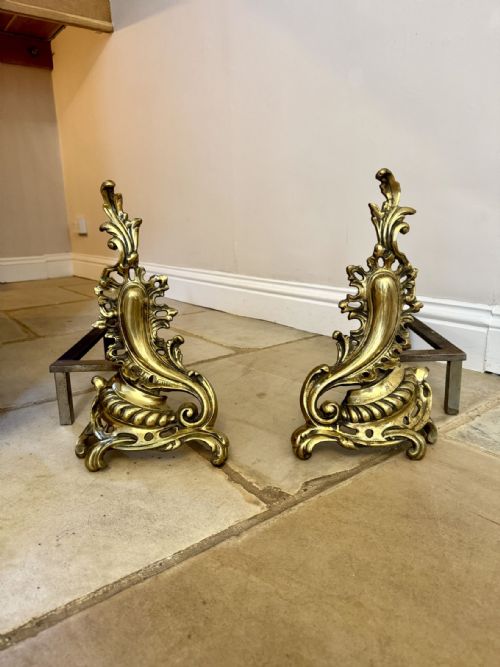
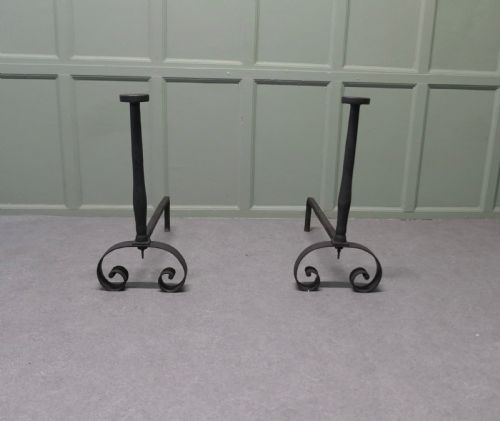
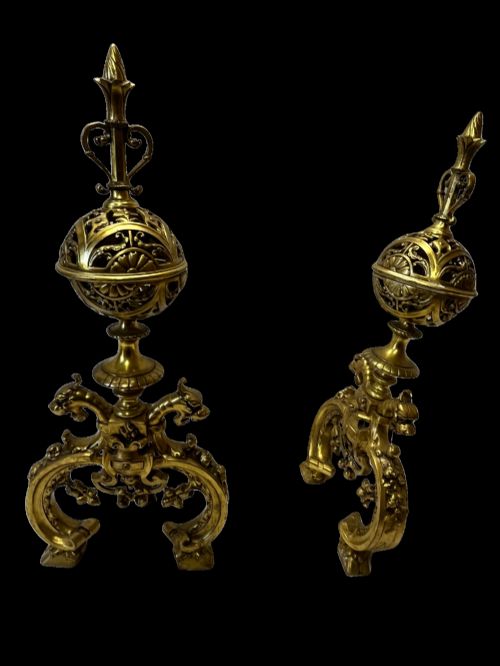
Most examples take the form of chenets or fire dogs, often accompanied by related fireplace accessories such as fenders and grates. Stylistically, the selection ranges from ornate French Rococo and Baroque revivals to simpler French Country and provincial ironwork.
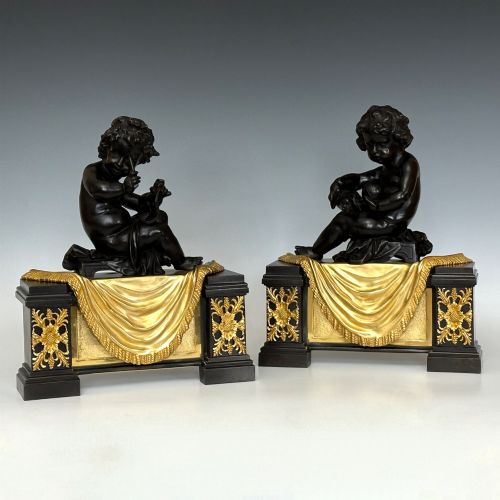
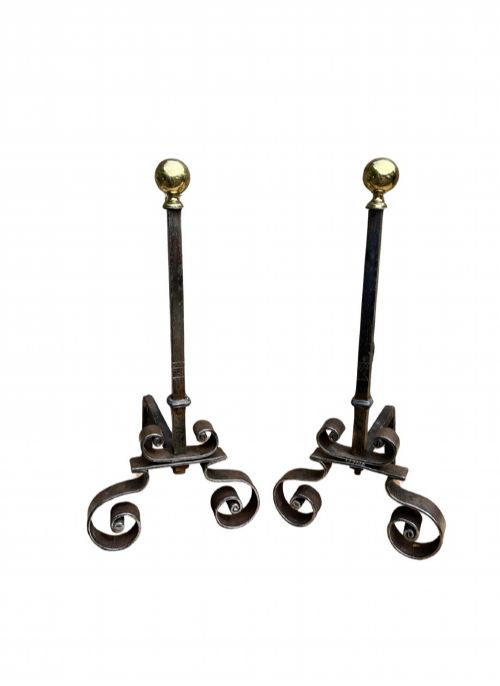
Buyers meet everything from monumental gilt brass figural pairs to heavy wrought iron utilitarian andirons. These items originated to elevate wood off the hearth floor, allowing air to circulate beneath the fire for a cleaner burn.
Materials and construction methods
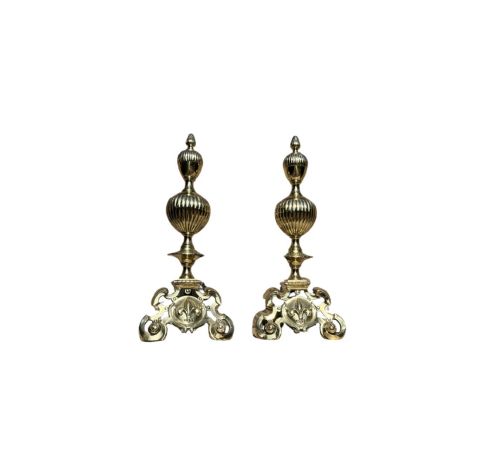
Foundries utilised cast iron and wrought iron for sturdy utility, while decorative pairs employed brass, bronze, ormolu, and gilt bronze. Metalcasters shaped these components through traditional casting and forging techniques, assembling heavy iron bars with detailed decorative mounts.
Surface treatments included fire gilding, parcel gilt accents, and patinated finishes to highlight sculptural cherubs, scrolls, and asymmetrical rocaille motifs. Many sets combine cast brass or bronze ornamentation with durable cast iron billets designed to withstand direct heat.
Listings feature materials spanning bronze, brass, ormolu, gilt bronze, iron, wrought iron, cast iron, and cast brass.
Factors determining quality
The distinction between ordinary and exceptional pairs lies in the crispness of the metal chasing and the depth of the gilding. Heavier castings with finely articulated figural details, such as cherubs or mythological figures, command greater appreciation than plain utilitarian iron supports.
Construction robustness also sets pieces apart, with superior examples featuring substantial weight, integrated tool rests, and fully intact adjustable widths or secure structural joints. The harmony between the decorative front facade and the functional rear billet reveals the original maker's intent.
The Antique French Hearth Dogs Glossary
- Chenet
- A French term for an andiron or fire dog used to support logs in an open hearth. They usually feature an ornate decorative front facing into the room.
- Ormolu
- Finely ground high-carat gold mercury-gilded to a bronze object, creating a bright metallic lustre characteristic of luxury fireplace furniture.
- Billet
- The horizontal iron bar extending backward from the decorative front of an andiron to support the burning wood.
- Fender
- A low metal guard placed around the hearth to contain sparks, frequently matched in material and style with the associated fire dogs.
Antique French Hearth Dogs: Frequently Asked Questions
How do I use antique hearth dogs?
These pieces sit inside an open fireplace to elevate logs above the hearth floor. This elevation improves airflow beneath the wood for a more efficient fire.
While many buyers use them in working fireplaces, others place them in decorative mantels simply to anchor the room's interior design.
What is the difference between chenets and andirons?
The terms are largely interchangeable for these French hearth supports, though chenet specifically denotes the decorative French aesthetic. Both refer to the matched pair of metal stands holding the firewood.
Some regional variations emphasise utilitarian iron construction, while French examples often prioritize sculptural bronze and ormolu decoration.
How do I clean brass and bronze fire dogs?
Careful dusting with a soft cloth preserves the original patina and gilt surfaces on antique bronze and ormolu. Avoid harsh chemical polishes that strip historical finishes.
Iron components benefit from a light application of neutral wax to prevent oxidation while maintaining their dark forged appearance.
How do I date a pair of hearth dogs?
Dating relies on stylistic markers such as Regency restraint, Georgian proportions, or nineteenth-century Rococo revival asymmetry. Material choices like cast iron versus fire-gilded bronze also offer clues to the manufacturing era.
Examining assembly methods, fastener types, and casting seams helps narrow the decade of production.