




Antique Inlaid Chiffonier
An antique inlaid chiffonier brings refined low storage and display surface to a room, combining timber figures with precise metal or wood marquetry.
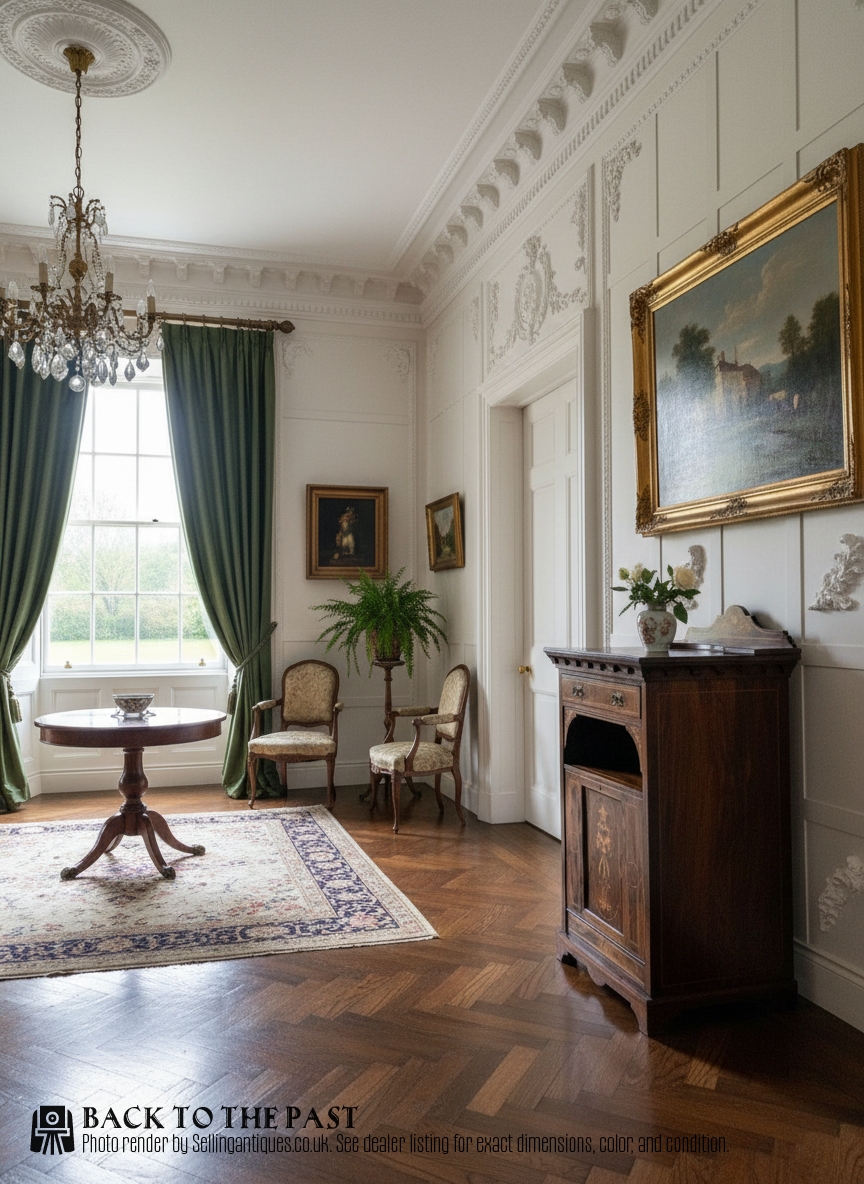
Antique Inlaid Chiffonier
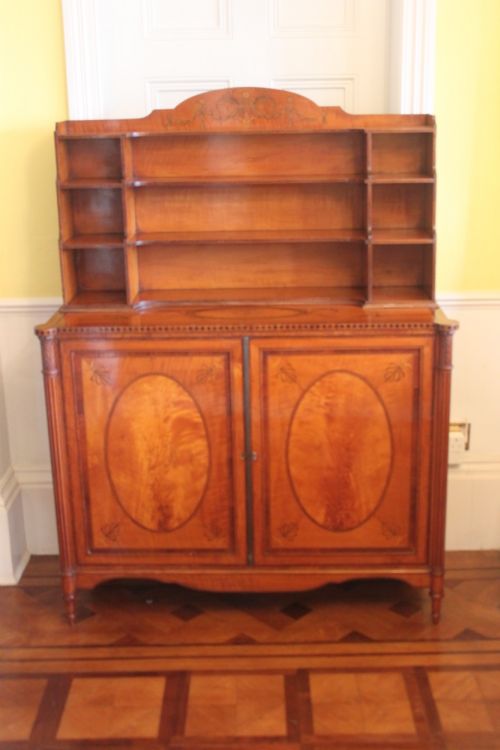
The antique inlaid chiffonier is a low cabinet designed for domestic display and containment, frequently featuring enclosed shelving beneath an upper tier or mirror back. Buyers seek these pieces for their combination of compact proportions and decorative surface detail, which suit both traditional and contemporary interiors.
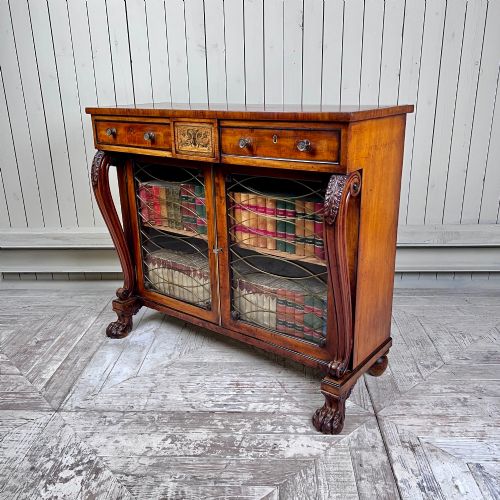
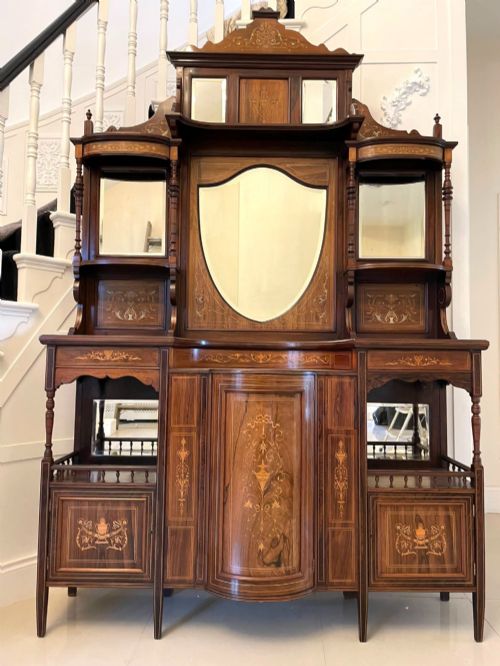
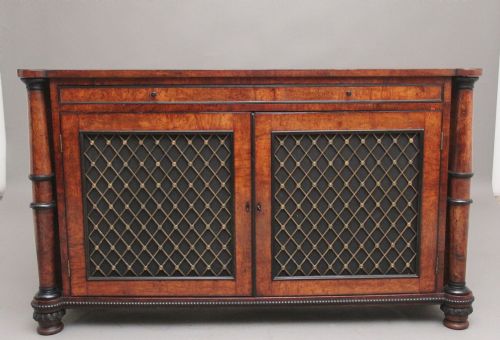
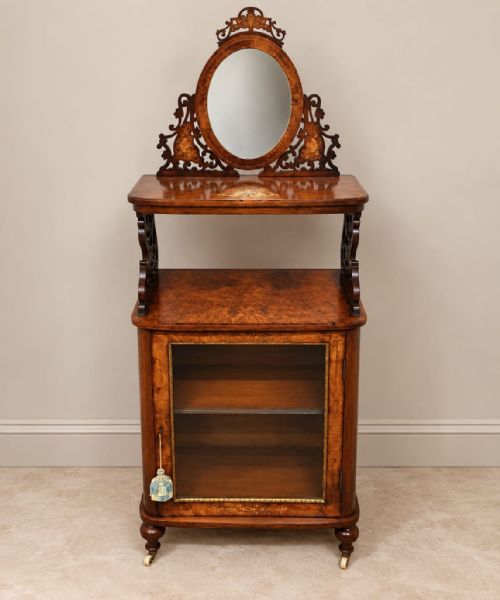
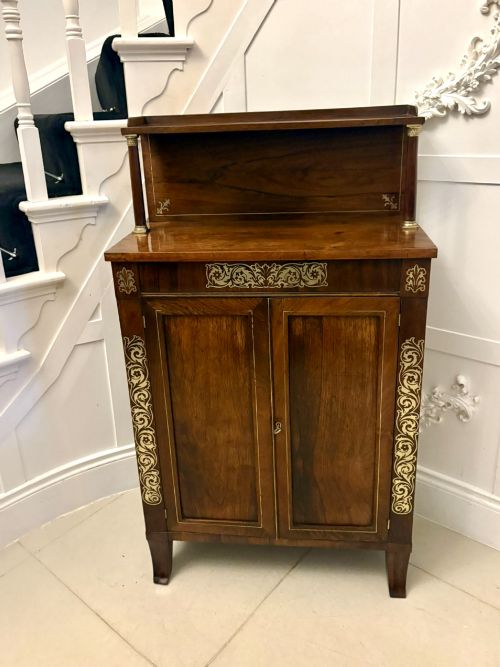
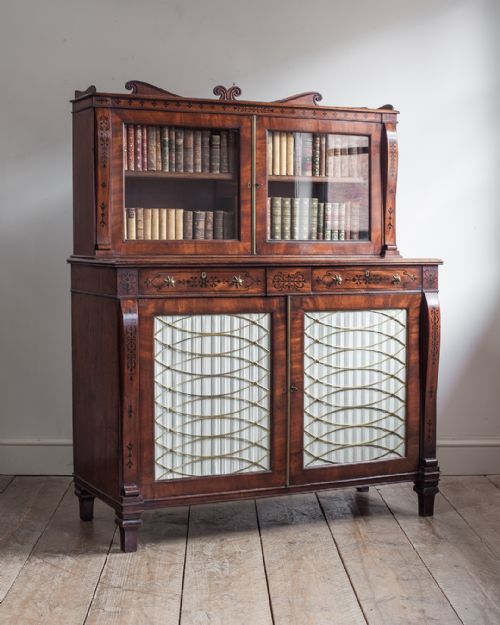
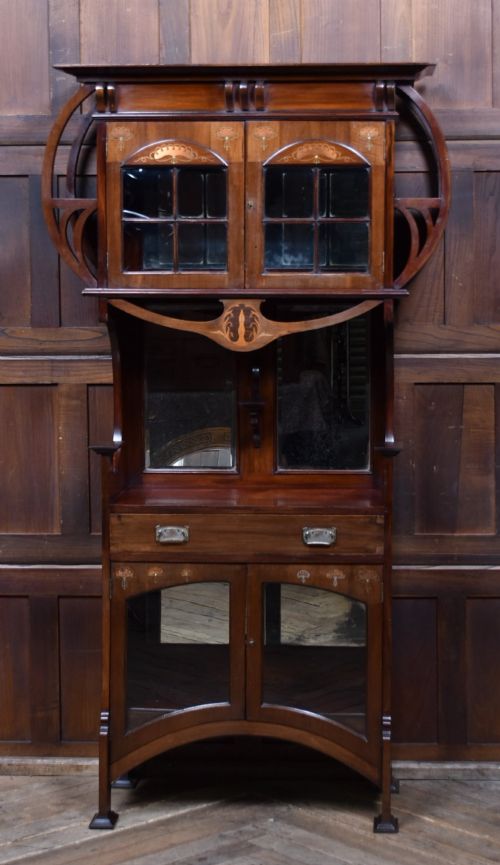
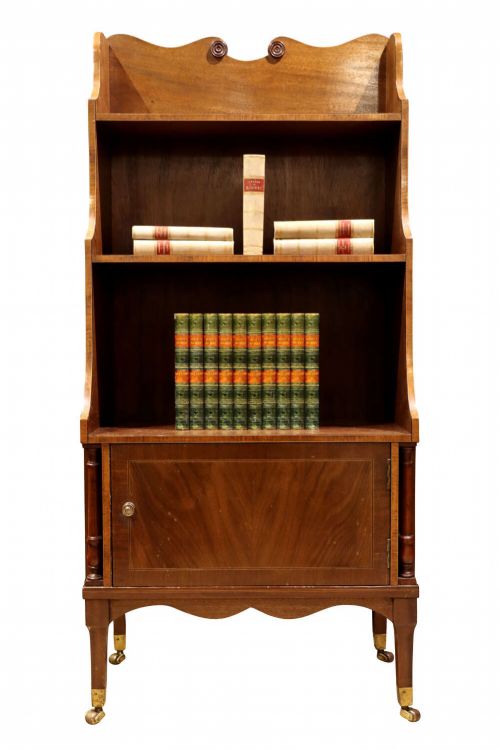
The versions most commonly met on this page date from the Regency and Victorian periods, with Edwardian examples also appearing. These pieces utilise woods such as mahogany, rosewood, and burr walnut, enhanced by contrasting inlay work that defines their fronts and doors.
Materials and construction methods
Cabinetmakers built the carcase using dense timbers like mahogany and rosewood as a stable base for decorative veneers and marquetry panels. Satinwood, boxwood, and ebony were cut finely to form contrasting floral motifs, geometric lines, or scrolling arabesques set flush into the primary wood.
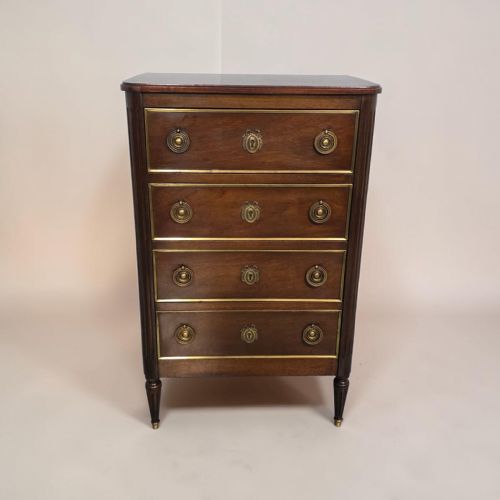
Brass formed an integral part of the decorative technique, appearing as fine stringing inlaid into the timber or as cast mounts, grilles, and gallery rails. Glass panes were fitted to upper cabinet doors, while internal shelves utilised matching secondary timbers supported by fixed or adjustable wooden bearers.
Some nineteenth-century makers hid shallow frieze drawers right beneath the top surface, perfect for secreting away silver teaspoons or stray keys.
Distinctions in craftsmanship
The standard of an antique inlaid chiffonier rests on the precision of the joinery and the integration of the inlay into the surrounding timber. Superior pieces exhibit tight, seamless joints where the contrasting wood or brass sits entirely flush with the polished surface, showing no shrinkage gaps or thick adhesive lines.
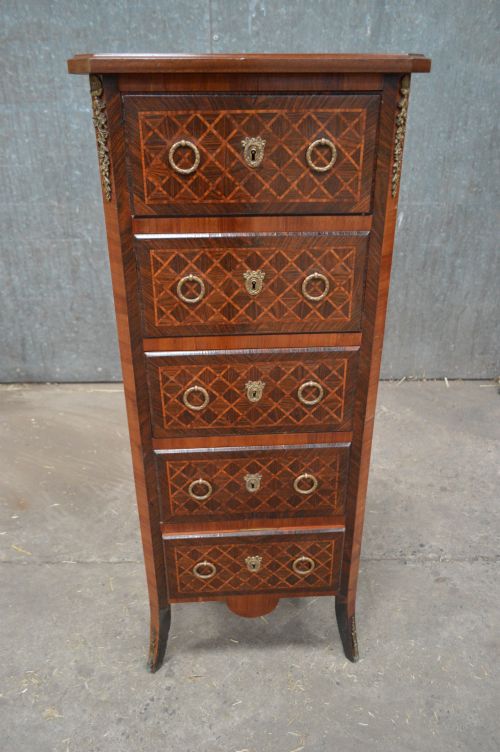
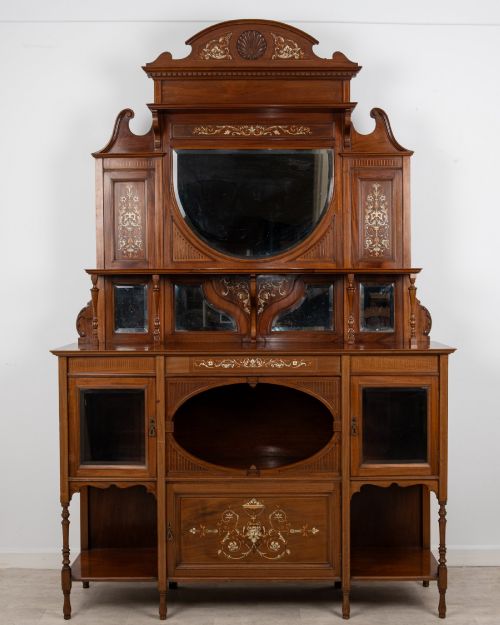
The choice of timber figure and the complexity of the marquetry design dictate the upper tier of quality. Finer cabinets employ highly figured burr walnut, pollard oak, or rich rosewood paired with meticulously shaded floral marquetry, whereas simpler examples rely on basic brass stringing over standard mahogany.
John McClean
The Antique Inlaid Chiffonier Glossary
- Chiffonier
- A low cabinet, typically featuring enclosed lower doors and sometimes an upper shelf or mirror back, evolved from the sideboard during the Regency period.
- Marquetry
- A decorative technique where small pieces of varied wood veneers are arranged to form pictorial or geometric patterns on a carcase.
- Stringing
- Thin lines of contrasting wood or brass inlaid into grooves cut into the surface of a cabinet to create geometric borders.
- Credenza
- A sideboard or low cabinet lacking legs, often highly decorated with marquetry and popular in Victorian drawing rooms.
- Burr walnut
- Timber taken from the gnarled growth of a walnut tree, prized for its swirling, highly figured grain patterns on cabinet doors.
Antique Inlaid Chiffonier: Frequently Asked Questions
What is an antique inlaid chiffonier used for?
These cabinets served historically in dining rooms and drawing rooms for storing tableware, linens, or books while providing a surface for decorative objects. Today, they function well as credenzas, media consoles, or display units in living spaces.
The enclosed lower cupboards keep everyday items out of sight, while the top surface and any open shelving allow for the display of lamps, ceramics, or small collections.
How do I date a chiffonier?
Dating relies on observing the primary timber, the hardware, and the overarching style of the cabinet construction. Regency examples often feature brass inlay in rosewood with slender proportions, while Victorian pieces lean towards heavier proportions in burr walnut or mahogany with mirror backs.
Secondary woods inside the drawers and cabinet backs offer further clues, as do the castors and key escutcheons used during manufacture.
Where should I place a chiffonier at home?
Because these cabinets are relatively shallow and low in height, they fit comfortably along hallway walls, living room focal points, or dining room perimeters. They do not block sightlines the way tall bookcases do, making them practical for smaller rooms.
Keep them away from direct heat sources and strong sunlight to protect the polished wood finishes and delicate veneer work from drying out.
How do Regency and Victorian chiffoniers differ?
Regency chiffoniers tend to exhibit cleaner architectural lines, frequently incorporating brass stringing and brass gallery rails above rosewood or mahogany carcases. They often have simpler understructures and restrained use of carved detail.
Victorian variations generally introduce heavier timbers like burr walnut, more elaborate floral marquetry, and functional additions such as mirror backs or integrated display shelving.