



Rosewood Marble Credenza
A rosewood marble credenza delivers the heavy grain and cool stone that anchor a formal room.
Rosewood Marble Credenza
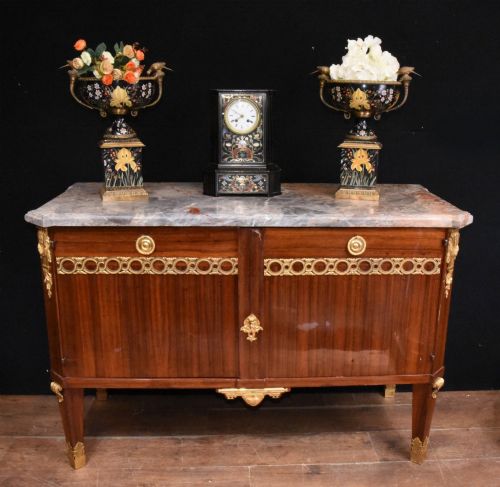
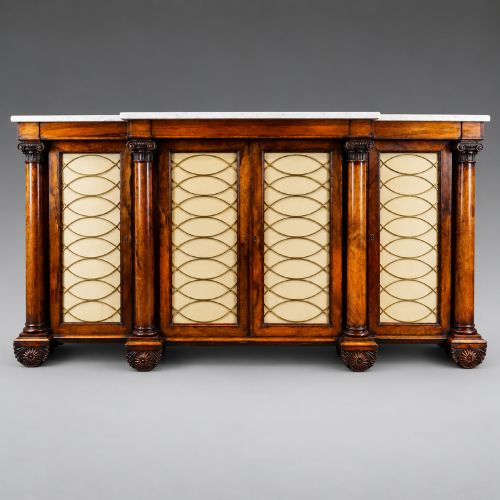
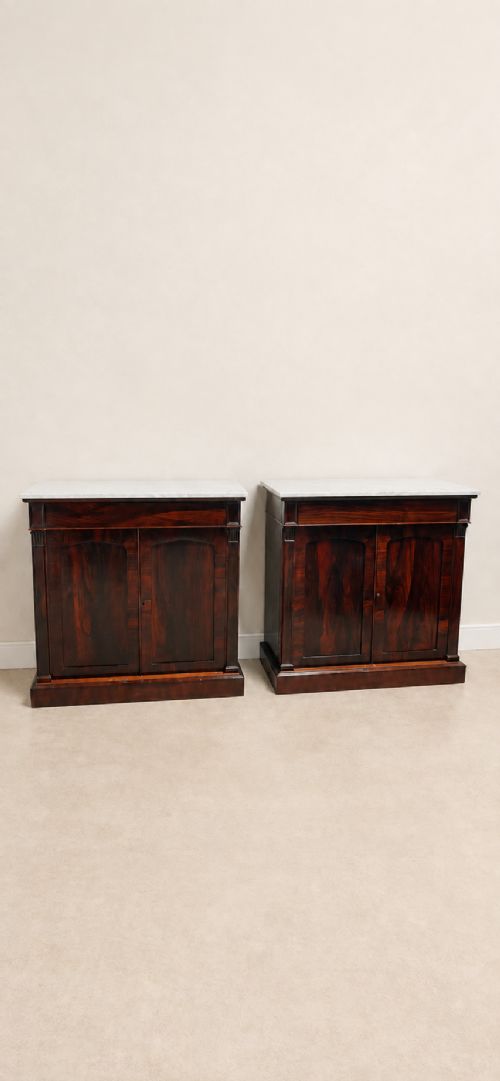
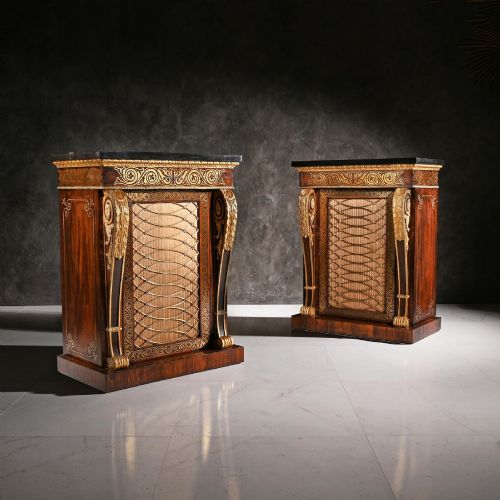
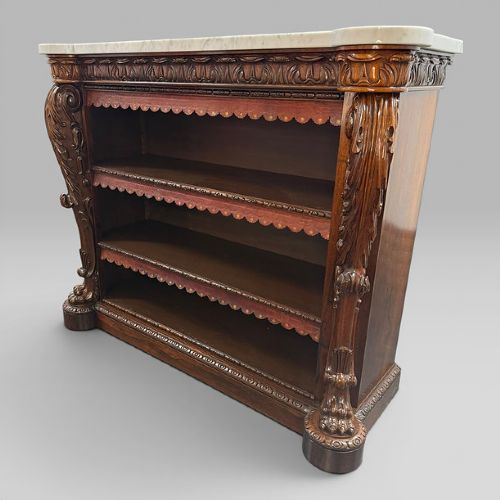
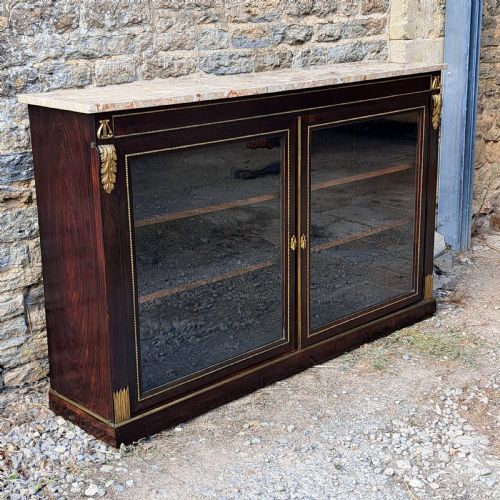
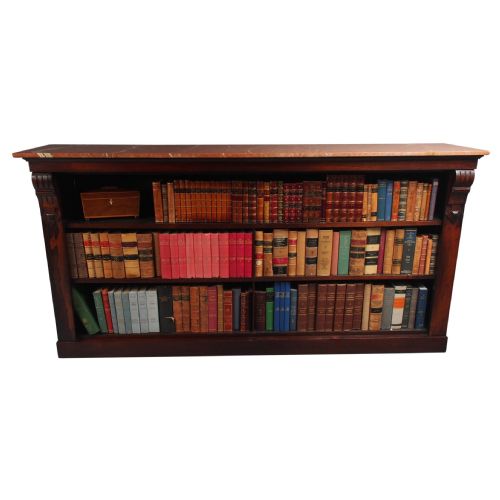
When you search for a rosewood marble credenza, you look at heavy nineteenth-century case pieces built to command a dining room or drawing room. The examples seen here run from Regency and George IV periods through William IV and Victorian eras, alongside French and Anglo-Indian variants.
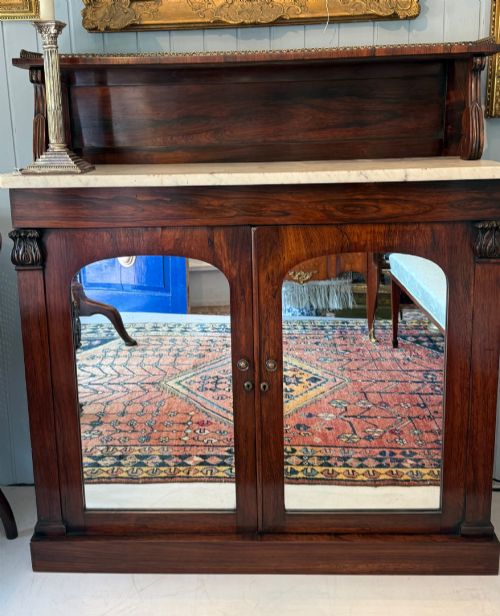
Most pieces on this page appear as side cabinets, chiffoniers, or bookcases rather than standard credenzas, reflecting how nineteenth-century cabinet makers categorised low storage furniture. You will encounter marble tops paired with dark timber carcasses, often fitted with glass doors or open shelving.
The styles span clean Regency lines, French Rococo and Louis XVI revivals, and elaborate marquetry inlay. These furnishings served primarily to display porcelain and silver while concealing household linen or books behind lockable doors.
Materials and construction methods
Makers built these pieces using dense rosewood veneers laid over solid secondary timbers, sometimes incorporating kingwood, ebony, and intricate marquetry. The timber was selected for its dramatic grain patterns, which were carefully matched across doors and panels.
Slabs of heavy marble, often white or pink, were fitted directly to the top surface to provide a durable and cool finish. Brass inlay, ormolu mounts, and gilded details were frequently applied to accentuate the architectural lines of the cabinet.
Internal construction relied on traditional joinery, with mahogany or oak drawer linings and adjustable wooden shelving. Glass panels were often held in place by wooden glazing bars, while brass grilles occasionally replaced glass in bookcase doors.
Rosewood Marble Credenza Retail Price Guide 2026
Typical asking prices for rosewood marble credenza among the pieces listed under this phrase on Sellingantiques today, from the lower quarter to the upper quarter. They describe what is for sale here now, not the wider market.
Some Regency cabinets include ingenious secret compartments disguised behind leather dummy books for hiding private correspondence.
Distinctions in craftsmanship and design
Quality reveals itself in the precision of the marquetry and the choice of timber cuts, where superior workshops selected rosewood with deep, uninterrupted grain movement. The integration of the marble top into the wooden frame demonstrates the skill of the cabinet maker.
Mounts and hardware mark the difference between standard production and fine workshop output. Heavy, chased ormolu mounts and finely articulated brass inlay elevate a piece, whereas stamped brass or simple mouldings indicate more commercial manufacturing.
Louis Constantin Le Gaigneur·Gillows·Mercier Freres
The Rosewood Marble Credenza Glossary
- Credenza
- A low cabinet or sideboard designed for display and storage, originating in Renaissance Italy and revived in the nineteenth century. These pieces often feature marble tops and glass-fronted doors.
- Chiffonier
- A small sideboard or cabinet popular during the Regency and Victorian periods, typically featuring shelves or a mirror superstructure above enclosed lower cupboards. They frequently incorporated marble tops.
- Ormolu
- Gilded bronze used for decorative mounts, feet, and gallery rails on fine nineteenth-century furniture. It was cast and chased to add crisp detail against the dark rosewood.
- Marquetry
- The art of applying pieces of veneer to a structure to form decorative patterns and pictures. Makers utilised contrasting timbers such as ebony and kingwood to create geometric or floral motifs.
- Breakfront
- A piece of furniture whose central section projects forward from the flanking wings. This architectural arrangement creates depth and breaks up the flat surface of a long cabinet.
Rosewood Marble Credenza: Frequently Asked Questions
How do I clean the marble top?
Use a soft cloth dampened with warm water and mild, pH-neutral soap to wipe the surface gently. Avoid acidic cleaners, vinegar, or harsh scouring powders that can etch or dull the stone.
Dry the marble thoroughly with a clean towel to prevent water spots. For polished surfaces, an occasional application of specialist marble wax helps protect against stains.
Were these pieces always used in dining rooms?
While frequently placed in dining rooms to serve food and store silverware, these cabinets also stood in drawing rooms and libraries. Their combination of display shelving and enclosed storage suited multiple formal spaces.
In parlours, they held collections of ceramics and books, functioning as prominent display furniture for guests to admire.
How do I condition the rosewood?
Apply a high-quality microcrystalline wax sparingly with a soft cloth, following the direction of the grain. Buff the surface gently after a short drying period to maintain a soft sheen without building up heavy layers.
Keep the timber away from direct sunlight and strong heat sources to prevent the rosewood from fading or splitting. Consistent indoor humidity protects both the veneer and the underlying structure.
How can I tell Regency from Victorian pieces?
Regency furniture typically displays restrained classical proportions, architectural brass inlay, and a focus on clean lines. The timber selection emphasises dark, richly figured rosewood with minimal carved ornamentation.
Victorian pieces often embrace heavier proportions, bolder carving, and elaborate revival styles such as French Rococo. They frequently incorporate more complex marquetry and heavier marble slabs.