
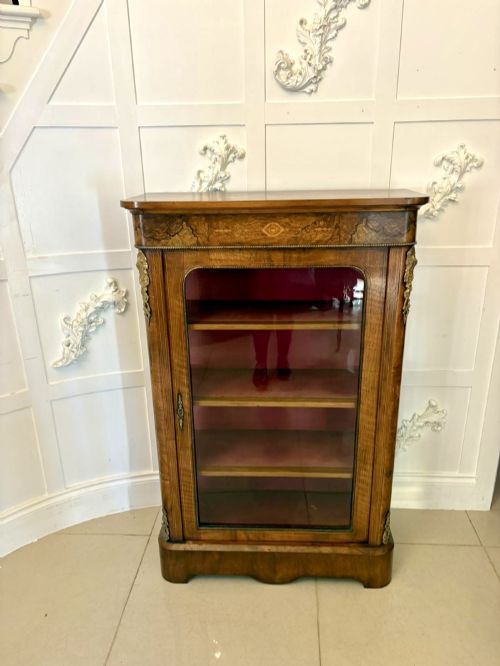
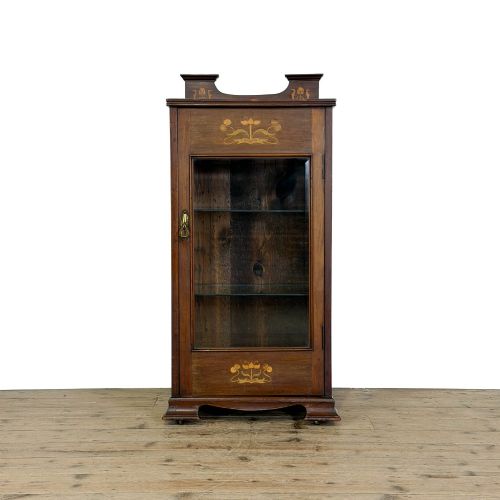
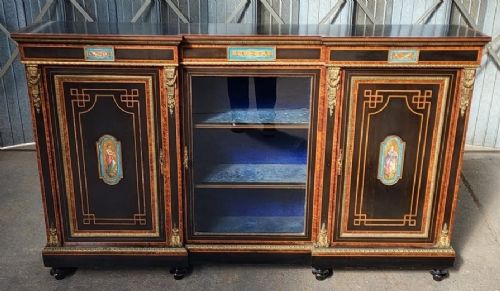
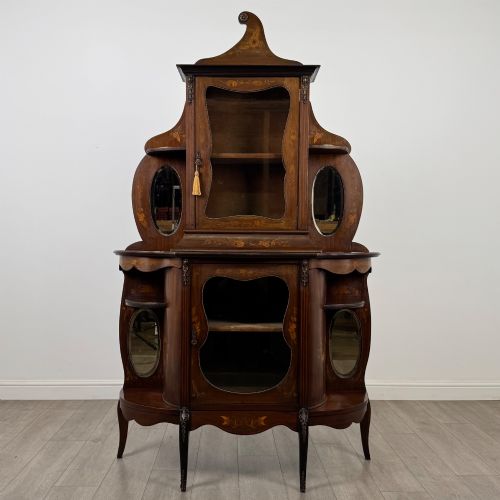
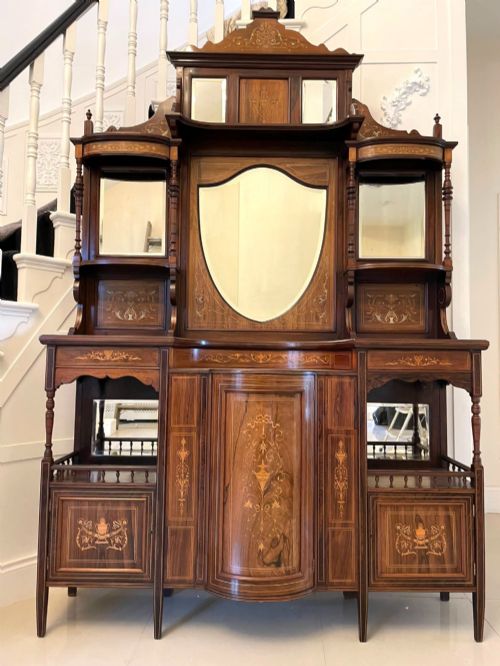
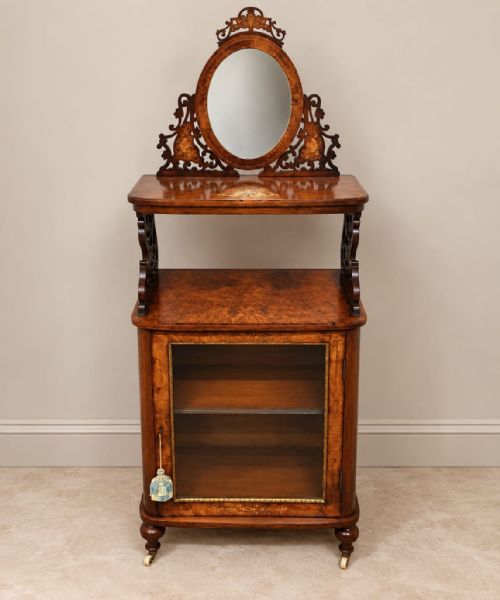
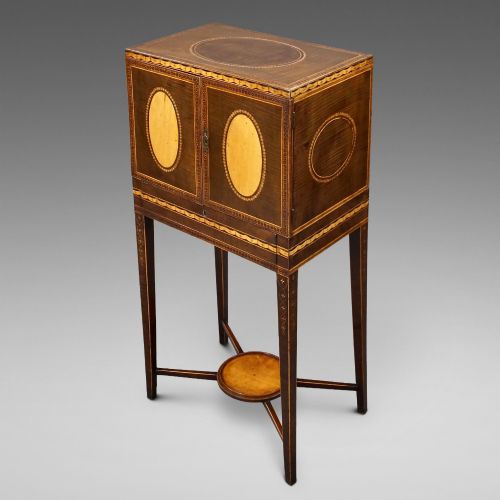
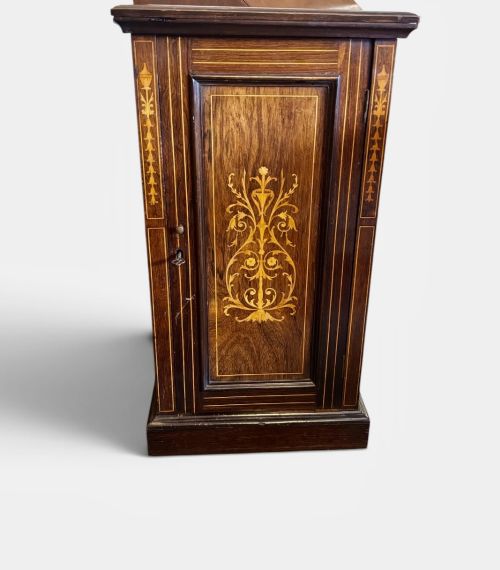
Edwardian Marquetry Side Cabinet
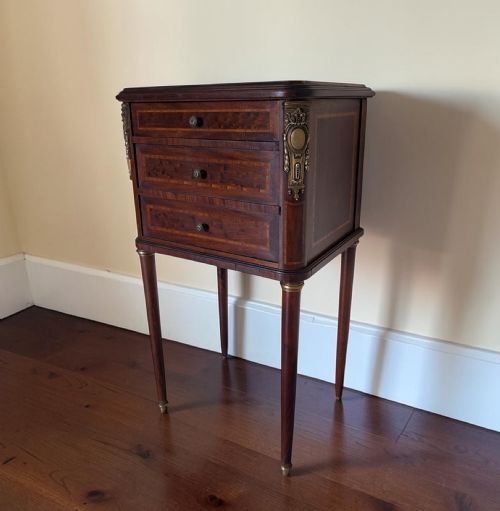
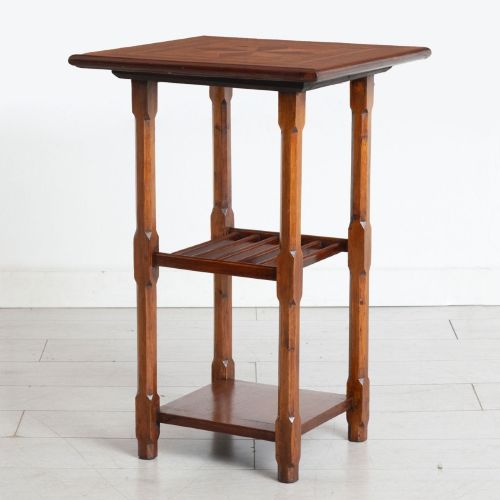
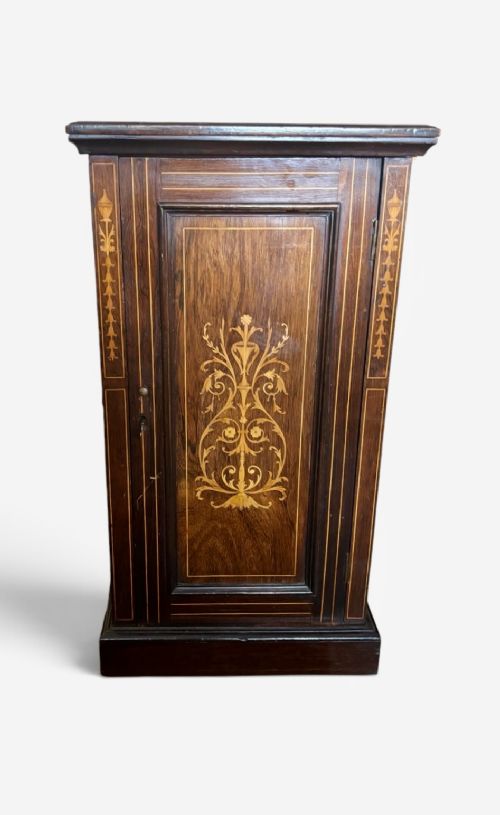
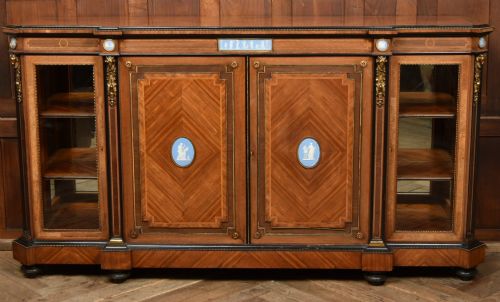
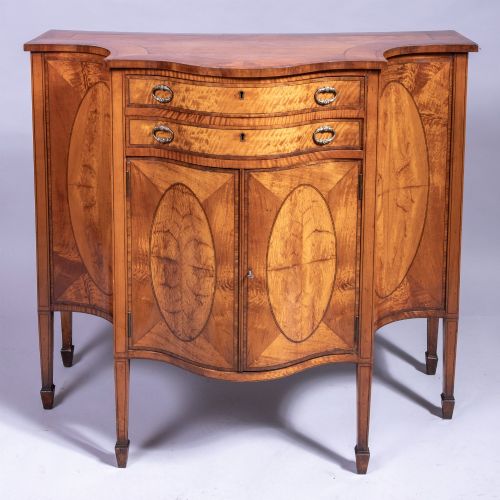
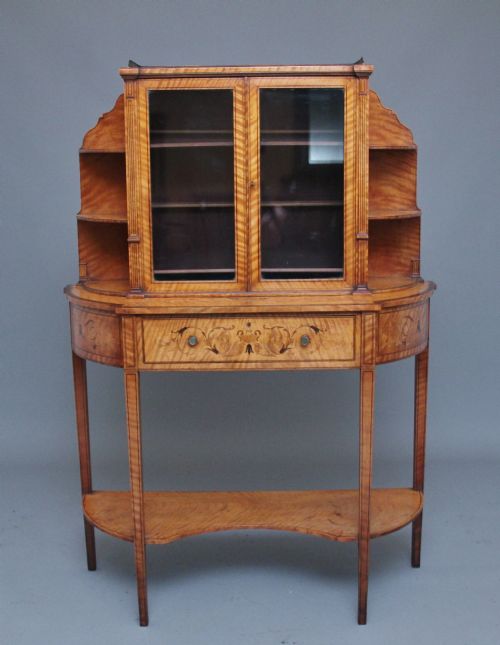
An Edwardian marquetry side cabinet brings together polished timber and intricate floral or classical inlay, offering a refined focal point for any room.
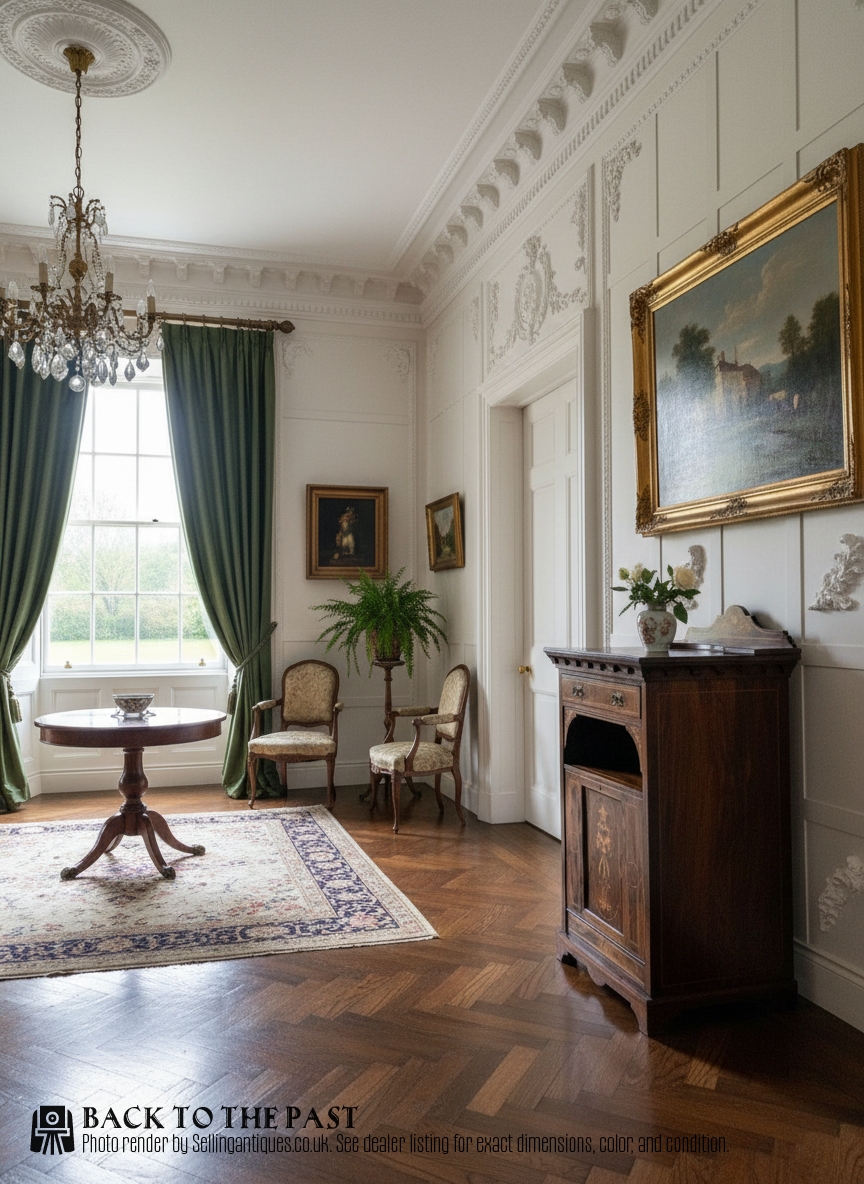
Edwardian Marquetry Side Cabinet
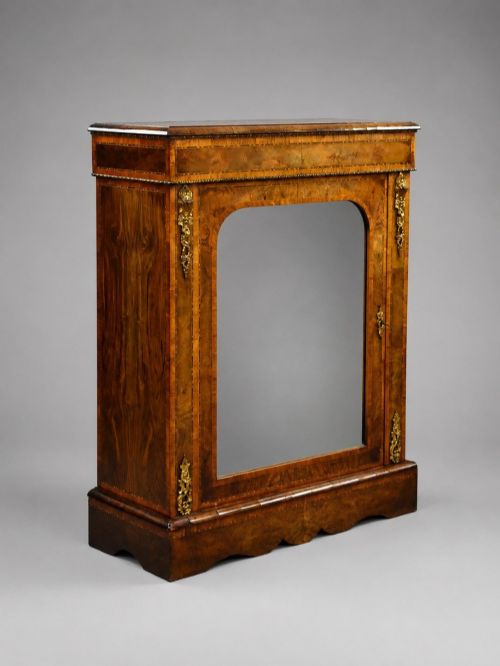
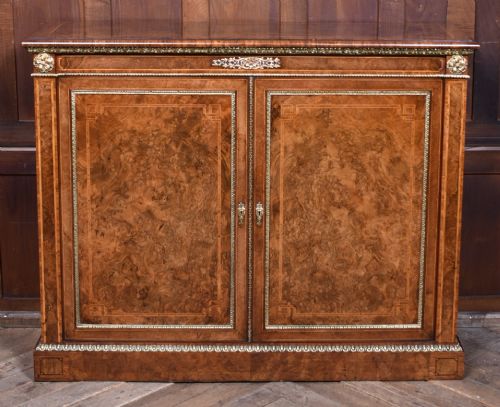
The materials utilised in these pieces range from mahogany and satinwood to rosewood and kingwood, often enhanced with brass mounts or glass doors. These cabinets served primarily in drawing rooms and parlours to display ornaments, store sheet music, or hold bedside essentials.
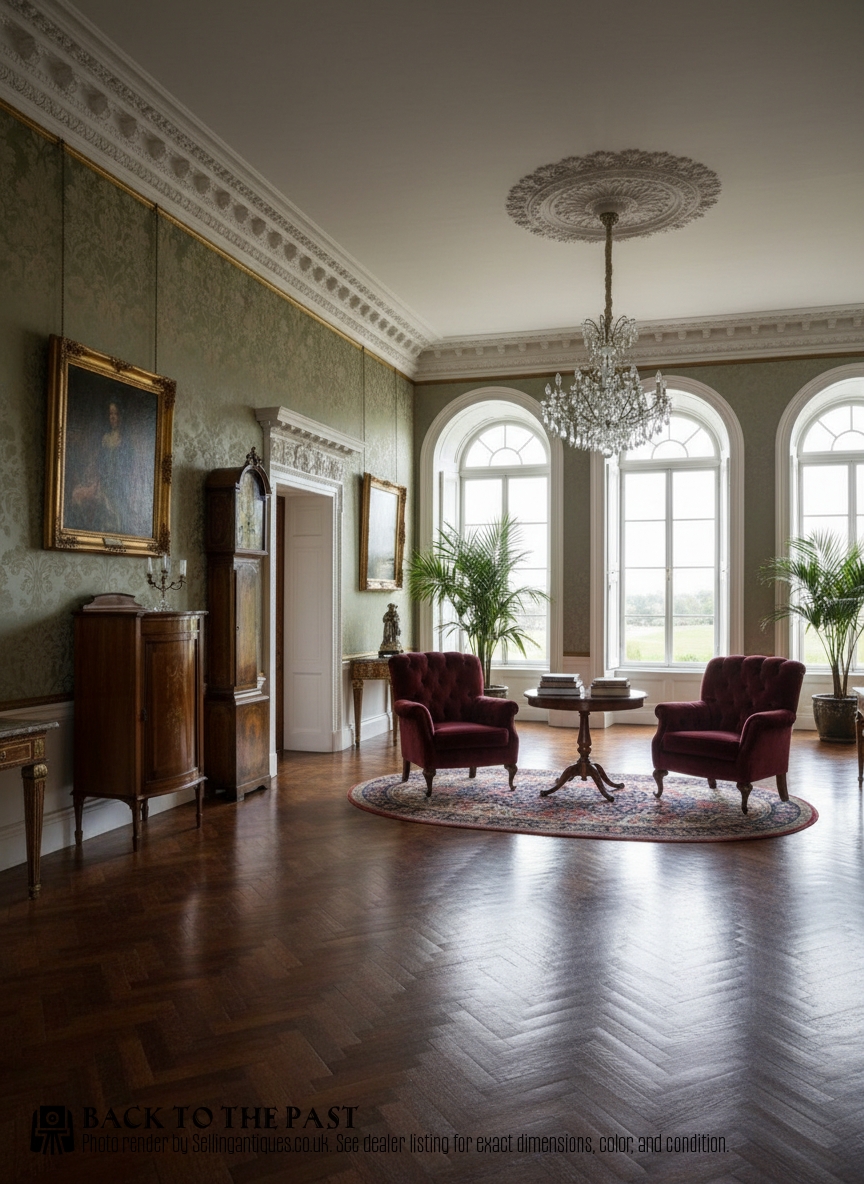
How They Were Made
Cabinet makers constructed the foundational carcase using solid timbers such as mahogany, walnut, or oak, applying fine veneers of satinwood, rosewood, or kingwood to the exterior surfaces. Marquetry panels were created by carefully cutting contrasting wood veneers and assembling them into pictorial or geometric designs before pressing them onto the backing.
Details such as brass handles, ormolu mounts, and glass panels completed the construction, adding structural contrast and visual depth. Joinery methods relied on traditional dovetailing and mortise-and-tenon techniques to ensure lasting stability.
Listings feature woods including satinwood, rosewood, kingwood, mahogany, and burr walnut across multiple periods.
What Varies in Quality
The standard of an edwardian marquetry side cabinet depends largely on the precision of the veneer work and the variety of woods employed. Finely executed pictorial inlays using diverse, naturally coloured timbers indicate a higher grade of craftsmanship than repetitive, stamped geometric patterns.
Secondary woods used inside drawers and back panels, along with the crispness of any brass or ormolu mounts, further distinguish workshop standards. A well-preserved original finish and intact, tight joinery elevate the standing of any piece within this range.
Maple and Co·Keeble London
The Edwardian Marquetry Side Cabinet Glossary
- Marquetry
- A decorative technique where small pieces of contrasting veneer are assembled to form intricate pictures or patterns on a wooden surface. This method defines the primary visual appeal of these cabinets.
- Satinwood
- A pale, lustrous hardwood originating from tropical regions, prized for its golden sheen and smooth grain. It frequently forms the background veneer for detailed inlay work.
- Ormolu
- Gilded bronze used for decorative mounts, feet, and keyhole escutcheons on fine furniture. It adds a metallic highlight to the timber surfaces.
- Pier Cabinet
- A tall, narrow display cabinet designed specifically to stand against the wall space between windows. These pieces often feature glass doors and velvet-lined interior shelves.
- Kingwood
- A dense, dark violet-brown hardwood with lighter golden streaks, often utilised in high-end French and Edwardian marquetry. Its rich tone provides strong contrast in patterned panels.
Edwardian Marquetry Side Cabinet: Frequently Asked Questions
What is an edwardian marquetry side cabinet?
An edwardian marquetry side cabinet is a small storage or display piece featuring patterned wood veneers created during the early twentieth century. These items typically incorporate styles drawn from earlier Georgian and Sheraton traditions.
They function as decorative storage units in living spaces, offering enclosed shelving alongside glass-fronted display areas for ornaments or books.
How do I care for inlaid wood?
Inlaid wood requires protection from direct sunlight and extreme humidity fluctuations to prevent the delicate veneers from lifting or drying out. Gentle dusting with a soft, dry cloth preserves the polished surface.
Avoid using silicone-based polishes or harsh chemical cleaners, as these can penetrate the joints and damage the traditional finishes over time.
How do I distinguish Edwardian from Victorian pieces?
Edwardian furniture generally exhibits lighter proportions, brighter satinwood finishes, and a refined elegance inspired by eighteenth-century Sheraton designs. Victorian equivalents often feature darker walnut or rosewood timbers with heavier, more robust construction.
Reviewing the interior secondary woods and overall aesthetic lightness helps clarify the period of manufacture.