

Antique Indian Teak Table
An antique indian teak table brings dense tropical timber and intricate regional carving into a room, offering both sturdy utility and historic decorative craft.
Antique Indian Teak Table
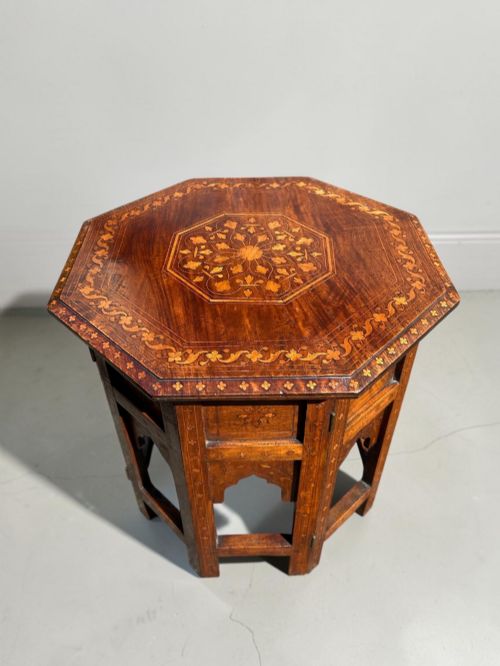
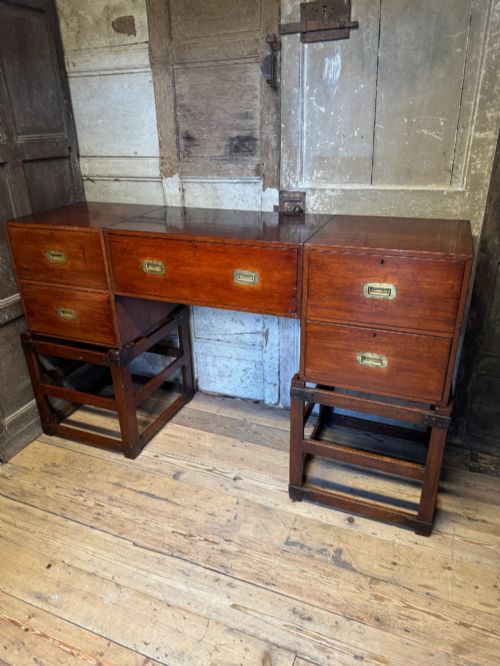
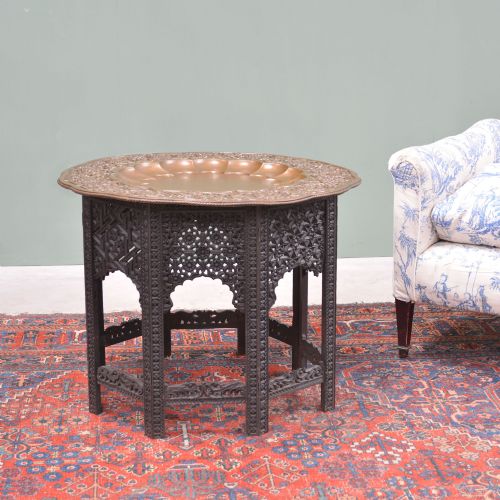
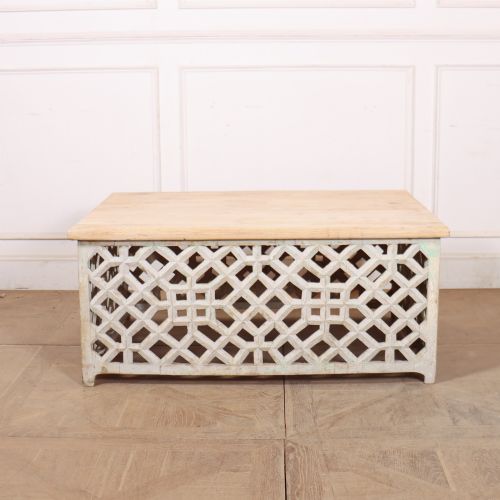
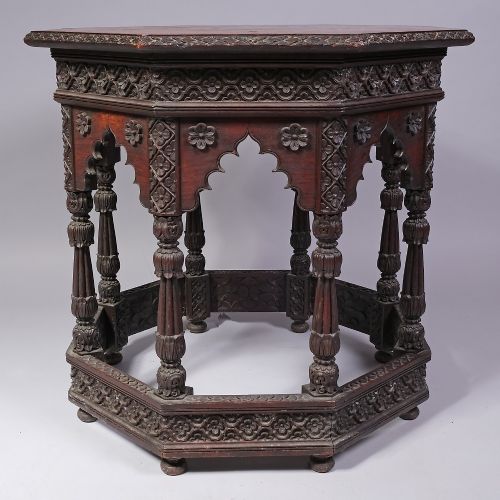
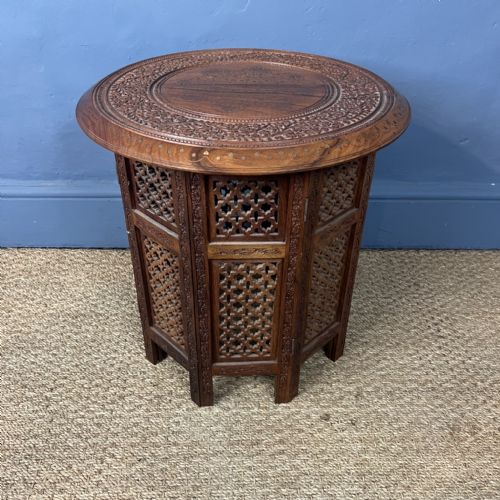
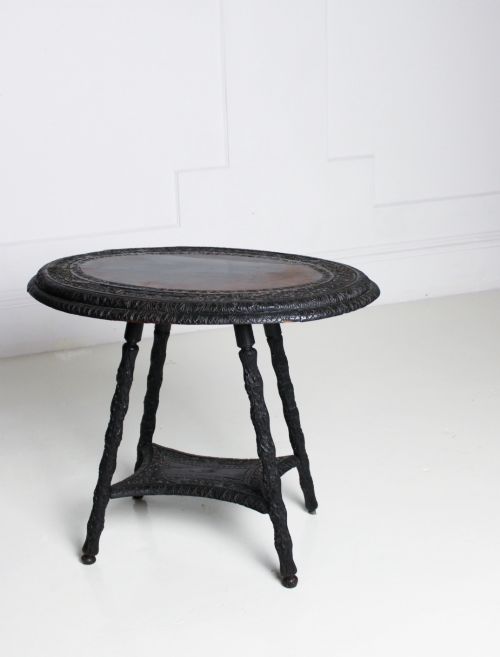
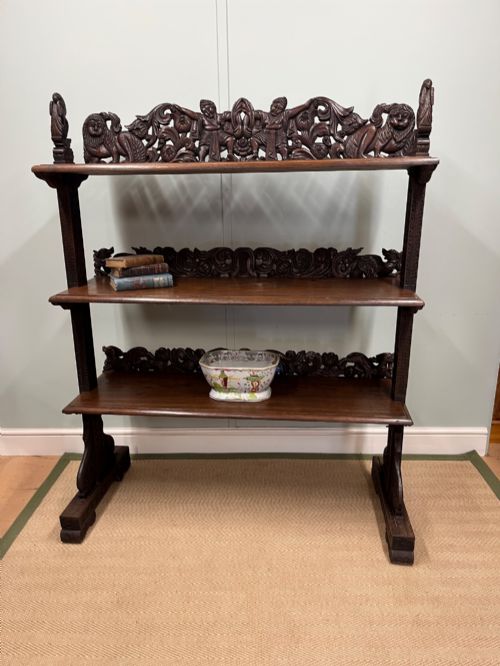
An antique indian teak table encompasses a diverse range of forms designed for colonial and domestic use, spanning occasional surfaces, coffee tables, and desks. Buyers searching for an antique indian teak table frequently encounter octagonal folding designs, carved side tables, and low forms associated with the nineteenth and early twentieth centuries.
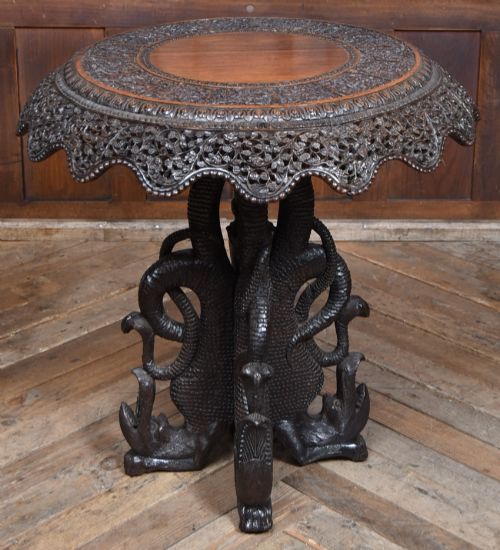
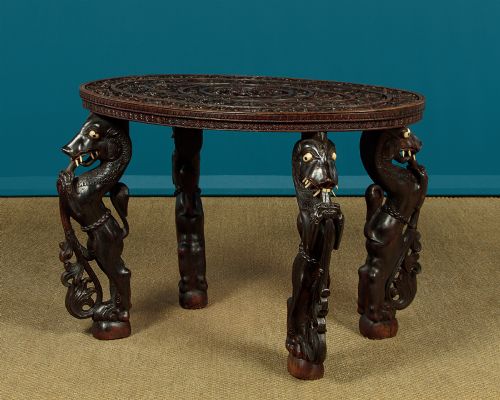
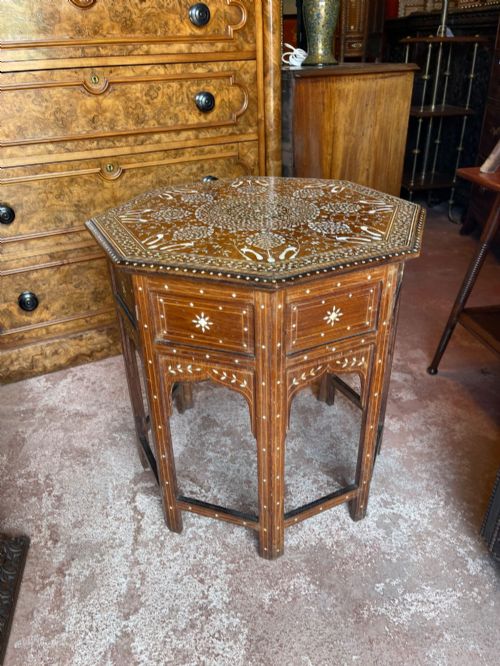
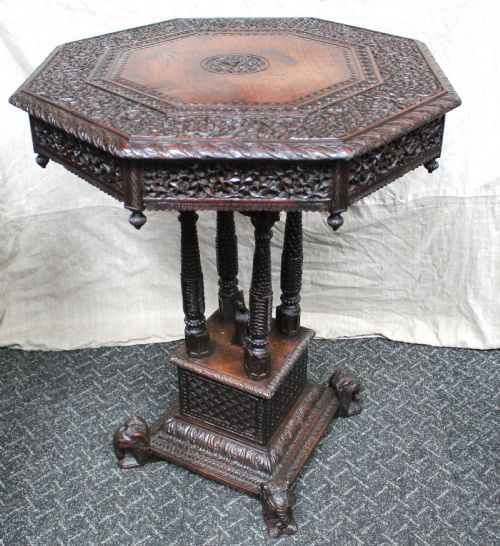
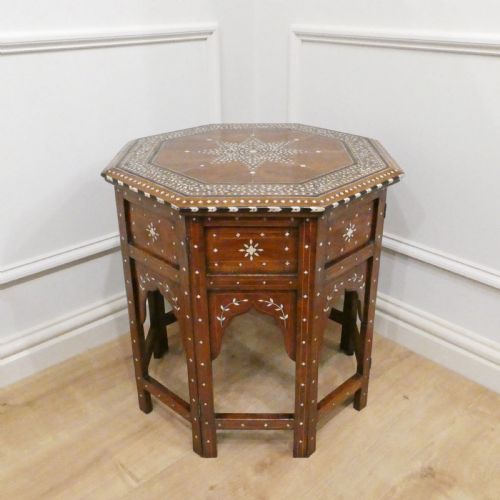
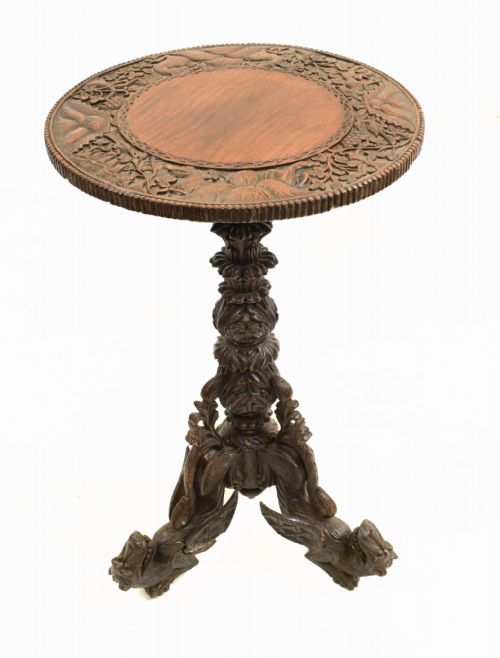
The selection includes regional variations such as Hoshiarpur work with brass inlay, intricate Burmese carvings, and Bombay presidency pieces featuring animal motifs like elephants. These tables reflect the cross-cultural exchange of the colonial period, combining British furniture forms with South Asian woodworking traditions.
How they were made
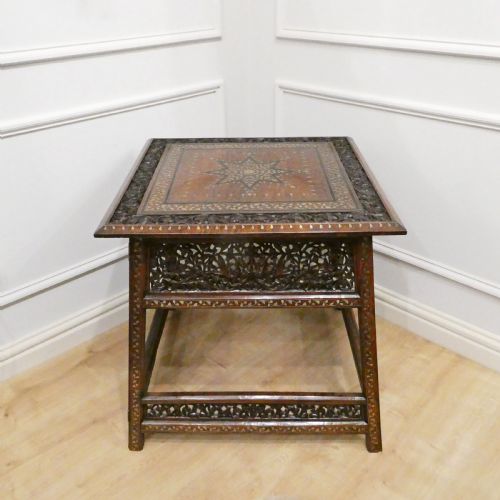
Carpenters constructed these tables primarily from solid teak and other dense hardwoods like padouk and rosewood, chosen for durability and deep grain. Artisans applied relief carving, pierce carving, and fretwork across the surfaces, frequently incorporating geometric patterns and vegetal motifs.
Inlay work relied on contrasting materials inserted into the timber channels, with brass wire and sheet metal forming intricate floral designs. Folding mechanisms and campaign joints utilised iron and copper fittings, allowing structural portability for colonial administrators.
Listings feature materials including teak, rosewood, padouk, brass, bone, iron, and copper across the nineteenth and early twentieth centuries.
What varies in quality
The distinction between standard execution and superior craftsmanship rests in the depth and crispness of the hand carving. Finer examples display meticulous relief work where every leaf and animal figure holds distinct anatomical proportion rather than shallow, repetitive stamping.
Material selection and integration dictate overall integrity, particularly in inlaid pieces where brass elements sit flush with the surrounding teak without excessive filler. The precision of folding joints and the stability of octagonal or multi-tiered structures further separate standard production from exceptional studio output.
The Antique Indian Teak Table Glossary
- Hoshiarpur
- A style of woodwork originating from Punjab, characterised by dense surface carving and intricate brass wire inlay on teak. Pieces from this region often feature folding octagonal or square tops.
- Campaign table
- A portable piece of furniture designed to fold or dismantle easily for travel. These items incorporate clever hinges and removable legs suited to colonial administration.
- Pier table
- A decorative side table designed to stand against a wall, frequently positioned beneath a mirror. These surfaces often display elaborate carving suited to formal nineteenth-century interiors.
- Tilt top
- A table construction where the surface hinges vertically to save space when not in use. This mechanism is frequently found on circular occasional tables from the Victorian era.
- Padouk
- A heavy, durable tropical hardwood with a reddish hue used in regional colonial furniture. It offers exceptional stability and takes a fine carved finish.
Antique Indian Teak Table: Frequently Asked Questions
How do I date an antique indian teak table?
Dating relies on combining stylistic markers, construction methods, and period documentation such as labels or known colonial trade patterns. Nineteenth-century examples often display hand-cut joinery and deeper relief carving compared to later twentieth-century production.
Examining the metal components, such as brass inlay and iron campaign hinges, provides further chronological clues. Gradual changes in British colonial interior fashions also help narrow down the decade of manufacture.
How should I care for teak furniture?
Maintain the timber by dusting regularly with a dry cloth and avoiding placement near direct heat sources or strong sunlight. Teak is a naturally oily wood, but historic pieces benefit from occasional specialist wax treatment to nourish the dry grain.
Protect the carved surfaces and brass inlay from moisture by using coasters and avoiding liquid cleaning agents that might loosen metal components.
What is an elephant table?
An elephant table is a specific regional form where the base or support structure incorporates carved elephant figures. These pieces originate largely from the Bombay presidency and date to the late nineteenth century.
The animals are rendered in various scales, often supporting an octagonal or rectangular top with detailed blanket and facial trappings.