

Antique Indian Storage Chest
An antique indian storage chest brings heavy timber, brass straps and distant trade routes directly into a modern room.
Antique Indian Storage Chest
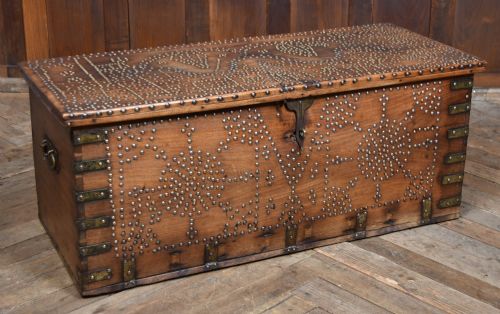
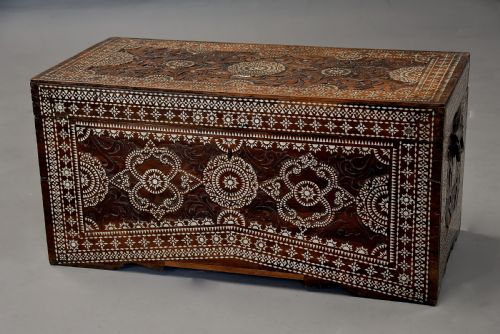
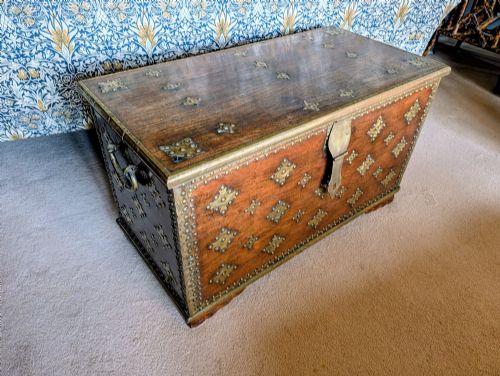
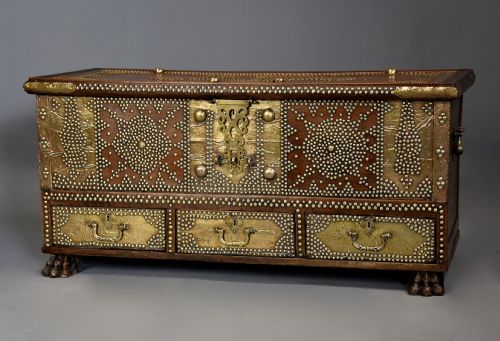
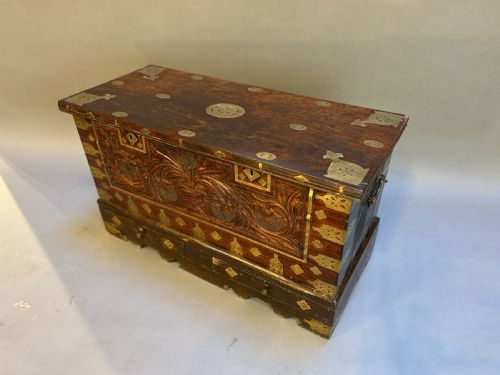
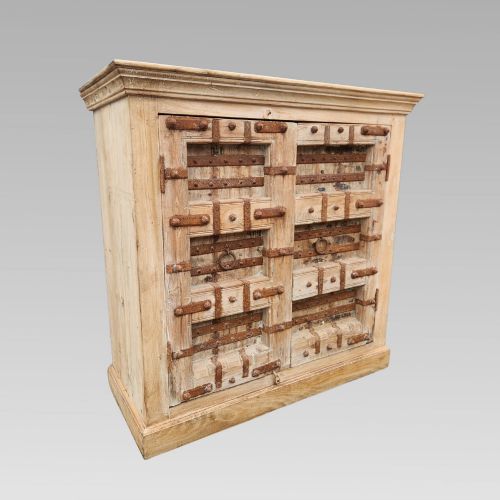
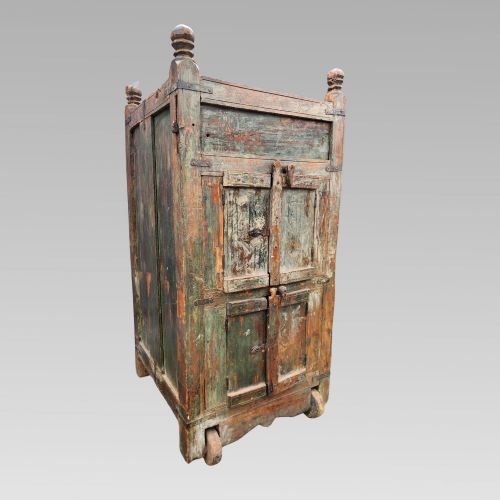
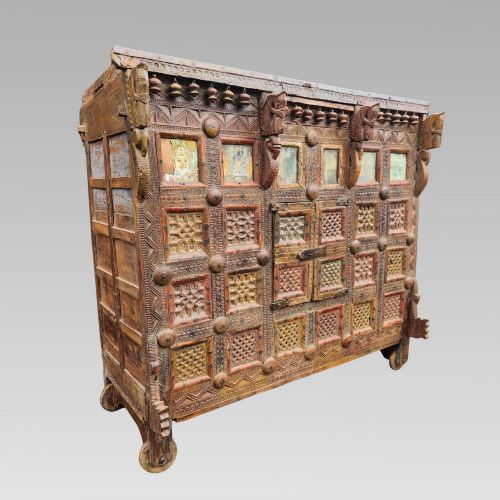
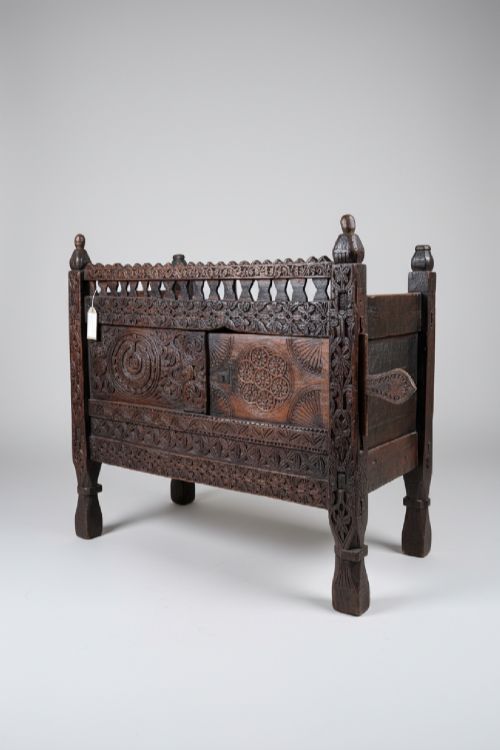
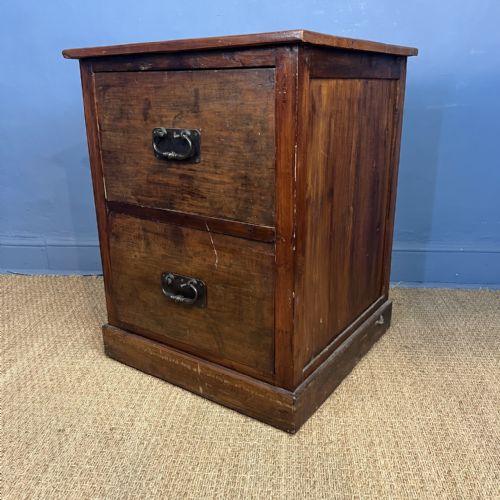
An antique indian storage chest encompasses a wide variety of heavy timber trunks, dowry cabinets and campaign boxes originating from the subcontinent and its trading spheres. Buyers seeking an antique indian storage chest will encounter sturdy domestic vessels alongside transportable campaign furniture built for colonial administration. The selection includes regional variants from Rajasthan, the Swat Valley and Zanzibar, spanning the eighteenth, nineteenth and early twentieth centuries.
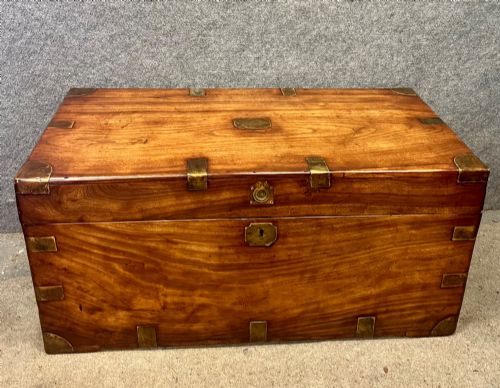
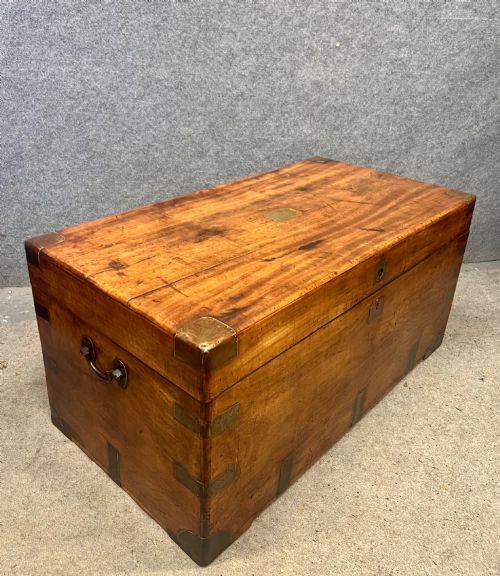
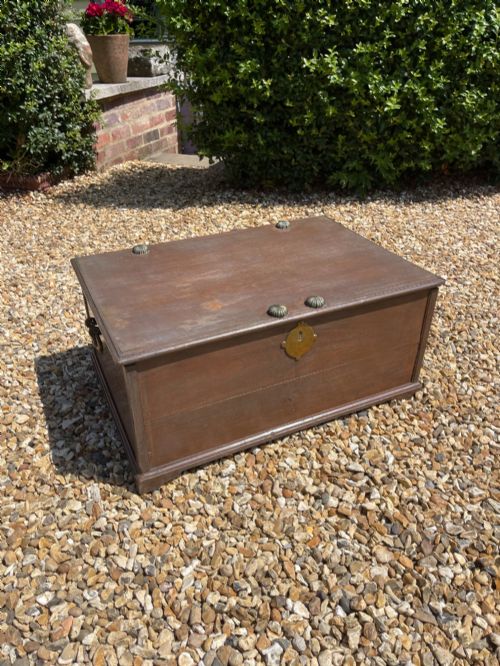
Forms range from low blanket boxes and spice containers to monumental dowry chests, damchiyas and standing storage cupboards. Many pieces combine traditional Indian carving with British military influence, resulting in utilitarian brass-bound trunks designed for long journeys. These objects served practical domestic functions, holding textiles, spices and valuables within family households or merchant ships.
Materials and construction
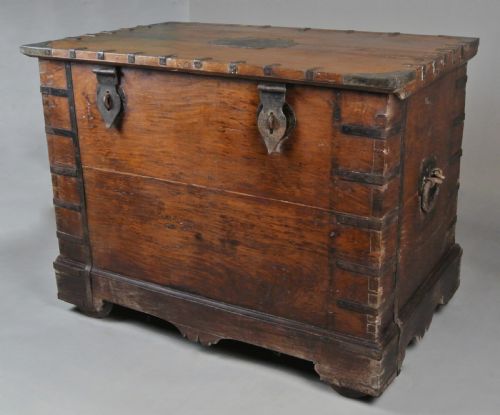
Makers utilised durable tropical hardwoods such as teak, padouk, camphor wood and rosewood to withstand humid climates and heavy transport. These dense timbers were frequently reinforced with structural iron bands, brass strapping and inset corner brackets to protect the joints during travel.
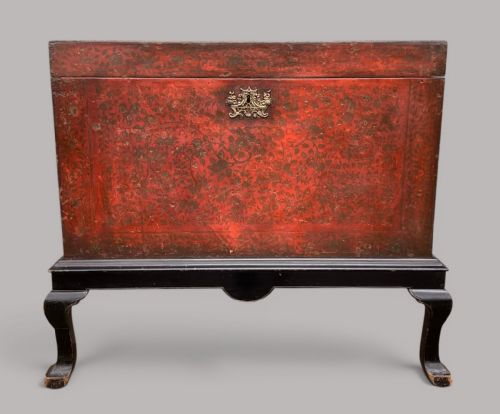
Decorative detailing relies on carved geometric panels, inlaid mother of pearl, red lacquer and applied brass studding rather than applied veneers. Joints are typically pinned or dovetailed, housing hand-forged locks and hinges that reflect the specific regional traditions of the makers.
Listings feature pieces spanning the eighteenth to the twentieth centuries, built from teak, camphor wood, padouk, iron and brass.
Quality differences
The standard of an antique indian storage chest depends heavily on the integrity of the original timber and the complexity of its metalwork. Higher quality examples retain their original brass or iron mounts, unblemished surface patination and complete structural joinery without extensive timber replacement.
Subtlety and depth of carved detail differentiate utilitarian shipping trunks from high-status dowry chests and damchiyas. Pieces featuring intricate regional carving, native hardwoods like padouk or camphor, and intact original locking mechanisms represent the upper tier of the available range.
The Antique Indian Storage Chest Glossary
- Damchiya
- A traditional low wooden dowry chest from Rajasthan, typically featuring carved panels, recesses and small internal compartments for storing household valuables. These cabinets often stand on short legs or integrated support frames.
- Campaign trunk
- A sectional or portable storage chest built for military officers and travellers, characterised by recessed brass handles, reinforced corners and durable teak or camphor wood construction. Such boxes were designed to withstand frequent transit.
- Zanzibar chest
- A heavy timber merchant chest featuring elaborate brass studding, strapwork, and a characteristic arched lid with a secret compartment inside. They reflect the maritime trade between India and the East African coast.
- Padouk
- A dense, heavy tropical hardwood prized for its rich reddish-brown colour and exceptional durability in marine environments. It appears frequently in nineteenth-century campaign and blanket boxes.
- Camphor wood
- A fragrant Asian timber traditionally chosen for storage boxes due to its natural insect-repellent properties. The distinct aroma helps protect stored textiles from moths.
Antique Indian Storage Chest: Frequently Asked Questions
What were Indian storage chests used for?
These chests originally served multiple domestic and commercial purposes, holding textiles, dowry items, spices and personal valuables within households. Merchant vessels and military officers also utilised portable variants for secure transport during long journeys.
Over time, many of these utilitarian trunks transitioned into decorative furniture pieces, providing concealed storage within modern living spaces while retaining their historical utility.
How do I care for antique camphor wood?
Antique camphor wood requires minimal maintenance beyond dusting with a dry, soft cloth to preserve the natural wax finish. Avoid placing the timber in direct sunlight or near artificial heat sources, which can dry out the wood and cause splitting.
Keep the interior clean and dry to maintain the natural aromatic qualities of the timber without applying heavy oils or modern polishes.
How can I tell a Zanzibar chest apart?
Zanzibar chests are distinguished by heavy brass strapwork, numerous decorative brass studs, and a domed or arched lid. They frequently include a concealed internal compartment known as a secret till.
These pieces typically utilise dense hardwoods such as teak or rosewood, reflecting the historical trade links between Indian workshops and East Africa.