






Antique Imari Ceramics
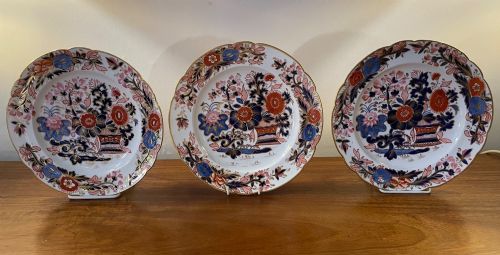
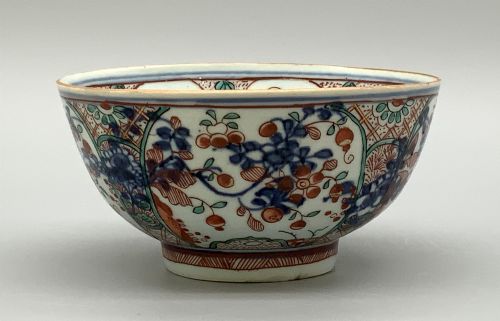
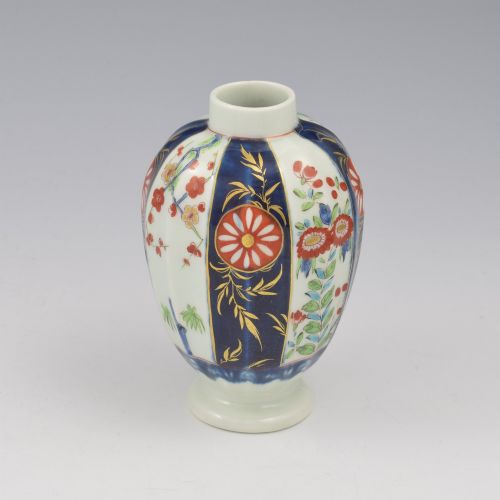
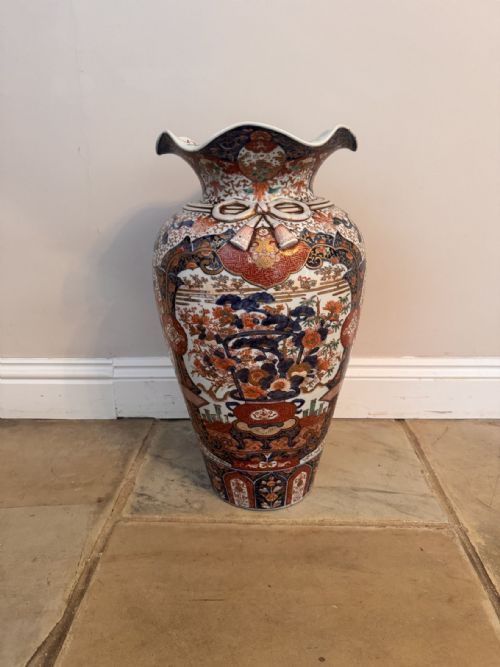
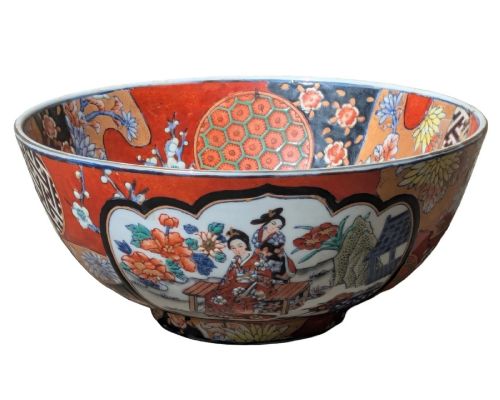
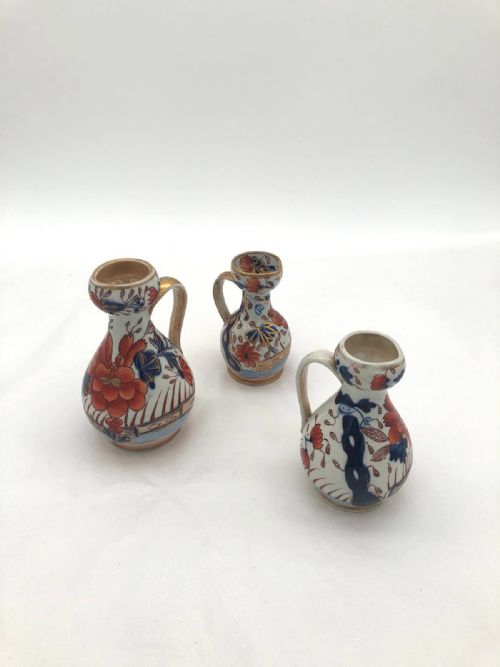
These antique imari ceramics bring together rich palettes of cobalt blue, iron red and gold across vessels and plates.
Antique Imari Ceramics
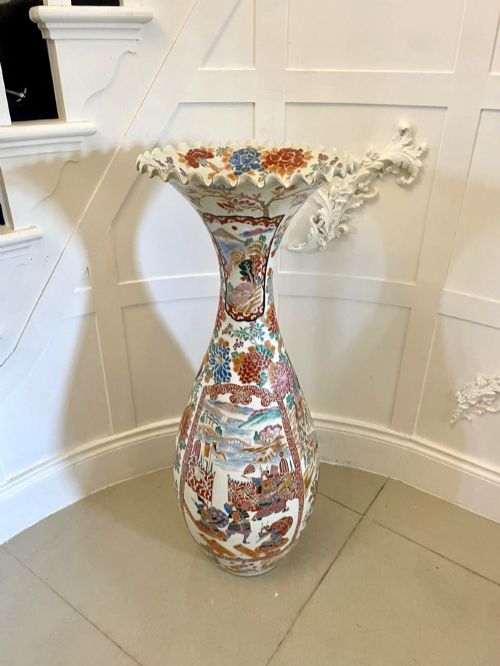
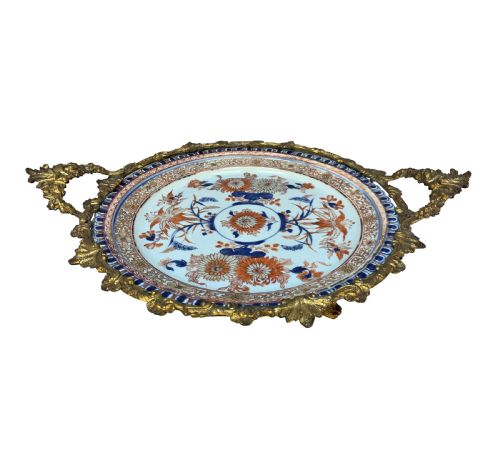
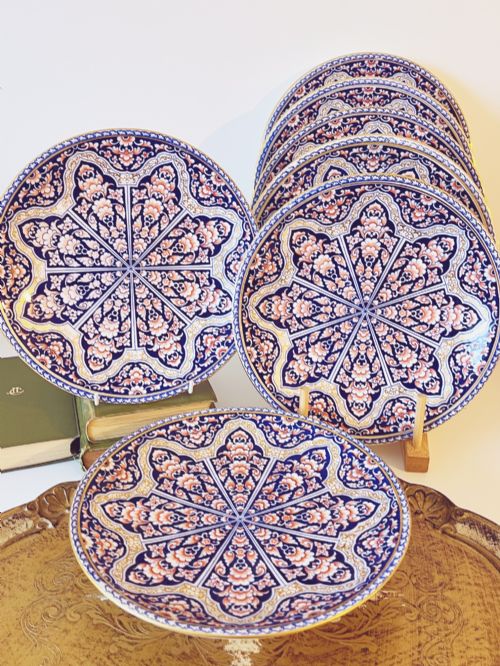
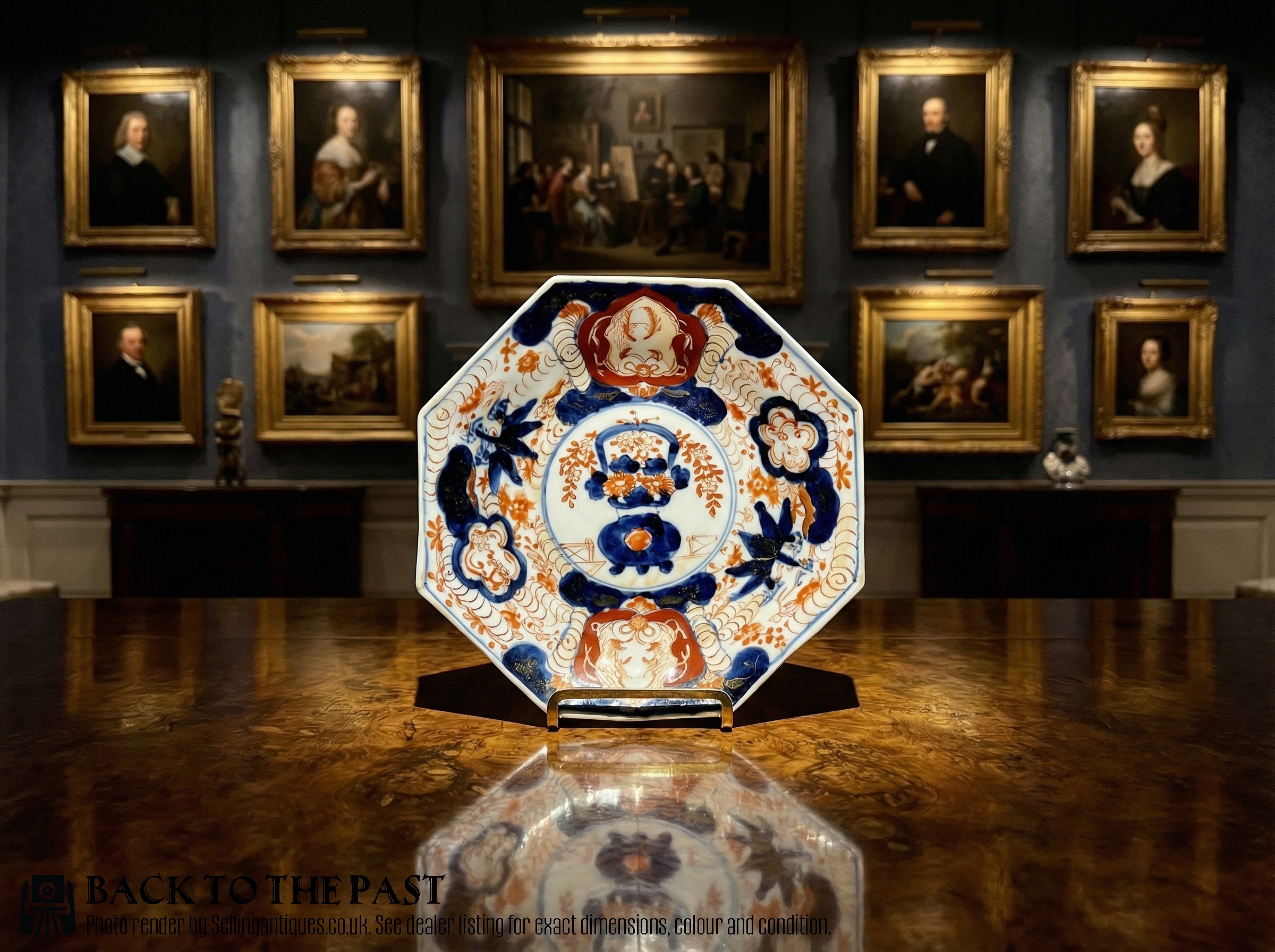
Antique imari ceramics encompass a diverse range of decorative wares created for domestic display and utility, spanning Japanese export pieces and English interpretations. Buyers encounter chargers, bowls, plates, jars, and vases originating from various centuries, with a strong representation of nineteenth-century Japanese Meiji examples and English ironstone variations.
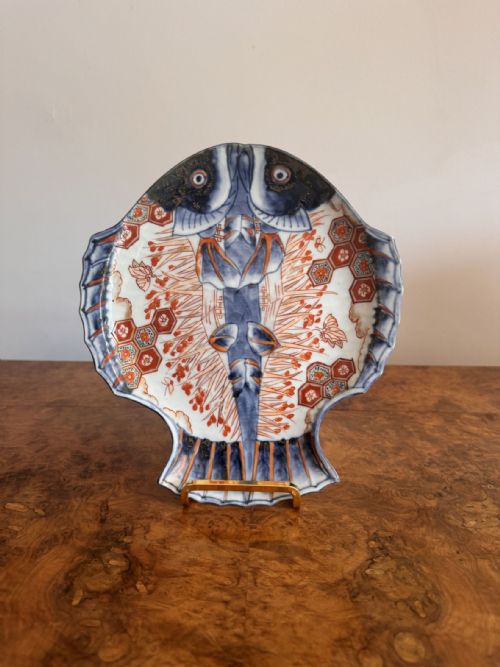
The selection ranges from large floor-standing vases and jardinières down to cabinet plates and miniature twin-handled vessels. Forms include scalloped edges, fish shapes, and square bowls, alongside English factory pieces adopting the distinct palette.
How they were made
Makers utilised porcelain, earthenware, and ironstone as the body for these pieces, shaping them on wheels or moulding them into specific forms such as shells and jugs. Glaze was applied before firing to provide a smooth, vitreous surface.
Decoration relied on underglaze cobalt blue combined with overglaze enamels, particularly iron red, supplemented by gold leaf and gilding to catch the light. Kiln firing fixed the pigments into the hardened body.
Some nineteenth-century makers fashioned ironstone jugs into the likeness of schoolhouses, complete with tiny painted pupils peering from the windows.
What varies in quality
Quality rests primarily in the crispness of the hand-painted detailing and the depth of the iron red and cobalt blue pigments against the white ground. Superior pieces display precise brushwork and well-applied gilding that remains crisp and bright across the surface.
The weight and balance of the ceramic body, alongside the complexity of the moulding such as scalloped edges or relief work, separate standard production items from finer studio and factory outputs.
Royal Crown Derby·Mason's Ironstone·Spode·Hicks and Meigh·Dr Wall Worcester
The Antique Imari Ceramics Glossary
- Imari
- A style of ceramic decoration originating in Japan, characterised by a palette dominated by underglaze blue, iron red, and gold. The style was widely emulated by European factories.
- Charger
- A large decorative plate intended for display on a sideboard or wall rather than for dining use. These pieces often feature complex central motifs.
- Ironstone
- A type of durable earthenware patented in the nineteenth century, designed to resist chipping while offering a smooth white surface suitable for coloured enamels.
- Meiji Period
- The era in Japanese history spanning from 1868 to 1912, known for prolific ceramic production aimed at international export markets.
Antique Imari Ceramics: Frequently Asked Questions
What is imari?
Imari is a style of ceramic decoration defined by its distinct palette of cobalt blue, iron red, and gold highlights. The aesthetic originated in Japan before European potteries began producing their own versions.
These pieces range from export wares made in East Asia to English ironstone and porcelain adaptations created by factories during the Georgian and Victorian eras.
How do I display chargers?
Chargers are large decorative plates traditionally meant for display on walls or upright on sideboards rather than dining use. Their generous diameters and detailed borders make them strong visual focal points.
When displaying them, use secure wall mounts or sturdy plate stands designed to support the weight of heavy porcelain and ironstone.
Are these pieces waterproof?
Most ceramic and porcelain vessels hold water safely, but older earthenware and ironstone items can develop hairline fractures or porous bodies over time. It is wise to inspect the interior glaze before using vases or jugs for fresh flowers.
Displaying them dry avoids moisture damage to historic bodies and protects vulnerable overglaze enamels and gilding.