
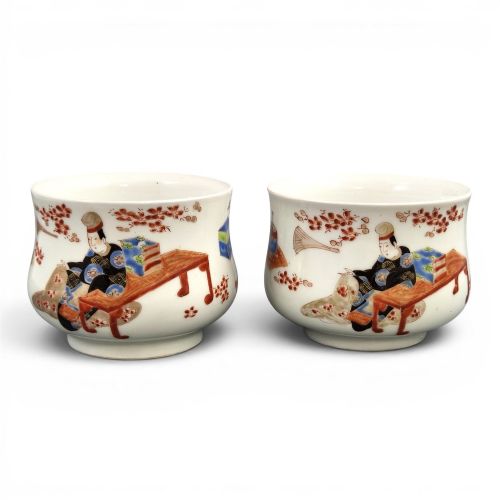


Oriental Porcelain Cups
Oriental porcelain cups bring hand-painted artistry to the table, offering a tangible link to centuries of global trade and domestic ritual.
Oriental Porcelain Cups
Oriental porcelain cups encompass teacups, coffee cups, tea bowls, and stem cups originating from Chinese and Japanese kilns, alongside British interpretations influenced by these Eastern aesthetics. When searching for oriental porcelain cups, buyers encounter forms ranging from delicate export tea bowls of the eighteenth century to robust nineteenth-century Japanese wares and Worcester or Minton creations inspired by Asian motifs.
The material record spans the eighteenth and nineteenth centuries, taking in Georgian and Victorian eras as well as the Qing Dynasty and Meiji period. Pieces include Chinese Export wares made for Western markets, Japanese Imari and Kutani items, and European porcelain painted in distinct Asian-inspired palettes.
How they were made
Potters utilised hard-paste and soft-paste porcelain, shaping clay bodies before applying cobalt underglaze, enamel colours, and gold leaf. Cobalt blue underglaze provided deep blue decoration beneath the clear glaze, while enamels sat on top of the fired glaze to introduce vibrant polychrome scenes.
Techniques varied from delicate hand-painting on Chinese export vessels to moulded blue and white patterns on English tea bowls and detailed gilding on Japanese sencha cups. Kiln firing required precise temperature control to achieve the vitrified, resonant ceramic body characteristic of fine porcelain.
Materials recorded across the inventory include porcelain, bone china, enamel, gold leaf, and cobalt underglaze applied in diverse patterns.
What varies in quality
Quality rests upon the precision of the brushwork and the clarity of the porcelain body, where controlled lines and vibrant enamel application distinguish superior examples. Finer pieces demonstrate careful potting with thin, translucent walls and well-aligned decorative schemes that balance empty space with intricate motifs.
The refinement of the glaze and the execution of gold leaf or cobalt details dictate the overall character of a piece. Firing success also plays a role, with smoother surfaces and consistent colour placement marking out objects produced by skilled hands in established workshops.
Ginshōtei Gyokushi·Minton·Worcester
The Oriental Porcelain Cups Glossary
- Porcelain
- A vitrified ceramic material made from china clay and petuntse, fired at high temperatures to create a non-porous, ringing body. It forms the essential base for all the cups and bowls found in this category.
- Cobalt Underglaze
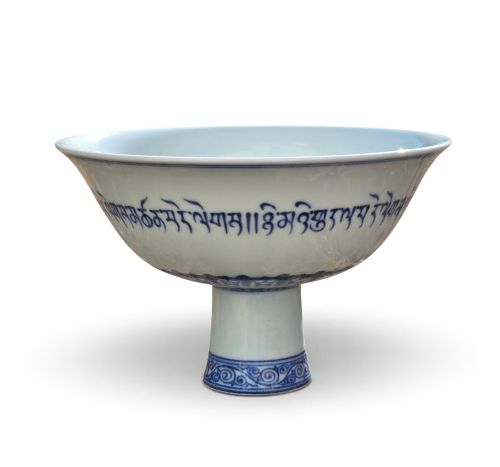
- A blue pigment applied to the unfired clay body before glazing and firing, yielding permanent decoration that resists fading. It defines the classic blue and white aesthetic seen across various centuries.
- Famille Rose
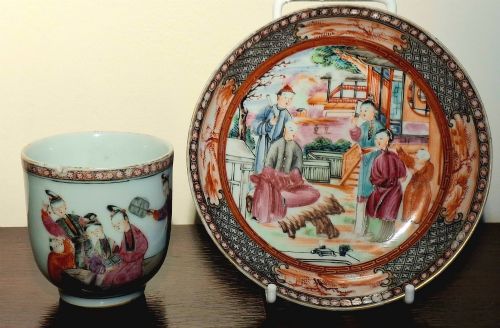
- A palette of opaque enamel colours dominated by pink or rose hues, introduced in the eighteenth century during the Qing Dynasty. This technique allowed for shaded floral and figurative designs.
- Imari
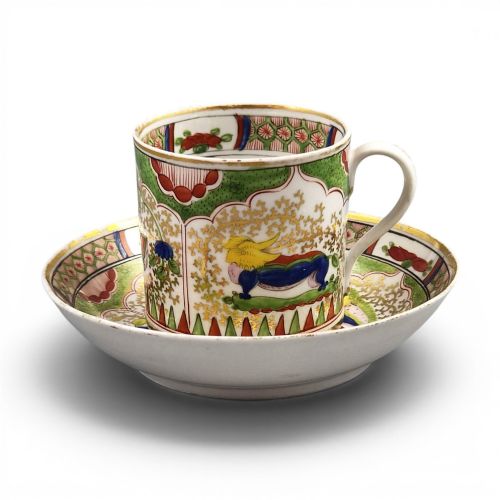
- A style of Japanese export porcelain featuring deep underglaze blue combined with iron red and gilt highlights. The aesthetic was widely copied by European factories during the Georgian and Victorian periods.
- Tea Bowl
- A handleless vessel used for drinking tea, common in early Chinese and Japanese traditions as well as eighteenth-century British porcelain. These cups require a steady grip and encourage a deliberate pace of consumption.
Oriental Porcelain Cups: Frequently Asked Questions
How do I date oriental porcelain cups?
Dating relies on stylistic markers, reign marks, paste characteristics, and historical context linking the piece to periods like the Qianlong era or the Meiji period.
Changes in glaze texture and painting styles help differentiate eighteenth-century export wares from nineteenth-century Japanese production and British factory interpretations.
Can I use antique porcelain cups for tea?
While sturdy enough for careful handling, antique cups are generally kept for display or gentle occasional use rather than daily service.
Thermal shock and modern dishwashers can damage delicate enamel and historical glazes, so hand washing in tepid water is essential.
What is the difference between tea bowls and teacups?
Tea bowls lack handles, following traditional East Asian forms designed to be cupped in both hands to feel the warmth of the tea.
Teacups with handles or saucers emerged as European drinking habits evolved during the Georgian period and factories adapted foreign shapes.
What does Chinese Export mean?
Chinese Export refers to porcelain manufactured in China specifically for trade and sale to Western markets from the seventeenth to the nineteenth centuries.
These objects often combined traditional Chinese ceramic techniques with European heraldry or shapes requested by foreign buyers.