
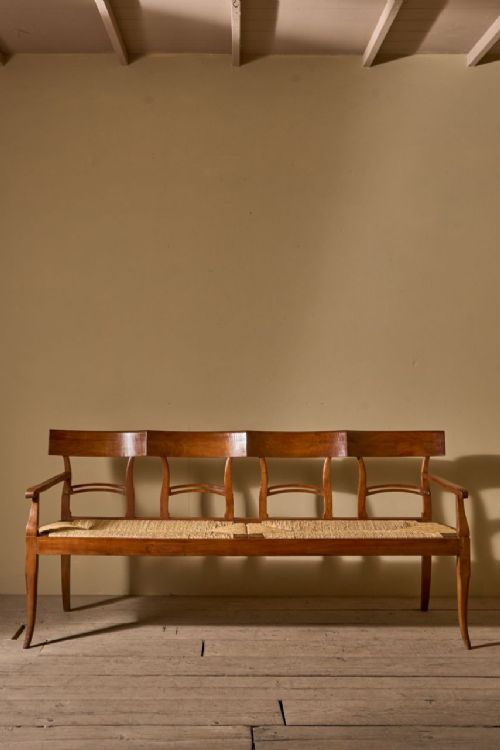
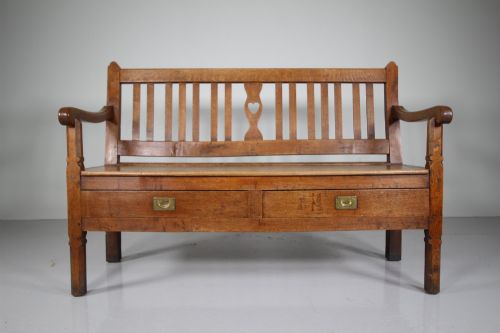
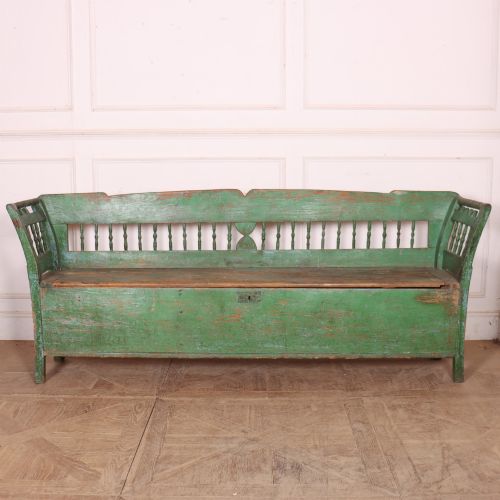
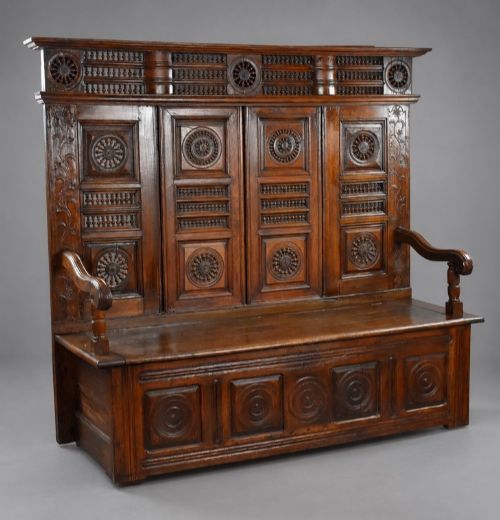
Antique Hall Settle Bench
When you search for an antique hall settle bench, you explore heavy timber seating built to block draughts and anchor historical hallways.
Antique Hall Settle Bench
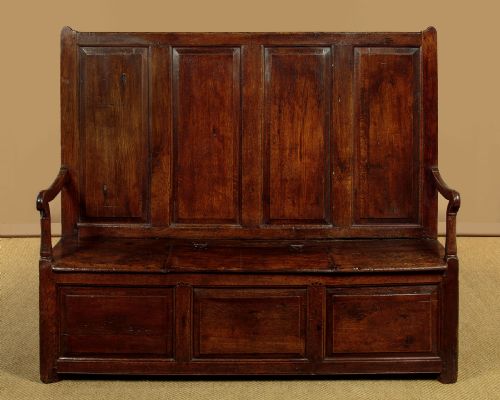
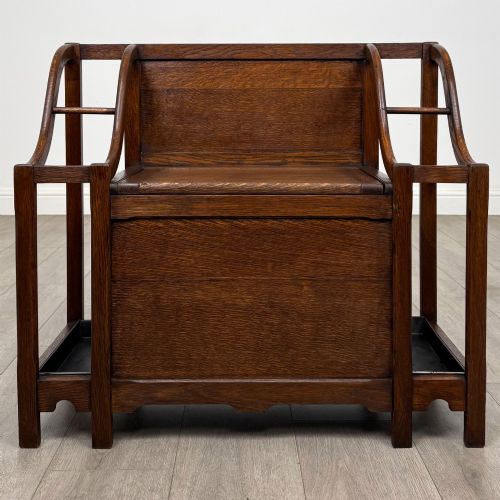
An antique hall settle bench serves as robust, high-backed seating historically placed in entryways to shield inhabitants from cold air currents. These pieces range from simple panelled forms to complex box settles with integrated storage compartments beneath the seat.
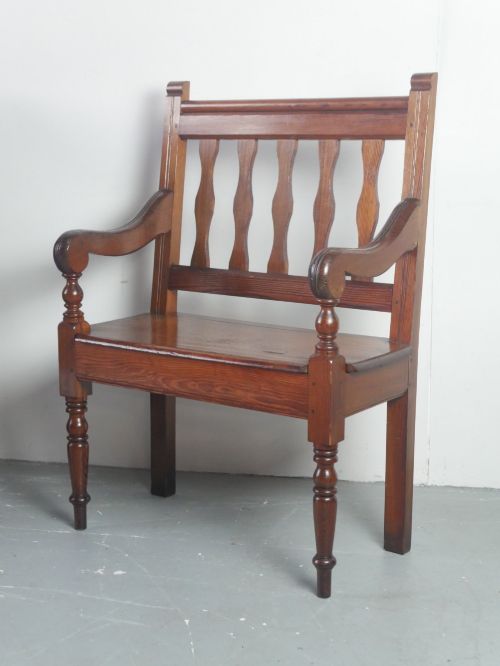
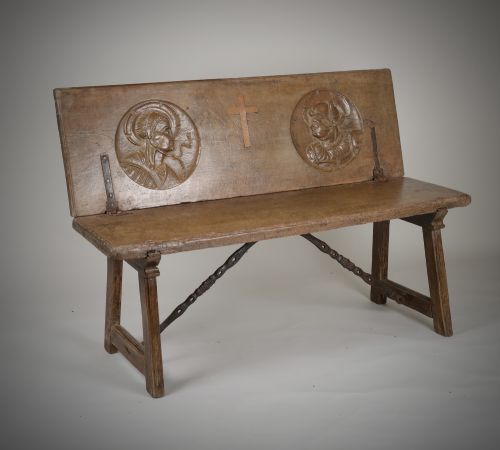
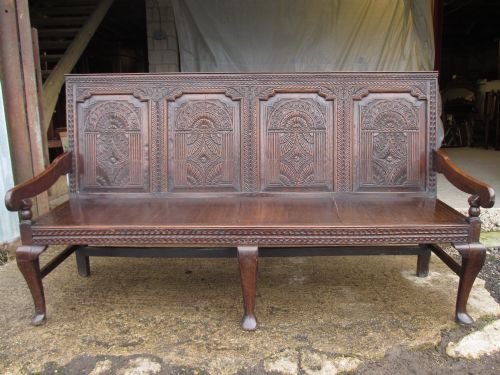
The selections on this page span several centuries, with prominent representation from the 18th century, Georgian, and Victorian eras. Alongside traditional British oak examples, one encounters continental variants fashioned from walnut, chestnut, and painted hardwoods.
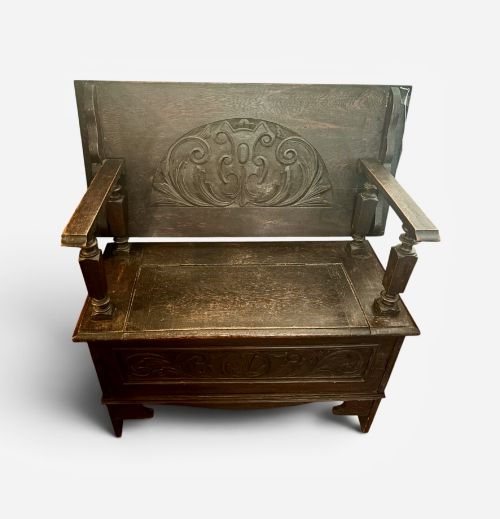
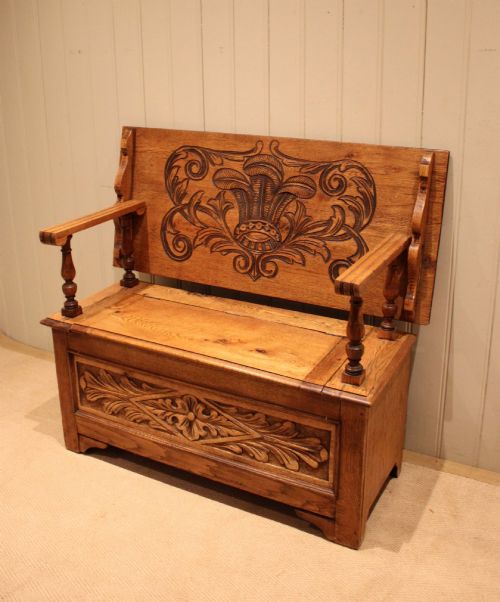
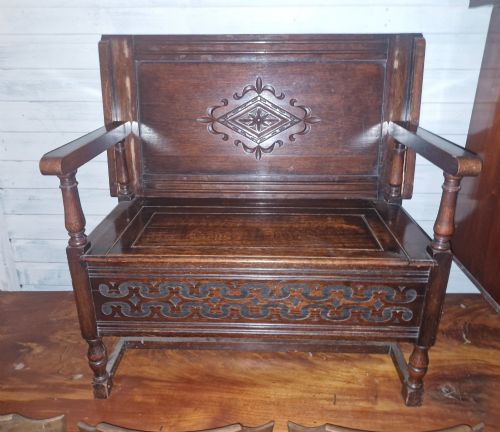
Formations vary from narrow one-seater hall seats to grand six-foot high-back benches. Certain items feature folding mechanisms, allowing the backrest to pivot forward and convert the seating unit into a table.
How They Were Made
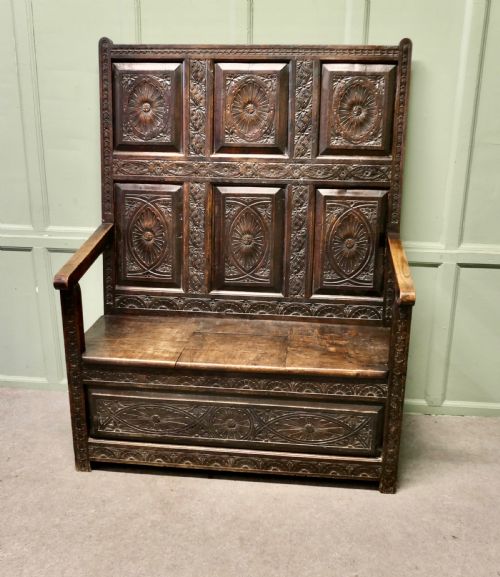
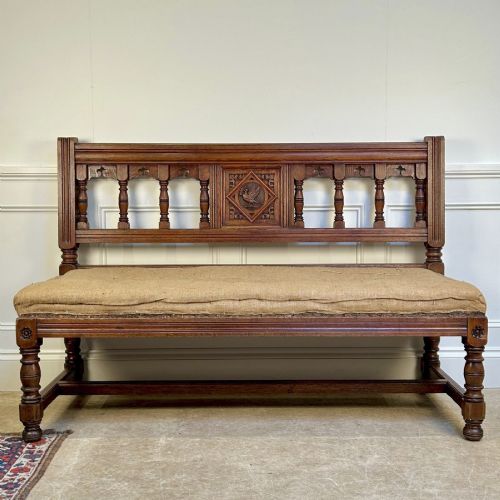
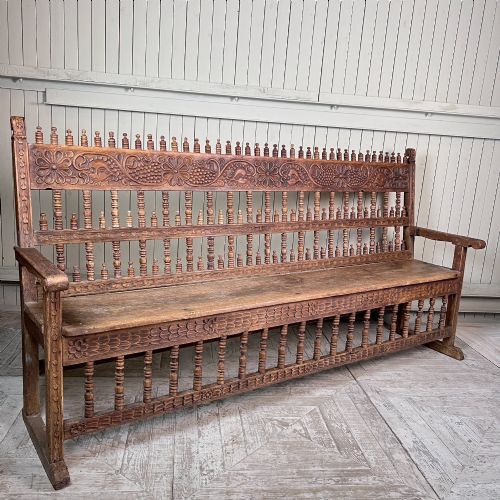
Carpenters relied predominantly on solid oak, utilising traditional mortise and tenon joinery secured with wooden pegs to construct stable frameworks capable of withstanding heavy daily use. Panels were commonly hand-carved with geometric motifs, linenfold patterns, or intricate Jacobean revival designs.
Secondary timbers such as ash, pine, and mahogany appear in specific regional iterations, while auxiliary details incorporate iron hinges, brass fittings, and rush or leather seating surfaces. Wax finishes were regularly applied to nourish the timber and develop a deep natural sheen over decades of service.
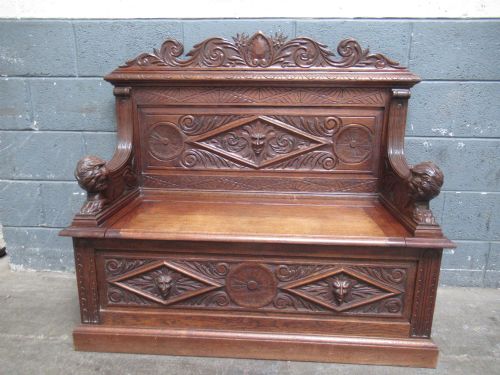
Several examples incorporate mysterious green man carvings, peering out from the timber to watch over your hallway.
What Varies in Quality
The standard of a piece depends heavily on the integrity of the timber and the depth of its construction. Heavy, uncompromised solid oak frames with original panel work and unaltered box compartments command greater admiration than lighter assemblies or those altered during later restorations.
Carving execution defines the upper tier of craftsmanship. Crisp, deeply chiselled details like green man masks or panelled tracery demonstrate superior artisan skill compared to shallow, mechanical stamping found in later revival periods.
GIllows·James Shoolbred & Co.
The Antique Hall Settle Bench Glossary
- Settle
- A wooden bench with high backboards, solid arms, and frequently a closed box base designed to keep draughts away from the sitter. These functional seats formed central fixtures in pre-central heating domestic interiors.
- Box Settle
- A variant featuring a hinged seat lid that opens to reveal a deep storage chest underneath. This compartment historically stored blankets, boots, or household provisions.
- Monk's Bench
- A convertible piece of furniture possessing a pivoting backrest that folds flat over the arms to form a table top. This dual-purpose design conserved valuable floor space in cramped historical dwellings.
- Cassapanca
- An Italian wooden bench featuring a storage box base and backrest, often elaborately carved or inlaid. These grand pieces functioned as both seating and luxurious storage chests in continental halls.
- Linenfold
- A style of wood carving that mimics the appearance of folded linen fabric, popular in Tudor and Jacobean joinery. This decorative technique added texture and visual movement to flat wooden panels.
Antique Hall Settle Bench: Frequently Asked Questions
What is a monk's bench?
A monk's bench is a dual-purpose wooden seat with a hinged back that flips forward onto the armrests to create a table. This clever adaptation provided a functional dining surface in smaller historical rooms.
They combine enclosed box storage beneath the seat with sturdy timber construction, making them versatile accent pieces for modern hallways and entryways.
How were settle benches used?
Settle benches were placed near hearths or entranceways to block cold incoming draughts from sweeping across stone floors. The high wooden back and solid side wings trapped body heat and shielded occupants.
In addition to seating, the enclosed base compartment served as a secure chest for storing heavy garments, firewood, or household items.
How do I date an oak settle?
Dating relies on observing construction marks, joint types, and carving styles characteristic of specific eras. Early 18th-century pieces display hand-riven timber, pegged joinery, and simpler panel layouts without mass-produced hardware.
Later Victorian and Arts and Crafts examples often introduce machine-sawn elements, revived historical motifs like Gothic tracery, and lighter proportions suited for formal entrance halls.
Where should I place a hall settle?
These benches fit naturally against wide hallway walls where their high backs and substantial timber presence can anchor the room. They offer practical seating when putting on shoes while providing hidden storage inside the base.
Ensure you measure both floor space and ceiling clearance, as high-back and canopy-top variants require adequate vertical room to sit properly within a modern interior.