





Dark Wood Entry Bench
A dark wood entry bench is a practical and historic piece that anchors a hallway with rich grain and traditional craftsmanship.
Dark Wood Entry Bench
When you search for a dark wood entry bench, you encounter sturdy seating designed for hallways, corridors and boot rooms from various centuries. These forms include tall-backed settles, lift-up storage seats, hall stands and monastic benches built for daily utility.
The versions you are most likely to meet on this page span the sixteenth century through to the nineteen-twenties, incorporating periods such as the Victorian era, Edwardian period and Regency style. Oak is the primary timber found here, alongside mahogany, walnut, pine and Chinese hardwood.
Makers shaped these hall seats to serve as functional furniture near the front door, often integrating storage compartments beneath hinged lids or high panelled backs to block draughts. Their forms draw upon Renaissance, Gothic Revival, Flemish Baroque and Jacobean design vocabularies.
How they were made
Cabinet makers and joiners utilised solid timbers such as oak, mahogany and walnut, constructing frames through traditional mortise and tenon joints. Panels were frequently carved by hand with relief patterns, strapwork, scrollwork and linenfold motifs.
Many examples incorporate secondary materials like brass for coat hooks and fittings, wrought iron for structural reinforcement, and occasionally glass or pine. Construction methods prioritized durability, ensuring these heavy pieces could withstand the demands of a busy entrance hall.
Some nineteenth century hall stands still retain their original drip trays for damp umbrellas, ready for rainy British mornings.
What varies in quality
The standard of carving and the selection of timber define the upper tier of these pieces, where depth of relief and grain figure show deliberate artistry. Pieces with integrated storage compartments or combined functions, such as hall stands with mirrors and umbrella wells, display more complex joinery.
Proportion and the integrity of the original construction separate finer examples from heavily altered or later assembled items. The crispness of the hand-carved details and the preservation of the primary wood surface indicate the level of care taken during manufacture.
The Dark Wood Entry Bench Glossary
- Settle
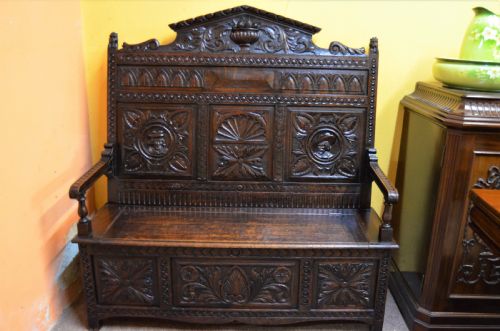
- A wooden bench with a high back, solid arms, and often a storage box beneath the seat. Historically placed near entryways to keep out cold draughts.
- Monks bench
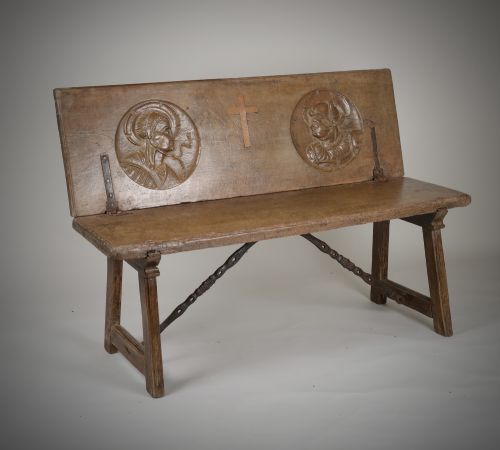
- A convertible piece of furniture that functions as a table with a tilting back that transforms into a bench seat. These typically feature carved oak panels.
- Hall stand
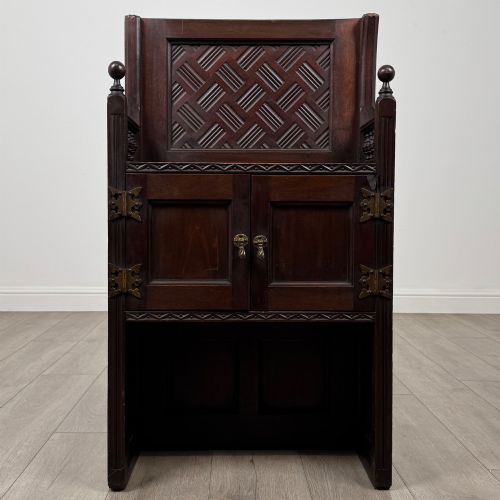
- An entrance piece combining a bench or seat with a panelled back, coat hooks, and sometimes a mirror or umbrella stand. They appear frequently in Victorian and Edwardian iterations.
- Mortise and tenon
- A traditional joint where a projecting tongue fits snugly into a matching hole, securing wooden frame components without metal fasteners.
- Linenfold
- A style of relief carving used on wooden panels to imitate folded linen fabric, popular in early period furniture.
Dark Wood Entry Bench: Frequently Asked Questions
What is a monks bench?
A monks bench is a dual-purpose item featuring a hinged top that converts a table into a high-backed seat. This design maximised space in historic hallways and living areas.
Many examples include a box compartment beneath the seat for storing blankets or outerwear, making them practical for modern entryways.
How do I style a hall bench?
Position your bench against a main hallway wall to establish a focal point as you enter the home. Add simple cushions or textiles to soften the timber and provide comfort.
Ensure there is adequate clearance for doors to open and for people to sit down to remove shoes.
Are these benches comfortable?
Historic hall seating was built for temporary use rather than lounging, often featuring upright wooden backs and solid seats. Adding loose squab cushions improves comfort for daily seating.
The primary purpose of these pieces historically was practicality and welcoming guests rather than extended relaxation.
How do I identify oak furniture periods?
Examine the colour, tool marks, and construction methods to gauge the age of oak pieces. Early examples from the sixteenth and seventeenth centuries show hand-riven timber and pegged joints.
Later Victorian and Edwardian revivals often utilise machine-sawn boards while replicating earlier carved styles like Jacobean strapwork.