



Antique Green Wine Glasses
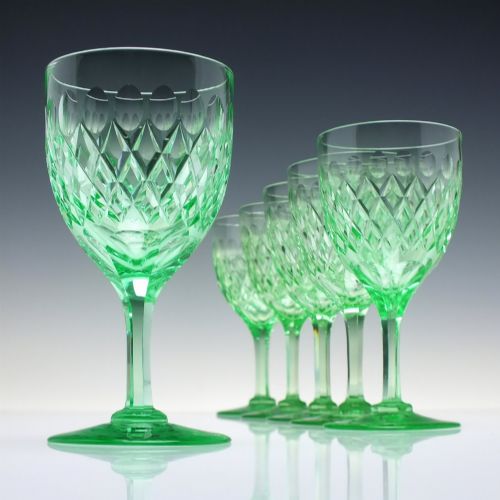
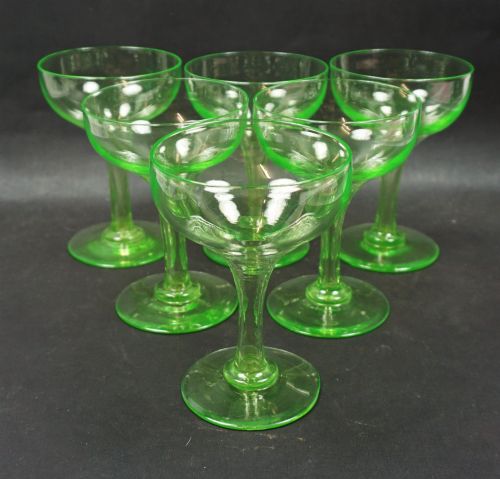
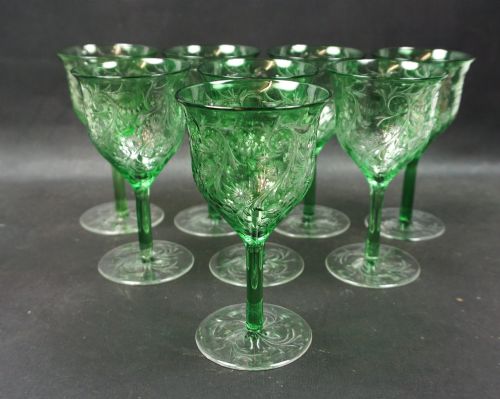
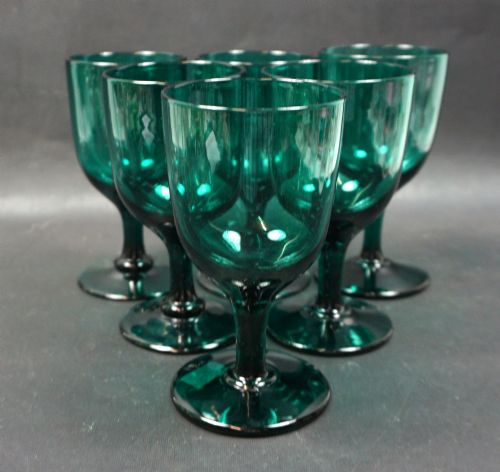
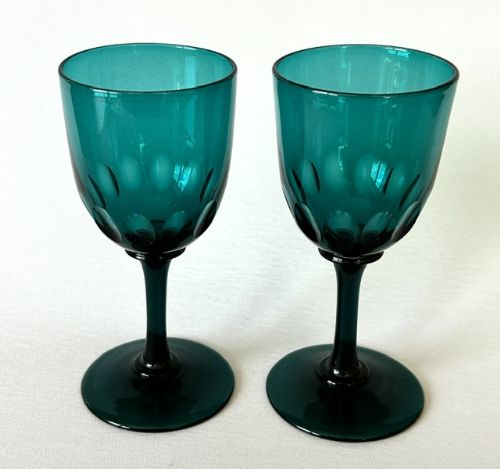
These antique green wine glasses bring rich colour and tactile weight to the table, spanning Georgian ribs to Victorian enamels and Edwardian roemers.
Antique Green Wine Glasses
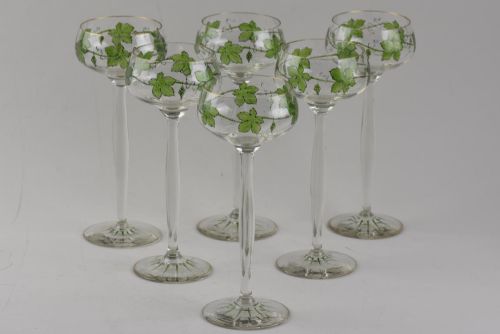
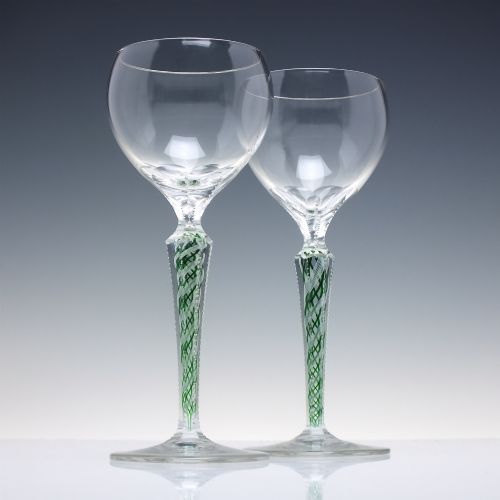
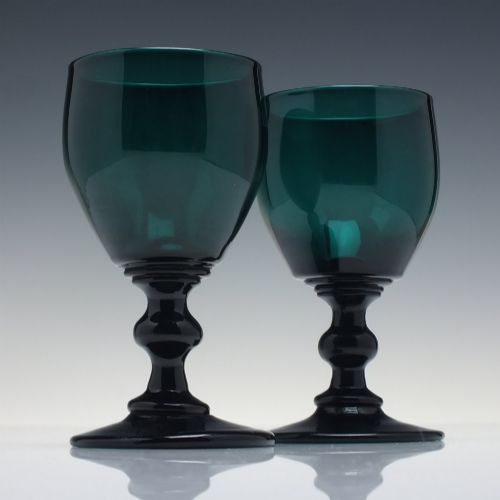
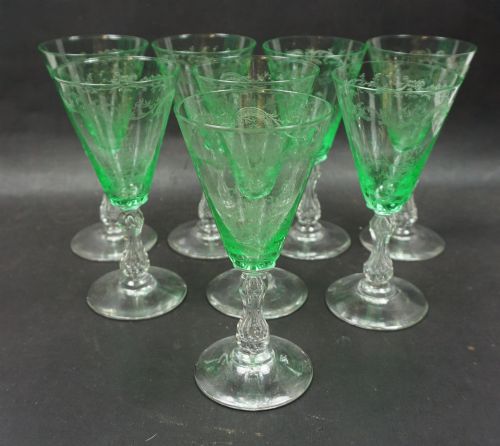
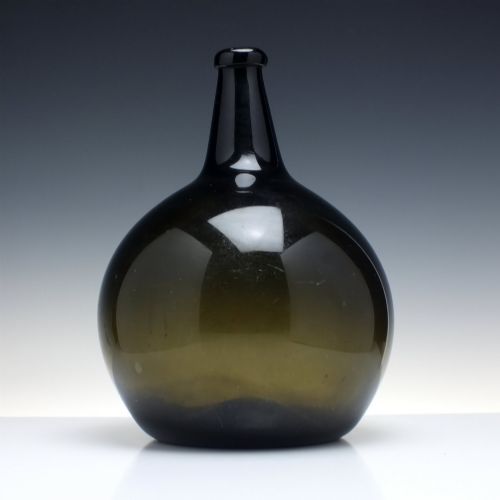
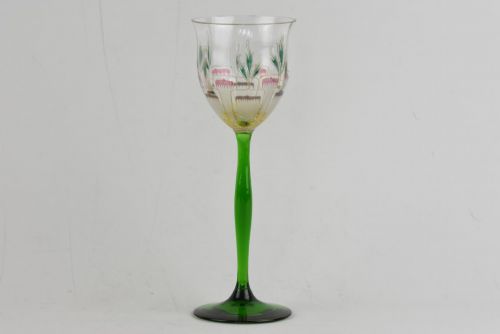
When searching for antique green wine glasses, collectors encounter vessels formed from hand-blown glass, lead glass, and coloured glass across various historical eras. The pieces on this page include Georgian dram glasses and rummers, Victorian emerald and aqua stems, and later hock glasses from continental workshops. Forms range from simple tulip shapes and flutes to elaborate roemers with hollow stems.
How they were made
Glassmakers utilised traditional blowing techniques, often employing rib moulds to create texture in the walls of Georgian and Victorian vessels. Metal oxides added to the batch produced the distinctive green shades, from pale turquoise and apple green to dark emerald and Bristol tones.
Decoration required specialist intervention, including polychrome enamel painting, armorial detailing, and overlay cutting where a coloured glass layer is cut back to reveal clear crystal beneath.
Antique Green Wine Glasses Retail Price Guide 2026
Typical asking prices for green wine glasses among the pieces listed under this phrase on Sellingantiques today, from the lower quarter to the upper quarter. They describe what is for sale here now, not the wider market.
Some Victorian wine glasses glow under ultraviolet light because their makers laced the green glass with uranium.
What varies in quality
The skill of the glassblower dictates the balance and weight of the stem, visible in the uniformity of rib-moulded bowls and the stability of hollow stems on roemers. Superior pieces display crisp optical effects in the glass without distracting bubbles or heavy distortion.
Surface ornamentation separates standard tableware from masterworks, evident in the precision of enamel painting, gilding, and cut-crystal overlay work executed by notable continental and English houses.
Archibald Knox for Liberty Co·Baccarat·Frits Hechert·Lobmeyer·Richardson·St Louis Massenet·Theresienthal
The Antique Green Wine Glasses Glossary
- Roemer
- A traditional continental drinking vessel featuring a large bowl resting on a cylindrical stem decorated with prunts, often with a hollow interior. These forms developed in Germany and the Low Countries before being adopted across Europe.
- Hock glass
- A tall-stemmed goblet traditionally utilised for pouring white wine or hock. Makers frequently produced these in coloured crystal with elaborate cut or enamelled decoration.
- Rib moulded
- A decorative technique where molten glass is inflated inside a ribbed pattern mould to create raised vertical ridges along the body of the vessel. This method adds grip and visual texture to Georgian and Victorian pieces.
- Vaseline glass
- A transparent yellowish-green glass coloured with uranium oxide that exhibits a distinct green fluorescence under ultraviolet light. Victorian manufacturers popularised this material for decorative tableware and novelties.
- Ewer
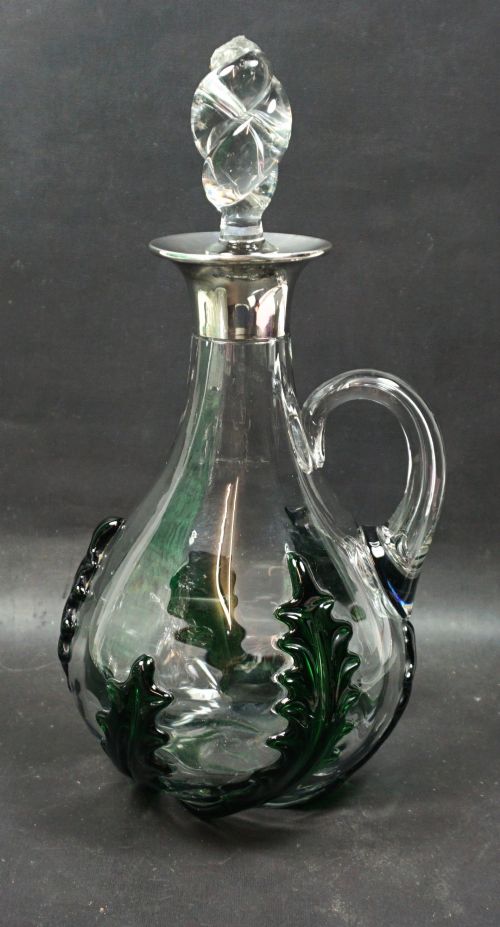
- A large jug with a wide spout and a looped handle, designed for serving liquids at the table. Antique examples often combine coloured glass bodies with metal mounts in pewter or silver.
Antique Green Wine Glasses: Frequently Asked Questions
How were green wine glasses used?
Historically, these glasses served wine, hock, and drams during formal dining and social gatherings. Their tinted glass often matched specific beverage types or table service themes of the period.
Today, buyers utilise them both as functional tableware for special occasions and as decorative display items in cabinets.
How do I care for antique glassware?
Hand washing in lukewarm water with mild detergent preserves the integrity of delicate enamel work and thin blown walls. Avoiding sudden temperature changes prevents thermal shock and cracking in old metal.
Storing them securely away from edge hazards ensures these fragile historical objects survive for future generations.
How do I tell periods apart?
Georgian examples typically exhibit heavier lead content, simpler rib moulding, and pontil marks on the base. Victorian and Edwardian pieces frequently introduce brighter vaseline tones, elaborate enamel painting, and cut-overlay crystal techniques.
Examining the silhouette, manufacturing marks, and decorative style helps place a piece within its correct historical decade.