



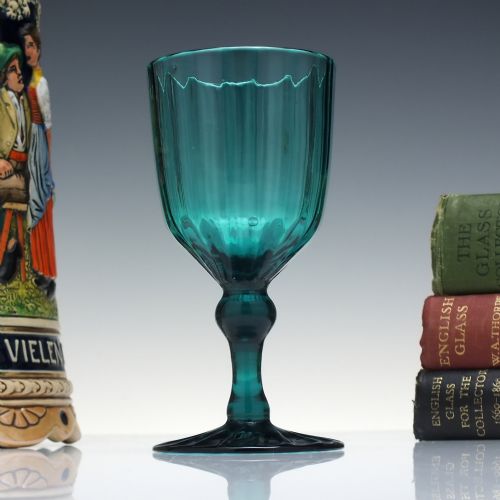


Antique Green Goblets
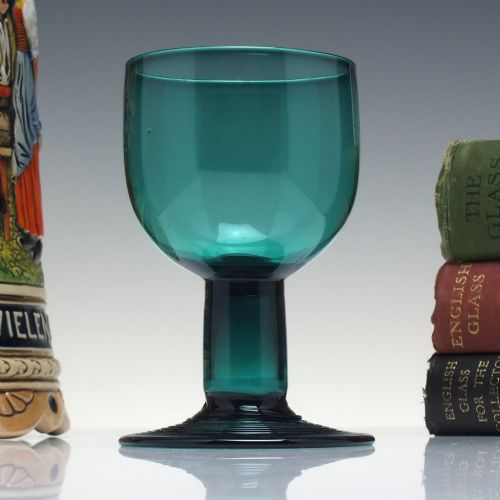
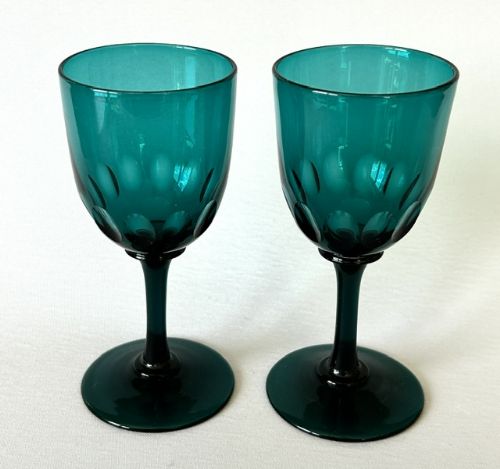
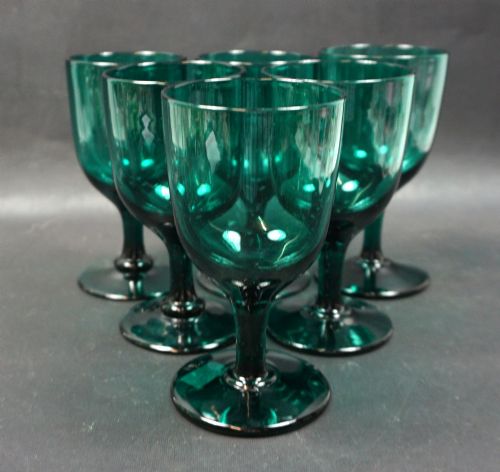
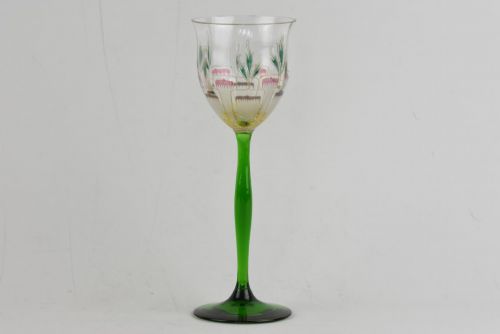
These antique green goblets bring striking depth and saturated tone to the table, spanning Georgian rib moulded vessels to intricate Victorian and Edwardian examples.
Antique Green Goblets
When you search for antique green goblets, you encounter a varied selection of drinking vessels and glassware spanning periods from the Georgian era through to the early twentieth century.
The objects appearing here include wine glasses, rummers, roemers, cordial glasses and champagne coupes in distinct shades ranging from deep Bristol green to turquoise and pale aqua.
Most frequent are English and continental examples, featuring shapes shaped by Georgian, Victorian, Art Nouveau and Arts and Crafts movements.
Materials and methods
The pieces listed on this page utilise glass, lead glass, and cased or over-crystal methods where a layer of green glass overlays clear crystal.
Makers employed free-blowing, hand-blowing, and rib moulding techniques to shape the vessels, frequently finishing surfaces with polychrome enamel decoration or cut facets.
Listings feature periods spanning from the Georgian era through Victorian, Edwardian, and Art Deco phases up to nineteen thirty.
Judging quality
Quality rests upon the crispness of the rib moulding, the clarity of the coloured glass, and the precision applied to enamel work.
Makers such as Lobmeyer, Theresienthal, and Biedermeier workshops achieved superior results through refined handling of material and proportion.
Harry Powell for James Powell·Frits Hechert·Lobmeyer·Theresienthal·Baccarat Massenet
The Antique Green Goblets Glossary
- Roemer
- A traditional Germanic drinking vessel featuring a wide bowl and a large hollow stem adorned with raspberry prunts. These appear frequently in nineteenth-century Bohemian production.
- Rib moulded
- A glass vessel formed by blowing molten metal into a ribbed dip mould to create parallel raised ridges along the body. This technique adds structural strength and visual texture.
- Cased glass
- A method where a layer of coloured glass is fused over a base layer of clear crystal before cutting. This technique reveals the contrasting under-layer through facet cuts.
- Prunt
- An applied blob of molten glass pressed onto the stem or base of a vessel for decoration and grip. They are characteristic of traditional Germanic roemers.
Antique Green Goblets: Frequently Asked Questions
What are antique green goblets?
These pieces are historic drinking vessels produced in various shades of green glass, ranging from deep Bristol tones to pale aqua and turquoise.
They encompass functional forms such as wine glasses, roemers, and rummers originating from Georgian, Victorian, and Edwardian periods.
How were green goblets used historically?
They served primarily for consuming wine, cordials, and liquors during formal dining and social gatherings.
Heavier roemers and rummers were suited to communal toasts and substantial portions, whilst delicate enamelled hock glasses accompanied specialised vintages.
How do I care for antique glass?
Wash these pieces gently by hand using lukewarm water and mild detergent, avoiding sudden temperature changes that can fracture aged material.
Store them securely on stable surfaces away from direct sunlight to preserve the integrity of enamelled decoration and coloured glass.
How do I distinguish Georgian from Victorian pieces?
Georgian examples often display simpler hand-blown forms with rib moulding and pontil marks, reflecting eighteenth-century utilitarian elegance.
Victorian and later pieces frequently introduce richer ornamentation, such as polychrome enamel work, cased crystal layers, and more elaborate nineteenth-century styling.