




Antique Green Drinking Glass
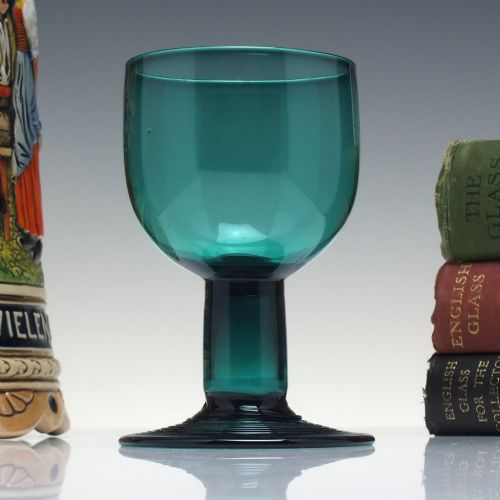
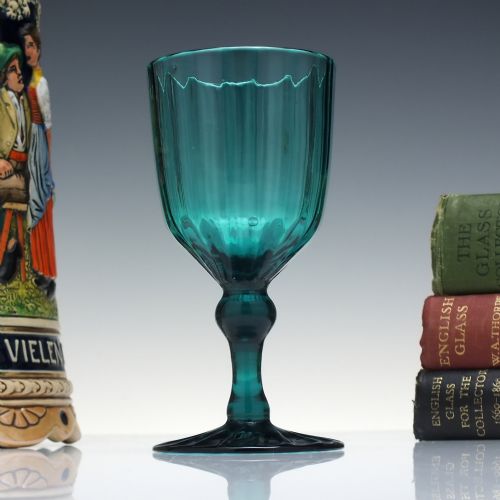
An antique green drinking glass brings deep colour and hand-formed character to the table, whether you seek a Georgian rib moulded wine glass or a Victorian goblet.
Antique Green Drinking Glass
When you search for an antique green drinking glass, you are looking at small vessels intended for wine, spirits, and cordials, spanning the Georgian, Victorian, and Edwardian eras. The selection on this page includes wine glasses, rummers, dram glasses, goblets, and roemers.
Georgian examples lean towards rib moulded bowls and deep turquoise or forest tones, while Victorian iterations stretch to vaseline glass, emerald hues, and taller paired formations. Continental influences also appear through Biedermeier cut pieces and Bohemian enamelled vessels.
The assortment ranges from single tall goblets to matched sets of six or eight tulip shaped glasses. Certain pieces incorporate hollow stems or export roemer designs that reflect specific historical tavern and dining traditions.
Judging quality and craftsmanship
Quality rests on the crispness of the rib moulding, the uniformity of the green hue throughout the metal, and the balance of the stem and foot. Superior pieces display thin, even walls and delicate pontil marks rather than heavy, clumsy proportions.
The precision of the polychrome enamel work and the sharpness of the wheel-cut facets distinguish standard utility vessels from more ambitious decorative goblets. Consistency across a matched set further elevates the standing of the glassware.
The listings on this page span the Georgian, Victorian, and Edwardian periods, featuring materials such as lead glass, vaseline glass, and polychrome enamel.
Lobmeyer·Frits Hechert
The Antique Green Drinking Glass Glossary
- Rib moulded
- Glass formed in a dip mould to create vertical or spiral raised ribs on the body. This technique adds structural strength and visual texture to the vessel.
- Roemer
- A traditional Germanic drinking glass featuring a wide bowl atop a large, hollow cylindrical stem wrapped with prunts. It was frequently used for hock and white wines.
- Vaseline glass
- Glass containing uranium dioxide that exhibits a distinct yellowish-green fluorescence under ultraviolet light. It gained popularity during the Victorian period.
- Polychrome enamel
- Glass decoration executed with multiple colours of powdered glass fused to the surface by heat. It permits detailed pictorial and floral motifs.
- Pontil mark
- The rough scar left on the base of a vessel where the punty rod was detached after blowing. Its presence indicates traditional hand-formed manufacture.
Antique Green Drinking Glass: Frequently Asked Questions
Were these glasses meant for everyday use?
Many of these pieces served as functional tableware for wine, spirits, and cordials during the Georgian and Victorian eras. Wealthy households utilised matched sets for formal dining.
Today, collectors often reserve them for special occasions or display them to showcase their rich historical colours.
How do I tell Georgian green glass from Victorian?
Georgian green drinking glasses frequently feature rib moulding, deeper turquoise tones, and heavy lead metal with pontil scars on the bottom. Forms like dram glasses and export roemers typify this earlier period.
Victorian examples often show brighter vaseline or emerald hues, taller proportions, and occasional wheel-cutting or polychrome enamel work characteristic of later nineteenth-century production.
What is a roemer glass?
A roemer is a traditional drinking vessel featuring a rounded bowl resting on a large, hollow stem decorated with applied prunts. English export versions appear alongside continental examples.
The hollow stem design is an inheritance from earlier Germanic drinking traditions intended to provide a secure grip during feasts.