



Antique Glass Sugar Bowl
An antique glass sugar bowl brings colour and form to the table, combining glassware with precious metal work.
Antique Glass Sugar Bowl
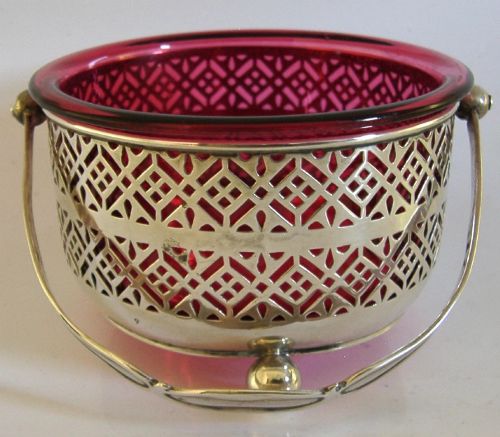
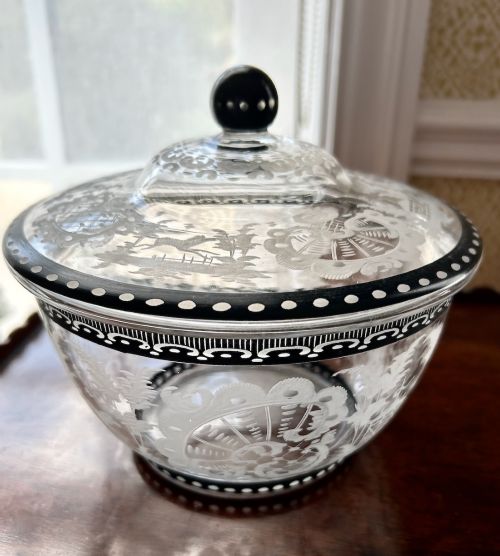
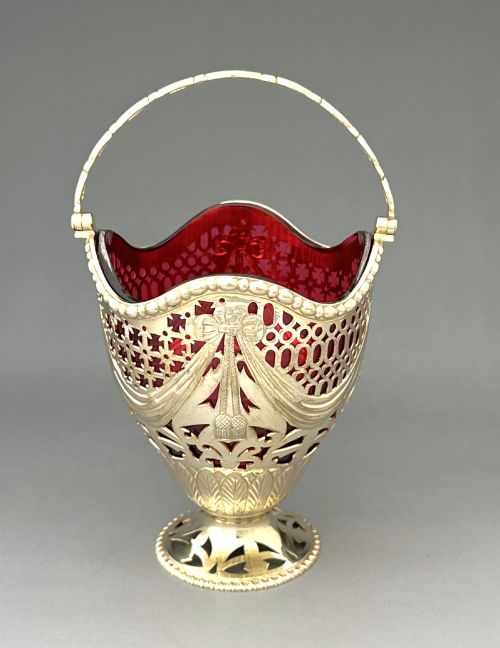
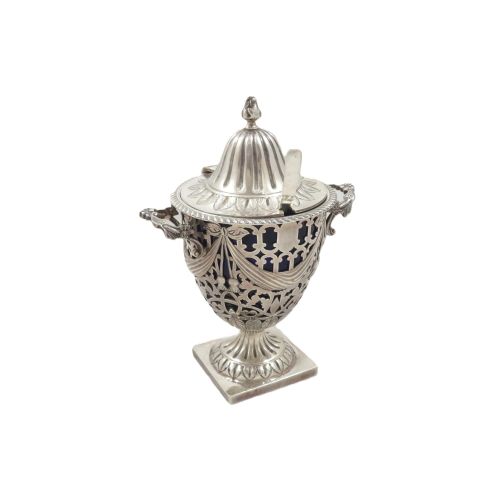
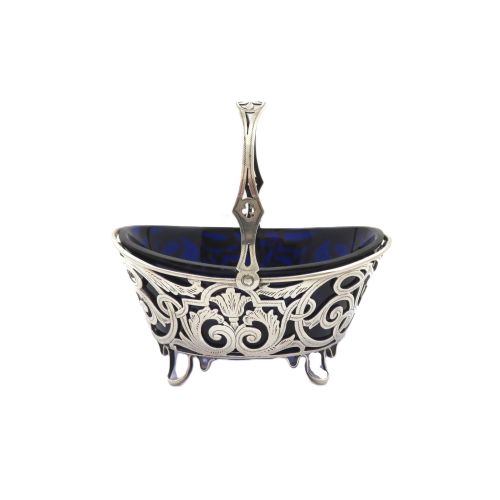
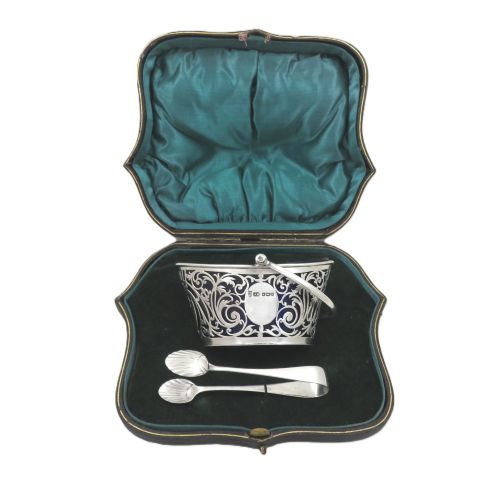
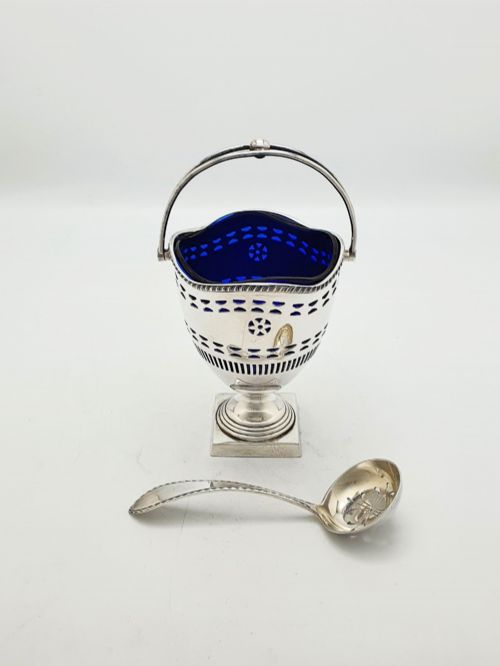
When searching for an antique glass sugar bowl, you encounter vessels designed for sugar storage and table service from the eighteenth century onwards. The selection includes open bowls, lidded jars, and handled baskets fitted with coloured glass liners.
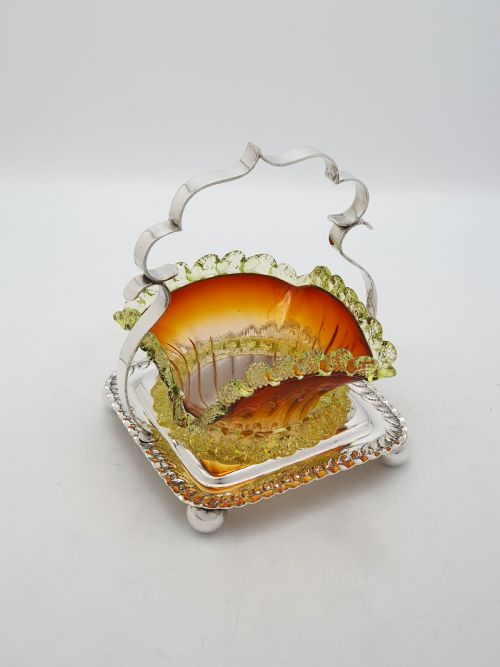
The pieces on this page span the Georgian, Victorian, and Edwardian eras, alongside Art Nouveau and Regency designs. You find rich cranberry, cobalt, ruby, and vaseline glass paired with sterling silver, silver plate, and silver gilt mounts.
Materials and construction
Makers combined blown or cut glass vessels with metalwork frames formed through piercing, casting, and silver-gilt techniques. Liners made of cranberry, cobalt, or vaseline glass sit within openwork silver plate or sterling silver baskets.
Decoration includes hand-painted details, enamel work, engraving, and blue wrythen or latticinio canes. Metal mounts often incorporate swing handles or hinged lids tailored to the shape of the glass insert.
Materials span cranberry, cobalt, ruby, vaseline, and cut glass alongside sterling silver and silver plate.
Factors determining quality
Quality rests on the crispness of the glass cutting, the depth of colour in varieties like cranberry and cobalt, and the weight of the silver or silver plate. Pierced metalwork shows superior craftsmanship when the openwork patterns remain sharp and symmetrical.
The relationship between the glass insert and its metal mount dictates the standard of the piece. Fine examples feature fitted liners that sit securely within hallmarked silver or marked silver-plated frames without movement.
Aldridge and Green·Baccarat·George Fox·W M F
The Antique Glass Sugar Bowl Glossary
- Cranberry glass
- A transparent pinkish-red glass coloured with gold chloride during production. This tone appears frequently in Victorian tableware and baskets.
- Vaseline glass
- A yellow-green glass containing uranium dioxide that produces a distinct greenish-yellow tint. It gained popularity during the late Victorian and Edwardian periods.
- Latticinio
- A technique incorporating opaque white or coloured glass threads twisted within clear glass. This method appears on mid-nineteenth-century European vessels.
- Sterling silver
- An alloy containing a high proportion of pure silver, typically marked with standard hallmarks on sugar baskets and frames. It provides durable structural mounts for glass inserts.
- Silver gilt
- Silver covered with a thin layer of gold applied through chemical or electrochemical methods. This treatment gives the metal mounts a warm golden finish.
Antique Glass Sugar Bowl: Frequently Asked Questions
Are liners and baskets original to each other?
Examine the fit between the glass insert and the metal basket to check for originality. A proper fit ensures the glass rests evenly inside the pierced or cast frame without excess wobble.
Look for matching wear marks on the base of the glass and the interior floor of the metal mount. Consistent age across both materials indicates they belonged together originally.
What is the difference between cranberry and ruby glass?
Cranberry glass uses gold chloride to achieve a lighter, translucent pinkish-red hue. It appears frequently in Victorian baskets and preserve dishes.
Ruby glass displays a deeper, more saturated red tone that often requires closer inspection under light to see through the walls. Both types occur across late nineteenth-century tableware.
How do I identify a Georgian sugar bowl?
Georgian pieces from the eighteenth century often feature hand-blown blue glass paired with pierced silver frames. Look for pontil marks on the base of the glass and restrained, classical ornamentation on the metalwork.
Maker marks and silver assay office stamps help date eighteenth-century sterling silver components. The presence of blue wrythen or Bristol blue glass points towards this earlier period.