


Bohemian Engraved Glass
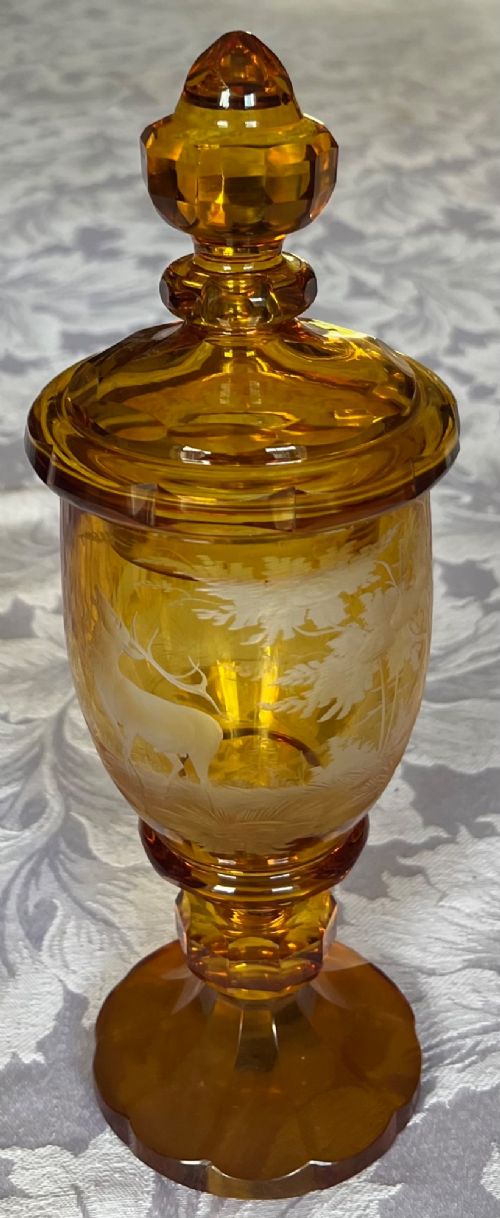
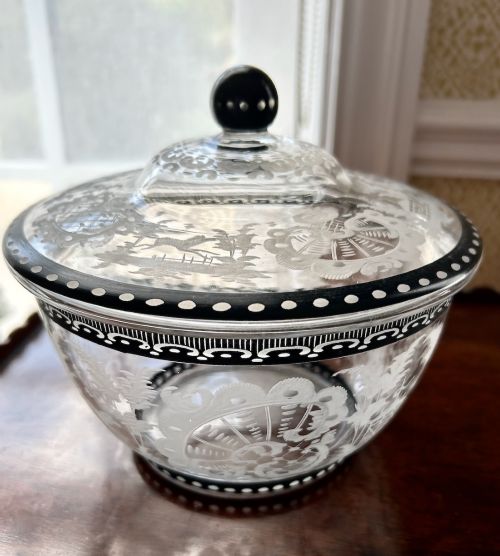
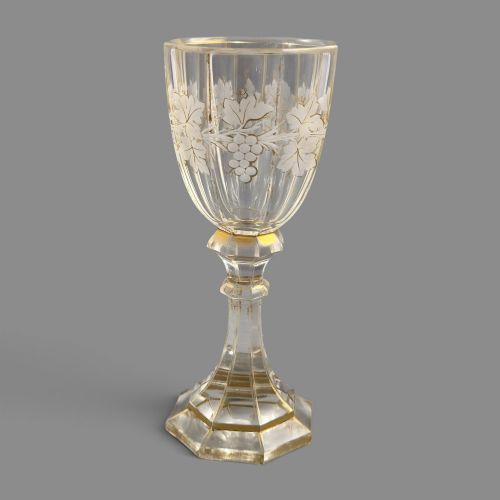
These pieces of bohemian engraved glass combine deep colour and wheel-cut motifs, offering a striking centrepiece or drinking vessel for any room.
Bohemian Engraved Glass
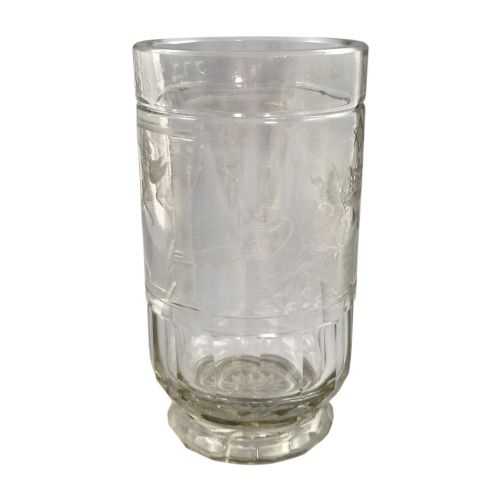
When you search for bohemian engraved glass, you encounter items spanning the seventeenth century through to the twentieth century, with nineteenth-century Victorian pieces appearing most frequently. The selection includes vases, covered jars, decanters, centrepiece bowls, and various drinking vessels such as roemers, wine glasses, tumblers, and beakers.
The objects originate primarily from Bohemia, maintaining a distinct heritage of glassmaking that encompasses styles from the Biedermeier period to the Edwardian era. You will find items rendered in clear crystal alongside deeply saturated tones like ruby red, amber, and blue.
Forms range from modest beakers to massive ceremonial vessels and ornate covered urns. Animal decoration, heraldic motifs, and intricate geometric cutting frequently define the surface of these wares.
How they were made
Glassmakers utilised lead crystal and coloured glass bodies, often applying ruby flash, amber, or cranberry layers over clear glass before cutting through the surface. This layering technique exposed the contrasting colour underneath when worked on the wheel.
Artisans applied wheel-engraving and cutting methods to achieve detailed pictorial scenes, animals, and architectural designs. Gilding and enamel work occasionally supplemented the engraved motifs to add metallic brilliance and polychrome depth.
Listings feature items in ruby glass, amber glass, blue glass, and clear lead crystal across the Victorian and Edwardian periods.
What varies in quality
The depth and clarity of the wheel-engraving set individual pieces apart, distinguishing fluid, highly detailed pictorial work from rigid or shallow incisions. Superior examples display precise control over line and shading across the glass surface.
The richness of the glass body and the execution of supplementary gilding also influence the standard of a piece. High-grade items integrate heavy crystal blanks with balanced proportions and crisp flash-glass layering.
Moser·Egermann
The Bohemian Engraved Glass Glossary
- Ruby flash
- A thin layer of red glass applied over a clear glass body before cutting and engraving. This technique creates high contrast when the wheel cuts through the coloured exterior.
- Roemer
- A traditional Germanic or Central European wine goblet featuring a wide bowl and a decorated cylindrical stem. They often appear in amber or green glass within this tradition.
- Wheel-engraving
- A technique where small rotating copper or stone wheels held against a lathe carve designs into the glass. Artisans use abrasive powders to cut deep, precise images.
- Lead crystal
- A heavy, clear glass containing lead oxide that increases brilliance and weight. It provides a stable, luminous medium for deep facet cutting.
- Masonic beaker
- A ceremonial vessel decorated with fraternal symbols and emblems. These historical drinking vessels often record specific dates or names from the nineteenth century.
Bohemian Engraved Glass: Frequently Asked Questions
What periods do these glass pieces come from?
The listings encompass items from the seventeenth century through to the early twentieth century. Nineteenth-century Victorian examples appear most often.
Earlier pieces from the seventeen-hundreds also surface alongside twentieth-century items from nineteen-twenty.
How do I identify ruby flash glass?
Ruby flash consists of a thin ruby-red coating applied over a clear glass body. You can often spot the clear glass underneath where the engraving wheel has cut through the red layer.
This creates a strong contrast between the deep red surface and the clear glass beneath.
What types of drinking vessels are available?
The selection includes wine glasses, roemers, tumblers, and large beakers. Many feature amber or ruby coloration paired with wheel-cut decoration.
Several examples originate from the Victorian era and reflect traditional Central European forms.