




Covered Glass Jars
These covered glass jars span Victorian display domes, Georgian butter dishes, and apothecary vessels designed to protect or contain.
Covered Glass Jars
When you search for covered glass jars on this page, you encounter a diverse assortment ranging from large Victorian and Edwardian display domes with wooden bases to functional vessels like apothecary jars, condiment containers, and butter dishes. The domestic examples include Georgian cut glass items, sweetmeat jars, and sugar bowls, while the larger protective covers often house taxidermy, clocks, or botanical specimens.
The selection reflects production across several centuries, with nineteenth century and Victorian items forming a substantial portion of the listings alongside Edwardian and earlier Georgian pieces. These objects serve distinct purposes, split between decorative tablewares with fitted covers and upright protective display cloches mounted on timber plinths made of oak, beech, pine, or ebonised wood.
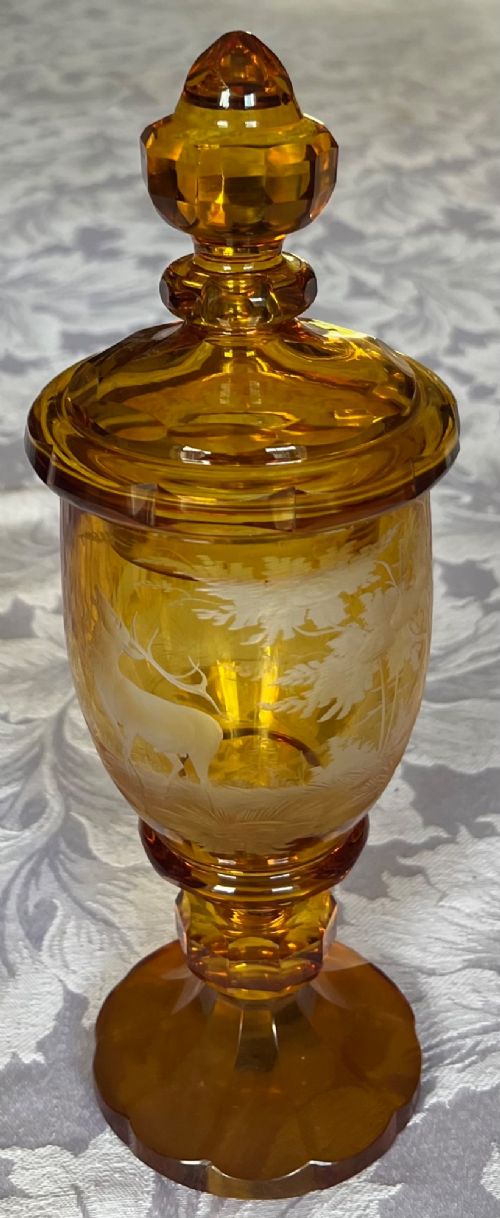
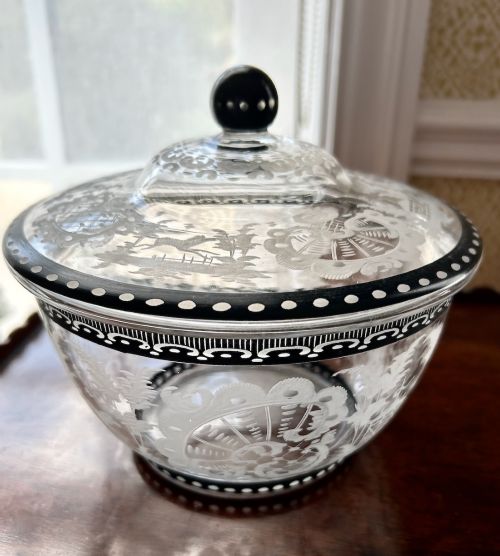
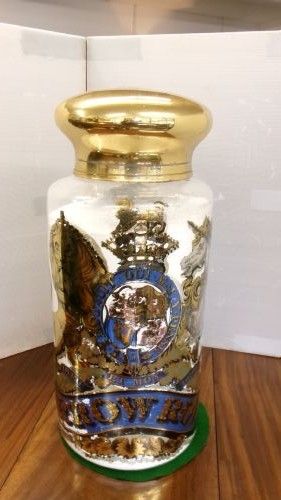
Origin and styling vary noticeably across the inventory, encompassing English manufacture, French pieces from Baccarat, and Bohemian cut and etched works. Buyers find everything from small dressing table domes to grand punch bowls and apothecary jars labelled for contents such as arrowroot or gelatine.
Materials and technique
The objects combine blown or cast glass with supporting elements of wood, brass, fabric, and occasionally silver mounts. Lead crystal and standard glass receive surface decoration through cutting, engraving, etching, and enamel application, producing faceted patterns or pictorial designs.
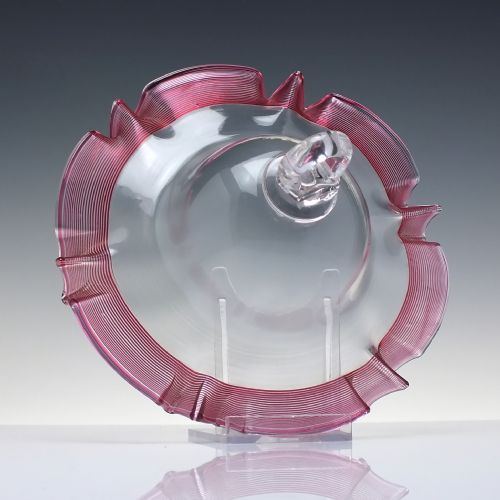
Bases for display domes utilise turned or joined timber such as oak, beech, and pine, sometimes ebonised to contrast with the transparent glass above. Decorative vessels incorporate specialised glass techniques like latticinio canes, decalcomania, and applied coloured enamels as seen in Mary Gregory pieces.
One seasonal offering includes a cut glass pumpkin jar ready for a vintage Halloween punch.
Judging quality
Distinctions in quality rest upon the clarity and weight of the glass, the precision of the cutting or engraving, and the integrity of any associated mounts and wooden bases. Deep wheel-cut facets and crisp etched motifs on Bohemian or Georgian vessels indicate higher workshop standards than simpler mould-blown alternatives.
For protective domes and clock cases, the thickness and uniform pull of the blown glass cover combined with the proper seasoning and joinery of the wooden plinth determine the overall execution. Fitted lids on jars and condiment containers should sit true without excessive wobble.
Baccarat
The Covered Glass Jars Glossary
- Display Dome
- A glass cover used to protect delicate objects such as taxidermy, clocks, or botanical specimens. These are typically mounted on a turned wooden base made of pine, oak, or beech.
- Latticinio
- A glassblowing technique involving opaque white or coloured glass threads embedded within clear glass. This method often creates delicate cane rims or swirling patterns on bowls and jars.
- Sweetmeat Jar
- A covered glass vessel intended for holding small confectionery items or sweetmeats. These pieces date frequently from the nineteenth century and sit on pedestal feet.
- Decalcomania
- A decorative method using transferred prints applied to the interior of glass vases. The technique produces layered illustrative effects popular in the nineteenth century.
- Cut Crystal
- Glass with a high lead content shaped by cutting and polishing facets into the surface. This process enhances the refractive qualities and weight of the material.
Covered Glass Jars: Frequently Asked Questions
What were glass display domes used for?
These glass covers protected fragile ornaments, taxidermy specimens, and clocks from dust in period homes.
They allowed delicate collections to remain visible while keeping the interior environment stable.
How do I clean antique glass jars?
Warm water and a soft cloth suit most glass surfaces without risking old engraving or enamelwork.
Harsh chemical cleaners and abrasive scrubbing pads should be avoided to protect the original finish.
Are apothecary jars airtight?
Most antique glass jars and covers sat closely together but lacked modern rubber sealing gaskets.
They served to keep dry contents like arrowroot or gelatine accessible yet free from casual dust.
How do I date a glass dome?
The thickness of the glass, the presence of subtle bubbles, and the construction of the wooden base provide clues.
Victorian and Edwardian examples often feature heavier turned timber plinths compared to earlier variants.