




Cut Crystal Urn
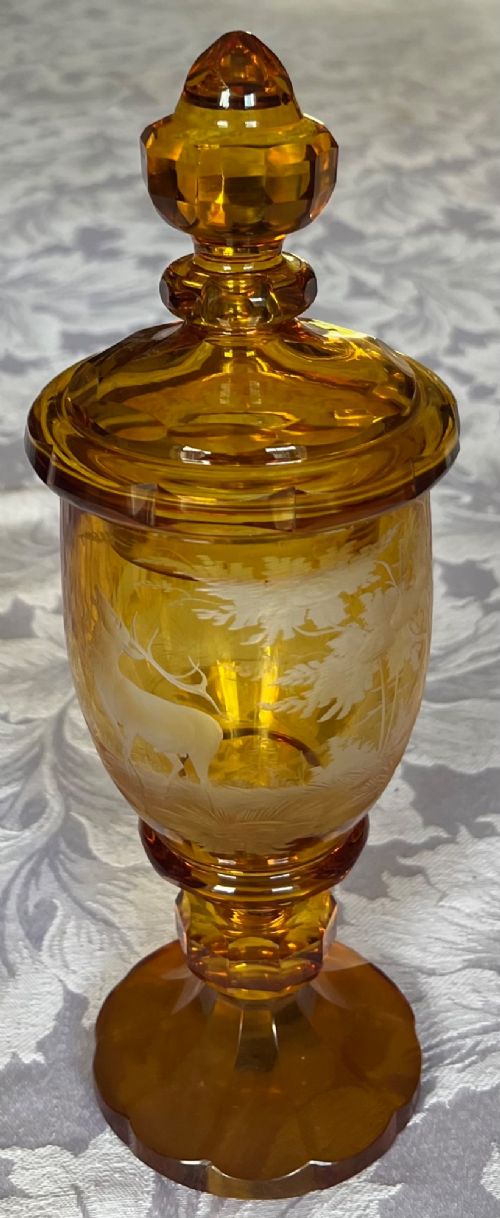
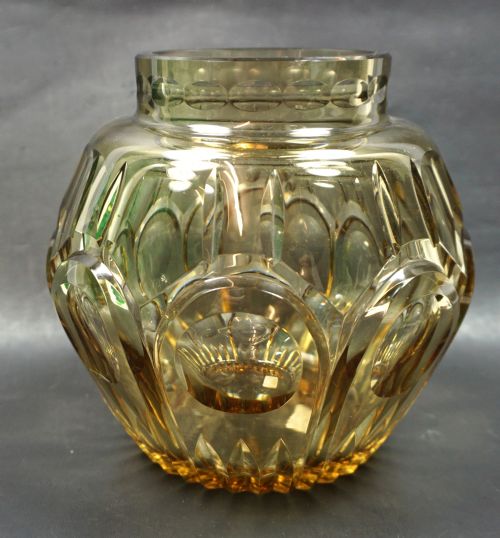
A cut crystal urn carries the light of the room through deep facets, offering a stately focal point for a mantelpiece or side table.
Cut Crystal Urn
When searching for a cut crystal urn, buyers encounter an array of decorative jars, lidded vases, and heavy coolers spanning the nineteenth and twentieth centuries. These vessels combine functional storage with ornate display, emerging in forms from traditional classical silhouettes to striking Art Deco geometries.
The pieces on this page lean heavily towards Victorian and twentieth-century examples, including Bohemian cased glass and French ice buckets. Covered sweet jars, table lamps, and wine coolers also populate the selection, showing the broad domestic application of heavy glasswork.
Originating from English, French, and Belgian workshops, these objects reflect distinct regional preferences in glass colour and cutting depth. A buyer is most likely to meet Victorian lidded jars or coloured Art Deco vessels when browsing this specific category.
Markers of distinction
Quality in a cut crystal urn rests on the crispness of the wheel-cut facets and the depth of the polish within the grooves. Superior pieces display sharp, precise edges that refract light cleanly, whereas lesser examples show softness in the cutting and dullness in the final polish.
The weight of the lead crystal and the balance of the proportions dictate the presence of the piece in a room. Coloured overlay work also demands exceptional skill from the glassblower to ensure even thickness across the cased layers.
Several lidded jars spent their youth holding fancy biscuits before retiring to the mantelpiece.
Charles Graffart for VSL·Joseph Simon for Val St. Lambert
The Cut Crystal Urn Glossary
- Cut crystal
- High-clarity glass containing lead oxide, shaped by grinding and polishing geometric patterns into the surface. This material is heavier and more refractive than standard glass.
- Cased glass
- A vessel formed of two or more distinct layers of glass, often in contrasting colours, where the outer layer is cut away to reveal the colour beneath. This technique creates a dramatic two-tone visual effect.
- Sweetmeat jar
- A covered vessel historically used to hold small confections, sweetmeats, or dried fruits on a dining table or sideboard. These often feature decorative faceted lids and substantial bases.
- Regency
- An English design period spanning the early nineteenth century, characterised by classical restraint and robust proportions. Pieces from this era often display deep diamond cutting.
Cut Crystal Urn: Frequently Asked Questions
How do I clean a cut crystal urn safely?
Wash the vessel by hand in lukewarm water using a mild, non-abrasive detergent. Avoid sudden temperature changes to prevent thermal shock to the heavy glass.
Dry the piece immediately with a lint-free cloth to maintain the brilliance of the cut facets and avoid water spots.
What were cut crystal urns originally used for?
These lidded vessels served primarily as ornamental centerpieces, decorative storage jars for sweetmeats, or refined wine coolers on dining tables. Their substantial weight and secure lids kept contents protected while adding a decorative presence to formal rooms.
Over time, many of these lidded forms transitioned into pure display pieces or were adapted into table lamps.
How can I tell a Victorian urn from a later piece?
Victorian examples often feature heavier lead crystal with deep diamond or strawberry cutting, sometimes accompanied by silver mounts. The forms tend to follow traditional classical or ornate Victorian silhouettes with substantial lidded tops.
Twentieth-century pieces from the Art Deco era introduce coloured glass bodies like sapphire blue or green, alongside cleaner geometric lines.
Are these urns durable enough for everyday use?
Heavy lead crystal offers robust structural integrity, but the intricate cut edges and rims remain vulnerable to sharp impacts. With careful placement away from high-traffic edges, they withstand normal display conditions reliably.
Lidded jars and decorative bowls function well for storing small items if handled gently during removal and replacement of the cover.