



Amber Cut Glass
Amber cut glass brings warmth and rich colour to interiors through faceted vessels, lighting and dressing table accessories.
Amber Cut Glass
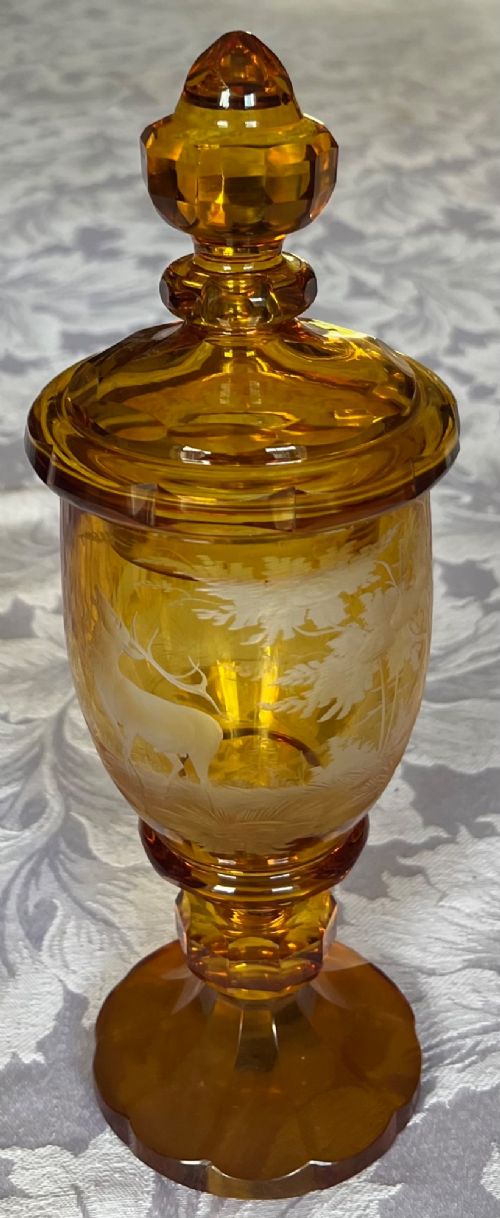
Amber cut glass encompasses decorative objects from the Georgian, Victorian, Edwardian and Art Deco periods, ranging from table glassware to lighting. Buyers encounter scent bottles, decanters, vases, salts and chandeliers shaped by wheel-cutting and engraving.
The material appears in domestic settings as functional tableware and dressing accessories, alongside architectural elements like shop window panels and door handles. Bohemian and English makers dominate the earlier production, while Czech and French studios emerge later.
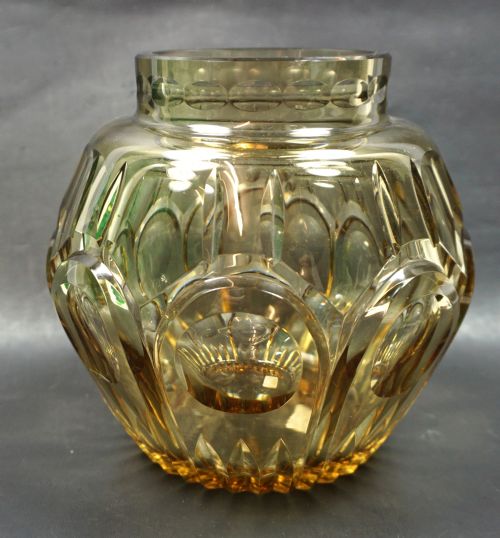
Vessels span deep amber tones alongside lighter straw and topaz shades, often combined with silver mounts or clear crystal layers. The forms vary from intimate scent bottles to large twelve-arm chandeliers hung with coloured glass fruits.
Materials and technique
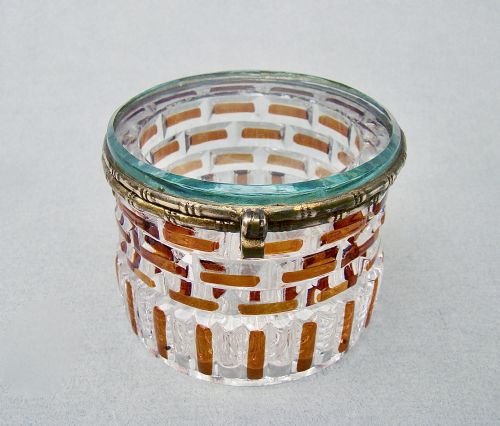
Craftsmen shaped these pieces using lead crystal and coloured glass, often applying an overlayer technique where amber glass coats a clear or contrasting core. Wheel-cutting created sharp facets, geometric patterns and intaglio engravings that caught the light across the surface.
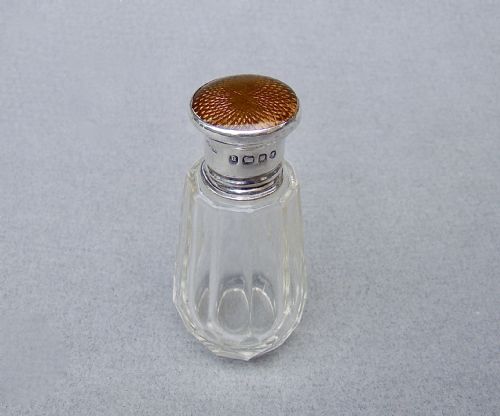
Metal mounts in silver and brass frequently secure the glass on scent bottles and chandeliers, while enamel additions introduce further colour detail. Glassblowers formed the base vessels before specialists carved the decorative cuts by hand on rotating wheels.
Listings feature amber cut glass across the Victorian, Edwardian and Art Deco periods, alongside Georgian examples.
Quality and execution
Excellence in these pieces rests on the crispness of the cutting and the depth of the colour within the glass. Superior items display sharp, cleanly defined facets with no blurring in the engraved details.
The weight of the lead crystal and the integration of metal mounts, such as hallmarked silver collars, separate finer dressing table wares from standard production. Master glasshouses achieved richer, more consistent amber saturation across complex faceted forms.
Henry Perkins·Joseph Simon·Val St. Lambert·Karl Palda·Charles May·Webb
The Amber Cut Glass Glossary
- Intaglio
- A design carved into the surface of the glass rather than raised in relief. This technique creates a sunken motif that appears polished and distinct against frosted or clear grounds.
- Lead crystal
- Glass containing lead oxide which increases weight, brilliance and clarity. It allows deeper, sharper cutting than standard soda-lime glass.
- Overlayer
- A manufacturing method where a layer of coloured glass is fused over a clear or different coloured base before cutting. Cutting through the top layer reveals the contrasting material underneath.
- Finger bowl
- A small bowl filled with water, placed on the table after a course for rinsing fingers. In amber glass, these serve as decorative tableware items.
- Tazza
- An ornamental cup or shallow bowl raised on a stem and foot. These pieces often feature cut glass decoration to display fruit or sweetmeats.
Amber Cut Glass: Frequently Asked Questions
How do I date amber cut glass?
Dating relies on stylistic shifts, manufacturing methods and accompanying metal mounts. Victorian pieces often feature heavy silver collars with hallmarks, while Art Deco items display geometric Czech designs.
Cut patterns also evolve from intricate 19th-century floral intaglio work to stark modernist facets in the 1930s.
Were scent bottles used daily?
Victorian and Edwardian scent bottles served as essential dressing table accessories for holding perfumes and smelling salts. Their silver mounts and stopper seals prevented evaporation.
Many survived in pristine condition because owners kept them within fitted travel cases or displayed them on mirrored trays.
How do I clean antique glass?
Cleaning requires warm water and mild soap, avoiding harsh abrasives that scratch the surface or damage silver mounts. Residue inside narrow decanters and scent bottles lifts best with specialised brushes rather than chemicals.
Vintage chandeliers and window panels need gentle dusting to preserve the integrity of the wired or leaded components.
What is Bohemian amber glass?
Bohemian production refers to glassware originating from the historic regions of Bohemia, renowned for deep colours and skilled cutting techniques. These works frequently utilise layered glass to create striking tonal contrasts.
Their decanter sets, vases and liqueur glasses set a standard for decorative table service across the nineteenth and early twentieth centuries.