




Engraved Glass Dish
An engraved glass dish brings tactile warmth and period pattern to a table, spanning Victorian, Edwardian, and Georgian tastes.
Engraved Glass Dish
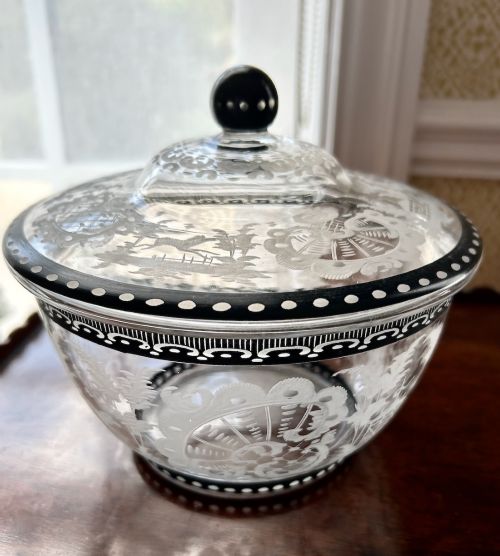
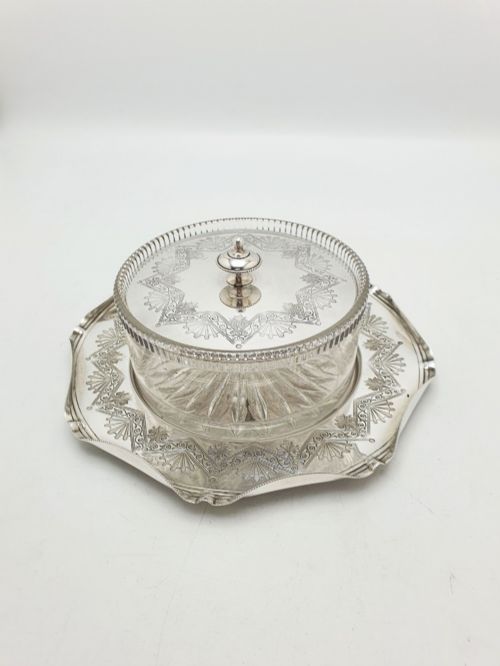
When you search for an engraved glass dish, you encounter a variety of forms designed for practical service and display across the nineteenth and early twentieth centuries. The selection encompasses butter dishes with liners, bowls with covers, trinket boxes, custard cups, tazzas, and decorative plates.
You are most likely to meet Victorian and Edwardian examples on this page, reflecting the periods most commonly represented in the evidence. These items range from simple domestic tableware to pieces finished with silver, silver plate, or 15-carat gold mounts.
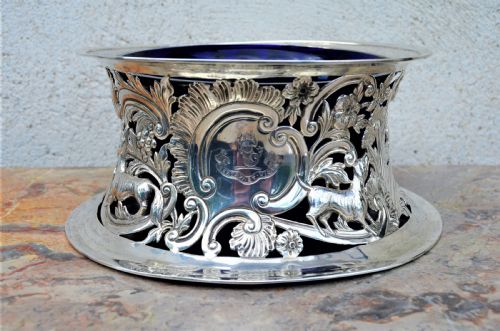
Origins include English and Irish production, with specific styles drawing upon Georgian traditions well into the later Victorian era. The primary material is clear or coloured glass, frequently paired with metalwork such as sterling silver or silver plate.
How they were made
The objects combine glass manufacturing with metalwork and decorative surface techniques, utilising clear glass, cut glass, etched glass, and enamel alongside solid silver, silver plate, and gold. Artisans formed the vessels through blowing and pressing before applying wheel-engraving or acid-etching to create the surface patterns.
Many items incorporate fitted mounts or liners, pairing glass bodies with sterling silver, silver plate, or gold components. Gilded highlights occasionally enhance the engraved motifs on amber or blue glass variants from the later nineteenth and early twentieth centuries.
The listings show items spanning the Victorian, Edwardian, and Georgian periods, utilising glass, sterling silver, silver plate, and enamel.
What varies in quality
Quality depends upon the crispness of the wheel-engraving or etching and the clarity of the glass itself, distinguishing finer decorative work from standard domestic production. The weight and substance of the vessel, alongside the integration of precious metal mounts like sterling silver or gold, elevate certain pieces.
The refinement of ancillary components, such as pierced silver frames, matching lids, or fitted glass liners, marks the distinction between ordinary tableware and superior examples designed for formal display.
The Engraved Glass Dish Glossary
- Tazza
- A shallow ornamental bowl or plate mounted on a stem and foot. This form was frequently utilised for serving sweetmeats or fruit.
- Cut glass
- Glassware shaped and patterned by grinding and polishing wheels. This technique produces deep, light-reflecting facets across the surface.
- Etched glass
- Glass decorated by applying acid to eat away exposed areas of the surface. The process creates fine, matt-finished lines and patterns.
- Silver plate
- A base metal object coated with a thin layer of silver. This method provided the appearance of solid silver for domestic tableware.
- Custard cup
- A small handled or handleless vessel intended for serving individual portions of custard. These items are typically found in matched sets from the Victorian period.
Engraved Glass Dish: Frequently Asked Questions
What were glass butter dishes used for?
These dishes held butter on the dining table, often protecting the contents beneath a matching glass cover or lid.
The glass liner sat inside a decorative metal frame made from silver plate or sterling silver, keeping the butter cool during meals.
How do I distinguish Victorian from Edwardian glass?
Victorian pieces often display heavier proportions and dense, ornate surface engraving or cutting reflecting mid to late nineteenth-century tastes.
Edwardian examples tend towards lighter forms and refined, delicate patterns influenced by early twentieth-century design preferences.
Can I use these dishes daily?
Most pieces function adequately for serving dry foods or display, though delicate engraved surfaces require careful handling.
Items featuring silver plate or antique gold mounts benefit from occasional gentle polishing rather than heavy daily use.