

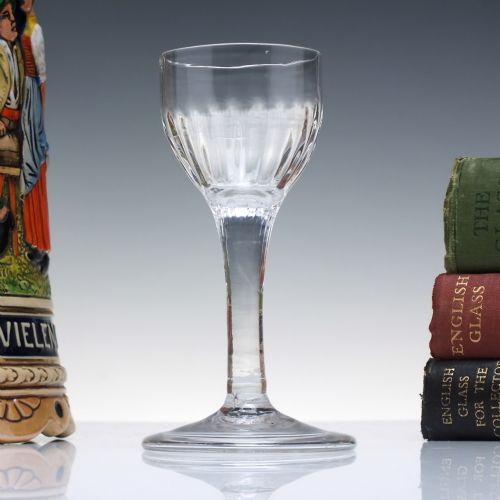


Antique Glass Footed Goblet
These antique glass footed goblets bring tactile weight and historic charm to the table, offering a tangible connection to past drinking customs.
Antique Glass Footed Goblet
An antique glass footed goblet encompasses drinking vessels raised on a distinct base, ranging from robust rummers to delicate cordial glasses. When searching for an antique glass footed goblet, buyers encounter diverse forms shaped for specific beverages like ale, wine, and gin.
The selections span significant periods, most notably the Georgian era alongside examples from the eighteenth and nineteenth centuries. English and German origins dominate, showing traditional craftsmanship in stemware and drinking glasses.
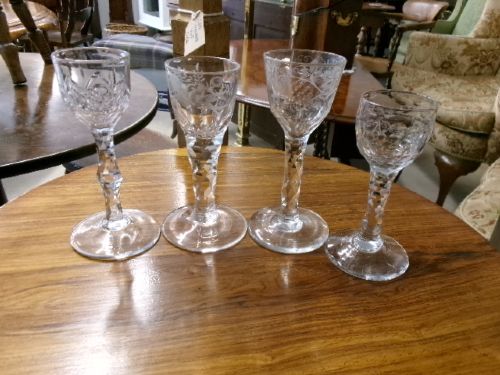
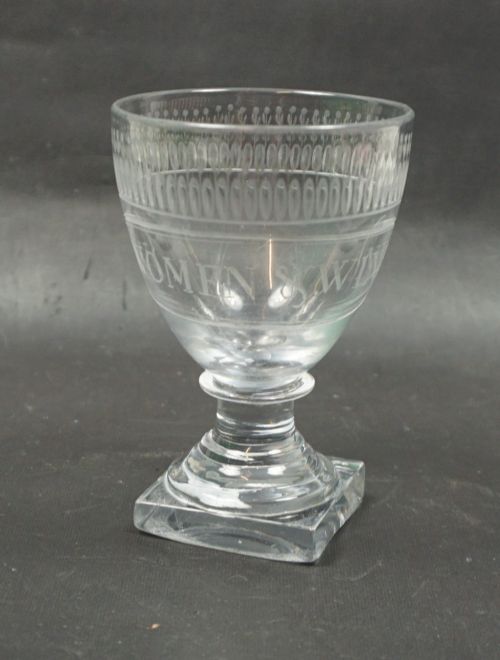
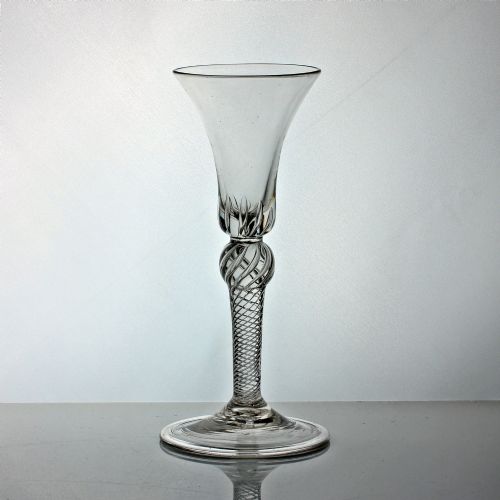
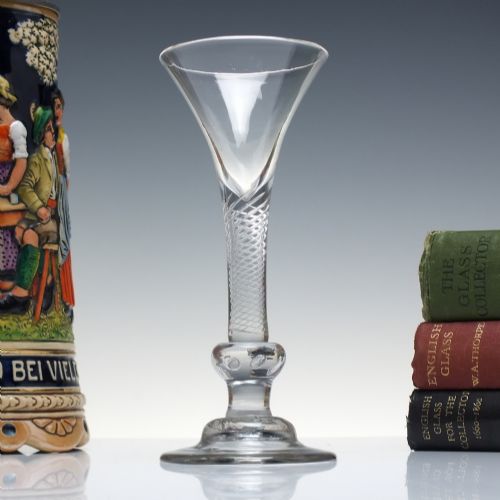
Forms vary from heavy square-based rummers to elegant wine glasses featuring air twist or faceted stems. Each piece demonstrates the functional design priorities of historical glassware production.
How they were made
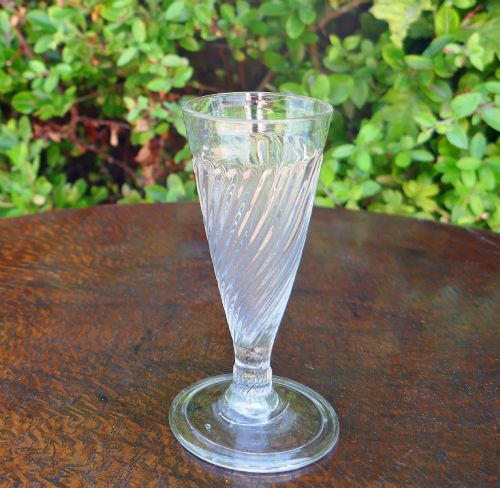
Craftsmen shaped these vessels using hand-blown lead glass, flint glass, and lead crystal, working the molten material with iron tools. Techniques like wrythen moulding and optical ribbing added texture to bowls and stems.
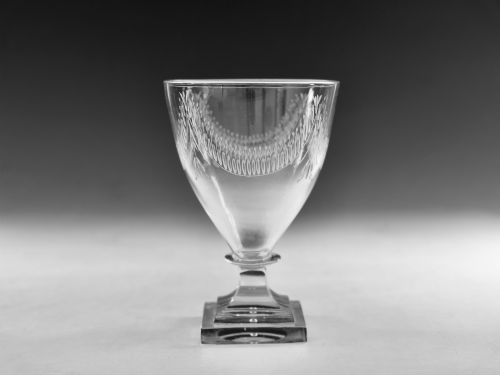
Stems incorporated complex internal structures, including air twists, opaque twists, and air tears trapped within the metal. Feet were frequently formed with folded edges for stability or shaped into domed and square lemon squeezer bases.
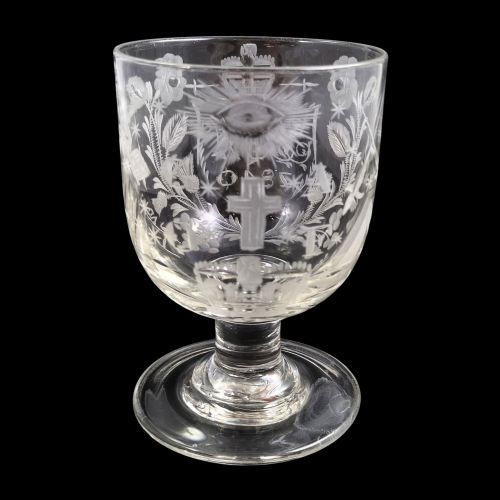
A small rummer is engraved with the spirited toast 'Women & Wine' around eighteen-eighty.
What varies in quality
Quality rests upon the clarity of the metal, the precision of the stem formation, and the balance of the foot. Finer examples display meticulous control over optical effects and twists without distortion.
Engraved decoration demonstrates differing levels of artisan skill, ranging from simple surface cuts to detailed pictorial scenes. The symmetry of the foot and the proportion of bowl to stem distinguish superior specimens.
The Antique Glass Footed Goblet Glossary
- Folded foot
- A base formed by doubling the hot glass edge back underneath for extra strength. This technique creates a thickened rim commonly seen on eighteenth-century stemware.
- Rummer
- A heavy drinking glass introduced in the Georgian period, typically featuring a capacious bowl and a short stem. They were used for ale, wine, and punch.
- Air twist
- A spiral thread of air enclosed within the transparent stem of a glass. This decorative effect was achieved by drawing bubbles through the molten metal.
- Lemon squeezer base
- A square, pressed glass foot with sloping sides resembling a manual juicer. These sturdy bases are characteristic of rummers from around eighteen hundred.
- Roemer
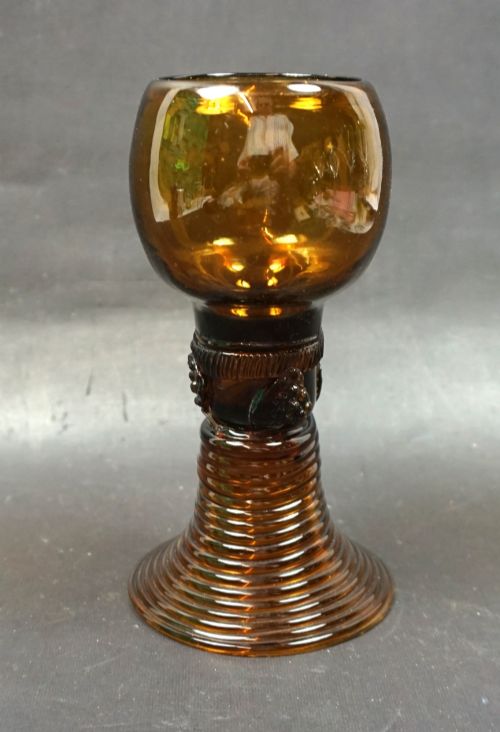
- A traditional Germanic drinking vessel featuring a wide bowl and a cylindrical, prunted stem. They are frequently produced in green or amber glass.
Antique Glass Footed Goblet: Frequently Asked Questions
What were rummers used for?
Rummers served as substantial everyday drinking vessels for ale, beer, and wine during the Georgian period. Their sturdy proportions made them practical for taverns and domestic dining alike.
Over time, these versatile glasses adapted to changing tastes while retaining their characteristic heavy bowl and supportive foot base.
How do I identify a Georgian wine glass?
Georgian wine glasses display distinct manufacturing traits such as pontil marks on the underside and heavy lead content in the metal. Their stems often incorporate air twists, opaque twists, or faceted cuts specific to the eighteenth century.
The bowl forms also reflect the period, ranging from drawn trumpet shapes to ogee and bell profiles.
What is an air tear?
An air tear is a small, elongated bubble intentionally left inside the stem or foot of a drinking glass. Makers manipulated the molten metal to trap air during the initial shaping process.
This subtle feature acts as a hallmark of early craftsmanship, frequently found in mid-eighteenth-century English stemware.
Why do some feet have folded edges?
Folding the outer edge of the foot provided crucial physical reinforcement for fragile glass vessels. The extra layer of material added durability to the most vulnerable part of the drinking glass.
This method remained standard practice among glassmakers before manufacturing techniques advanced to produce thicker, self-supporting bases.