



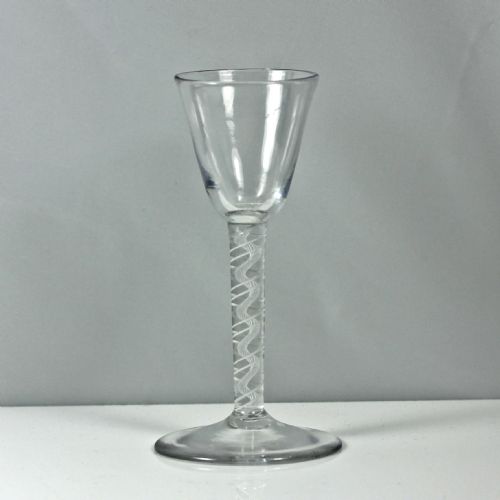


Engraved Lead Crystal Goblet
An engraved lead crystal goblet brings weight and clarity to the table, carrying hand-cut designs from Georgian and Victorian parlours.
Engraved Lead Crystal Goblet
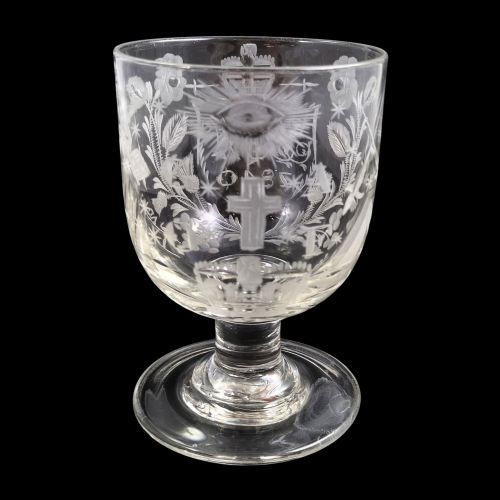
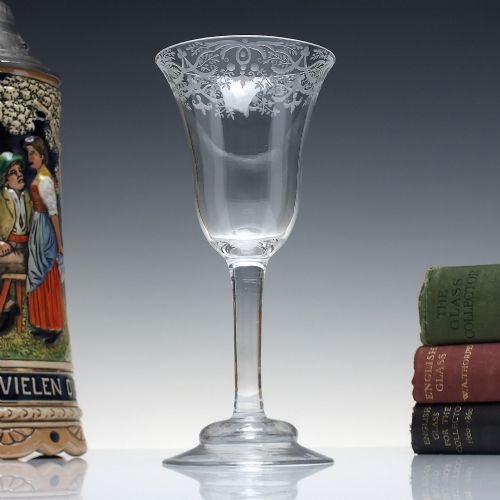
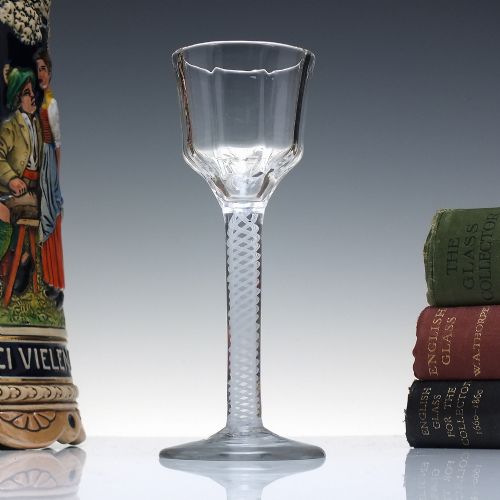
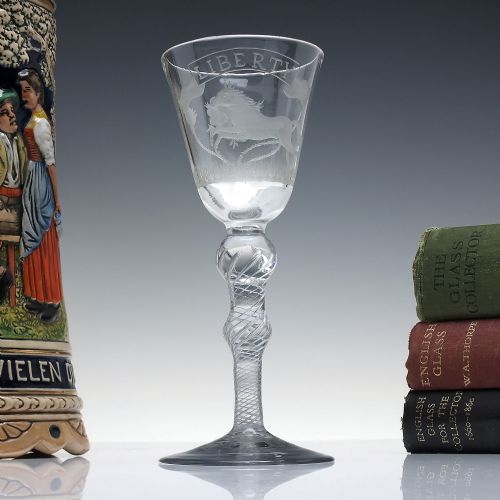
When you search for an engraved lead crystal goblet, you are looking at substantial drinking vessels designed for wine, beer, ale, and spirits across the eighteenth and nineteenth centuries. The examples on this page span styles from Georgian plain stem and air twist forms to Victorian commemorative pieces and Regency table rummers.
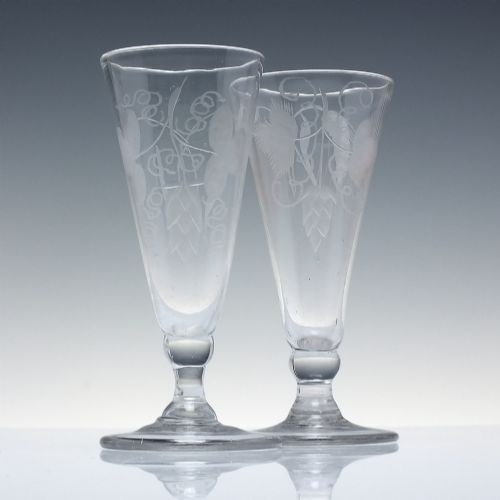
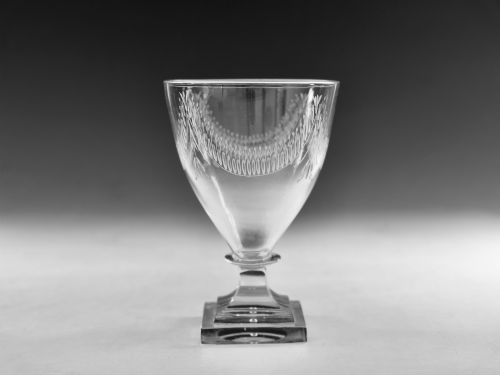
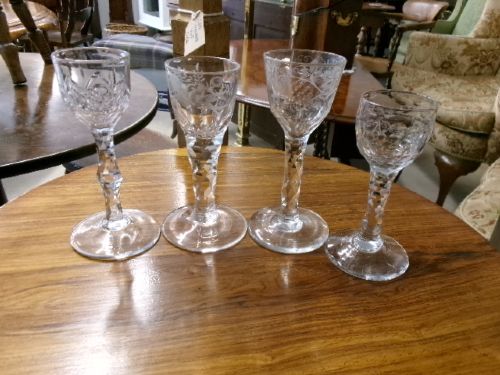
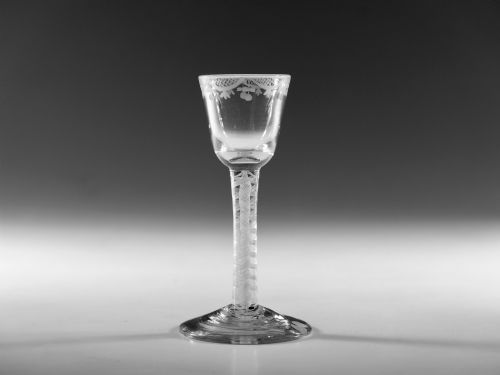
Most pieces you meet here belong to the Georgian and Regency periods, featuring deep lead glass bowls adorned with motifs such as hops, barley, armorial crests, and Jacobite symbols. Forms range from large serving rummers with square lemon-squeezer bases to slender wine glasses with opaque and multi-spiral air twists.
Makers and engravers utilised clear glass, flint glass, and hand-blown techniques to produce robust drinkware meant for both daily toasts and political sympathies. The survival of these drinking glasses demonstrates their enduring utility and appeal for collectors of antique glassware.
Judging the standard of execution
Quality rests upon the crispness of the wheel engraving and the symmetry of the vessel's proportions, from the foot rim to the lip of the bowl. Superior examples display deep, clean cuts without wander, while lesser pieces show faint, shallow scratching that lacks definition.
The handle and weight of the lead glass dictate the tactile presence of the goblet, with denser metal offering superior light refraction and resonance. The complexity of the internal stem structure, such as multi-spiral air twists or intricate opaque threads, separates standard production from exceptional work.
The Engraved Lead Crystal Goblet Glossary
- Rummer
- A large, heavy drinking glass popular for ale, wine, and punch during the Georgian and Regency eras. These vessels often sit on square lemon-squeezer feet or heavy circular bases.
- Air twist
- A stem formation containing elongated spiral bubbles trapped inside the glass rod during manufacture. This technique requires considerable skill from the glassblower.
- Opaque twist
- A stem enclosing one or more white or coloured enamel rods drawn into spiral threads. These threads create striking linear patterns within clear glass stems.
- Lemon-squeezer base
- A square, pressed glass foot with indented corners resembling a citrus squeezer. Found frequently on heavy rummers and decanters from the late eighteenth century onwards.
- Intaglio
- A design carved into the glass surface so that the pattern sits below the outer plane. This technique creates a three-dimensional cameo effect when viewed from the inside.
Engraved Lead Crystal Goblet: Frequently Asked Questions
What is a rummer glass?
A rummer is a heavy, large-bowled drinking vessel designed for ale, beer, or wine during the Georgian and Regency periods. They often feature sturdier walls and wider bases than delicate wine glasses.
These glasses were built for communal toasts and hearty dining tables rather than formal court functions. Their substantial weight helps prevent tipping during lively gatherings.
How do I date an old goblet?
Dating relies on combining the form of the bowl, the construction of the stem, and the style of the engraving. Georgian pieces often feature air twists or facet cutting, while Victorian examples lean towards heavier cut crystal.
Foot shapes also provide clues, as square lemon-squeezer bases point firmly toward the turn of the nineteenth century. Pontil marks underneath confirm hand-blown manufacture before modern machine grinding became standard.
What do hop and barley engravings mean?
Motifs of hops and barley indicate that the vessel was intended for serving ale, beer, or malt liquors. These agricultural symbols celebrate the brewing ingredients directly on the drinking glass.
Such decoration appears frequently on eighteenth and nineteenth-century English rummers used in taverns and country homes. They reflect the domestic agrarian economy of the period.
Are these glasses safe to use?
Antique lead crystal can be used for gentle dining and special toasts provided you handle them with care. Hand washing in lukewarm water is essential to protect the historic glass.
Avoid sudden temperature changes, as old lead glass can crack under thermal shock. Storing them securely away from edge hazards ensures their continued survival.