


Regency Engraved Goblet
Regency engraved goblet pieces are substantial lead glass rummers and chalices carrying period wheel-engraving, offering collectors a tactile piece of early nineteenth-century tavern and dining history.
Regency Engraved Goblet
A regency engraved goblet search typically returns heavy lead glass rummers, ale glasses, and occasionally church chalices or loving cups in Old Sheffield Plate. These drinking vessels date across the Georgian and Regency periods, spanning roughly from eighteen hundred to eighteen thirty.
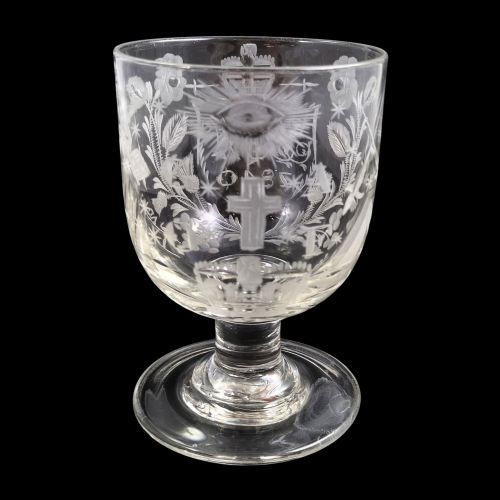
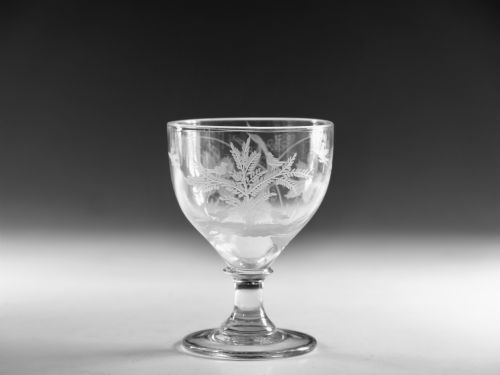
The most common form met on this page is the English glass rummer, often featuring wheel-engraving of hops, barley, armorial crests, or commemorative scenes like the Sunderland Bridge. Many rest upon heavy square lemon squeezer bases typical of the era.
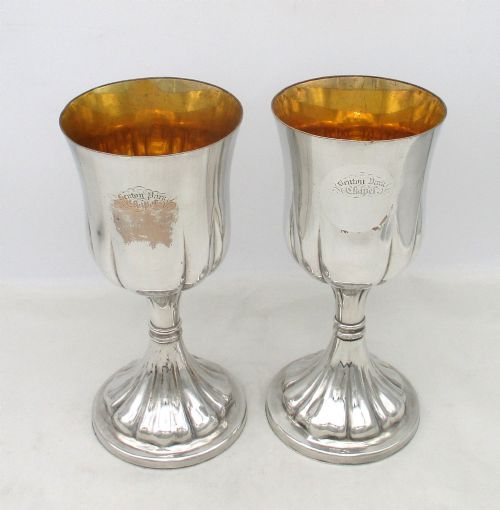
While primarily glass, the evidence also includes silver-plated church chalices and loving cups from around eighteen thirty. These share the robust proportions and functional heft characteristic of early nineteenth century tableware.
Materials and manufacture
These vessels utilise heavy lead glass, flint glass, and clear glass blown into moulds or free-blown before receiving deep wheel-engraving and cutting. The high lead content gives the metal a resonant ring and a heavy weight in the hand.
Metal vessels in the selection utilise copper combined with Old Sheffield Plate, fused with a thin layer of silver. This technique produces durable ecclesiastical and domestic pieces with warm metallic highlights.
Listings combine lead glass drinking vessels with copper and Old Sheffield Plate items dating from eighteen hundred to eighteen thirty.
Assessing quality in early glassware
Quality rests heavily upon the crispness and depth of the wheel-engraving, where finer work displays sharp detail in motifs like hops and barley or architectural bridges. Secondary factors include the clarity of the clear glass and the absence of clouding.
The stability and symmetry of heavy bases, particularly the moulded lemon squeezer feet, separate standard production from more ambitious table rummers. Heavier lead crystal and well-balanced proportions indicate superior output.
The Regency Engraved Goblet Glossary
- Rummer
- A large drinking glass popular in the eighteenth and nineteenth centuries, used for ale, wine, or punch. These sturdy vessels often feature bucket bowls and thick stems.
- Lemon squeezer base
- A square, pressed glass foot with indented corners resembling a citrus squeezer. This form is particularly characteristic of the Regency period.
- Old Sheffield Plate
- An early composite material made by fusing a sheet of silver to a copper core. Items made this way show a thin sliver of copper at the seams upon close inspection.
- Lead glass
- Glass containing lead oxide, which increases brilliance, weight, and workability for cutting and engraving. It forms the primary material for high-end Regency drinking vessels.
- Armorial
- Decorated with a coat of arms or family crest. Such engraving usually indicates a bespoke commission for a landed family or institution.
Regency Engraved Goblet: Frequently Asked Questions
What were glass rummers used for?
These large vessels served robust drinks like ale, porter, or punch during communal gatherings and tavern evenings. Their generous capacity made them central items on Regency dining tables.
Over time, their role shifted as dining habits evolved, leaving behind durable specimens that showcase the heavy toast drinking culture of the period.
What motifs appear on engraved rummers?
Common decorative themes include agricultural symbols like hops and barley, reflecting the contents of the glass. Other examples display Masonic emblems, shipping bridges, or personal armorial crests.
These subjects offer direct insight into the interests and loyalties of the original owners.
Are these pieces made of crystal?
Many listings refer to lead crystal or lead glass, which possesses a higher refractive index and weight than standard soda glass. This composition allows for deep brilliant cutting and fine wheel engraving.
Handling the pieces reveals a dense heft and a clear, resonant ring when tapped gently.