
Antique Giltwood Seating
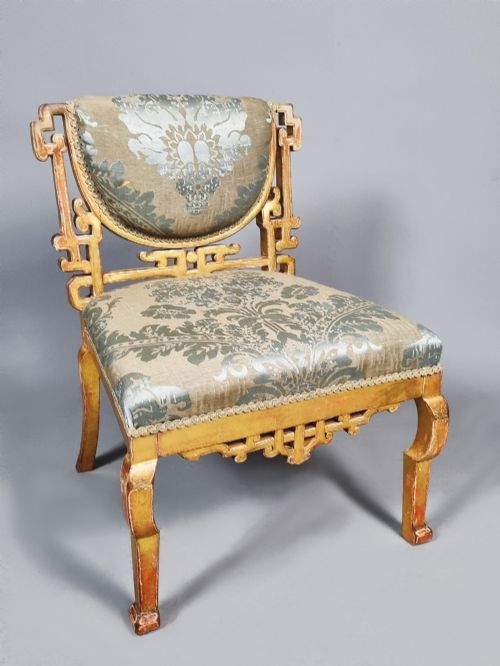
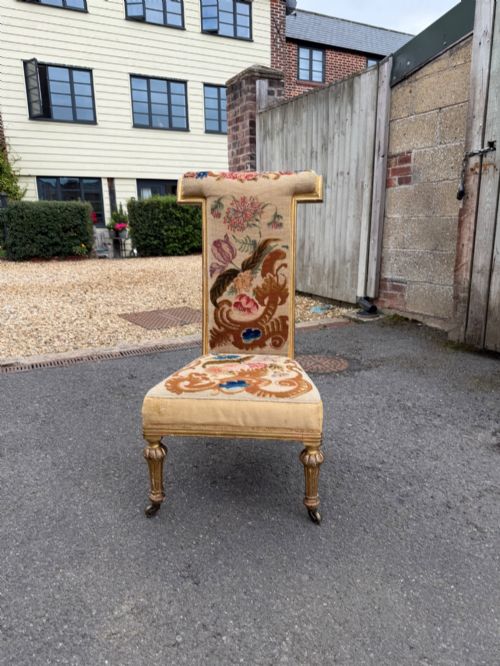
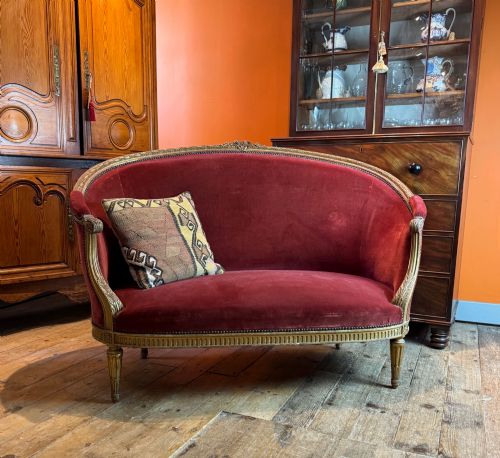
Antique giltwood seating brings gilded frames, carved wood and historic French or Italian styles into a room.
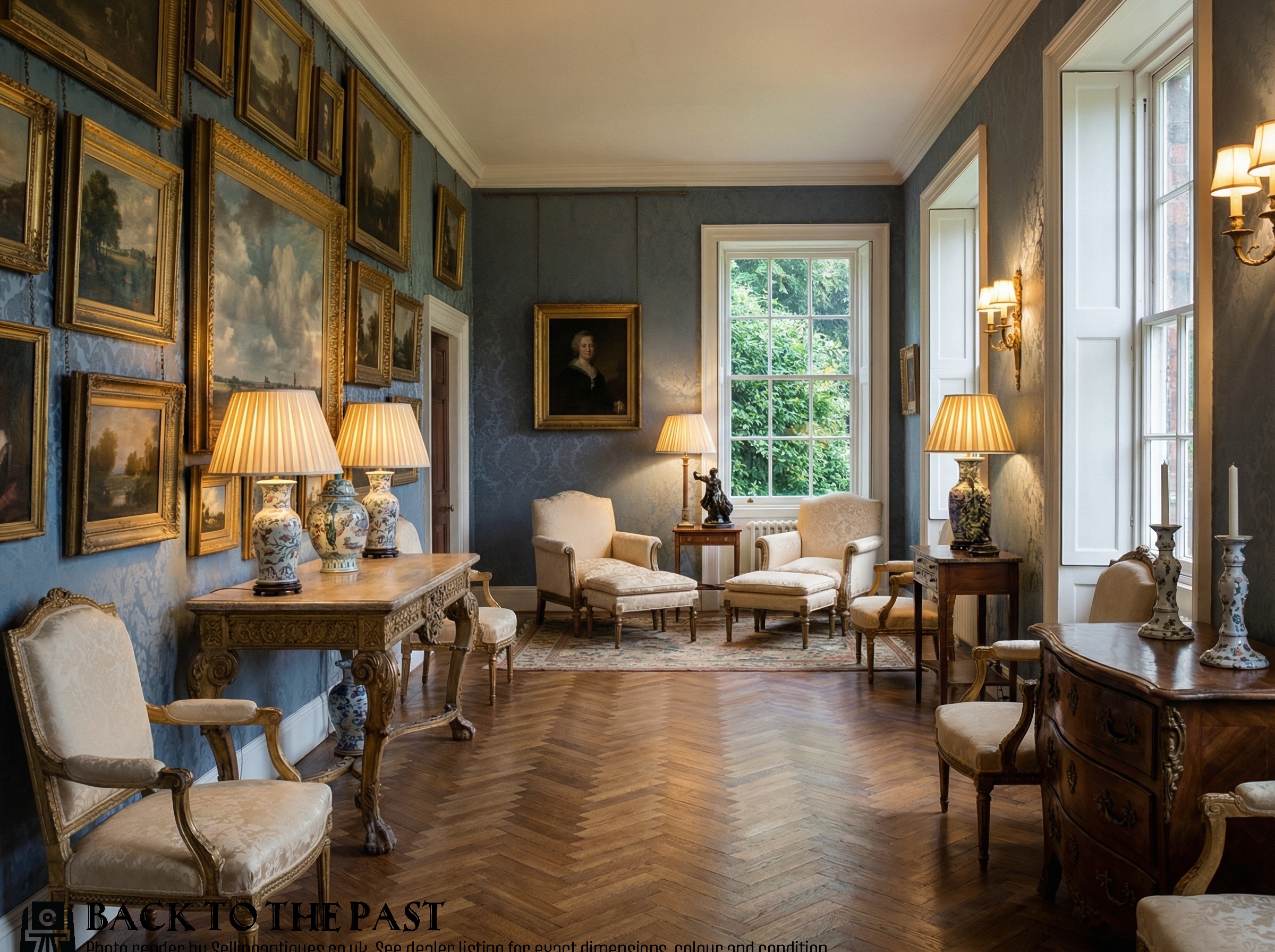
Antique Giltwood Seating
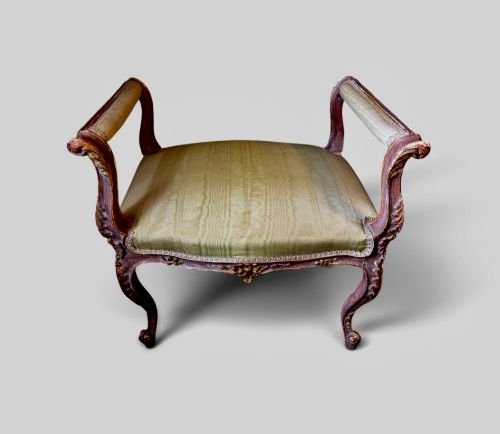
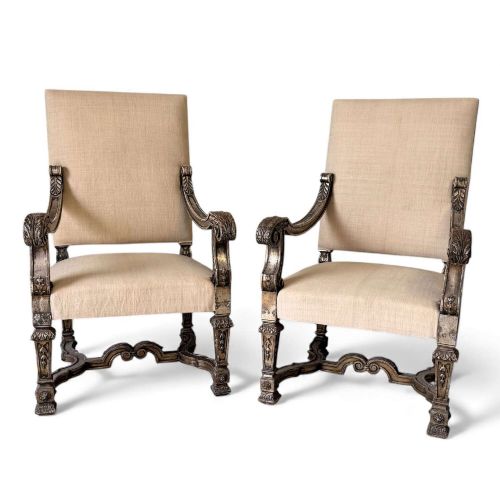
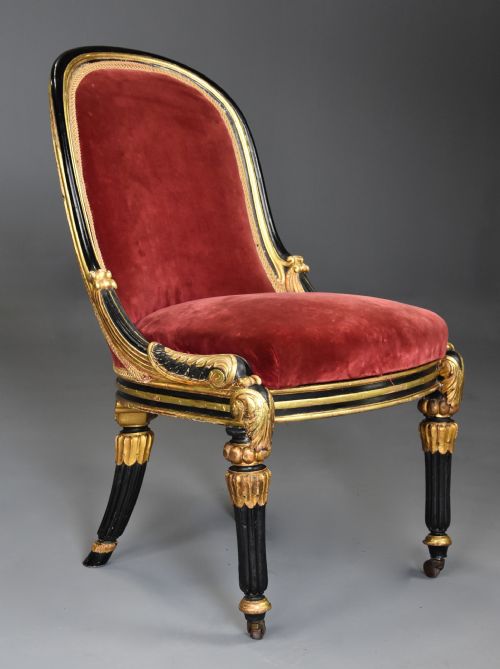
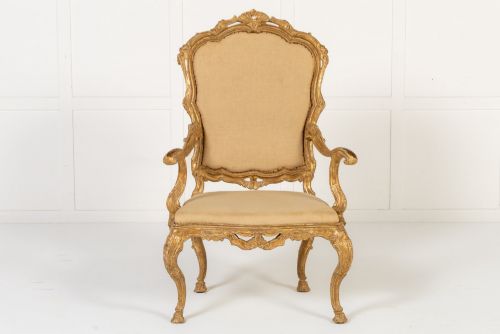
When you search for antique giltwood seating, you encounter a varied collection of chairs, sofas, settees and stools designed for formal reception rooms and parlours. The pieces span the eighteenth, nineteenth and early twentieth centuries, drawing heavily on French and Italian design traditions.
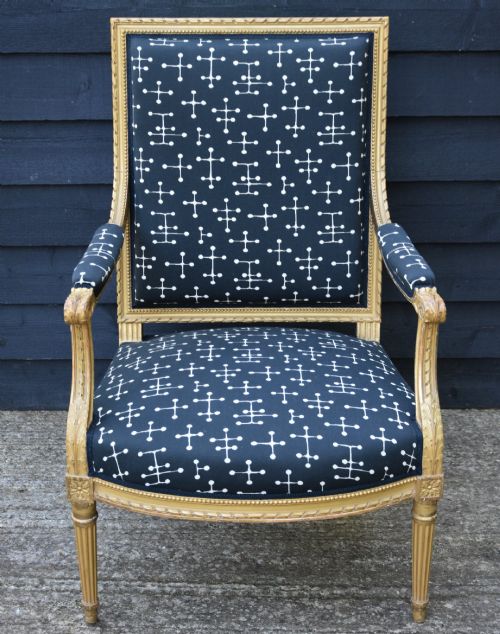
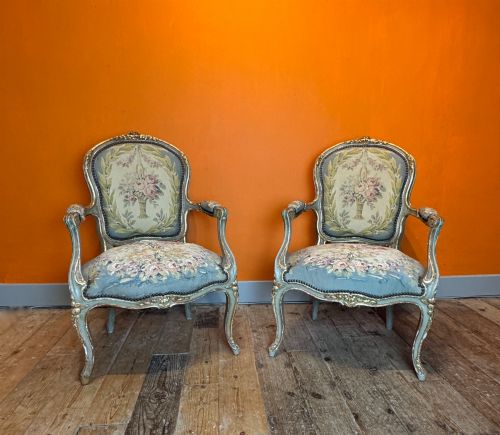
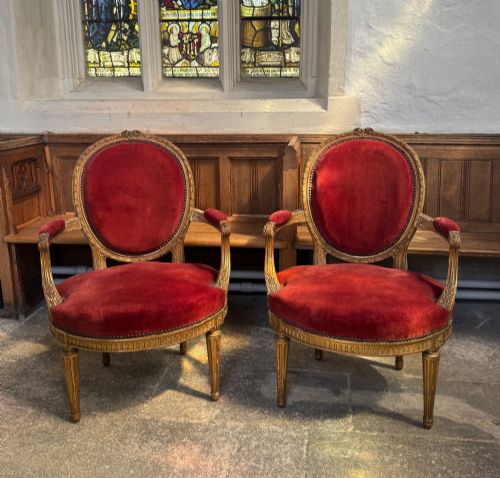
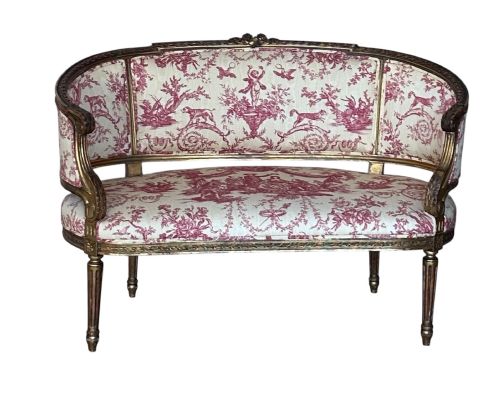
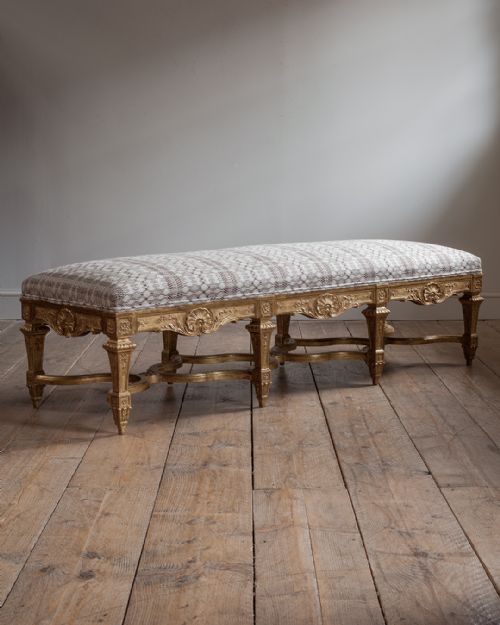
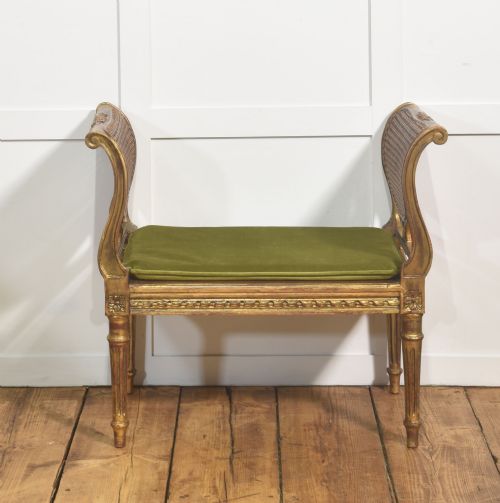
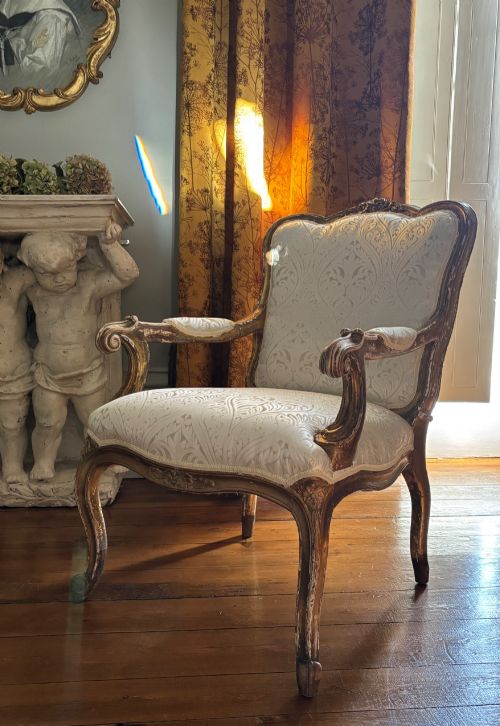
Armchairs, open armchairs and fauteuils dominate the selections, alongside smaller numbers of window seats, long stools and multi-seat sofas or canapés. French revival styles, particularly Louis XVI and Louis XV, appear frequently among the listings, often characterised by exposed carved frames and upright proportions.
Origins stretch across English, French and Italian workshops, with nineteenth-century interpretations outnumbering eighteenth-century originals. Buyers find everything from intimate boudoir settees in silk to substantial baroque throne armchairs and carved window stools.
What varies in quality
Quality in antique giltwood seating rests primarily on the depth and crispness of the hand-carving upon the wooden frame. Crisp acanthus leaves, fluted legs and sharply defined mouldings indicate skilled craftsmanship, whereas soft or blunt edges suggest mass production or heavy over-gilding.
The integrity of the underlying timber structure and the preservation of the original gold leaf layer dictate the desirability of a piece. Examples that retain their authentic surface wear without unsympathetic modern repainting hold greater appeal for collectors.
Listings feature periods from the eighteenth century through the Regency era and Victorian decades into the early twentieth century, utilising beech, timber, velvet and silk.
Waugh And Son·Blaise Maucuy
The Antique Giltwood Seating Glossary
- Giltwood
- Timber that has been coated with thin gold leaf over a prepared ground. This technique gives furniture a bright metallic finish that reflects candlelight and daylight.
- Fauteuil
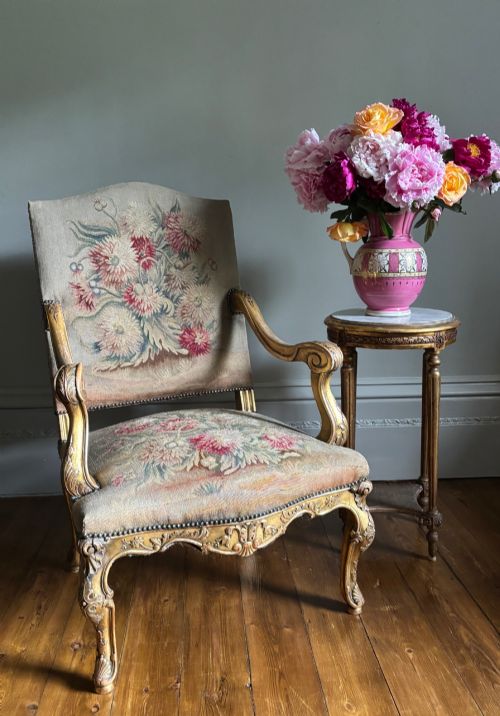
- An open-arm armchair with upholstered back and seat, developed in France. The wooden arm supports typically feature padding where the arms rest.
- Canapé
- An ornamental multi-seat sofa or settee featuring an exposed wooden frame. These pieces often match sets of salon chairs from the same period.
- Caning
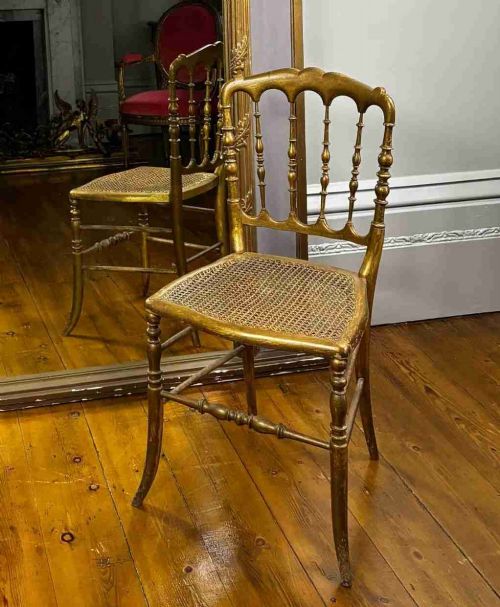
- Woven rattan material used to form seats or backs in chairs and window stools. It provides a lightweight, resilient surface popular in eighteenth and nineteenth-century seating.
- Parcel Gilt
- A decorative treatment where only specific carved portions of a painted or stained wooden surface are gilded. This creates contrast between the gold elements and the base colour.
Antique Giltwood Seating: Frequently Asked Questions
What is the difference between a fauteuil and a standard armchair?
A fauteuil is an open-arm armchair originating from France, featuring an exposed wooden frame with padded armrests. Standard armchairs may utilise fully upholstered sides or different structural proportions.
French salon seating often pairs fauteuils with matching side chairs and settees to create a unified suite for entertaining guests.
How do I care for antique giltwood surfaces?
Giltwood requires gentle dusting with a soft, dry cloth to prevent the delicate gold leaf from lifting or wearing away. Avoid liquid cleaners, polishes and abrasive materials entirely.
Keep these pieces away from direct sunlight and fluctuating humidity to protect both the fragile metallic leaf and the underlying timber frame.
Were these seats used in British homes originally?
Many giltwood pieces found in Britain were imported from France or Italy during the eighteenth and nineteenth centuries for grand country houses. British cabinet makers also produced their own versions influenced by French styles, such as Regency and Chinese Chippendale designs.
Wealthy homeowners utilised them in formal drawing rooms to project elegance and sophistication.
How can I tell a Louis XVI style piece from a Louis XV piece?
Louis XVI style seating is defined by straight, fluted legs, geometric shapes and neoclassical symmetry. Carvings often include classical motifs like ribbons, urns and acanthus leaves.
By contrast, Louis XV pieces embrace the curved lines of the Rococo movement, featuring cabriole legs and asymmetrical floral ornamentation without sharp angles.