

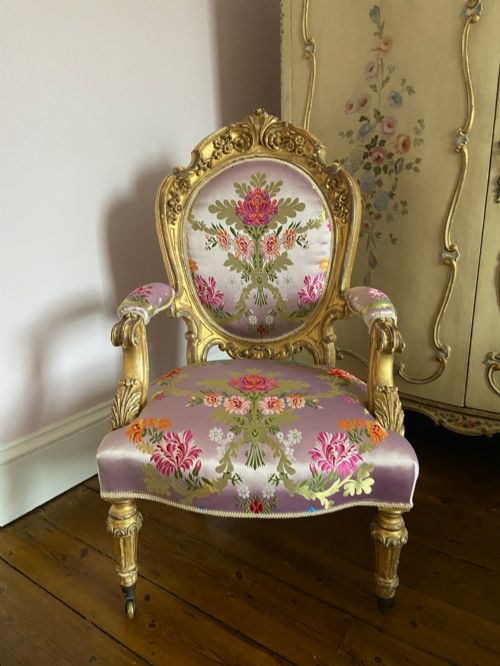
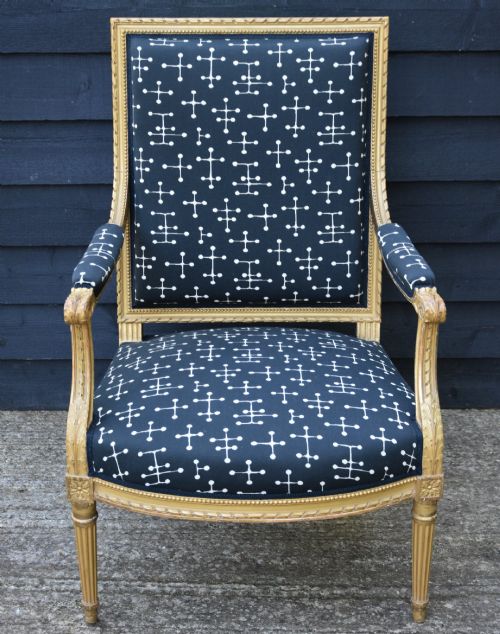
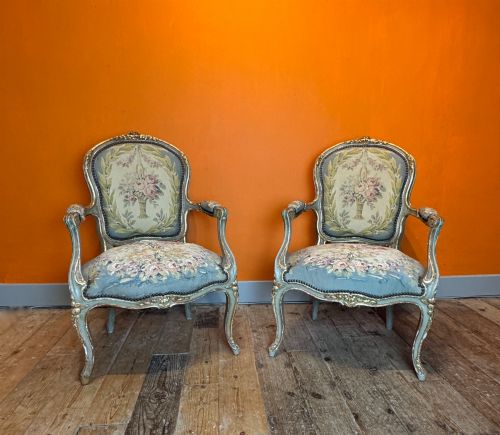
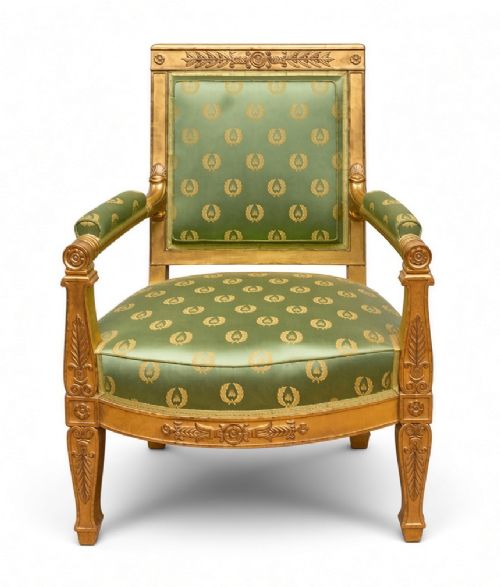
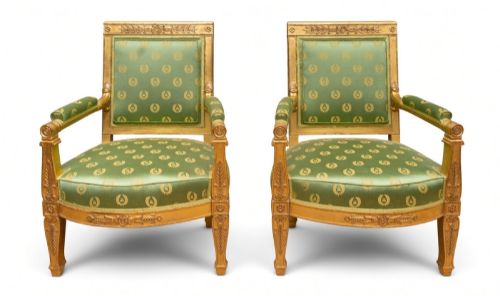
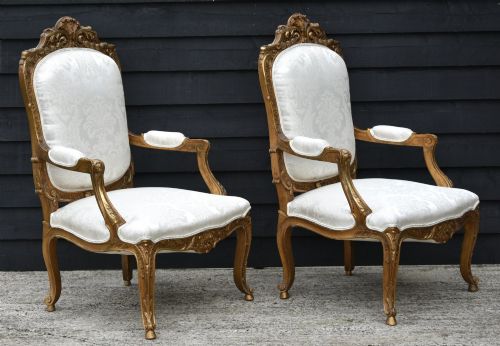
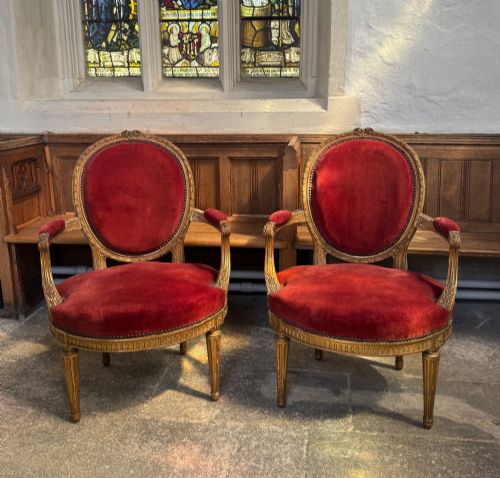
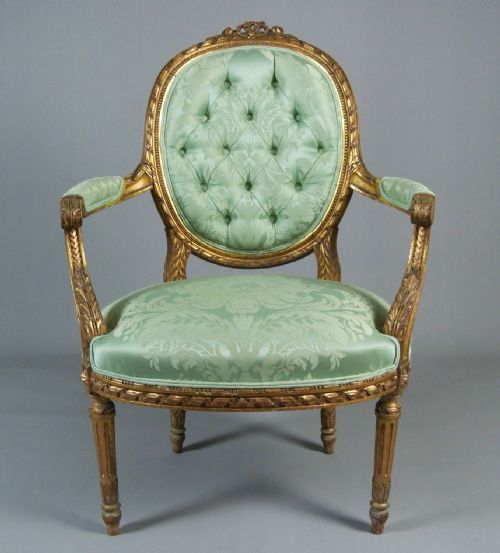
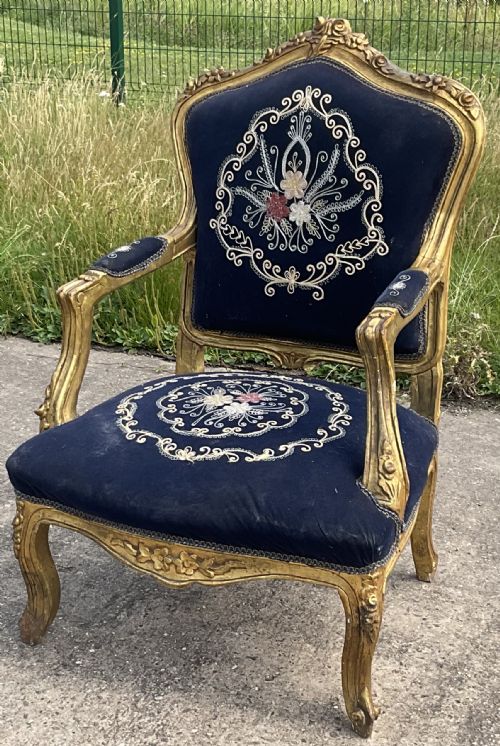
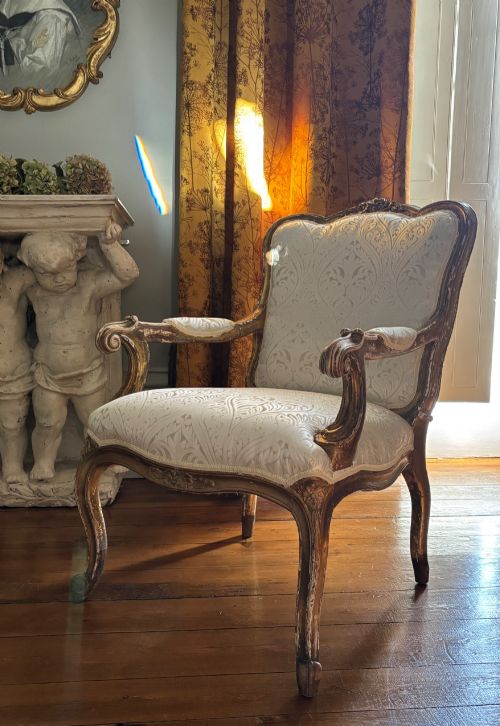
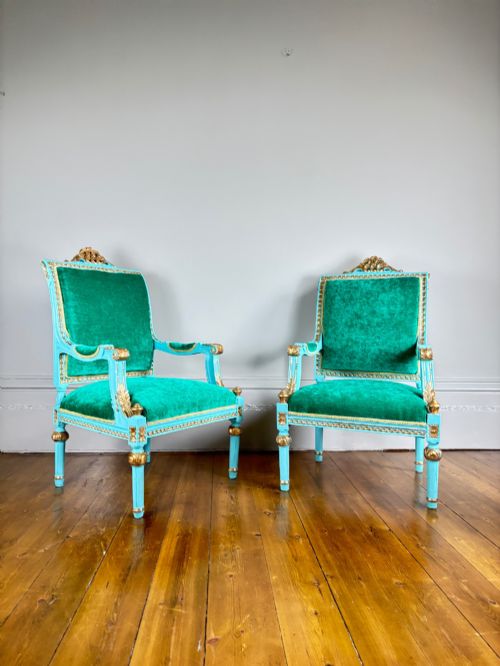
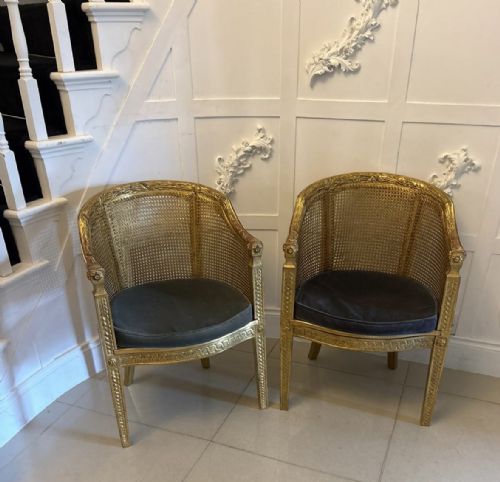
Giltwood Salon Armchairs
Giltwood salon armchairs bring formal seating into sitting rooms with carved timber and gold leaf.
Giltwood Salon Armchairs
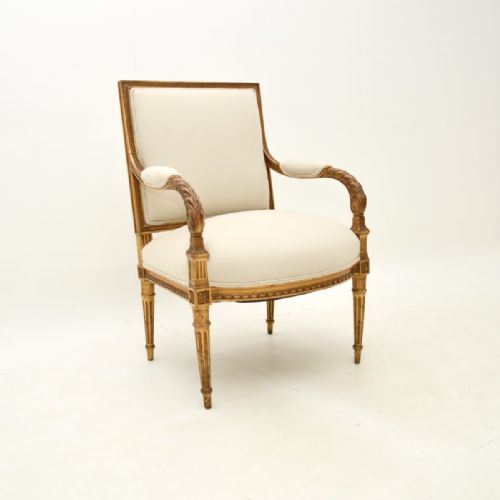
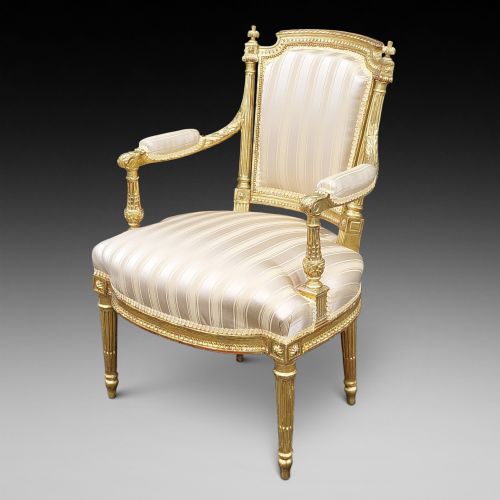
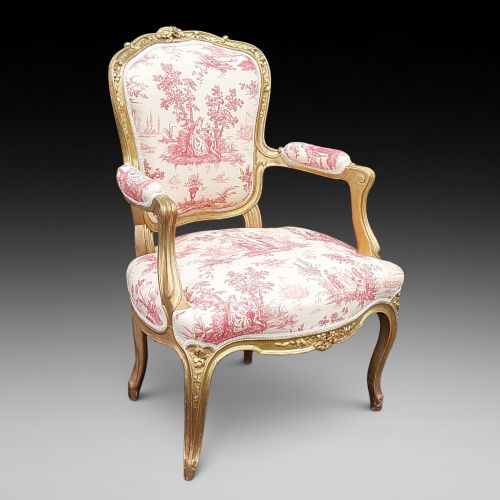
When buyers search for giltwood salon armchairs, they look at ornate seating designed for formal reception rooms. The pieces here span the eighteenth, nineteenth, and early twentieth centuries, drawing heavily on French stylistic traditions.
Louis XVI style and revival examples appear frequently, alongside French Rococo designs and English interpretations. Frames take the form of open armchairs, bergères, and fauteuils, often gathered in pairs or larger sets.
Origins stretch across French workshops and English makers, reflecting varied periods from the Regency era through to the Victorian decades. The selection balances decorative presence with functional seating built for the grand interior.
Materials and Construction
Carved timber forms the structural core, with beech and walnut providing the dense substrate required for intricate ornamentation. Artisans applied thin layers of gold leaf or gilt preparation over gesso, creating the characteristic reflective metallic surface.
Upholstery relies on traditional textile applications, utilising silk fabric, velvet, and tapestry to pad the seat and back rails. Silk parrot designs and plain textiles complete the traditional finish, supported by webbing and horsehair stuffing beneath.
Several armchairs incorporate silk fabric featuring parrot designs, bringing an exotic touch to nineteenth-century French drawing rooms.
Assessing Quality and Execution
Depth and sharpness of the wood carving distinguish superior frames from simpler production, particularly where acanthus leaves, fluting, and floral motifs meet at the joints. Crisp detail in the gesso layer beneath the gilding preserves the integrity of the maker's hand.
The coherence of the gilding application dictates visual success, with burnished highlights contrasting against matte areas to articulate the form. Original upholstery schemes or sympathetic re-coverings in silk and velvet maintain the historical harmony of the armchair.
Jacob Desmalter·Thomas Chippendale·Blaise Maucuy·Holland and Sons
The Giltwood Salon Armchairs Glossary
- Giltwood
- Timber decorated with gold leaf applied over a prepared gesso ground. This surface provides a reflective finish characteristic of formal European seating.
- Fauteuil
- An open-framed armchair with upholstered back and seat, featuring exposed wooden arms. Originating in France, it defines much of the formal salon seating from the eighteenth century onwards.
- Bergère
- An enclosed armchair with upholstered sides and back, often featuring a loose seat cushion. The style emerged in France to offer a more enclosed, comfortable seat.
- Rococo Revival
- A nineteenth-century design movement resurrecting the asymmetric scrolls, C-curves, and naturalistic flora of the mid-eighteenth-century French court style.
- Louis XVI Style
- A neoclassical design vocabulary marked by straight tapered legs, fluting, and geometric symmetry. It provides the dominant aesthetic for many nineteenth-century revival chairs.
Giltwood Salon Armchairs: Frequently Asked Questions
How were these armchairs used historically?
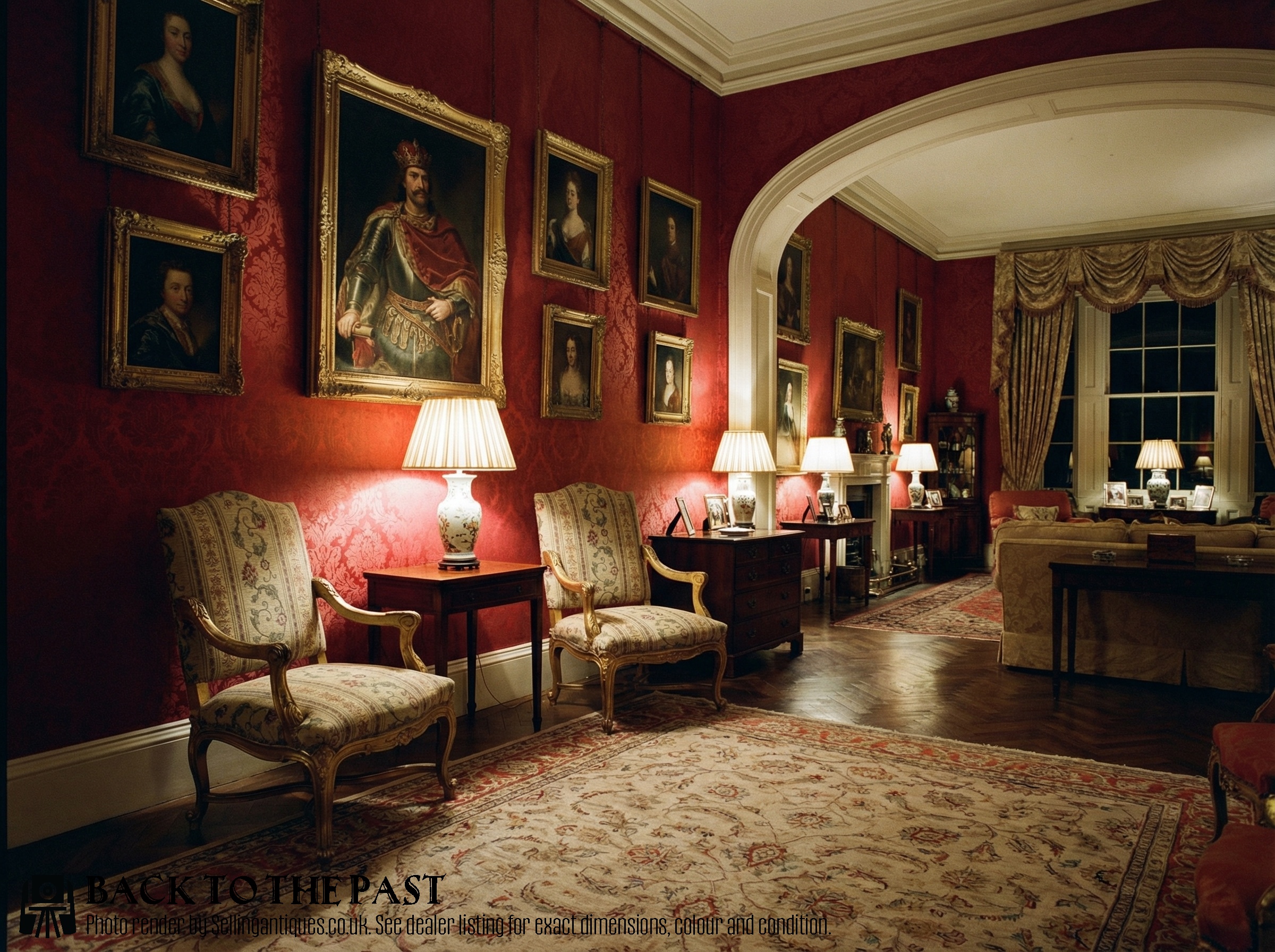
They furnished formal spaces where hosts entertained guests, functioning as both seating and symbols of social status. Their open arms accommodated voluminous contemporary fashion.
Pooled in pairs or larger suites around a salon, they anchored the formal layout of the room.
How do I care for giltwood furniture?
Keep these pieces away from direct sunlight and fluctuating humidity to protect the fragile gold leaf and underlying gesso. Dust gently with a dry, soft cloth without applying liquid polishes.
Protect the silk and velvet upholstery from abrasive wear and environmental moisture to preserve the textile surfaces.
How do I distinguish Louis XVI style from Rococo?
Louis XVI pieces rely on straight lines, geometric symmetry, fluted columns, and oval or rectangular backs. They project a restrained classical order.
Rococo designs employ asymmetric curves, flowing organic scrolls, and naturalistic floral carvings that avoid straight structural lines entirely.