

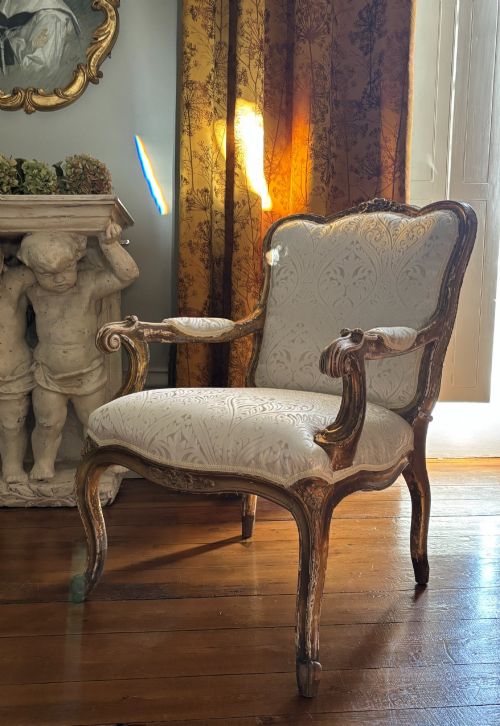
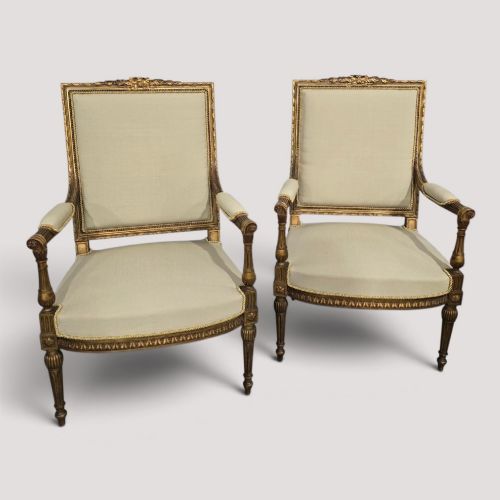
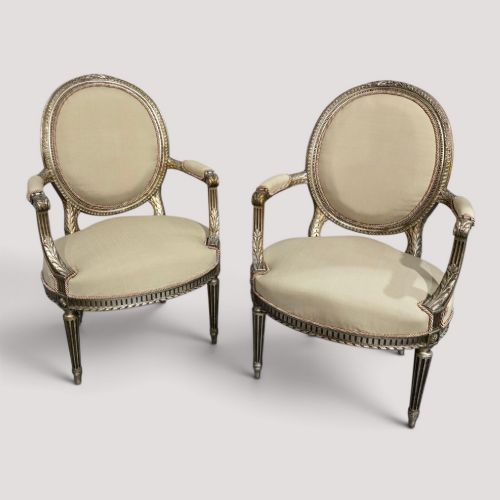
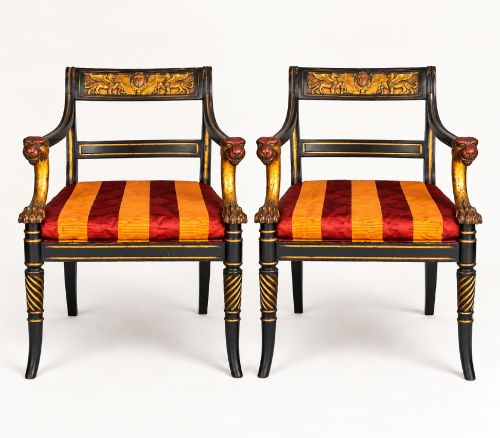
Antique Giltwood Chairs
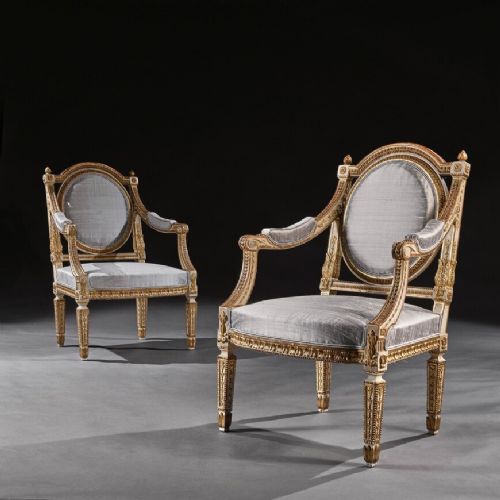
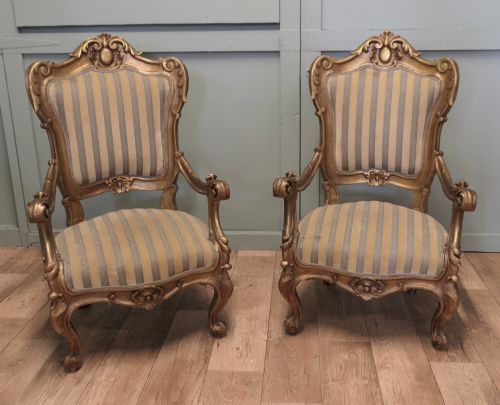
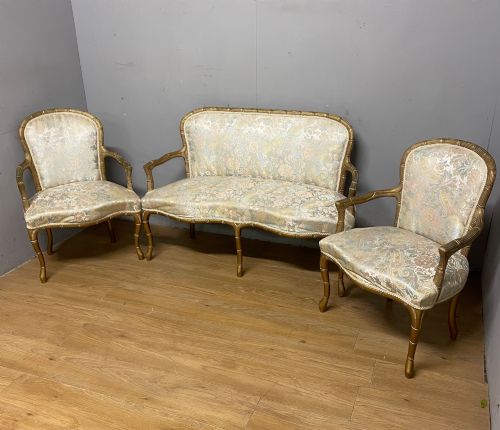
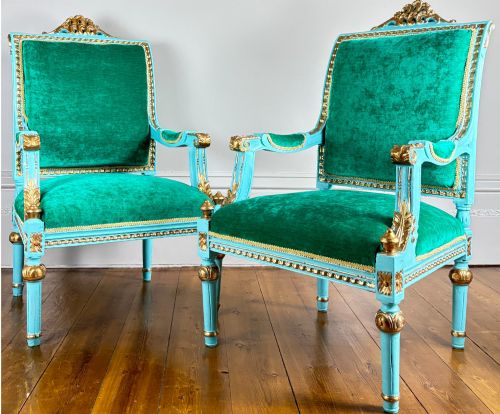
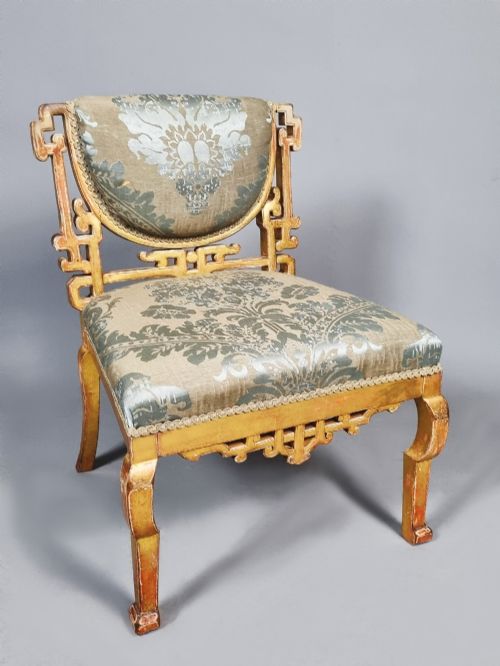
Antique giltwood chairs bring gilded warmth and carved splendour to a room, offering functional seating with enduring decorative presence.
Materials and Construction
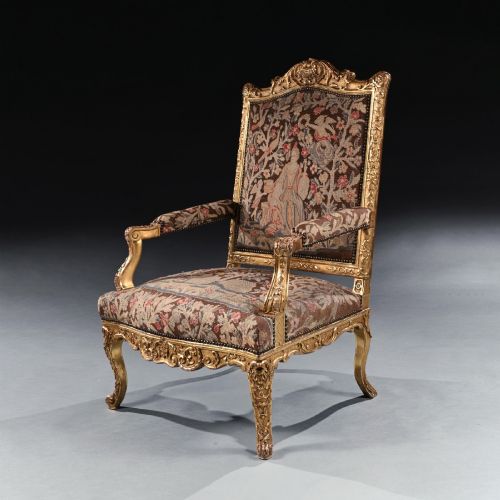
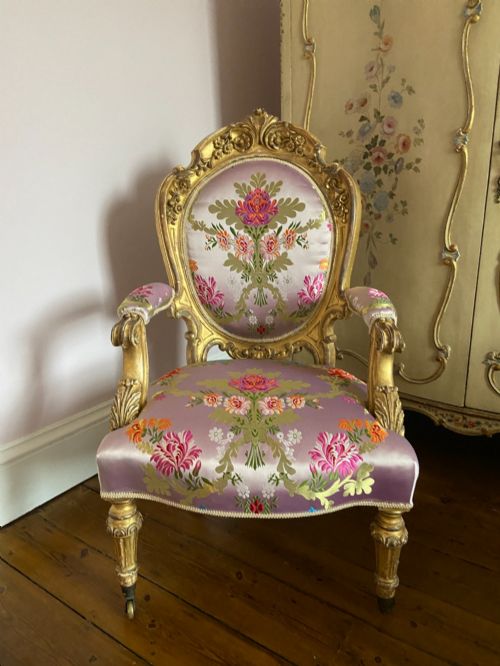
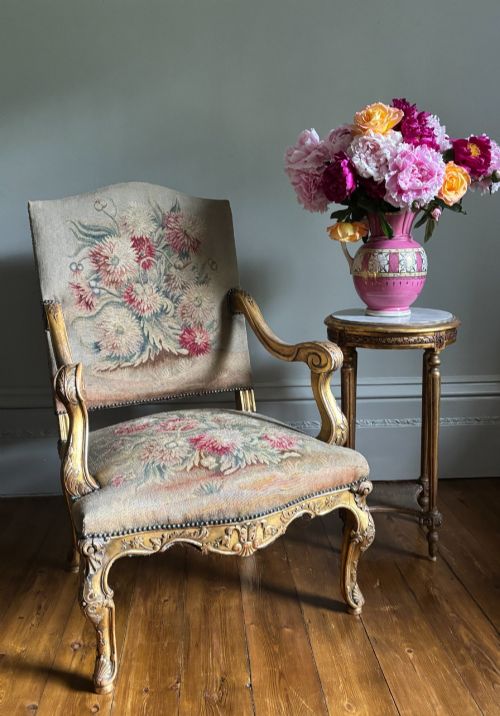
The underlying frames are constructed from solid timbers such as beech, walnut, and general hardwoods, selected for their stability under carved detail. Carvers shaped the wood into scrolls, acanthus leaves, and fluted legs before preparing the surface for gilding.
Gilding involved applying microscopic sheets of gold leaf over a prepared gesso and bole ground on the wooden frame, sometimes burnished to create a bright finish while leaving recessed areas matte. Upholstery techniques matched the period, securing horsehair or natural stuffing beneath silk, velvet, or tapestry fabrics with traditional tacks.
Evaluating Quality and Craftsmanship
The distinction between ordinary and exceptional pieces rests primarily on the depth and crispness of the wood carving. Skilled carvers produced lively, undercut foliage and balanced proportions, whereas lesser examples show shallow, mechanical tooling on rigid timber frames.
The integrity of the original gilt surface and gesso ground dictates preservation quality, as heavily stripped or later over-painted frames lose their period character. Original joinery stability and the retention of period upholstery components further separate standard production from workshop masterpieces.
Antique Giltwood Chairs Retail Price Guide 2026
Typical asking prices for giltwood chairs among the pieces listed under this phrase on Sellingantiques today, from the lower quarter to the upper quarter. They describe what is for sale here now, not the wider market.
Listings feature pieces from the eighteenth century up to the 1930s, encompassing walnut, beech, and silk damask materials.
Waugh and Son·Jacob Desmalter·Thomas Chippendale·Holland and Sons
The Antique Giltwood Chairs Glossary
- Giltwood
- Wood covered with gold leaf or a gold-coloured metallic finish over a prepared base. This surface treatment gives furniture its characteristic reflective metallic gleam.
- Fauteuil
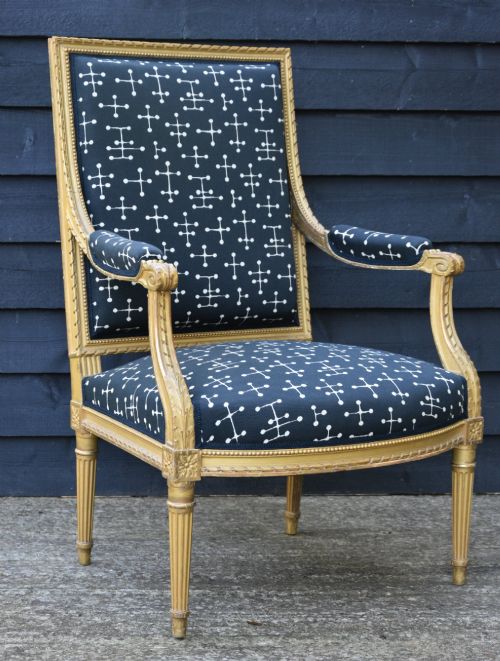
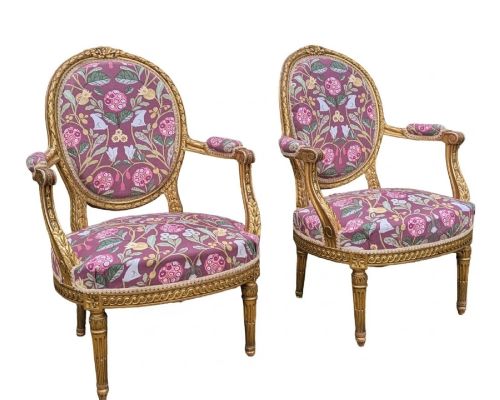
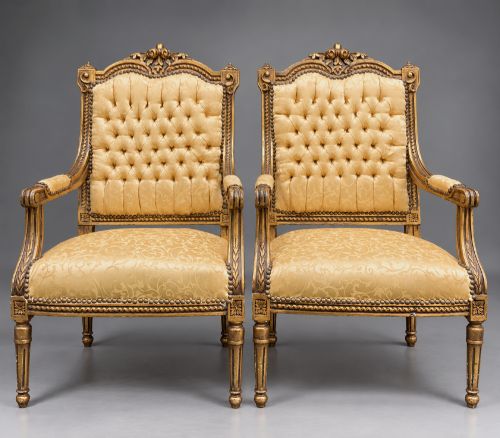
- An open-arm armchair with exposed wooden framing around the back and armrests. The style originated in France and remained popular through various revival periods.
- Gesso
- A plaster-like mixture applied to wooden frames as a smooth foundation for gold leaf. It provides the necessary flat or built-up surface for burnishing.
- Caning
- Woven rattan or split cane used to form breathable seats or backs on chairs. This technique lightens the visual weight of heavy wooden frames.
Antique Giltwood Chairs: Frequently Asked Questions
How do I clean antique giltwood chairs?
Dust surfaces gently with a soft, dry feather duster or a clean, dry artist's brush to prevent accumulation. Avoid all liquid cleaners, polishes, and moisture, as these can dissolve the delicate gold leaf and underlying gesso.
Protect the frames from direct sunlight and fluctuating humidity to prevent the wood from warping and the gesso from cracking. Professional conservation is recommended for any major surface consolidation.
How do I identify Louis XVI style pieces?
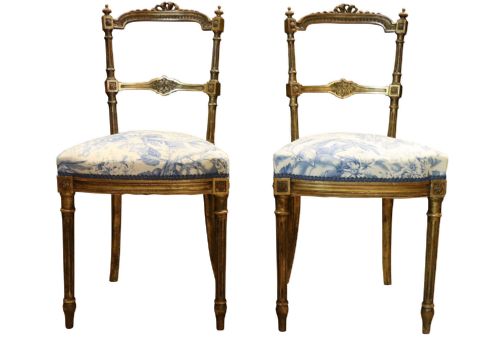
Louis XVI style pieces feature straight, tapering fluted legs, geometric symmetry, and neoclassical motifs like ribbons, urns, and acanthus leaves. This aesthetic contrasts sharply with the earlier curved, asymmetric lines of Rococo design.
Check the stretcher connections and overall frame geometry for the characteristic rectilinear discipline of late eighteenth-century French revivalism.
What is the difference between bergères and fauteuils?
Bergères are fully enclosed armchairs with upholstered sides and a built-in upholstered back, offering a more enclosed seat. They frequently include a loose feather or hair-stuffed seat cushion.
Fauteuils possess open wooden sides with padded armrests, exposing the carved and gilded frame between the backrest and the seat. Both forms served formal reception rooms during the eighteenth and nineteenth centuries.