

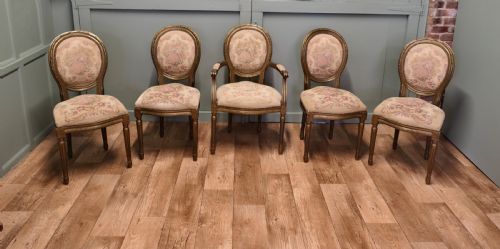
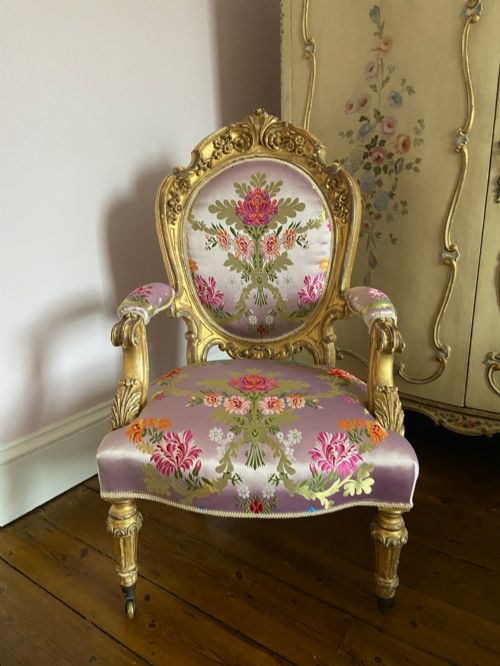
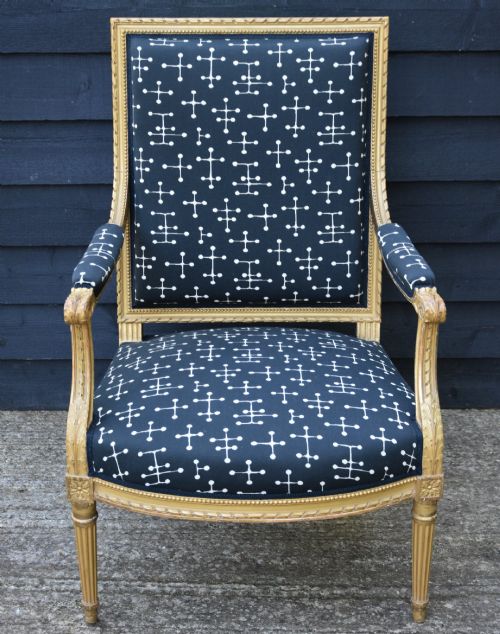
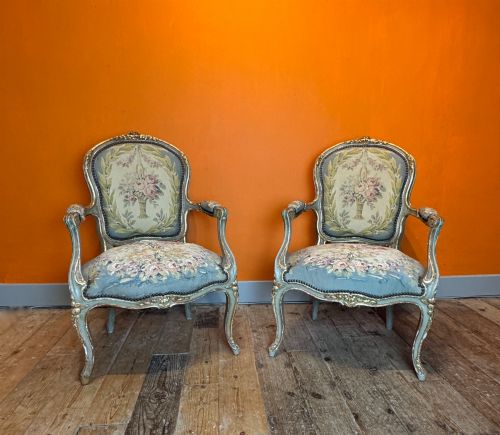
Gilded French Armchair
A gilded French armchair brings a gilded, carved presence and historical French seating directly into a room.
Gilded French Armchair
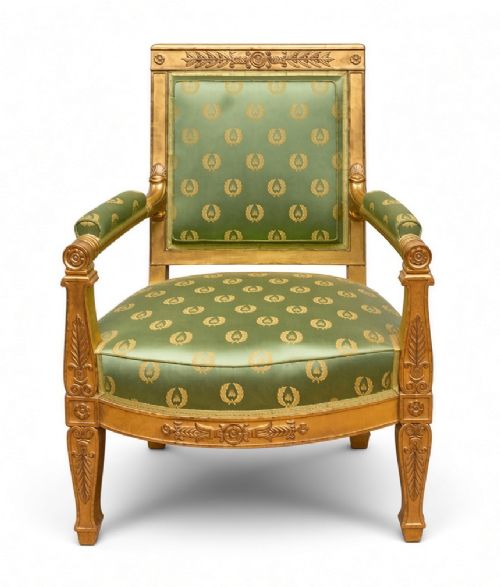
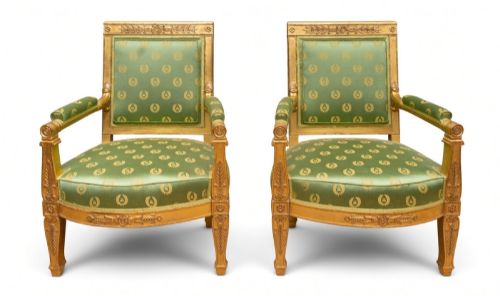
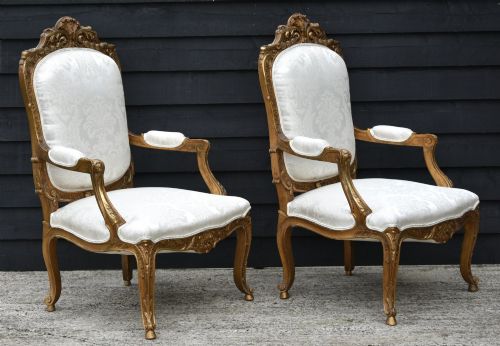
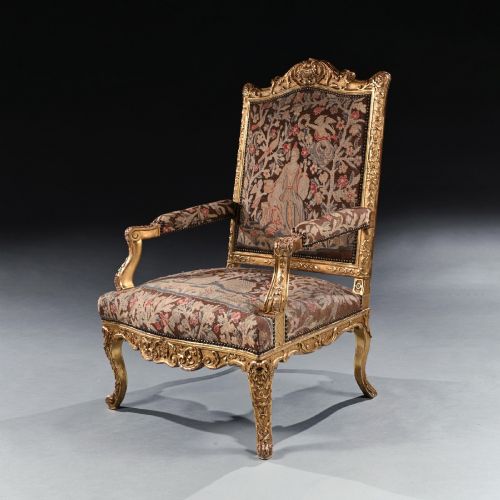
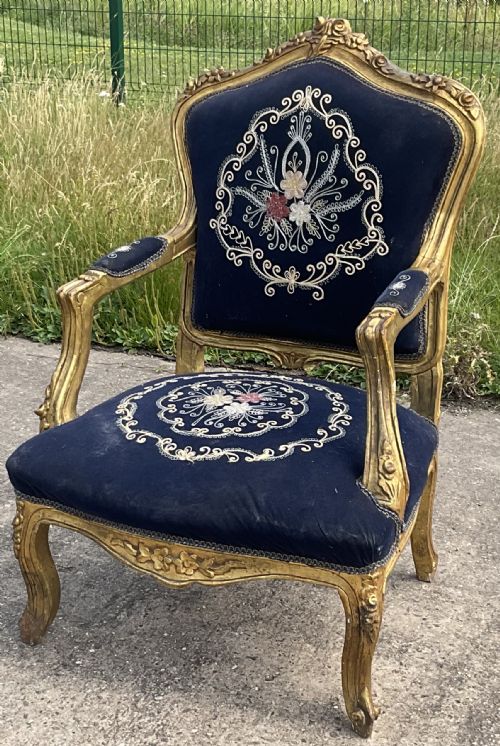
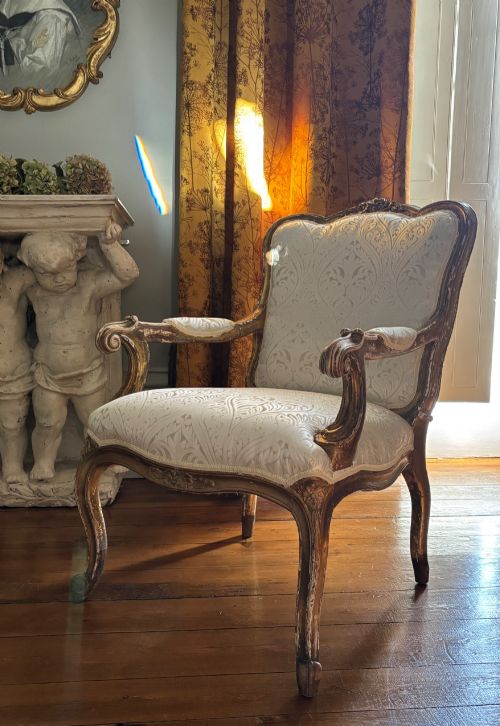
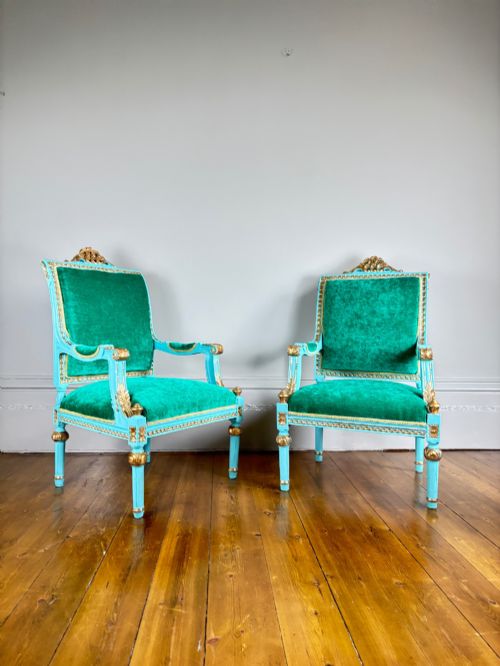
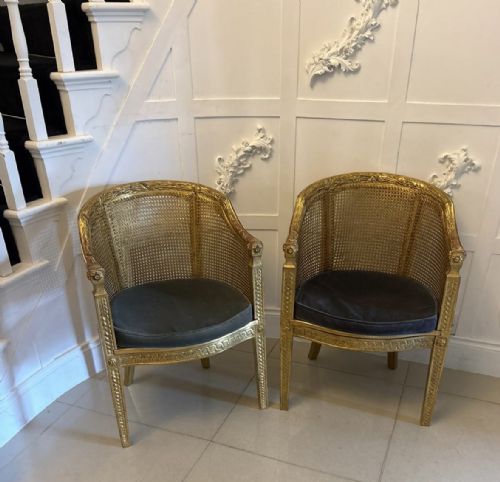
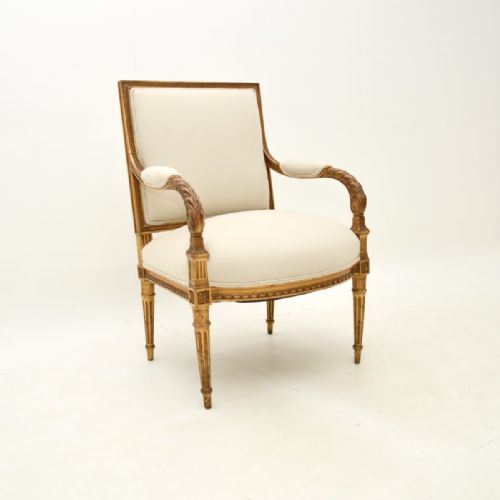
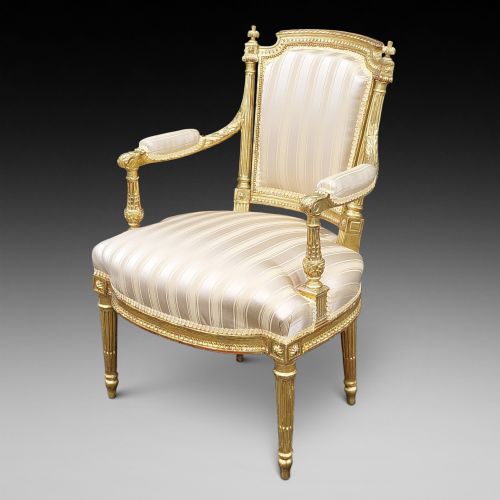
A gilded French armchair is a seated piece of furniture defined by carved wooden frames covered in gold leaf or gilt paint, following classical French forms. These seating options emerge most frequently from the nineteenth century, drawing heavily on Louis XVI and Rococo revival styles.
Buyers encounter open armchairs, bergères, and upholstered fauteuils that were originally designed for formal salons and chateaux. The forms range from small occasional chairs to large throne chairs and dining sets.
The aesthetic leans towards ornate scroll arms, exposed carved frames, and traditional textile upholstery including silk, velvet, and tapestry. These seating pieces connect directly to historical French interior design traditions.
Materials and construction methods
The structural frames rely predominantly on beech and other hardwoods selected for stability in detailed carving. Artisans shaped these woods into curved rails, cabriole legs, and fluted columns typical of French revival periods.
Surfaces received thin layers of gold leaf or parcel gilt paint applied over prepared grounds. Upholstery techniques combined traditional stuffing with high-status textiles such as silk damask, velvet, and woven tapestries.
Gilded French Armchair Retail Price Guide 2026
Typical asking prices for gilded french armchair among the pieces listed under this phrase on Sellingantiques today, from the lower quarter to the upper quarter. They describe what is for sale here now, not the wider market.
Listings feature beech frames, silk fabrics, velvet upholstery, and gold leaf finishes across eighteenth, nineteenth, and twentieth-century items.
Distinctions in craftsmanship and preservation
Quality separates along the depth and crispness of the hand-carved woodwork on the frame. Superior examples display sharp relief work in the foliage and floral motifs rather than soft, moulded contours.
The integrity of the original gilding and the quality of the timber substrate determine lasting value. Pieces retaining their initial gold leaf demonstrate higher execution than later repainted surfaces.
Jacob Desmalter·Blaise Maucuy·Holland and Sons
The Gilded French Armchair Glossary
- Fauteuil
- An open-arm armchair with upholstered back and seat, typically featuring exposed wood framing. These chairs originated in formal French reception rooms.
- Bergère
- An enclosed armchair with upholstered sides and a padded back, often containing a loose loose seat cushion. They provide a deeper, more enclosed seat than standard open armchairs.
- Giltwood
- Timber coated with gold leaf or gold powder applied over a prepared gesso base. This finish creates a luminous metallic surface on the carved frame.
- Louis XVI Style
- A neoclassical design vocabulary characterised by straight tapered legs, geometric symmetry, and classical ornamentation. This aesthetic revived strongly during the nineteenth century.
- Rococo Revival
- A decorative style dominated by asymmetrical C-scrolls, shell motifs, and naturalistic floral carvings. It reflects the earlier excesses of the French royal courts.
Gilded French Armchair: Frequently Asked Questions
What is a gilded French armchair?
A gilded French armchair is a decorative wooden seat covered in gold leaf or gilt paint, featuring traditional styles like Louis XVI or Rococo revival. These pieces originated in French drawing rooms and chateaux.
They serve as both functional seating and sculptural decorative objects within a residential interior.
How do I identify a Louis XVI style chair?
Louis XVI style chairs are distinguished by straight, fluted legs and geometric frameworks rather than the curved lines of earlier rococo designs. They often incorporate classical motifs like wreaths and ribbons.
This aesthetic emphasises symmetry and neoclassical restraint.
Where should I place a gilded armchair?
These armchairs work well as statement pieces in a living room, drawing room, or bedroom where their carved frames can be appreciated. They pair effectively with both antique and modern settings.
Positioning them away from direct sunlight protects delicate silk or velvet fabrics.