
Antique Gilt Consoles
These antique gilt consoles bring architectural presence to a hall or drawing room, combining carved woodwork with lustrous metallic finishes.
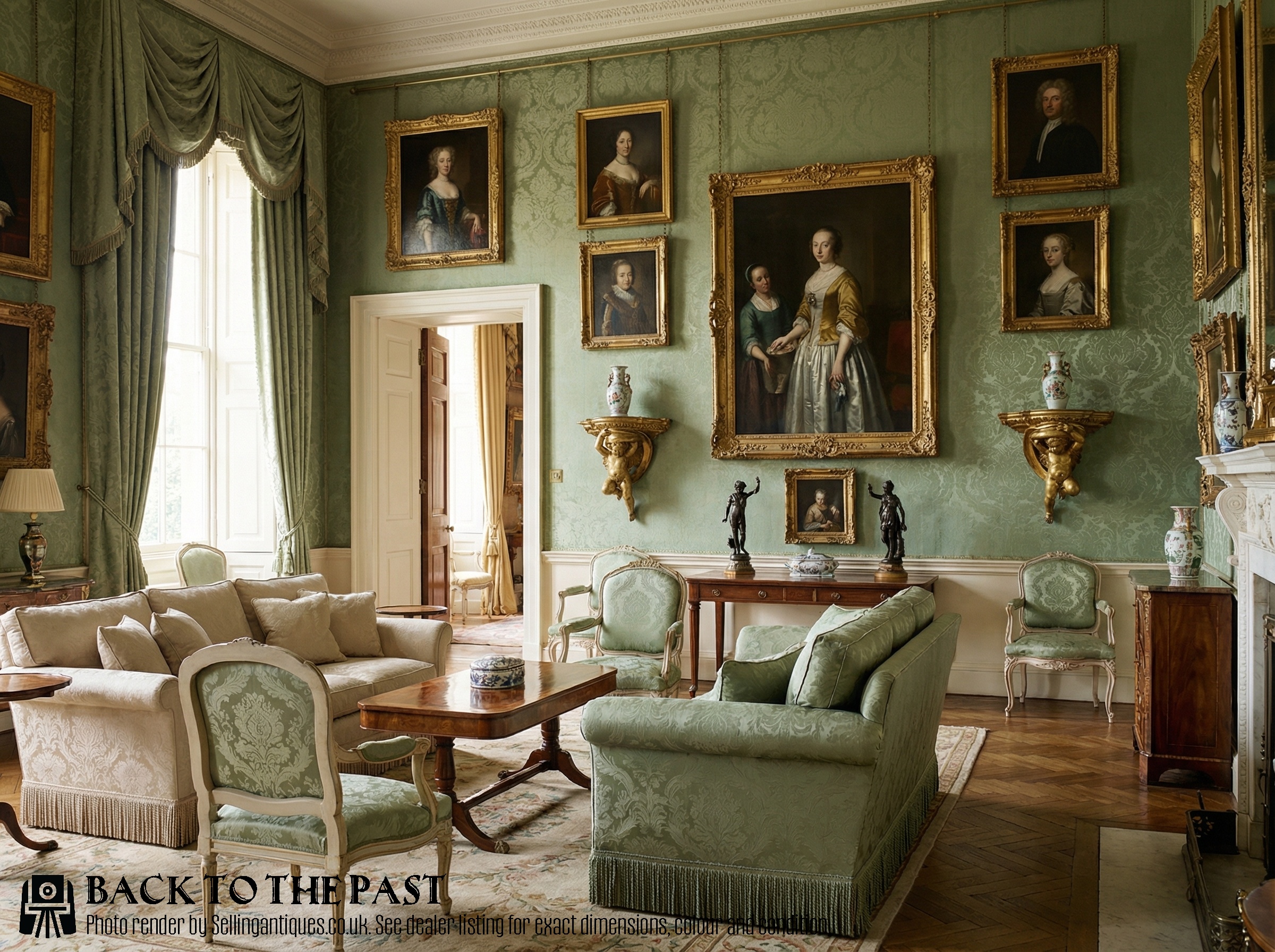
Antique Gilt Consoles
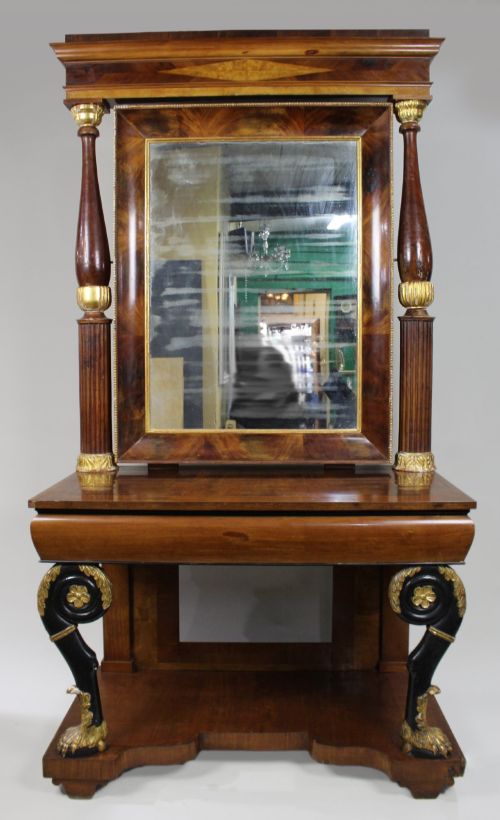
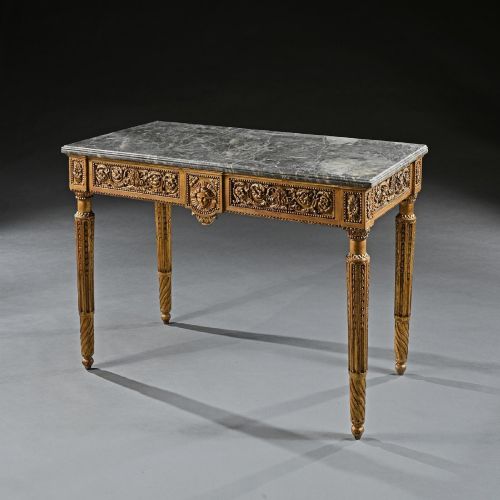
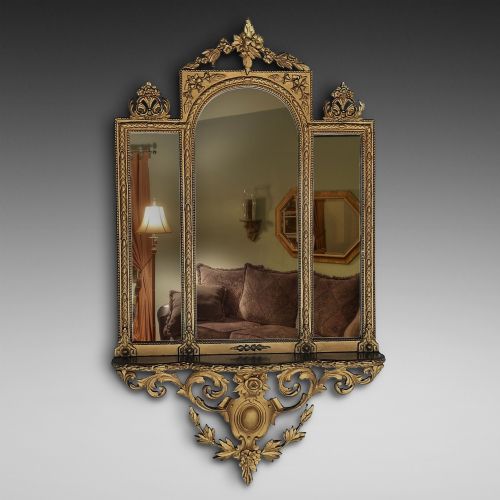
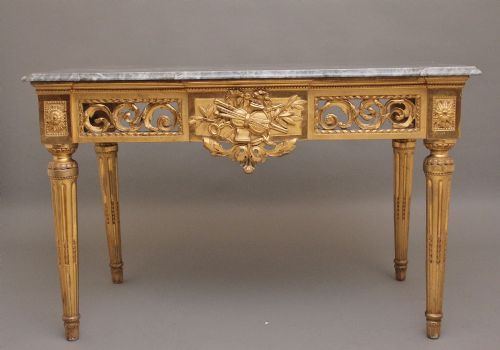
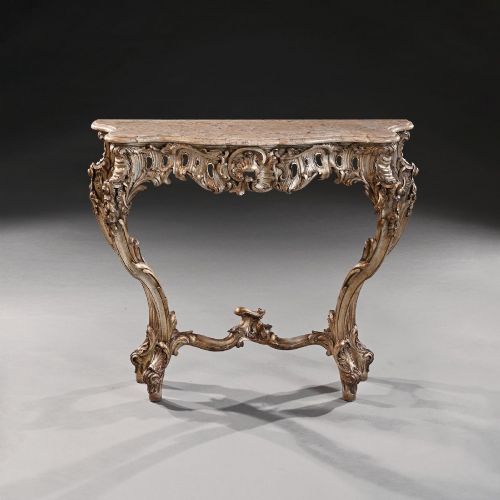
When searching for antique gilt consoles, collectors encounter wall-mounted or freestanding side tables designed to sit flush against a wall, frequently accompanied by matching pier mirrors. The selection spans the eighteenth, nineteenth, and early twentieth centuries, drawing on Italian and French stylistic traditions.
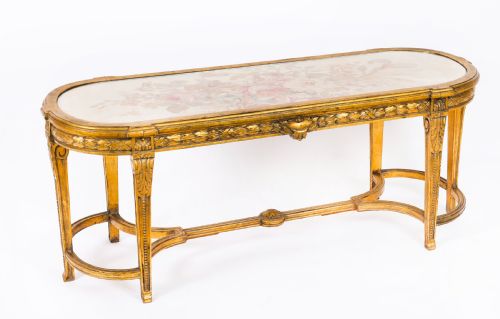
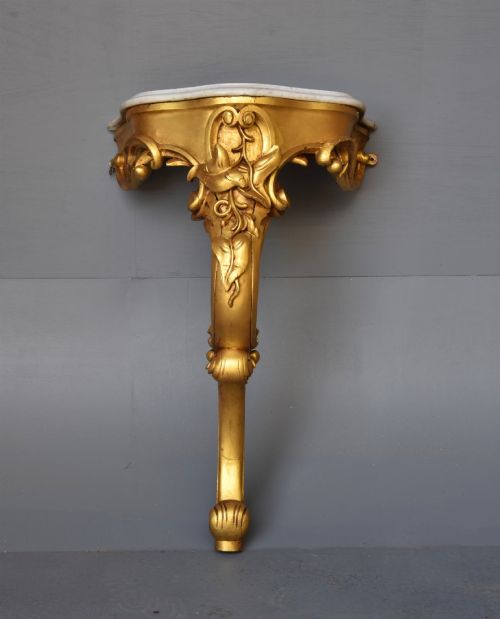
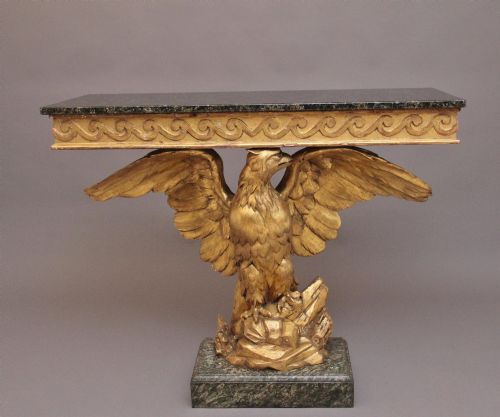
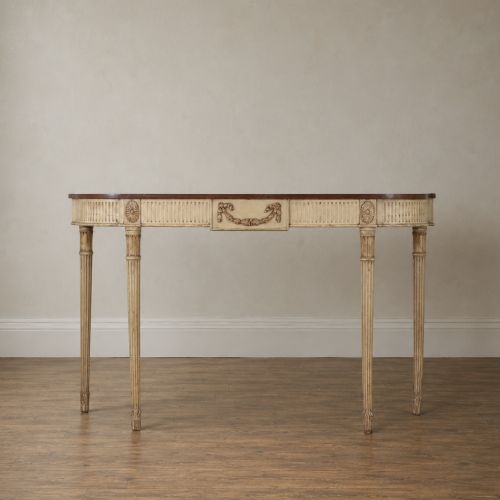
The inventory on this page ranges from compact nineteenth-century side tables to substantial Italian giltwood examples and Regency parcel-gilt demi-lune forms. Makers and workshops across Europe produced these tables to anchor formal interior schemes.
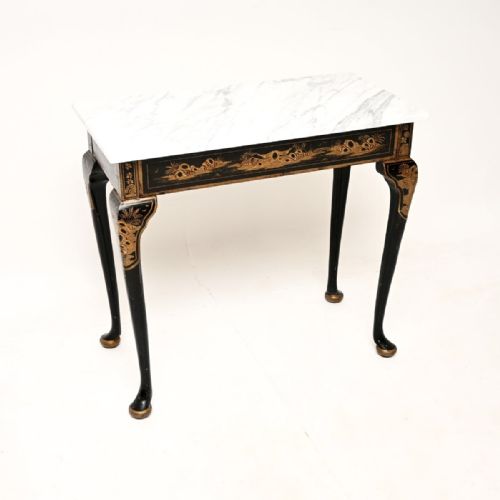
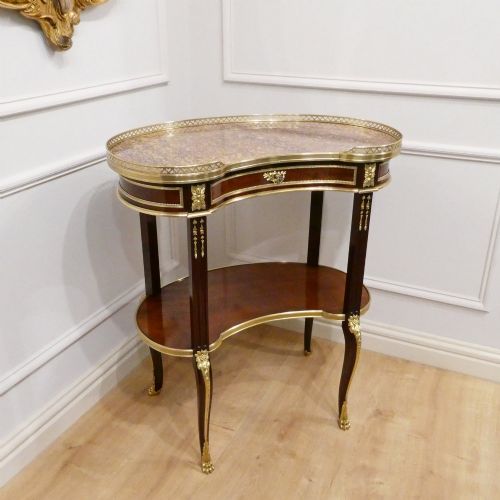
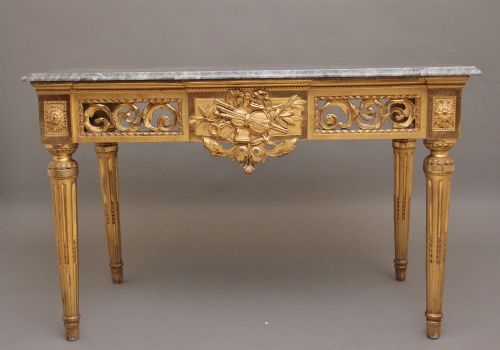
Marble tops dominate the surviving forms, paired with carved wooden frames reflecting neoclassical and revivalist tastes. These tables serve primarily as display surfaces rather than for heavy storage.
How they were made
Craftsmen shaped the structural frames from timbers such as mahogany, walnut, and pine, applying layers of gesso to smooth the surfaces before gilding. Gold leaf or silver gilt was then laid over the preparation layers to achieve a brilliant metallic sheen.
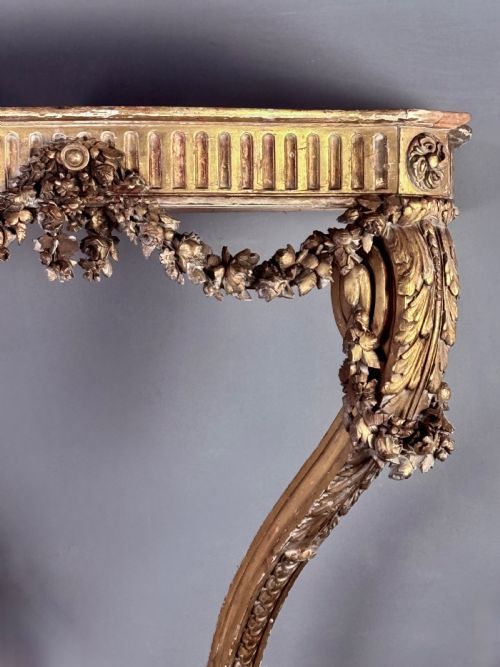
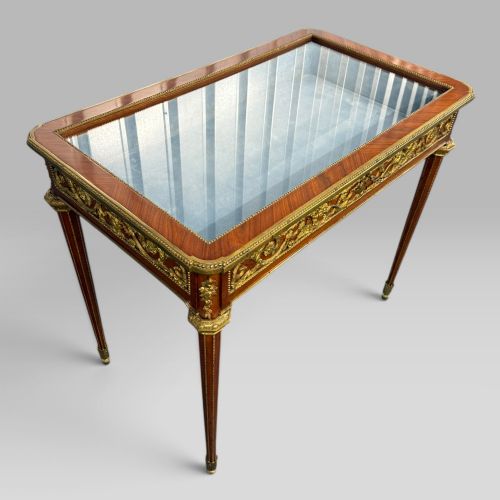
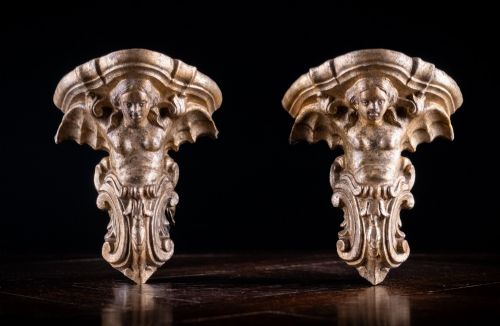
Carvers executed intricate foliate and scroll motifs by hand, particularly on eighteenth-century Italian and nineteenth-century French pieces. Ormolu mounts and figured marble tops were integrated to complete the decorative scheme.
Listings feature Italian and French origins alongside English Regency designs, spanning the eighteenth to the early twentieth century.
What varies in quality
The depth and crispness of the hand-carving distinguish standard production from exceptional workshop output. High-tier pieces exhibit undercut foliage and refined proportions that reflect the hand of a skilled master.
The integrity of the original gilding and the quality of the inset marble slab determine the enduring character of the console. Tables retaining their original mercury gilding and well-figured stone slabs command greater regard among serious collectors.
Maison Millet·Felix-Alfred Ternisien·Krieger Paris
The Antique Gilt Consoles Glossary
- Giltwood
- Wood that has been coated with gold leaf over a prepared gesso ground. This technique provides the signature reflective finish seen on classical console frames.
- Gesso
- A plaster mixture applied to wood frames to create a smooth surface for gilding. It allows carvers to achieve sharp relief details.
- Ormolu
- Gilded bronze mounts applied to furniture. It provides metallic contrast to wood and marble surfaces.
- Parcel-gilt
- Woodwork where only specific carved details or highlights are gilded, leaving the underlying wood grain or paint exposed elsewhere.
- Demi-lune
- A half-moon shape characteristic of console tables designed to fit tightly against a flat wall.
Antique Gilt Consoles: Frequently Asked Questions
Where do you place a console table?
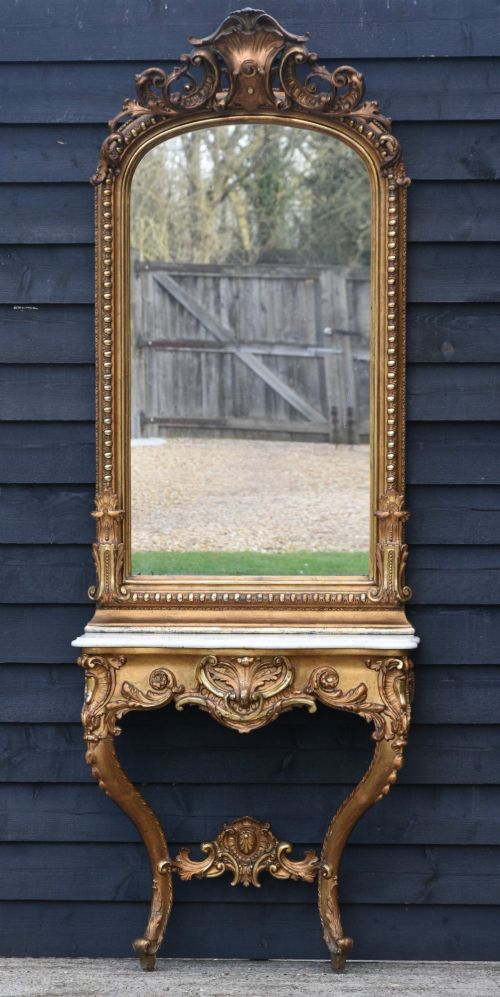
These tables traditionally anchor entrance halls, reception rooms, or living spaces against a flat wall. They frequently sit beneath a matching pier mirror to create a unified focal point in the interior.
Because of their shallow depth, they occupy minimal floor space while offering a prominent display surface for lamps, ceramics, or decorative objects.
How do I identify the period?
Dating relies upon stylistic markers such as the restrained geometry of Regency and neoclassical designs versus the exuberant curves of Rococo revival pieces. Construction methods and timber choices also offer clear indicators of age.
Examining the preparation layers beneath the gilding reveals the historical techniques employed by nineteenth and eighteenth-century workshops.
Are marble tops original?
Many surviving examples retain their heavy fitted marble slabs, which were chosen for their figured patterns and cool texture. Neoclassical and Victorian iterations frequently paired white or breche d'alep marble with gilded frames.
Checking the underside of the stone and its fit within the wooden rebate helps determine whether the top has remained with the base since manufacture.
How do I care for giltwood?
Gilt surfaces require gentle maintenance using a dry, soft brush to remove dust without disturbing the delicate metallic leaf. Moisture and harsh cleaning agents must be avoided entirely to preserve the underlying gesso.
Stable indoor humidity levels prevent the wooden frames from shifting, which protects both the carved structure and the gold leaf finish.