

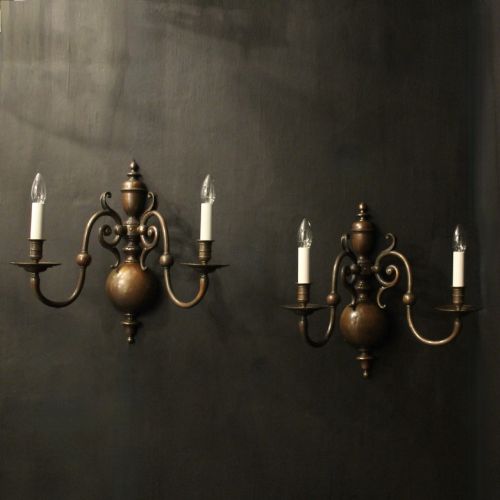
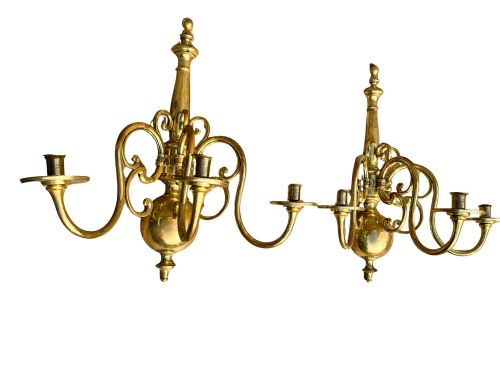
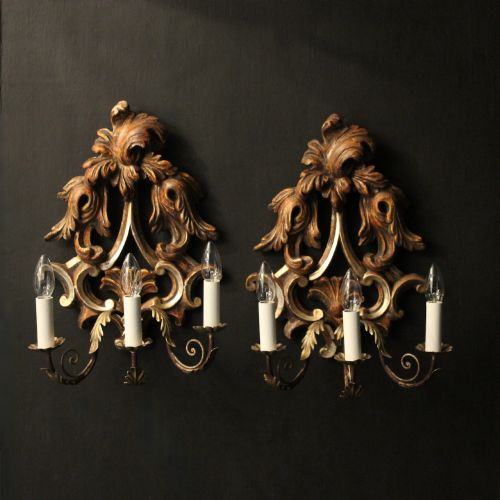


Baroque Style Brackets
Baroque style brackets are ornate wall supports and sconces that bring dramatic classical presence and rich historic character to an interior.
Baroque Style Brackets
Baroque style brackets encompass decorative wall supports, sconces, and console tables rooted in seventeenth and eighteenth-century design traditions. When exploring baroque style brackets, buyers encounter items ranging from carved wooden wall ledges to multi-branch lighting fixtures.
The selection on this page draws heavily from nineteenth-century revivals and early twentieth-century interpretations, particularly pieces reflecting Italian and French aesthetics. These objects frequently take the form of paired wall lights, carved wooden brackets, and gilt console tables.
Craftsmanship spans various origins, with Italian workshops and French makers providing much of the sculptural detail. Pieces from these traditions emphasise dynamic movement, architectural presence, and ornamental flair.
Materials and construction
Carved wood forms the structural foundation for many examples, utilising timber such as walnut, limewood, and general hardwoods shaped by hand. Artisans applied gesso layers over the wood to create a smooth preparatory surface for subsequent gilding.
Giltwood, gold leaf, and silver gilt finishes dominate the visual presentation of these pieces, providing a reflective metallic sheen. Metal elements such as brass, bronze, and ormolu appear in supporting arms and structural fittings for wall lights.
Baroque Style Brackets Retail Price Guide 2026
Typical asking prices for baroque style brackets among the pieces listed under this phrase on Sellingantiques today, from the lower quarter to the upper quarter. They describe what is for sale here now, not the wider market.
Listings feature items spanning the eighteenth, nineteenth, and early twentieth centuries, utilising wood, gesso, giltwood, bronze, and brass.
Assessing craftsmanship and finish
Depth and precision of the wood carving set finer examples apart from simpler productions, with superior pieces displaying crisp contours and deeply undercut foliage or figures. The quality of the gilding further distinguishes the range, where hand-applied gold leaf yields a warmer, more nuanced texture than uniform modern coatings.
Structural integrity and the harmonious integration of metal components with carved wooden bodies dictate overall refinement. Pieces that maintain balanced proportions and careful detailing across both primary motifs and mounting hardware represent the higher tier of the form.
Thuret
The Baroque Style Brackets Glossary
- Giltwood
- Wood that has been coated with thin sheets of gold leaf over a prepared gesso base. This technique creates a durable, luminous finish characteristic of high-end period furniture and decorative carvings.
- Ormolu
- Finely chased and gilded bronze used for mounts, decorative details, and lighting fixtures. The term derives from the French for milled gold and denotes a rich metallic appearance.
- Gesso
- A plaster-like mixture applied to wood surfaces to prepare them for painting or gilding. It provides a smooth, absorbent base that holds fine detail.
- Sconce
- A wall-mounted lighting fixture designed to hold candles or electric bulbs. These fixtures often feature elaborate backplates or extending arms to project light outward.
Baroque Style Brackets: Frequently Asked Questions
How were baroque style brackets used?
These pieces served primarily as decorative architectural supports or functional lighting fixtures within grand interiors. They were mounted on walls to hold candles, display ornaments, or support small console tops.
Over time, many wall brackets transitioned into purely decorative art objects, appreciated for their sculptural qualities rather than utility. In contemporary settings, they continue to function as wall displays or accent lighting.
Where should I place wall brackets?
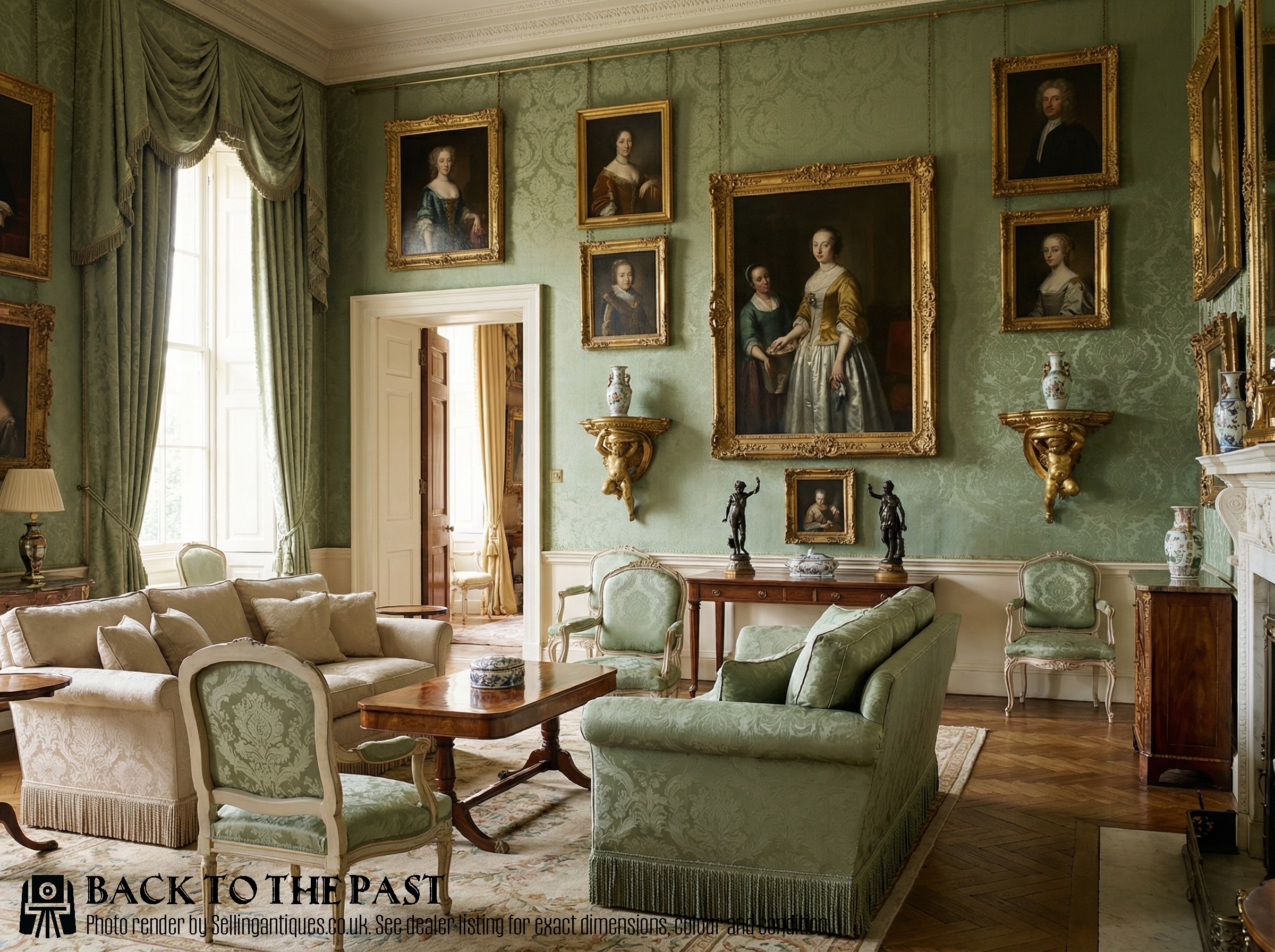
Wall brackets look best mounted at eye level or slightly above in spaces where their carved details can be appreciated. Hallways, living rooms, and dining areas provide suitable backdrops for pairs of sconces or decorative ledges.
Ensure the wall construction can support the weight of denser wooden and gilt pieces, particularly when mounting larger items. Pairing them with complementary mirrors or artworks enhances their visual impact.
How do I care for giltwood?
Giltwood requires gentle dusting with a soft, dry brush to prevent the accumulation of dirt without disturbing the delicate gold leaf surface. Avoid using liquid cleaners, moisture, or chemical polishes, as these can strip or damage the historic finish.
Keep pieces away from direct sunlight and areas of high humidity or fluctuating temperature to preserve the underlying gesso and wood. Careful handling protects the intricate carved edges from accidental chipping.
How do I identify a revival piece?
Revival pieces often display manufacturing techniques and tool marks consistent with nineteenth or early twentieth-century production rather than seventeenth-century originals. Examining the wood behind the gesso, the type of screws or fixings used, and overall wear patterns helps determine the true age.
Stylistic cues such as the specific interpretation of Louis XIV or Florentine motifs also point toward later revival periods. Comparing construction details with dated examples provides further clarity on origin.