

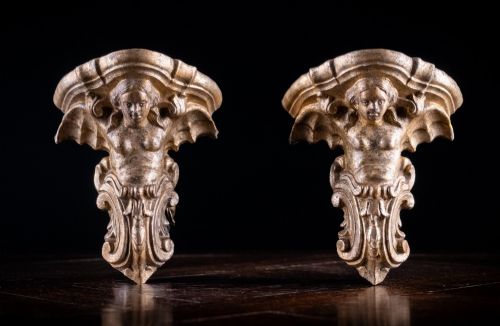
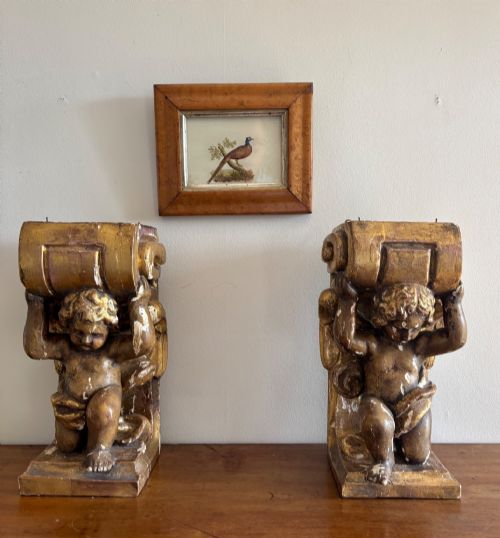


Gilt Corbel Shelves
Gilt corbel shelves bring sculptural presence to a room, offering gilded surfaces and architectural form to display smaller objects.
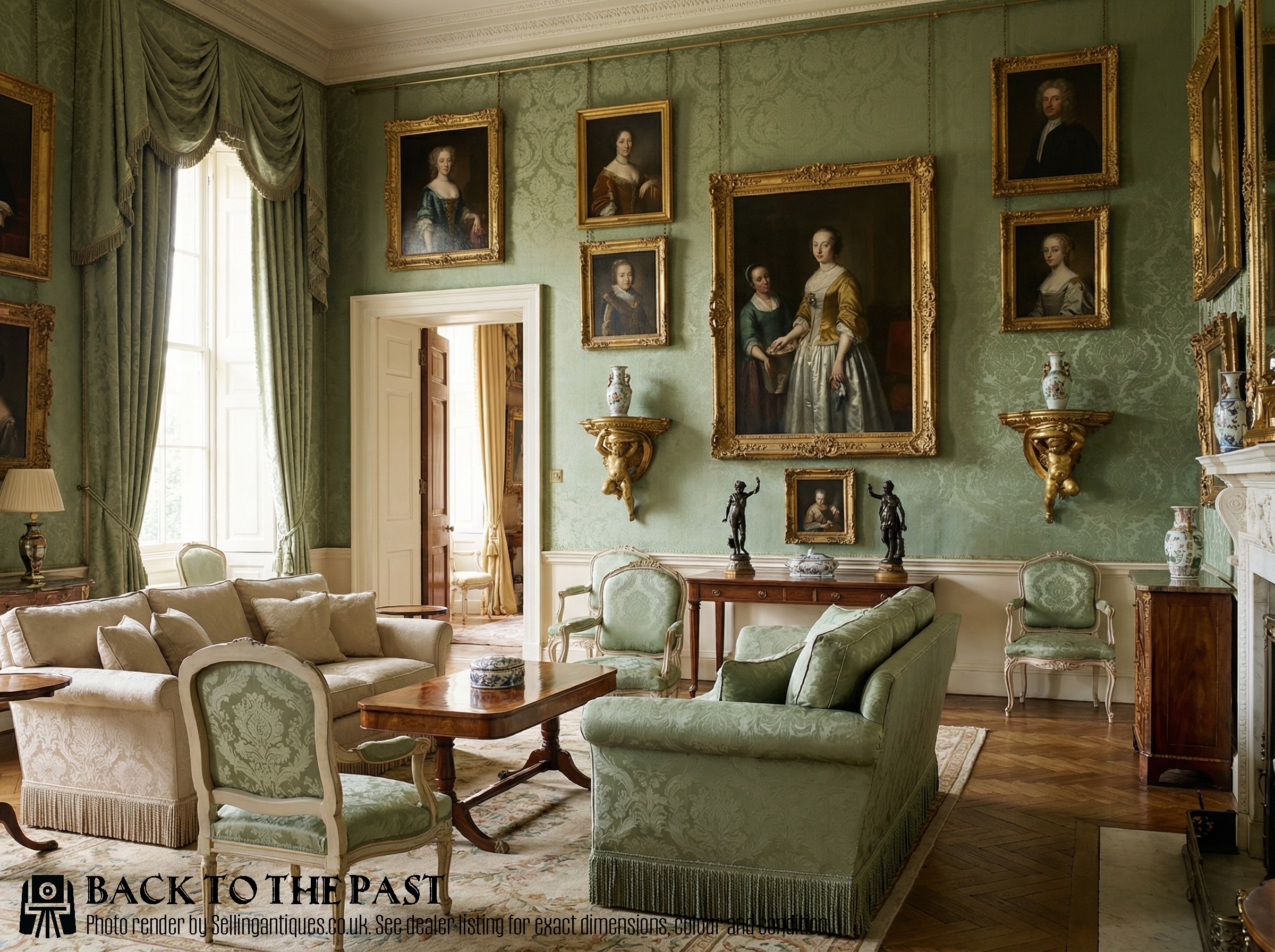
Gilt Corbel Shelves
When you search for gilt corbel shelves, you find wall brackets taking inspiration from classical architectural supports, predominantly rendered in giltwood, carved wood, and gesso. These pieces span the eighteenth, nineteenth, and early twentieth centuries, reflecting enduring revivals of baroque and rococo styles.
Victorian and Napoleon III periods supply many of the surviving items, showing elaborate scrollwork and asymmetrical leaf motifs derived from earlier continental designs. Buyers encounter single brackets as well as matched pairs, suited for flanking mirrors or doorways.
How they were made
Carved wood provides the structural core for traditional pieces, shaped from timber before receiving applications of gesso to build up crisp relief details. Artisans then applied gold leaf over sizing, burnishing specific areas to create contrast between matte and lustrous surfaces.
Ornate elements often combine materials, pairing gilded wooden frameworks with terracotta, ceramic, or ormolu mounts. Ebonised timber also appears alongside gilt bronze elements, demonstrating composite construction methods typical of nineteenth-century workshops.
Gilt Corbel Shelves Retail Price Guide 2026
Typical asking prices for gilt corbel shelves among the pieces listed under this phrase on Sellingantiques today, from the lower quarter to the upper quarter. They describe what is for sale here now, not the wider market.
Listings demonstrate that carved wood and gesso form the dominant material base for nineteenth-century wall brackets.
What varies in quality
The depth and sharpness of the carving dictate visual success, distinguishing hand-carved depth from softer moulded gesso ornamentation. Superior examples display confident, undercut foliage and scrolls that read clearly from a distance.
The integrity of the gilding surface determines overall character, where genuine gold leaf ages with a softer warmth than later metallic paints. Construction heft and the precision of the joints where the shelf meets the wall bracket further separate standard production from exceptional craftsmanship.
Henri Dasson
The Gilt Corbel Shelves Glossary
- Corbel
- A structural bracket projecting from a wall to support a weight above it. In decorative pieces, this form becomes purely ornamental.
- Giltwood
- Timber that has been coated with gold leaf or powder. This finish protects the wood while providing a brilliant reflective surface.
- Gesso
- A plaster mixture applied to carved wood as a smooth base for gilding. It allows craftsmen to model sharp decorative details.
- Ormolu
- Gilded bronze used for decorative mounts and decorative hardware. The technique involves applying a mercury-gold amalgam to bronze.
- Rococo Revival
- A nineteenth-century design movement mimicking the ornate, asymmetrical curves of the eighteenth-century French style. It relies heavily on C-scrolls and naturalistic plant motifs.
Gilt Corbel Shelves: Frequently Asked Questions
What were gilt corbel shelves used for originally?
These pieces served primarily as architectural wall brackets intended to elevate decorative objects, such as clocks, porcelain figures, or small bronzes, within formal interiors. By projecting outward from the wall, they created focal points and added depth to room schemes.
In period reception rooms and parlours, matched pairs were frequently positioned beneath mirrors or flank doorways to balance the room's symmetry. Their structural form mimics stone corbels while utilising lighter timber and plaster techniques appropriate for interior display.
How do I hang a heavy antique wall bracket safely?
Secure mounting requires locating proper wall studs or using heavy-duty wall anchors rated for the specific weight of the carved wood and gesso. Because these items project outward, the leverage places significant strain on the upper fixing point.
Most antique brackets feature integrated hanging loops or screw holes concealed within the backplate. Consulting a professional installer ensures the bracket supports both its own weight and any object placed upon the shelf.
How do I distinguish eighteenth-century pieces from nineteenth-century revivals?
Eighteenth-century examples typically show hand-carved timber construction with distinct tool marks and thinner, more degraded layers of gesso beneath the gold leaf. The carving tends to exhibit a fluid, organic asymmetry born of contemporary practice rather than stylistic revival.
Nineteenth-century revival pieces often employ heavier gesso build-ups over pine or hardwood cores, reflecting industrial-era production methods. Stylistic cues, such as Napoleon III or Victorian inventory labels, also point firmly to later nineteenth-century manufacture.
How should I clean and maintain antique giltwood?
Dusting requires only a very soft, dry artist brush or ostrich feather duster to remove particles without disturbing delicate gold leaf flakes. Moisture and modern chemical cleaners must be avoided entirely, as they strip the water-gilding size.
Keeping the shelf away from direct sunlight and damp environments prevents the gesso foundation from cracking or lifting. Professional conservation is necessary if structural repairs or regilding become essential.