

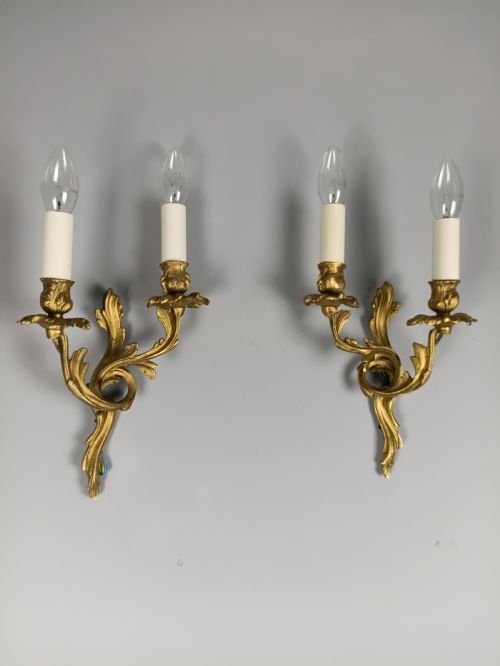

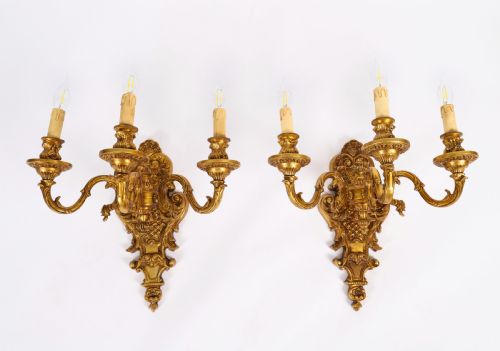
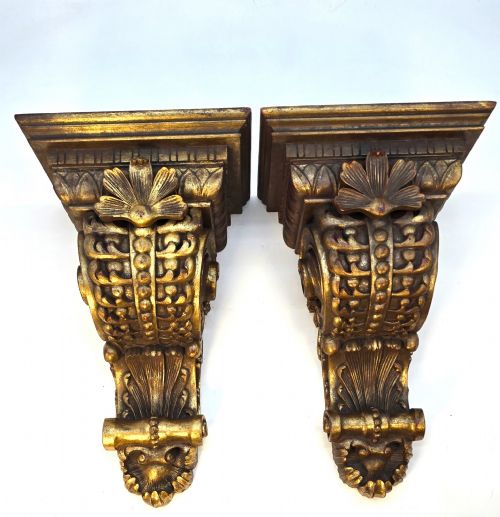
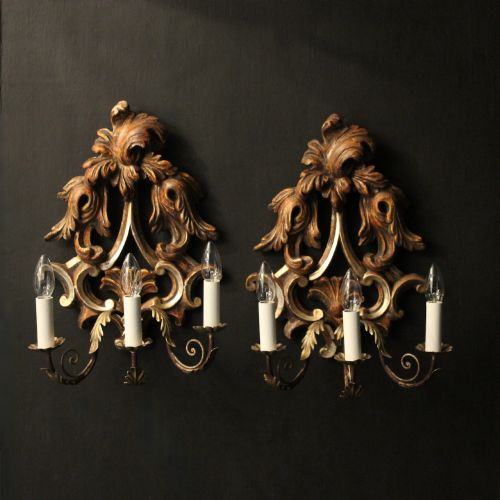


Gold Leaf Brackets
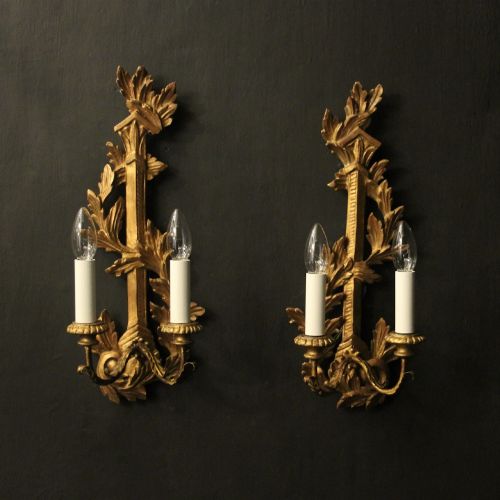
Gold leaf brackets bring architectural weight and rich metallic warmth to a room, holding candles, lamps or ornaments with classical poise.
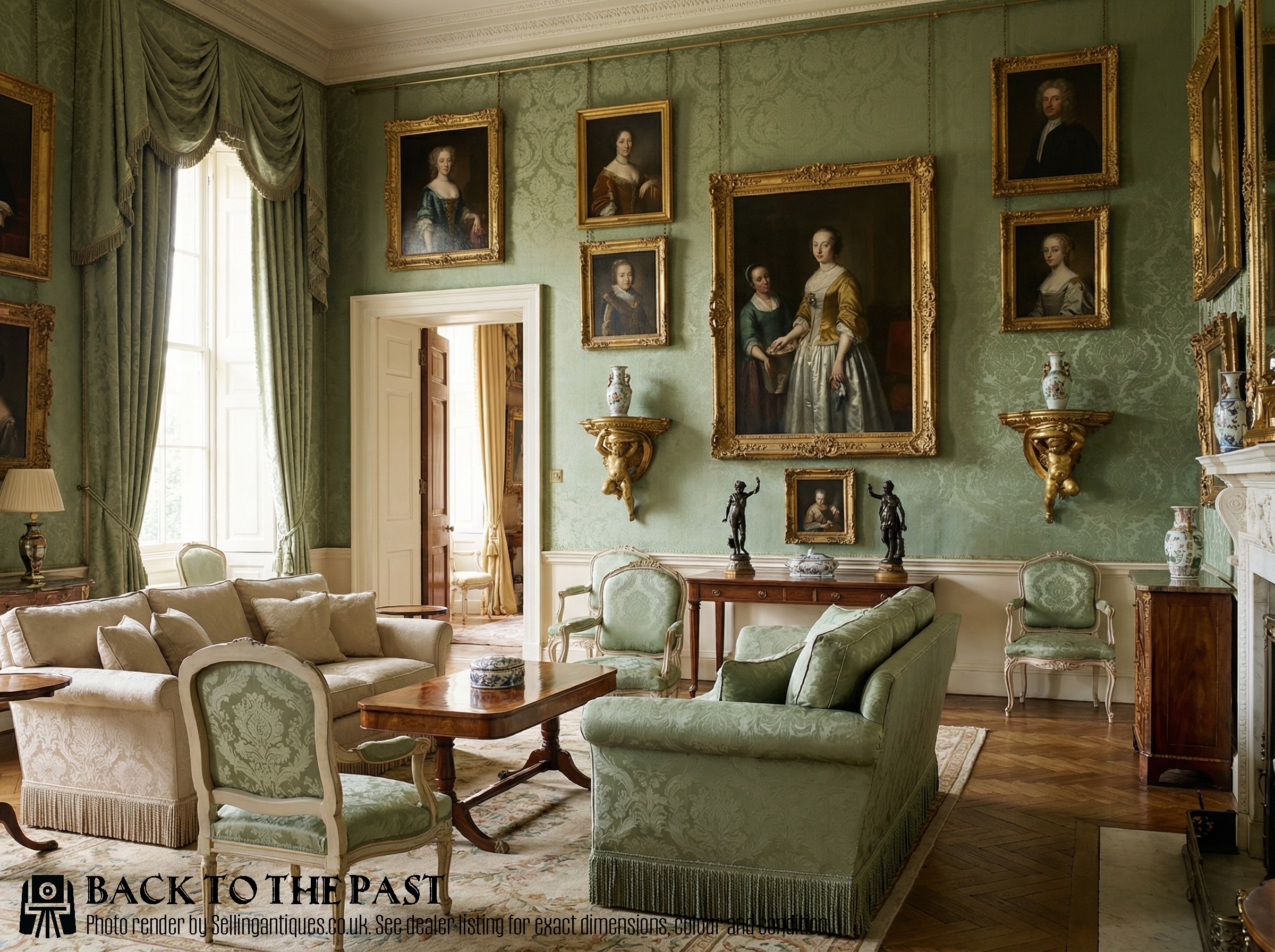
Gold Leaf Brackets
Gold leaf brackets encompass wall shelves, display ledges and structural supports designed to project ornamental objects or lighting from vertical surfaces. When searching for gold leaf brackets, buyers encounter varied forms spanning simple wall shelves to elaborate display brackets and sconces.
The selections on this page draw from centuries of design, including pieces from the eighteenth and nineteenth centuries alongside early twentieth century interpretations. Common configurations range from carved wooden ledges to mirrored display shelves and multi-armed wall lights sharing gilded finishes.
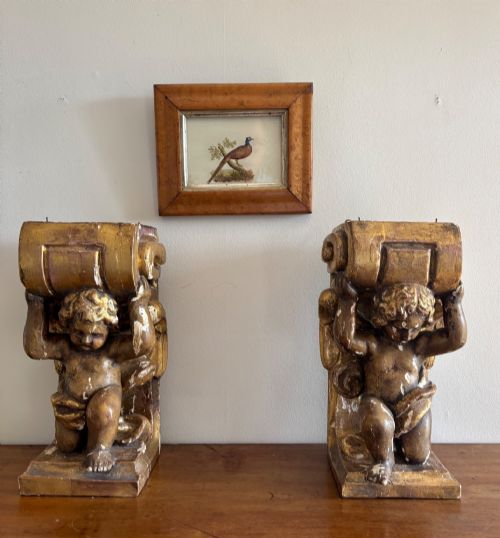
Origin points cluster around French and Italian workshops, channelling Rococo, Neoclassical and Florentine aesthetic traditions. Buyers frequently meet pairs of carved wooden or gessoed supports originating from continental European and Victorian domestic interiors.
How they were made
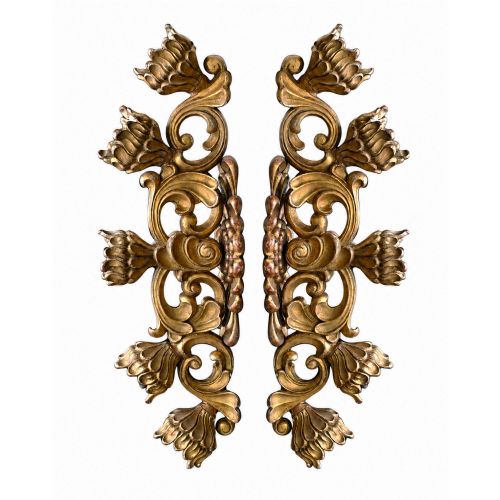
Artisans built these supports using carved wood, cast metal or moulded gesso as a structural base before applying delicate layers of gold leaf or gilt. Carved timber foundations provide organic depth, particularly in Florentine and French Rococo pieces where intricate scrollwork relies on the pliability of the material.
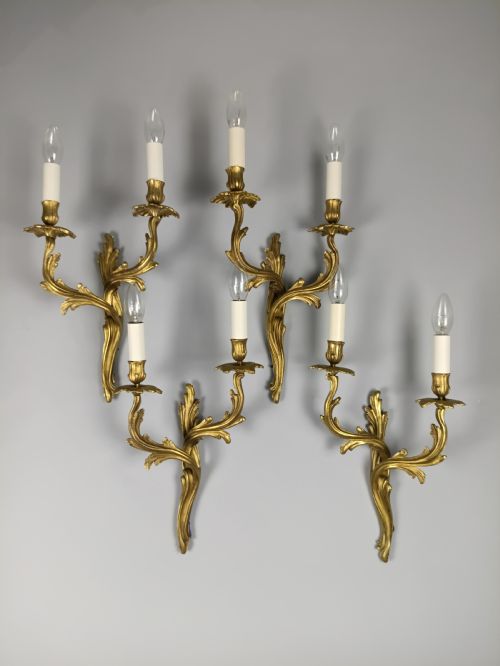
Gesso surfaces act as a smooth preparation layer beneath the metallic leaf, accepting minute detail in decorative mouldings and mirror frames. Bronze, brass and ormolu variants utilise metal casting techniques to form rigid armatures for wall lights and console mounts.
Gold Leaf Brackets Retail Price Guide 2026
Typical asking prices for gold leaf brackets among the pieces listed under this phrase on Sellingantiques today, from the lower quarter to the upper quarter. They describe what is for sale here now, not the wider market.
Some wall brackets wear their age proudly through tiny traces of red bole peeking out where centuries of dusting have thinned the golden coat.
What varies in quality
The distinction between ordinary and exceptional pieces rests in the crispness of the hand-carved detail and the purity of the gilding technique. Superior items display deep undercutting in the wooden scrollwork and subtle burnishing on the gold leaf that catches candlelight with varying sheen.
Substantial weight and thoughtful structural joinery separate fine antique brackets from later decorative reproductions. The integrity of the underlying gesso and wood directly influences how cleanly the ornamentation survives across centuries of use.
The Gold Leaf Brackets Glossary
- Giltwood
- Timber coated with gold leaf or gold paint to simulate solid gold enrichment. This material forms the primary body of many antique wall brackets and sconces.
- Gesso
- A plaster mix applied to wood surfaces as a preparation base for gilding and fine moulding. It allows craftsmen to impress sharp decorative reliefs before applying metallic leaf.
- Ormolu
- Gilded bronze utilised for decorative mounts, clock cases and wall light fittings. The technique produces a rich, durable metallic finish typical of French decorative arts.
- Rococo
- An ornate design style characterised by asymmetrical scrolls, C-curves and naturalistic plant motifs. It heavily influences the fluid silhouettes found on eighteenth and nineteenth century brackets.
- Appliqué
- An applied ornamental fixture attached to a wall surface, frequently functioning as a sconce or bracket. These elements project light or decorative objects outward into the room space.
Gold Leaf Brackets: Frequently Asked Questions
How do I hang a heavy gold leaf bracket?
Wall brackets require secure fixing directly into masonry or substantial timber studs behind plasterwork because of the combined weight of carved wood, gesso and metal.
Utilising appropriate wall anchors ensures the structural security of the bracket when displaying heavy items like mantel clocks or porcelain.
Can these brackets hold heavy objects?
Solid carved wood and metal iterations support substantial weight if anchored properly into the wall structure. Lighter gesso and pine variants suit decorative ornaments, smaller clocks or candles rather than massive loads.
Assessing the backplate and mounting points reveals whether a specific piece is engineered for display utility or purely ornamental projection.
How do I clean antique gilded surfaces?
Dusting gently with a soft, dry brush or feather duster preserves the delicate gold leaf without abrasion. Water and chemical cleaning agents strip or discolour fragile historical gilding.
Professional conservation advice is necessary if deeper cleaning becomes essential to remove stubborn grime from intricate carved recesses.
How do I tell an 18th century bracket from a 19th century revival piece?
Eighteenth century originals display hand-cut tool marks, aged timber shrinkage and genuine wear patterns within the gesso layers. Revival pieces from the Victorian era or later often feature heavier machine tooling and denser, more uniform plaster preparations.
Examining the reverse side and joinery methods provides clear clues regarding the age of the wooden armature.