



Antique Cherub Brackets
Antique cherub brackets bring sculptural putti and carved ledges to interiors, offering architectural charm paired with display space.
Antique Cherub Brackets
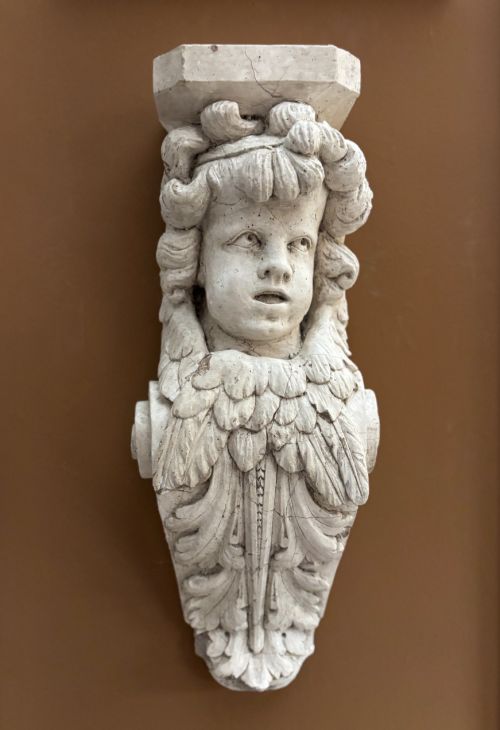
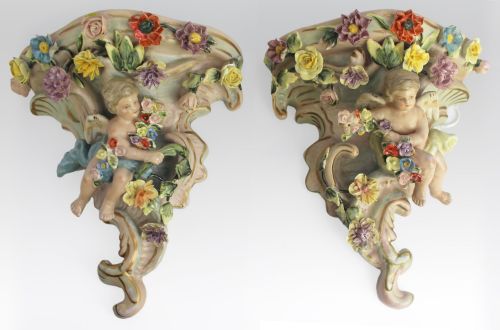
When you search for antique cherub brackets, you are looking at architectural supports and wall mounts featuring carved or cast figures of winged putti. These decorative ledges and corbels serve both to hold small objects and to provide ornamental relief against a wall.
The versions you are most likely to meet on this page span the nineteenth and early twentieth centuries, drawing heavily on French Rococo Revival, Baroque, and Louis styles. They appear primarily as carved wood, giltwood, or cast bronze fixtures designed to anchor wall displays.
How they were made
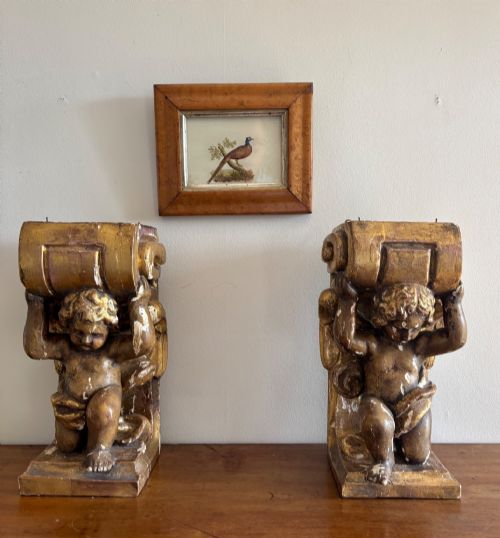
Carved wood examples utilise timber such as rosewood or pine, shaped with hand gouges before receiving coats of gold leaf or gesso. Cabinetmakers and carvers built up intricate relief work to define the wings, hair, and drapery of each figure.
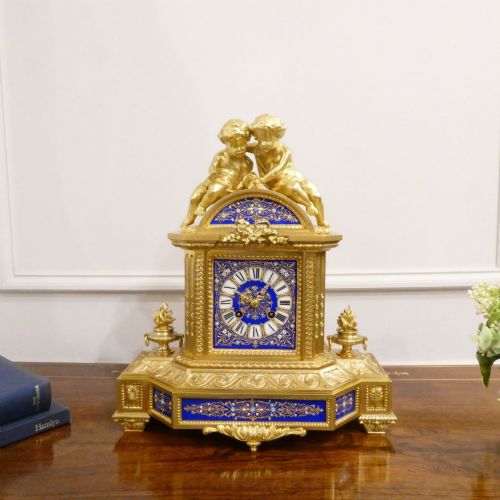
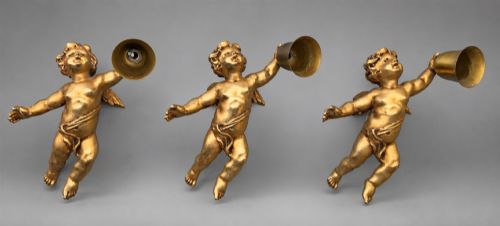
Metal versions rely on casting techniques in brass, ormolu, and gilt bronze, often finished with fire-gilding to achieve a bright metallic lustre. These pieces combine structural mountings with detailed figural castings produced in foundries across France and England.
Antique Cherub Brackets Retail Price Guide 2026
Typical asking prices for cherub brackets among the pieces listed under this phrase on Sellingantiques today, from the lower quarter to the upper quarter. They describe what is for sale here now, not the wider market.
Some cherubs are caught mid-mischief, reaching straight for birds in trees while ignoring the structural weight resting safely upon their tiny wings.
What varies in quality
Material application and gilding depth dictate the longevity and visual richness of the piece. Thick applications of gold leaf or well-preserved fire-gilding retain their warmth and integrity far better than thin, rubbed finishes.
Leon Message·Jollet et Cie·Samuel Marti·Le Roy and Fils·Baetens London
The Antique Cherub Brackets Glossary
- Corbel
- A structural bracket projecting from a wall to support a weight. In this context, it doubles as a decorative shelf featuring figural carvings.
- Putto
- A figure of a human infant, frequently winged, depicted in classical art and later revivals. These figures form the primary sculptural motif of the brackets.
- Ormolu
- Finely ground high-carat gold applied to a bronze object using a mercury amalgamation technique. This process creates a durable, rich golden surface finish.
- Gesso
- A paint mixture consisting of a binder mixed with chalk, gypsum, or pigment. It provides a smooth base for the application of gold leaf on wooden brackets.
- Rococo Revival
- A nineteenth-century design movement characterised by asymmetry, scrollwork, and naturalistic motifs. This style heavily influences the curves and ornamentation of many cherub brackets.
Antique Cherub Brackets: Frequently Asked Questions
How do I mount an antique bracket safely?
Most brackets feature integrated hanging loops or screw holes positioned behind the scrollwork or shelf plate. Fixing them securely requires matching the weight of the timber or bronze to appropriate wall anchors.
Heavier giltwood and cast bronze pieces demand direct attachment to wall studs or solid masonry rather than hollow drywall alone.
What rooms suit antique cherub brackets?
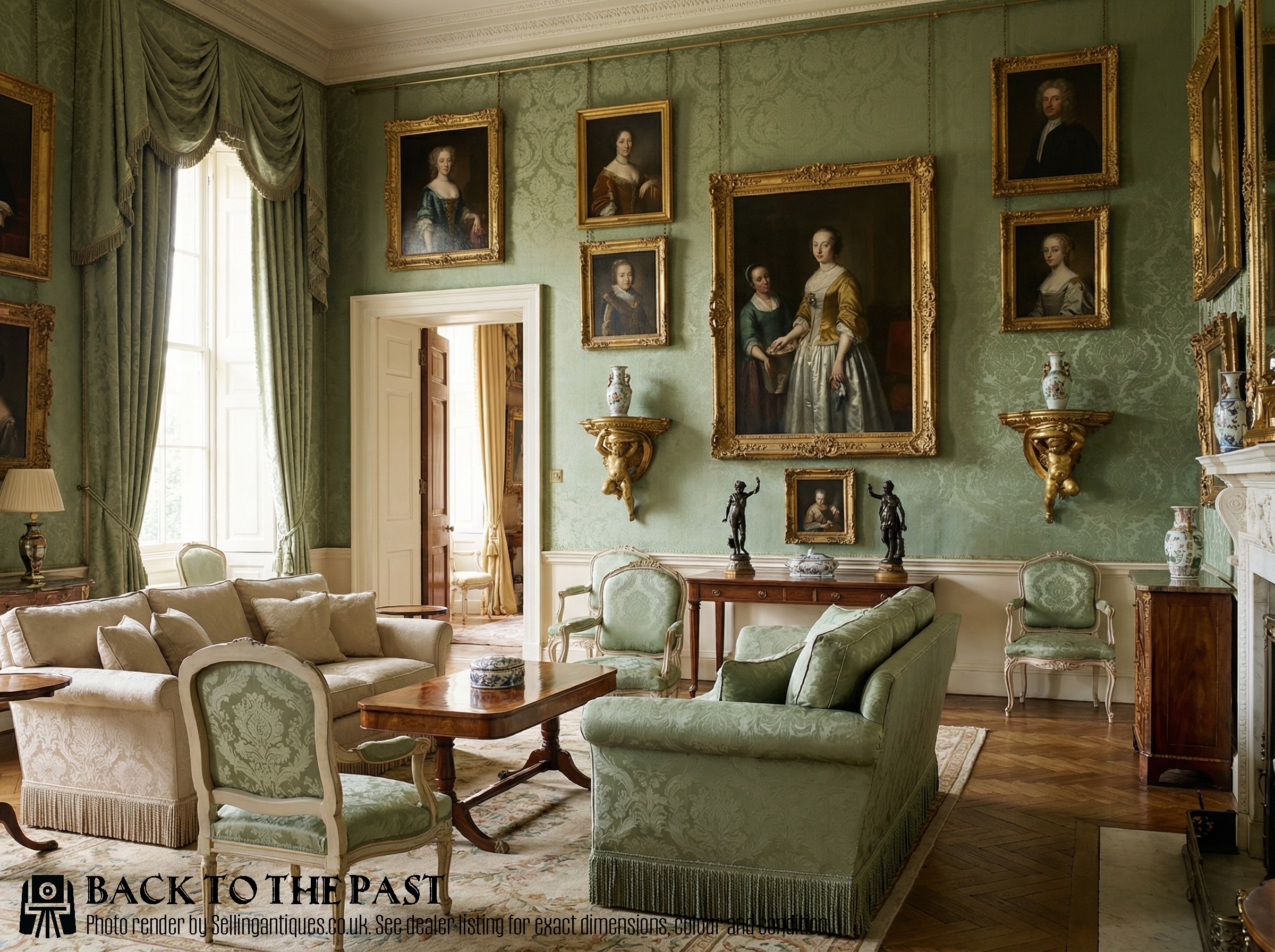
These brackets work effectively in entrance halls, living rooms, and studies where they can display small clocks, porcelain, or pocket watches. Their sculptural presence draws the eye upward and breaks up plain wall expanses.
Placing them at eye level or slightly above allows the carved details of the putti to be appreciated fully from a distance.
How do I clean giltwood and ormolu?
Dusting these surfaces requires a very soft, dry brush to prevent abrasive particles from scratching the delicate metallic leaf or bronze patina. Moisture and commercial chemical cleaners can strip historical finishes.
Keeping them away from direct sunlight and damp environments preserves the stability of the wood beneath and prevents the gilding from flaking.
Are these brackets French or English?
The listings show a strong French influence, particularly through nineteenth-century revivals of Louis XIV and Rococo styles, executed in giltwood, ormolu, and boulle work. English makers also produced similar wall fixtures, often drawing on Victorian interpretations of classical forms.
Examining the underlying timber, construction joints, and casting quality helps identify the likely regional workshop of origin.