




Italian Wall Consoles
Italian wall consoles are decorative furniture pieces designed to anchor against a wall, bringing carved detail and marble surfaces into reception rooms.
Italian Wall Consoles
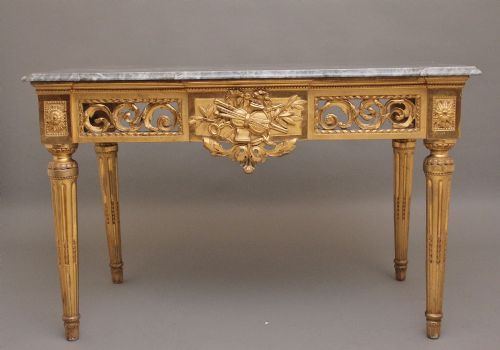
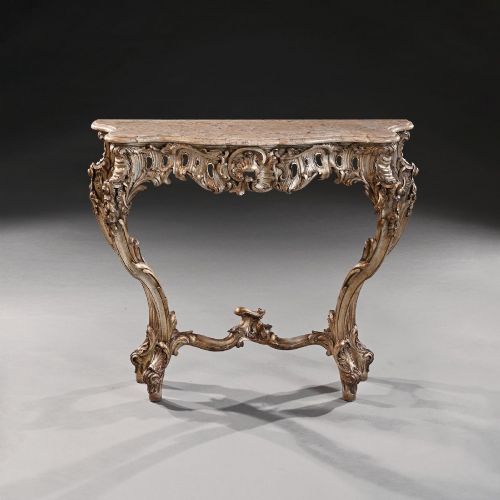
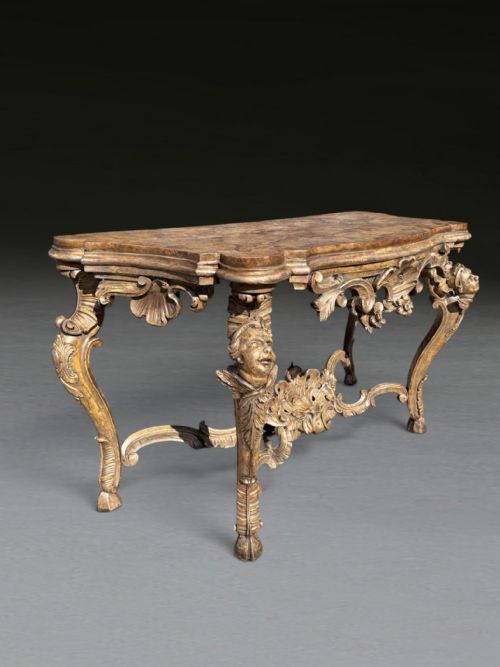
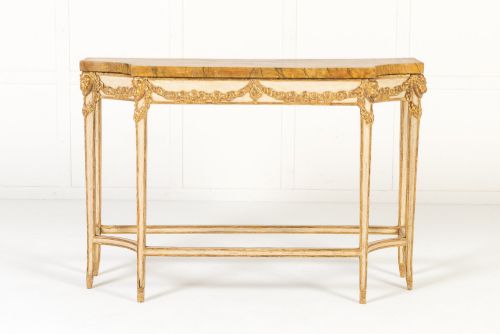
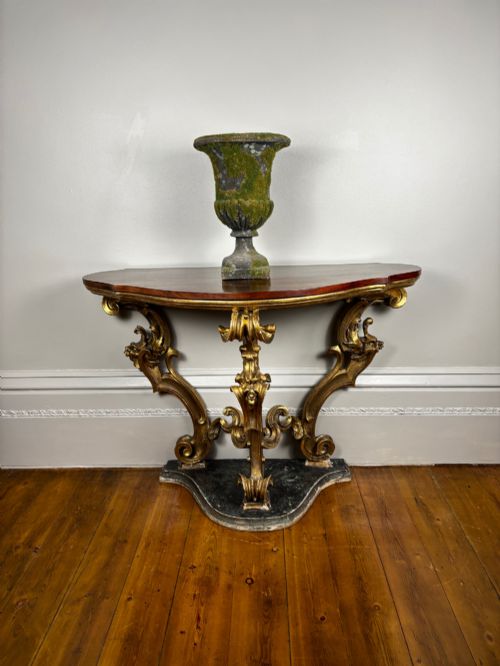
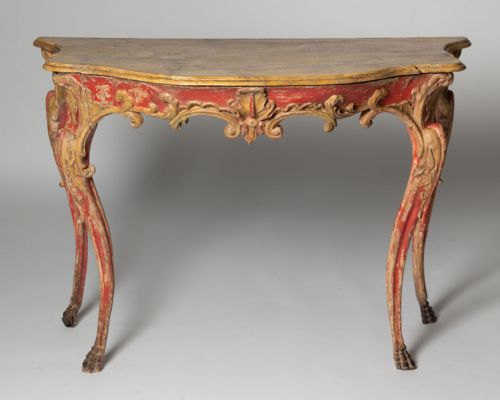
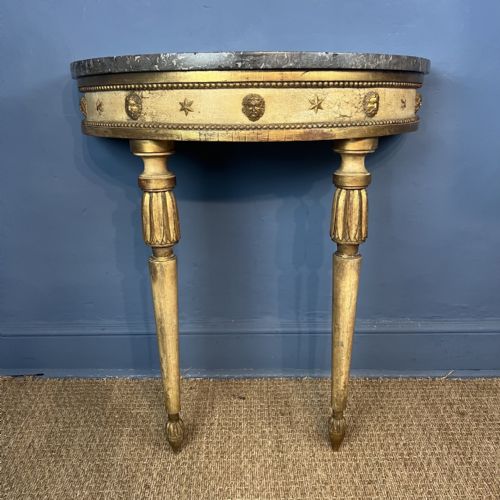
Italian wall consoles comprise console tables, wall brackets, and pier mirrors designed to fit flush against structural walls. The items seen most frequently span the eighteenth and nineteenth centuries, taking the form of demi-lune or serpentine tables alongside smaller wall brackets.
Makers utilised regional styles such as Venetian Rococo, Italian Neoclassical, and Baroque Revival to shape these items. Surviving examples often appear in matched pairs, demonstrating the symmetrical tastes of historic interiors.
How they were made
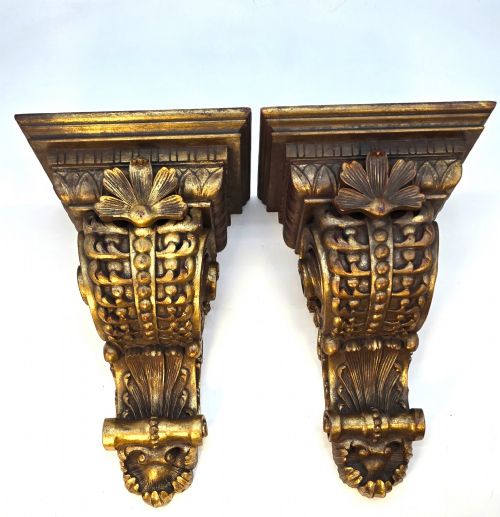
Carvers shaped solid woods including walnut, mahogany, and kingwood, applying layers of gesso to carved wood surfaces before gilding them with gold leaf or silver gilt. Paint finishes also appear across eighteenth and nineteenth-century pieces, sometimes incorporating faux porphyry effects.
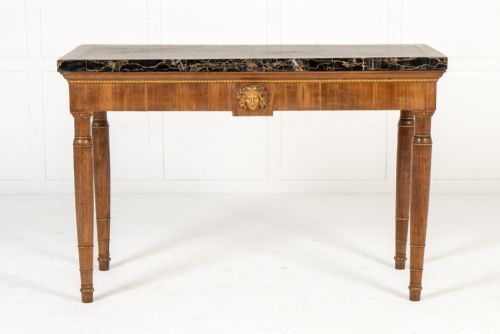
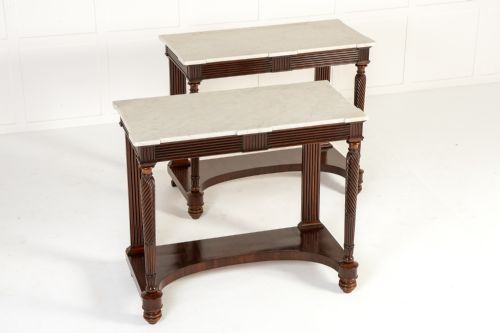
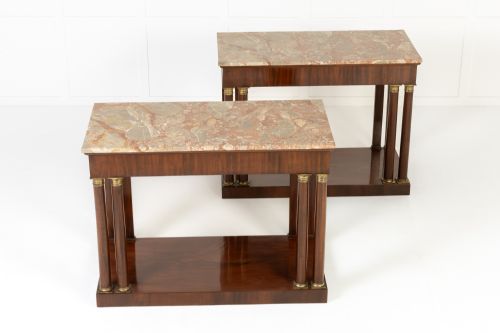
Tops consist predominantly of marble, including breccia and specimen varieties, cut to follow the serpentine or demi-lune contours of the wooden framework below.
Listings feature items spanning the 18th Century, 19th Century, and early 20th Century, constructed from walnut, mahogany, marble, and giltwood.
What varies in quality
The crispness of the hand-carved detail distinguishes finer examples, where motifs such as cherubs, lion paws, and rams' heads retain sharp definition beneath the gilding or paint. Lesser pieces show softer lines and heavier application of gesso that obscures the underlying woodwork.
The selection of the marble top also indicates the grade of the piece, with shaped or specimen marble slabs representing a higher standard of manufacture than plain timber surfaces.
Luigi Frullini
The Italian Wall Consoles Glossary
- Giltwood
- Wood that has been coated with gold leaf over a prepared gesso ground. This technique creates a luminous metallic finish characteristic of many antique console tables.
- Demi-lune
- A half-moon shape. Tables with this profile sit flat against the wall with a curved front edge.
- Serpentine
- A line that curves outward at the centre and inward at the sides, or vice versa. This undulating contour appears frequently on eighteenth-century console tabletops.
- Gesso
- A plaster mixture applied to wood surfaces to provide a smooth base for gilding or painting. Skilled artisans carve directly into this layer to achieve fine relief details.
- Wall bracket
- A small architectural shelf designed to be mounted directly to a wall. These fixtures often feature elaborate carved wood supports in the Baroque style.
Italian Wall Consoles: Frequently Asked Questions
Where were Italian wall consoles placed?
These pieces were positioned against interior walls in grand reception rooms, often placed beneath pier mirrors or between windows to maximise light and reflection.
Because they lack rear legs and rely on wall support or brackets, they occupied minimal floor space while providing a surface for decorative objects.
How do I identify a Baroque Revival console?
Baroque Revival examples typically display exuberant carving, including motifs like lion's paws, cherubs, and scrolling foliage. They often feature substantial marble tops and heavier proportions than earlier Rococo pieces.
Many date to the mid to late nineteenth century, reflecting a renewed interest in seventeenth-century Italian design.
Are marble tops original to these tables?
Most antique Italian consoles retain their original fitted marble tops, which were cut specifically to match the serpentine or demi-lune frames.
Breccia and specimen marble varieties are common on eighteenth and nineteenth-century pieces, contributing significantly to the overall weight of the furniture.
What is the difference between a console and a bracket?
Consoles are table structures featuring a surface supported by legs or wall brackets, designed to stand on the floor while anchored to the wall.
Wall brackets are smaller, standalone architectural ledges mounted entirely onto the wall surface without floor support.