



Vintage Italian Consoles
Vintage italian consoles bring sculptural carved wood, painted surfaces and marble tops into a room with striking presence.
Vintage Italian Consoles
When you search for vintage italian consoles, you are looking at ornamental tables and wall brackets made across centuries of Italian craftsmanship. The selection ranges from grand 18th century pieces to early 20th century serpentine designs and painted folk art.
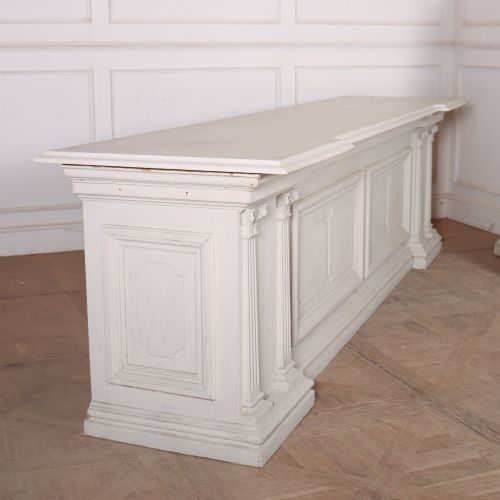
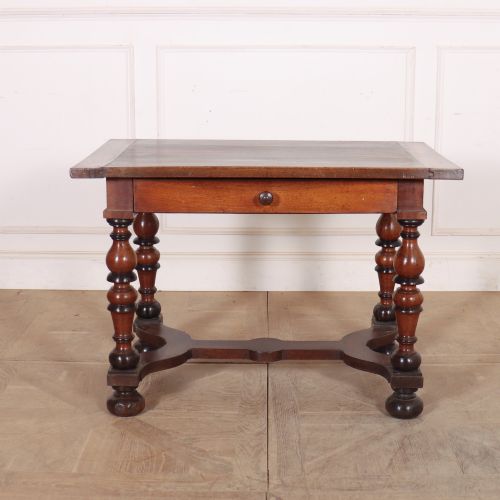
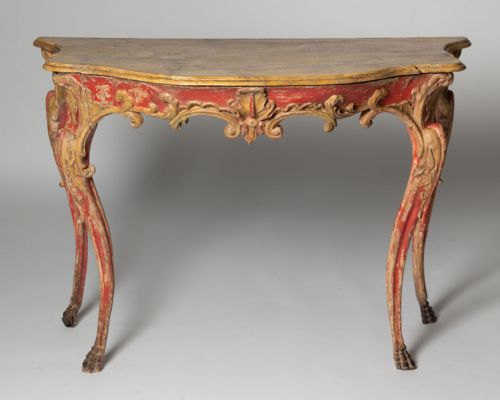
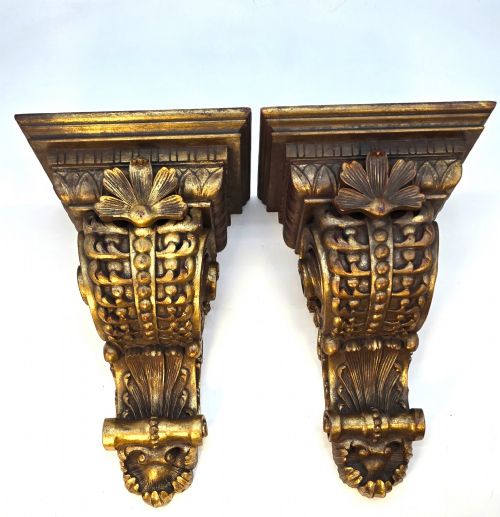
You are most likely to meet painted console tables, carved wooden wall brackets, and walnut centre tables featuring marble tops. These items bridge the gap between architectural elements and functional furniture, often designed to anchor a hallway or reception room.
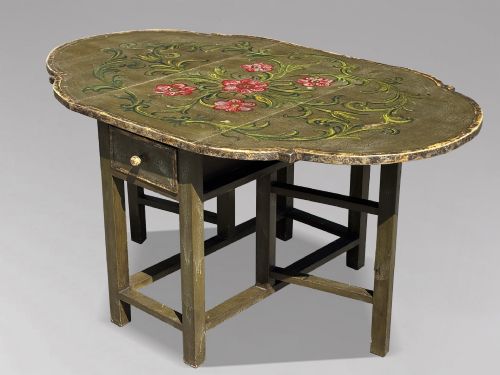
The forms encompass wall consoles, drop-leaf tables, and desks spanning the 18th, 19th, and early 20th centuries. Their regional styles draw heavily on Italian Baroque, Rococo, and Neoclassical traditions.
How they were made
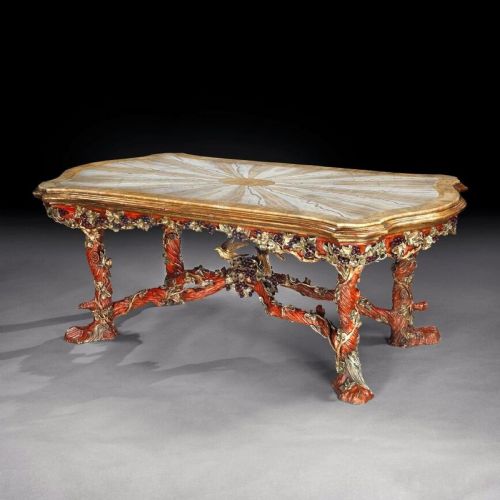
Carved wood forms the structural core of these pieces, often finished with gesso and gold leaf or layered polychrome paint. Artisans shaped walnut and other woods into elaborate curves, marine motifs, and cherub details.
Surface decoration relies heavily on hand-applied paint, gilding, and contrasting stone. Many tables incorporate heavy pink Salome or onyx marble tops resting upon heavily worked wooden bases.
Carved wooden dolphins occasionally support the weight of an Italian side table, proving that marine life makes an excellent furniture base.
What varies in quality
The depth and fluidity of the wood carving separate masterworks from simpler workshop output. Crisp execution in the gesso and the natural movement of serpentine edges distinguish superior examples.
The integration between the stone top and the wooden base indicates the original ambition of the piece. Authentic period paint layers and original gilding hold greater distinction than later surface updates.
Amleto Bertoni
The Vintage Italian Consoles Glossary
- Console Table
- A table designed to be fixed against a wall, frequently supported by ornamental brackets or legs at the front only. They often carry heavy marble slabs.
- Gesso
- A plaster mixture applied to wood surfaces as a base for painting or gilding. It allows for crisp, detailed low-relief ornamentation.
- Serpentine
- A furniture top or front shape featuring a double curve, curving outward at the centre and inward at the sides. This contour demands high skill in both woodworking and stone cutting.
- Polychrome Paint
- The practice of decorating furniture in several colours. In Italian pieces, this often involves floral motifs or faux-marble finishes.
- Wall Bracket
- A decorative architectural support or small shelf fixed directly to a wall. Italian examples often feature carved cherubs or gilded scrollwork.
Vintage Italian Consoles: Frequently Asked Questions
Where should I put a console?
These tables find their natural home in entrance halls, hallways, or living rooms beneath a mirror or painting. Because many are narrow or designed to anchor against a wall, they occupy minimal floor space while making a strong visual statement.
Wall brackets require secure fixing to support their carved wooden weight and any decorative objects placed upon them.
How do I care for marble tops?
Marble tops benefit from regular dusting with a soft, dry cloth and immediate blotting of any liquid spills. Acidic substances like citrus or wine can etch polished stone surfaces very quickly if left unattended.
Applying a specialist stone wax helps protect the historical patina without altering the natural appearance of the marble.
Are these tables sturdy enough for daily use?
Most antique consoles and wall brackets are primarily decorative or architectural in intent rather than built for heavy weight. Wall consoles and brackets rely partly on proper wall mounting for absolute stability.
Free-standing centre tables and side tables offer more robust everyday utility depending on their base construction.
How can I tell the period?
Dating relies on stylistic clues such as the theatrical curves of Baroque and Rococo Revival, or the restrained symmetry of Neoclassical design. Wood types, construction joints, and the ageing of paint or gold leaf provide further confirmation.
Earlier pieces from the 18th century display hand-cut joinery and aged patination distinct from early 20th century revivals.