



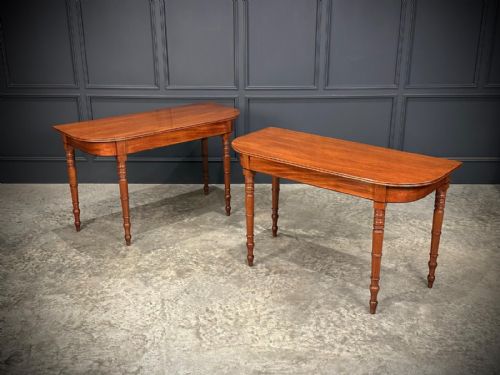
Pair of Wall Consoles
A pair of wall consoles brings symmetrical balance and architectural punctuation to a hallway or drawing room.
Pair of Wall Consoles
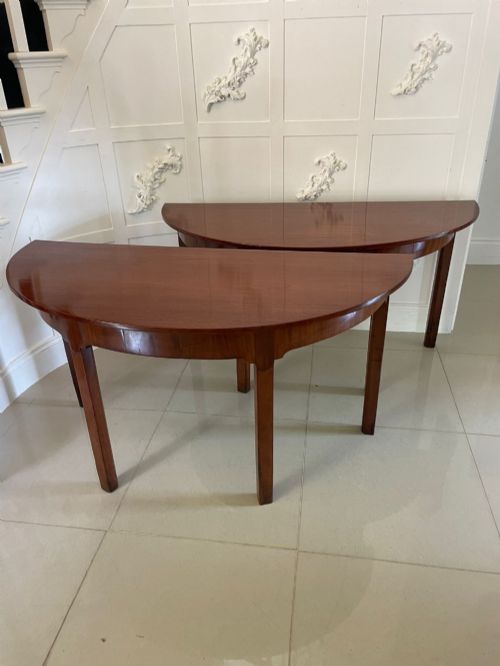
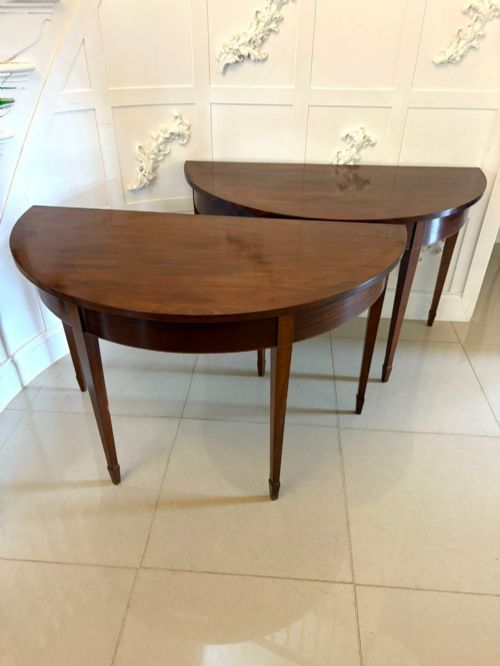
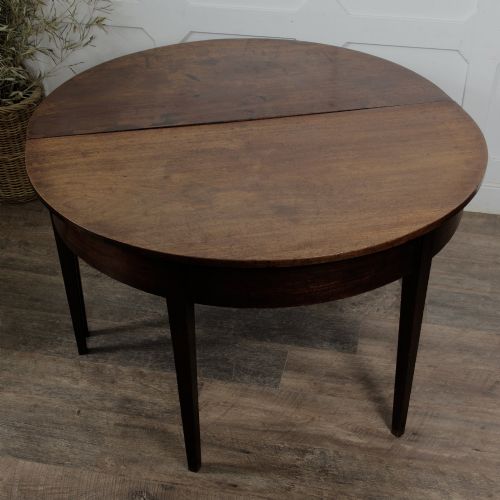
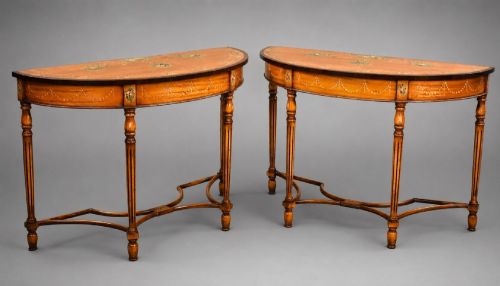
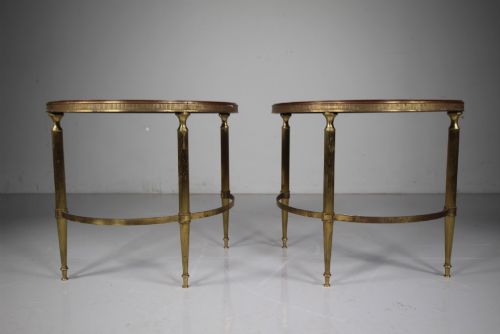
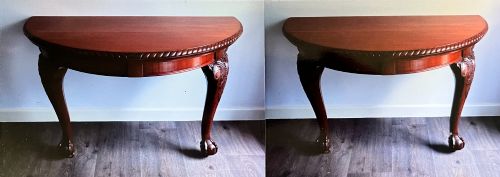
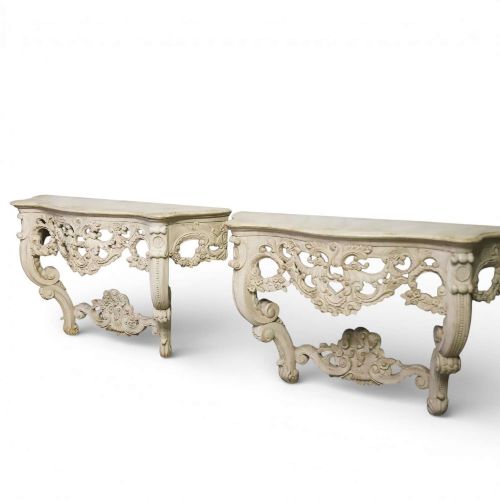
A buyer examining a pair of wall consoles will find pieces designed to anchor architectural spaces, frequently taking the form of demilune tables, side tables, or structural wall brackets. These objects emerge from periods spanning the eighteenth, nineteenth, and early twentieth centuries, reflecting styles from George III and Georgian to Victorian, Rococo Revival, and Italian Neoclassical.
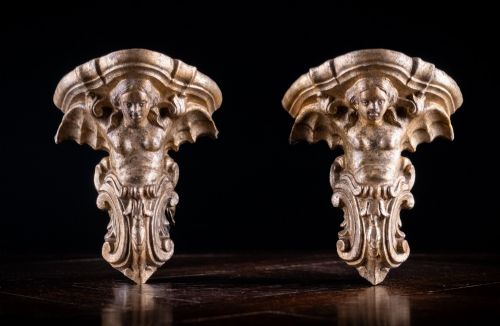
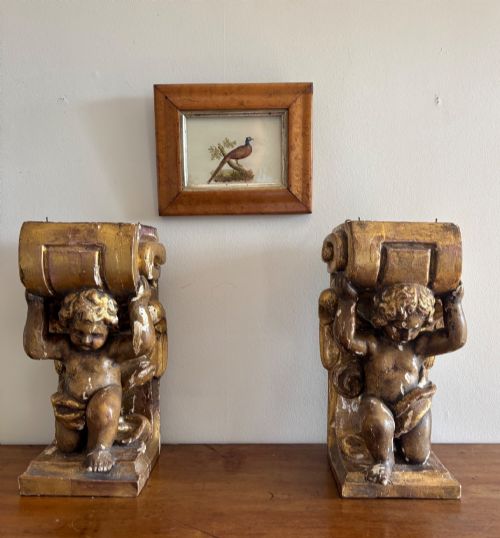
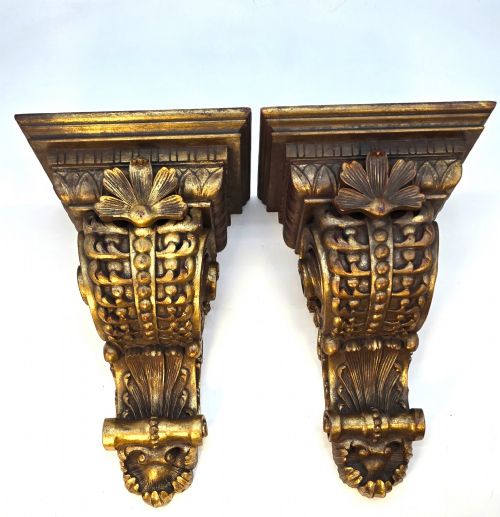
The most common examples on this page are mahogany and walnut console tables with demi-lune shapes, alongside giltwood and carved wood wall brackets designed to support heavier items or stand alone. Swedish, French, and Italian origins appear regularly among these furnishings, showing regional variations in painted wood and marble tops.
Makers and designers working across these centuries utilised specific forms like pier tables and wall-mounted display brackets to maximise wall space in formal rooms. The listings capture both substantial dining console pairs and smaller decorative brackets intended for display.
Materials and construction
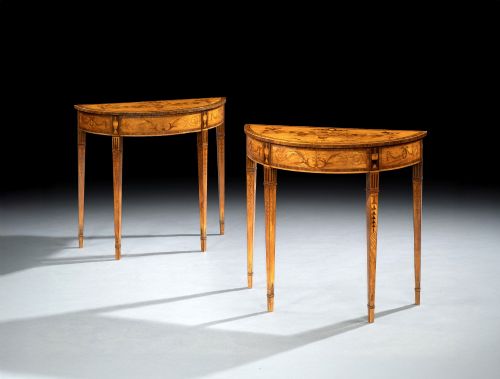
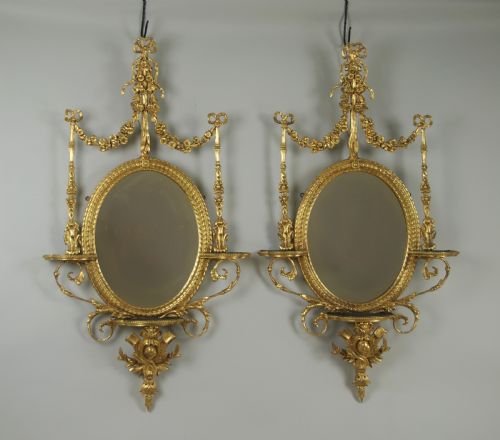
Cabinetmakers constructed these pieces primarily from solid and figured timbers such as mahogany, walnut, satinwood, and oak, often applying marquetry or painted finishes. Giltwood, gesso, and terracotta were employed for decorative brackets and mirrors, requiring skilled hand-carving and gilding techniques.
Surfaces frequently feature marble, including specimen and breccia varieties, fitted to the tops of console tables to provide durability and a formal aesthetic. Carved details such as lion's paw supports, cherubs, and winged sirens demonstrate the intricate handwork involved in both British and continental workshops.
Evaluating craftsmanship
The distinction between standard items and superior examples lies in the depth and crispness of the hand-carving and the quality of the primary timbers, such as highly figured mahogany or burr walnut. Superior pieces often incorporate specialised elements like specimen marble tops, intricate marquetry, or documented provenance.
Proportion and execution define the hierarchy of these objects, where finely balanced proportions and harmonious integration of giltwood or painted finishes separate workshops of high repute from routine production.
Jean Joseph Chapuis
The Pair of Wall Consoles Glossary
- Demi-lune
- A half-moon shape used frequently for console and side tables designed to sit flush against a wall. This profile became particularly popular during the Georgian and Neoclassical periods.
- Console table
- A table supported by wall brackets or console legs, designed to fit against a vertical surface. Many seventeenth and eighteenth-century examples relied on the wall for part of their structural support.
- Giltwood
- Timber that has been coated with a thin layer of gold leaf or gold paint. This finish appears frequently on brackets and mirrors from the Baroque and Rococo revival eras.
- Marquetry
- The art and craft of applying pieces of veneer to a structure to form decorative designs. Georgian cabinetmakers utilised this technique to adorn satinwood tabletops.
- Pier table
- A table designed to stand against the wall between two windows, often placed beneath a matching pier mirror. These pieces served both decorative and functional roles in formal interiors.
Pair of Wall Consoles: Frequently Asked Questions
Where should I place a pair of wall consoles?
These pieces suit entrance halls, drawing rooms, or dining spaces where symmetry enhances the room's layout. Placing them beneath matching mirrors or flanking a doorway creates a balanced focal point.
Because many examples feature wall-mounting requirements or semi-circular profiles, they occupy minimal floor space while providing a useful surface for lamps or decorative objects.
How do I distinguish Georgian from Victorian examples?
Georgian pieces, including those from the George III period, typically exhibit restrained neoclassical lines, lighter satinwood or figured mahogany veneers, and precise hand-carving. Victorian items often display heavier proportions, revival styles like Rococo or Baroque, and darker walnut or mahogany timbers.
Examining the construction methods underneath and the specific treatment of timber grain helps clarify the period of manufacture.
What is the difference between a console table and a wall bracket?
A console table stands on the floor, utilising legs or wall-mounted supports to bear its weight, and provides a usable top surface for display. A wall bracket is entirely secured to the wall without floor legs, functioning primarily to support a bust, urn, or mirror.
Both forms serve decorative purposes in traditional interiors, but their structural interaction with the room differs fundamentally.