
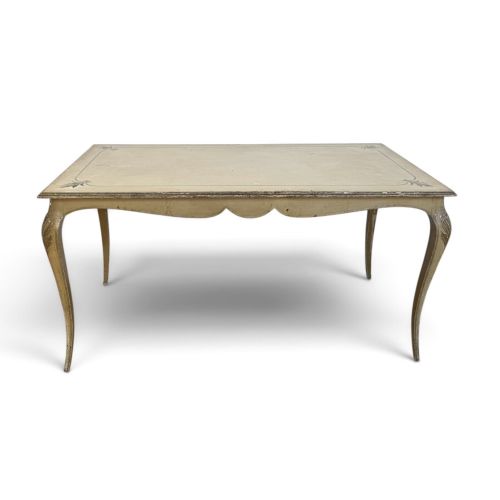
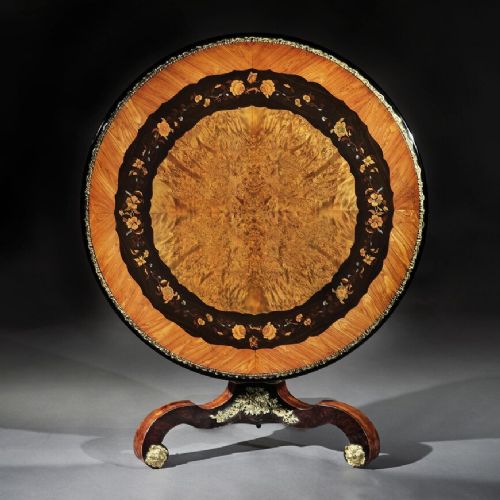
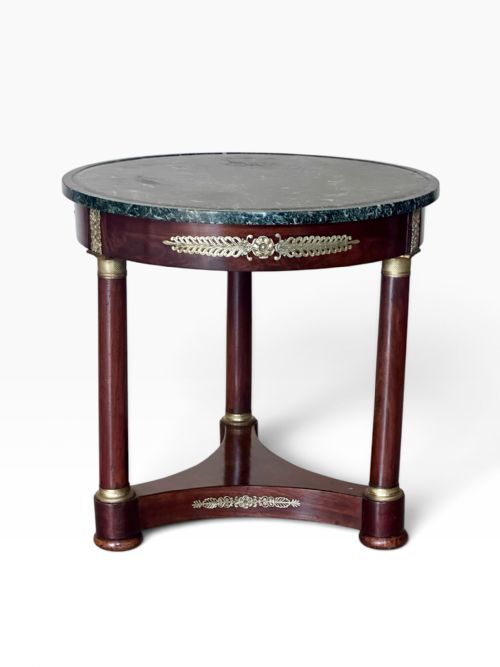
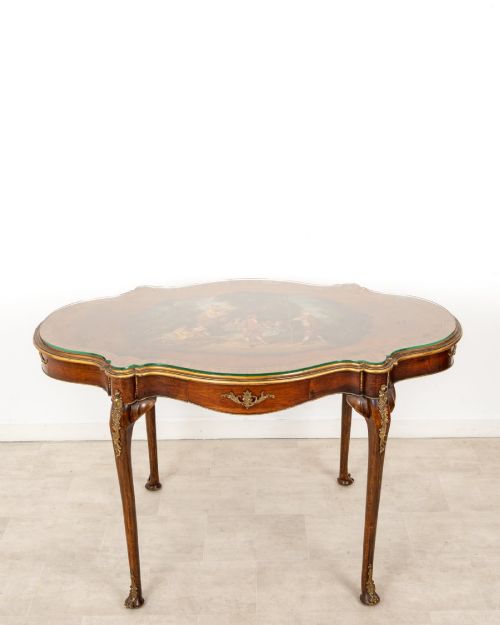
Antique Gilt Centre Table
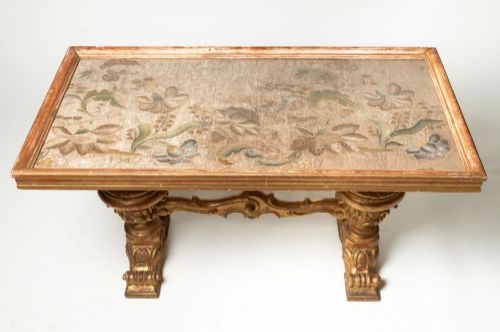
An antique gilt centre table brings architectural presence and gilded warmth to a room, functioning as a freestanding centrepiece.

Antique Gilt Centre Table
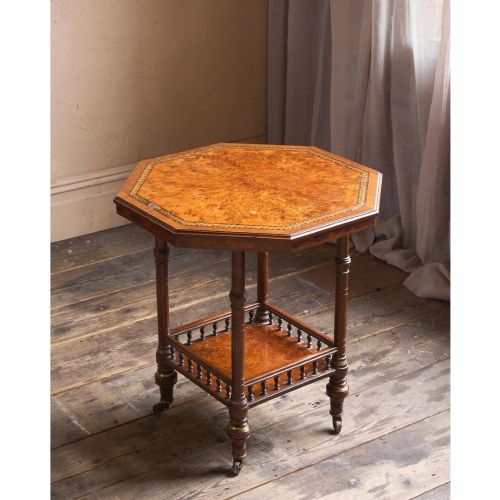
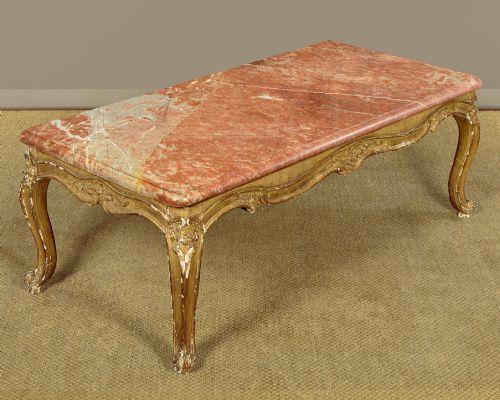
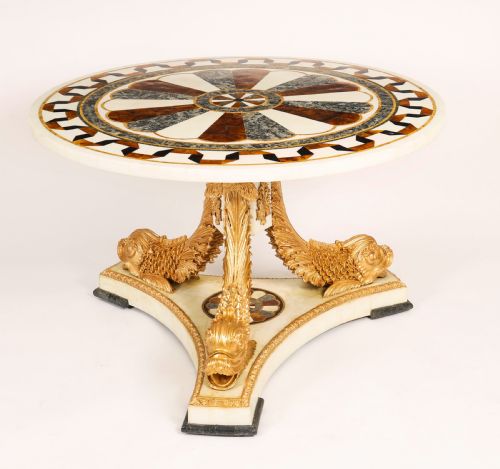
When searching for an antique gilt centre table, you are looking at freestanding tables designed to be viewed from all sides in the middle of a room rather than pushed against a wall. The examples on this page span the nineteenth century, the Regency period, and the Victorian era, alongside later revival pieces.
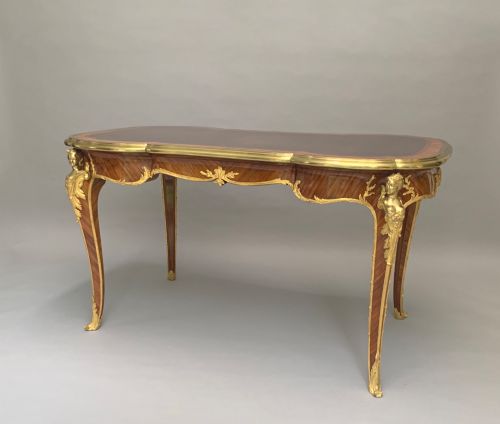
The forms vary considerably across the selection. Alongside standard centre tables, the listings include occasional tables, coffee tables, sofa tables, writing tables, desks, and étagères, often finished with giltwood, parcel gilt, or ormolu mounts.
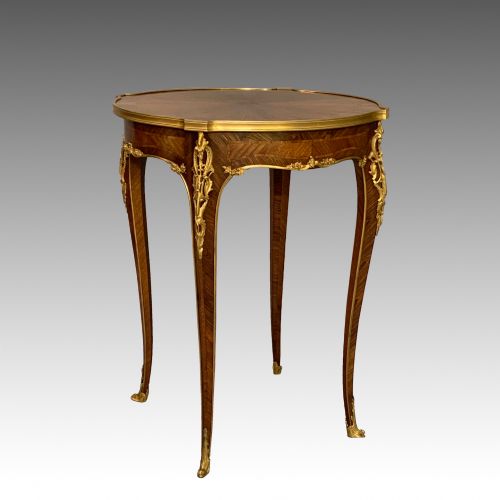
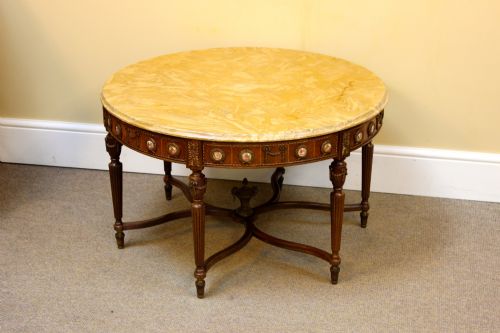
French taste heavily influences the selection, with numerous pieces executed in the Louis XV, Louis XVI, and French Empire styles. Makers and workshops from Britain, France, and Italy produced these works using rich timbers and polished marble tops.
How they were made
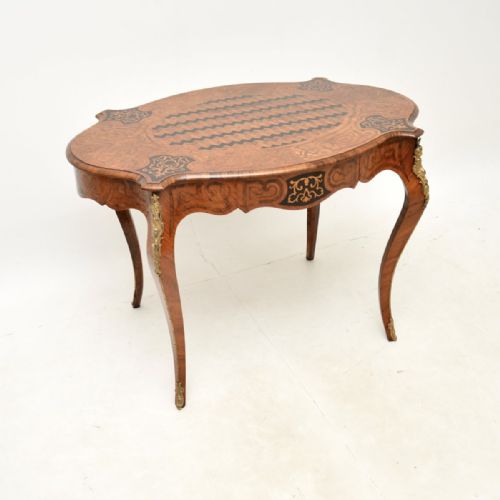
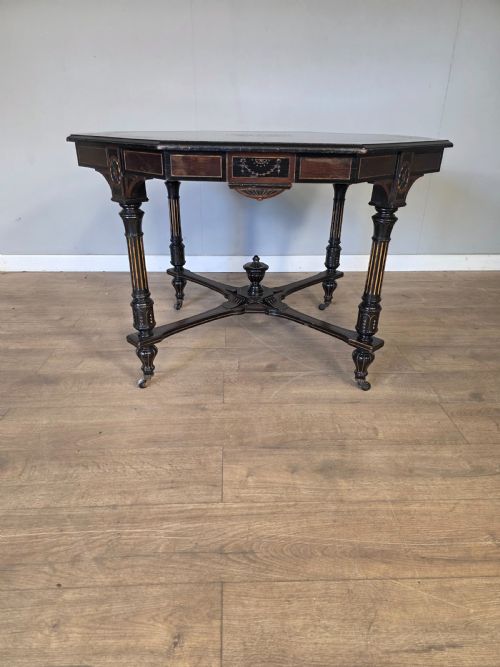
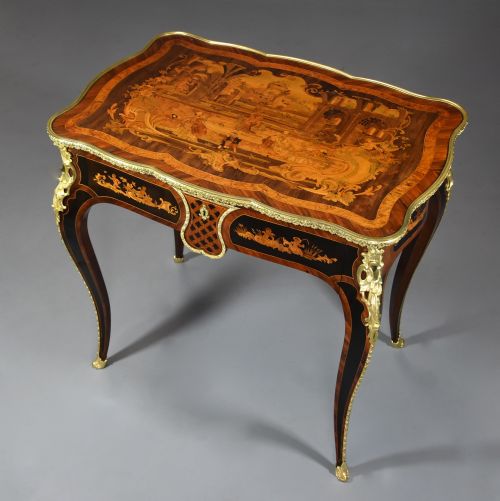
Cabinetmakers constructed the carcases of these tables from dense timbers such as kingwood, rosewood, mahogany, walnut, and ebonised wood, often applying intricate parquetry, marquetry, or Vernis Martin decoration to the surfaces.
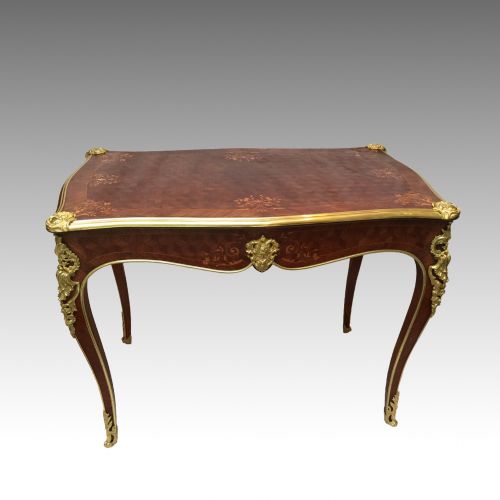
Metal ornamentation played a defining role in the construction. Workshops cast and chased bronze and brass into ormolu and gilt bronze mounts, securing them to table frames, legs, and friezes.
Surface finishing involved mounting heavy slabs of marble to the tabletops or applying layers of gilding directly to carved wooden frames, creating the reflective surfaces characteristic of the style.
Listings feature pieces spanning the 19th Century, Regency period, and Victorian era, constructed from materials including ormolu, marble, kingwood, and giltwood.
What varies in quality
The refinement of the cast metal mounts separates standard examples from exceptional ones. Finely chased ormolu with crisp detail and deep sub-chasing indicates superior craftsmanship compared to softer, more uniform commercial castings.
The complexity of the timber work dictates the standing of a piece. Elaborate floral marquetry, precise parquetry geometric arrangements, and the selection of figured veneers like plum pudding mahogany or burr walnut denote higher workshops.
Structural integrity and the retention of original components govern the grade of a table. Retaining the original marble top, matching mountwork, and authentic surface patination elevates a piece above those with replaced elements or altered finishes.
Edward Holmes Baldock·Francois Linke·Joseph-Emmanuel Zwiener·Gillows·Maison Millet
The Antique Gilt Centre Table Glossary
- Ormolu
- Gilt bronze mounted on furniture or decorative objects. The technique involves applying a gold amalgam to bronze and heating it to drive off the mercury.
- Marquetry
- Inlaid wood veneers forming decorative patterns or pictures. Craftsmen cut contrasting timbers together to fit precisely into predetermined recesses.
- Parquetry
- Geometric wood inlay forming repeating patterns such as cubes or chequers. It differs from marquetry by relying on angular, repetitive geometry rather than pictorial designs.
- Bureau Plat
- A freestanding writing table fitted with drawers in the frieze. These tables typically feature leather-lined writing surfaces and gilt bronze mounts.
- Giltwood
- Wood that has been coated with thin gold leaf or powder. This finish appears frequently on the carved frames of revival and neoclassical tables.
Antique Gilt Centre Table: Frequently Asked Questions
Where should a centre table go?
These tables are designed to stand away from walls in the middle of a room, allowing access from all sides. They serve as primary focal points in large reception rooms or libraries.
Because the finishing extends around the entire perimeter of the table, placement in an open hallway or drawing room showcases the craftsmanship of the base and mounts.
How do I identify a French style table?
French style tables typically display curved cabriole legs, asymmetrical floral mounts, and elaborate marquetry panels inspired by Louis XV and Louis XVI designs. The presence of ormolu mounts and marble tops further signals continental influence.
Many nineteenth-century English and continental makers deliberately adopted these French aesthetic conventions to satisfy prevailing fashionable demands.
What is the difference between a centre table and a writing table?
Centre tables focus purely on decorative display and freestanding placement, often featuring fixed wooden or marble tops without operational drawers. They function as surfaces for lamps, books, or decorative objects.
Writing tables, such as the bureau plat, include built-in drawers within the frieze and specialised writing surfaces like inset leather panels designed for daily correspondence.
How do I care for a giltwood and ormolu table?
Giltwood and ormolu require gentle treatment to preserve the delicate gold leaf and bronze patination. Dusting with a soft, dry cloth prevents the accumulation of grit without abrading the surface.
Avoid liquid cleaning products, waxes, or polishes on the gilded areas, as moisture and harsh chemicals can strip the metallic finish.