


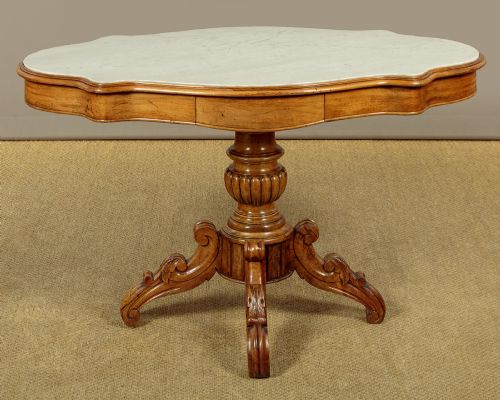

Marble Top Foyer Table
A marble top foyer table brings a heavy stone surface into an entrance hall, offering a sturdy drop-off point that handles daily traffic with ease.

Marble Top Foyer Table
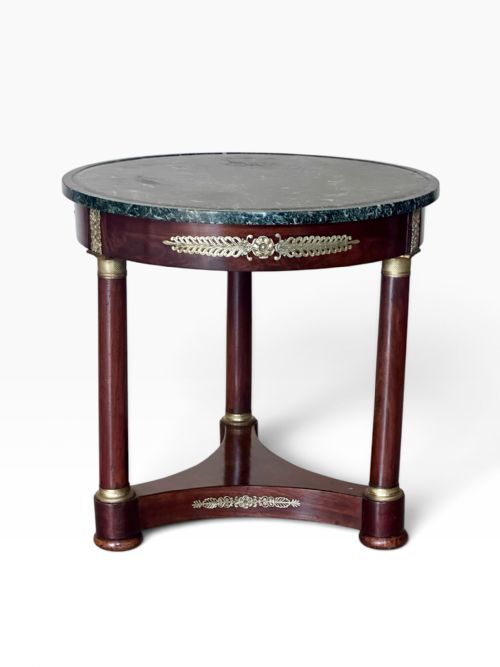
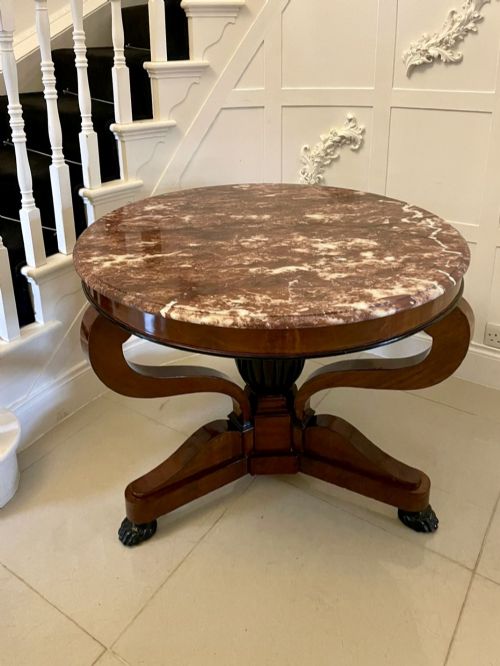
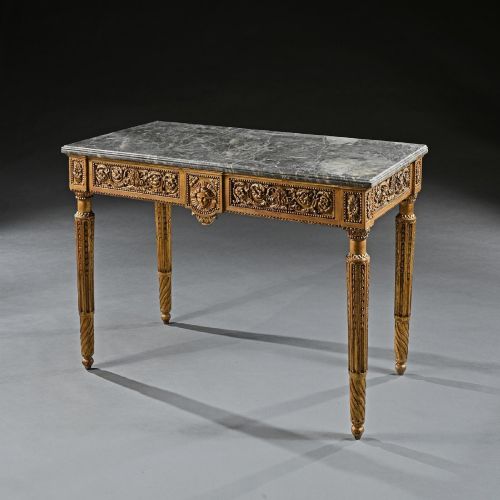
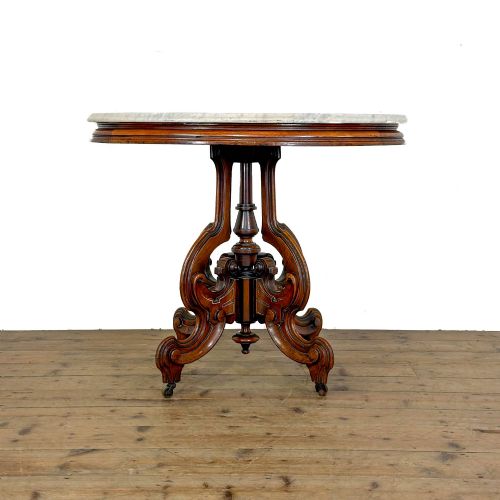
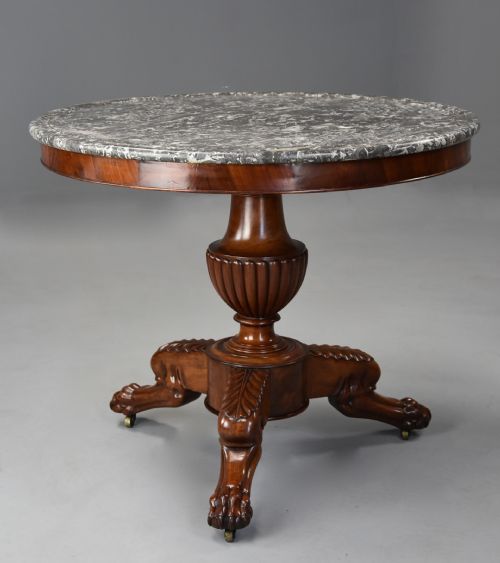
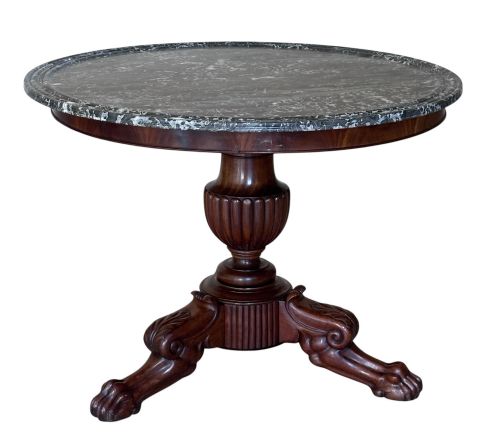
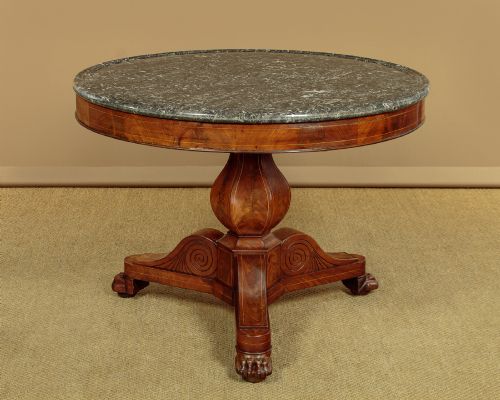
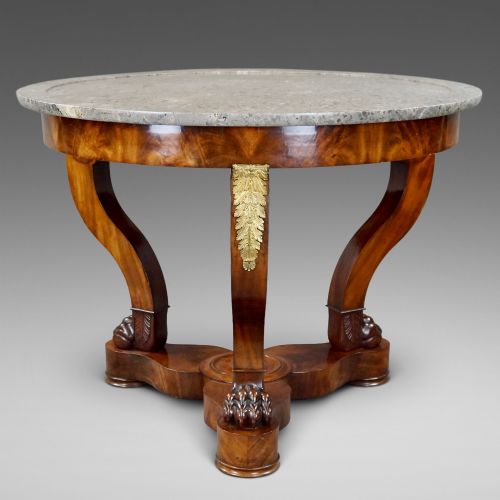
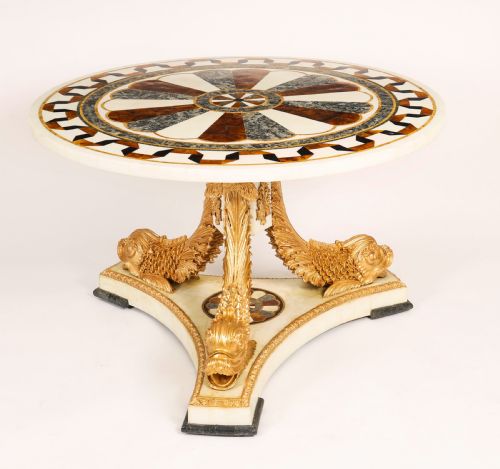
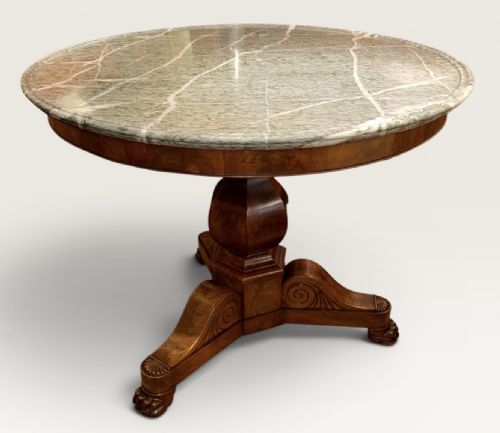
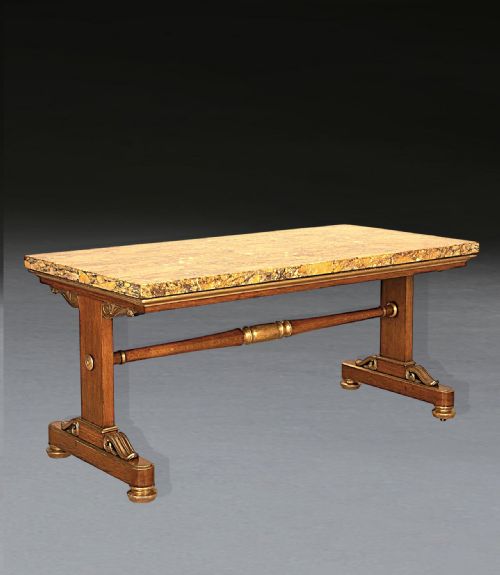
A marble top foyer table encompasses console tables, centre tables, and guéridons designed to stand in hallways and entrance spaces. These pieces combine heavy stone surfaces with wooden bases, serving both decorative and practical roles in a home.
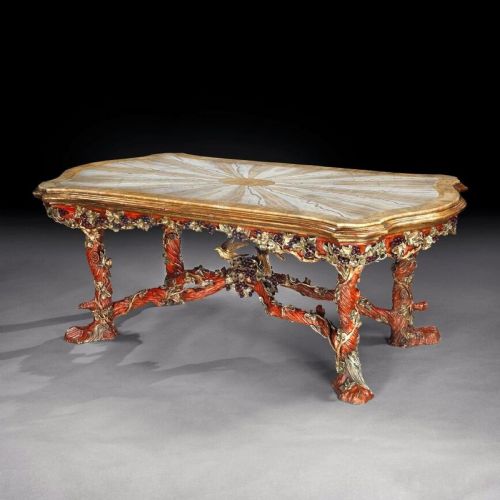
The selection here draws heavily on nineteenth-century French and Italian designs. French guéridons and console tables appear alongside Italian carved giltwood and mahogany pieces from the eighteenth, nineteenth, and early twentieth centuries.
Forms range from freestanding circular tables meant for the middle of a room to rectangular console tables built to sit flush against a wall. Many feature original stone inserts, including white veined marble, onyx, Siena marble, breccia, and specimen marble.
How they were made
Cabinet makers utilised dense hardwoods such as mahogany, walnut, oak, kingwood, and giltwood to build the structural bases and frames. These timbers provided the necessary strength to support heavy stone tops without warping under the weight.
Surfaces were topped with slabs of quarried marble or onyx, cut and polished to fit the wooden frames precisely. Carved details, ormolu mounts, and brass elements were often added to embellish the friezes and legs, following French Empire, Regency, and Revival styles.
Listings feature French Empire, Victorian, Regency, and Italian Rococo Revival styles spanning the eighteenth to the twentieth centuries.
What varies in quality
The distinction between tiers of quality rests on the depth and crispness of the wood carving, the choice of timber figure, and the integration of the stone top. Tables with flame mahogany veneers or hand-carved giltwood show a higher level of workshop skill.
The character of the marble slab also dictates the grade of the piece, with thicker, highly figured or coloured stones such as Siena and breccia indicating superior commission work. Originality of both the stone insert and the base remains a central marker of integrity.
Amleto Bertoni
The Marble Top Foyer Table Glossary
- Guéridon
- A small French table, often round and supported by a single central pillar or three legs. These tables frequently serve as centre tables in hallways.
- Console table
- A table designed to fix against a wall, often supported by scroll brackets or front legs. They traditionally sat in entrance halls and formal reception rooms.
- Ormolu
- Gilt bronze mounted onto furniture and decorative objects. This technique involves applying a gold-mercury amalgam to bronze.
- Breccia marble
- A composite stone made of broken fragments of rock cemented together in a fine-grained matrix. It produces a rich, mottled pattern across the tabletop.
- Siena marble
- A yellow-hued decorative marble quarried in Italy. It is prized for its warm tones and dark veining.
Marble Top Foyer Table: Frequently Asked Questions
Where should I place a marble top foyer table?
These tables fit well against a flat hallway wall or in the centre of a large entrance hall, depending on whether you choose a console or a guéridon.
Ensure the floor is level to support the combined weight of the wooden base and the stone top safely.
How do I clean a marble top?
Wipe the stone surface with a soft, damp cloth and mild, neutral soap. Avoid acidic cleaners, vinegar, or harsh chemicals that can etch the polished finish.
Dry the surface thoroughly after cleaning to prevent water spots from forming on the porous stone.
Can these tables hold heavy items?
The timber frames and stone slabs are structurally robust, designed to bear the weight of lamps, bowls, and everyday objects.
Distribute weight evenly across the surface and avoid placing excessive loads on the outer edges of console brackets.
How do I identify a French Empire style table?
Look for architectural lines, dark mahogany timbers, and classical mounts in brass or ormolu. Details such as swans, rams' heads, and lion paw supports are common.
These design motifs reflect the influence of classical antiquity popular during the early nineteenth century.