



Gilded Pedestal Side Table
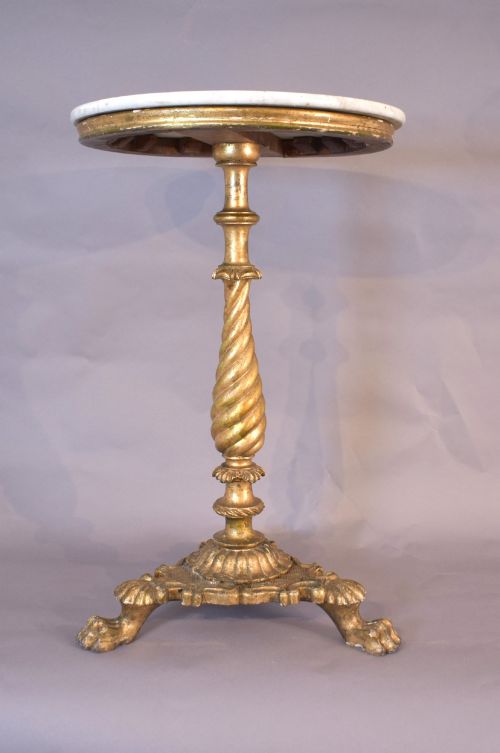
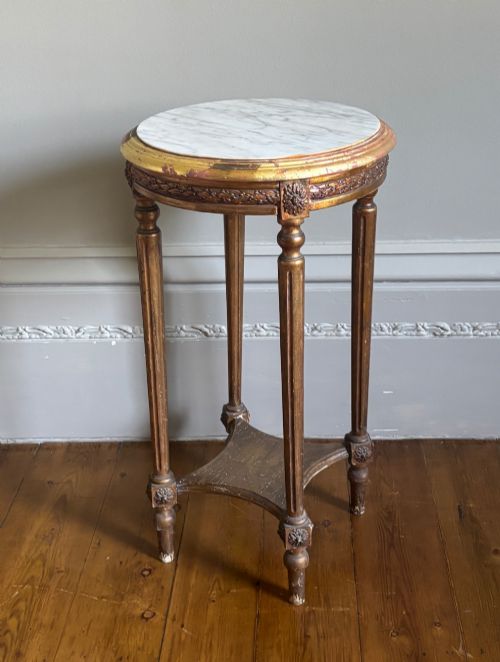
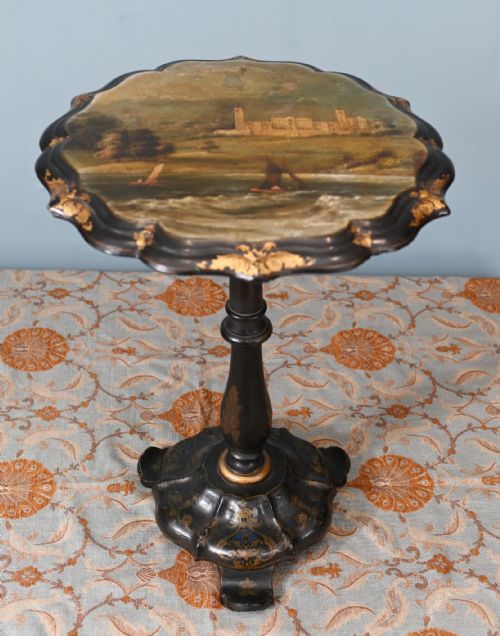
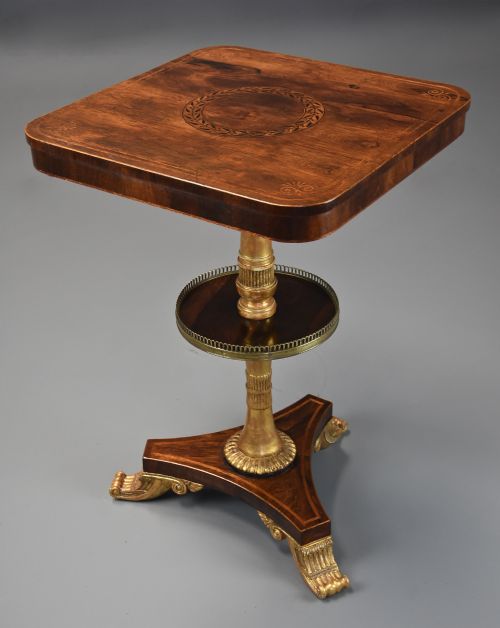
A gilded pedestal side table brings reflective warmth and classical proportion to a room, holding a lamp or a small arrangement with distinct presence.

Gilded Pedestal Side Table
When you search for a gilded pedestal side table, you encounter pieces spanning the eighteenth century through the early twentieth century, with the nineteenth century heavily represented on this page. These tables typically feature a central support or tripod base paired with a round or shaped top, designed to function as an occasional table, lamp table, or plant stand.
The materials and styles range widely, incorporating giltwood, brass, and gesso alongside marble and onyx tops. You will find pieces aligned with Regency, Victorian, and French Neoclassical aesthetics, often exhibiting carved details such as dolphins, flower mouldings, or neoclassical motifs.
The forms extend beyond standard side tables to include plant stands, two-tier occasional tables, and guéridons. The unifying element is the combination of a raised pedestal structure with surface gilding or metallic mounts, creating a compact yet decorative item for interior spaces.
Materials and construction methods
The construction of these pieces relies on foundational hardwoods such as mahogany, walnut, rosewood, lime wood, and amboyna, which provide structural integrity for the central column and top. Artisans shaped these timbers using traditional joinery and turning techniques to create sturdy tripod bases and slender pedestal columns.
Gilding was applied using gold leaf or liquid gilt over preparation layers of gesso upon wood, or through the integration of cast brass and gilt-bronze mounts. Many examples incorporate inset slabs of marble or onyx, fitted precisely into wooden rims to form durable, smooth tabletops.
Distinctions in craftsmanship
Quality rests in the crispness of the carving upon the gesso and giltwood, where hand-tooled details remain sharp rather than softened by excessive layers of later coating. The choice of materials also dictates standing, with dense native and exotic timbers and genuine hard stone tops like marble or onyx marking the upper tiers of production.
The integration of the metal elements, from cast brass mounts to finely chased gilt-bronze, demonstrates the maker's hand. Well-executed pieces show precise joinery in the tripod legs and a harmonious balance between the weight of the stone top and the slender grace of the pedestal support.
George Bullock·Thomas Hope·Zwiener Jansen Sucesseur
The Gilded Pedestal Side Table Glossary
- Giltwood
- Wood that has been coated with gold leaf or gold dust over a prepared gesso ground. This finish provides a reflective surface that catches natural light in a room.
- Gesso
- A plaster mixture applied to wood surfaces as a base for gilding or painting. It allows craftsmen to carve intricate relief details before applying gold leaf.
- Tripod base
- A support structure resting on three feet or legs. This design ensures stability for slender occasional tables and pedestal stands.
- Occasional table
- A small, movable table intended for specific, intermittent use in a room. These pieces serve as lamp tables or display surfaces.
Gilded Pedestal Side Table: Frequently Asked Questions
Where should I place a gilded pedestal side table?
These tables suit corners, beside seating, or in entryways where their reflective surfaces and compact footprints catch the light.
Their elevated tops make them practical for holding reading lamps, small sculptures, or decorative objects without crowding the floor area.
How do I care for a marble or onyx top?
Clean the stone surface with a soft, damp cloth and dry it immediately to prevent water spots. Avoid acidic cleaners that can etch the polished surface of marble or onyx.
Use coasters under glasses and felt pads under objects to protect the stone from scratches and rings over time.
How do I distinguish Regency from Victorian examples?
Regency pieces often display strict neoclassical restraint, drawing on ancient Greek and Roman motifs with clean lines and architectural proportion. Victorian items tend to embrace exuberant revival styles, incorporating heavier carving, richer wood grains, and more ornate floral or Rococo details.
Examining the underlying timber and the crispness of the gesso work helps clarify the period of manufacture.
Can these tables support heavy items?
While sturdy, pedestal and tripod tables are designed for balanced loads such as lamps, books, or decorative porcelain rather than heavy weight. Their central column distribution means heavy items placed near the edge can destabilise the stand.
Distributing weight evenly across the centre of the tabletop ensures the piece remains secure on its base.