



Victorian Marble Centre Table
A victorian marble centre table anchors a room with heavy stone and polished timber, offering a sturdy surface designed to stand free.

Victorian Marble Centre Table
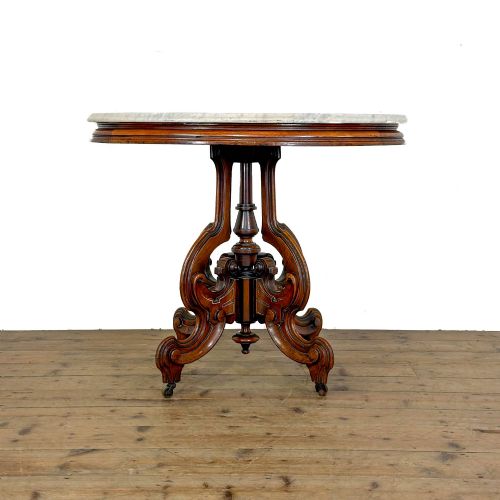
A victorian marble centre table stands as a substantial piece of nineteenth-century furniture, engineered to occupy the middle of a room rather than sit against a wall. These tables combine a heavy stone slab with a robust timber frame, fulfilling roles from formal display to daily domestic use.
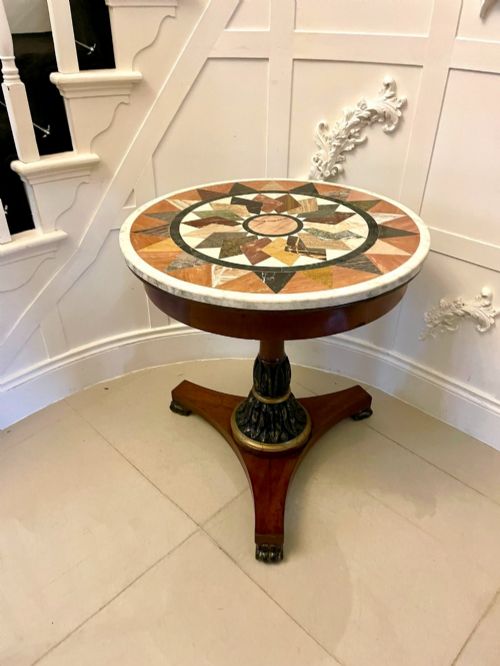
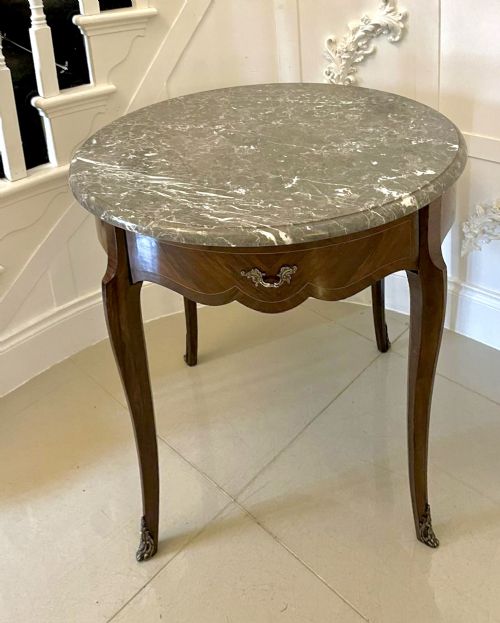
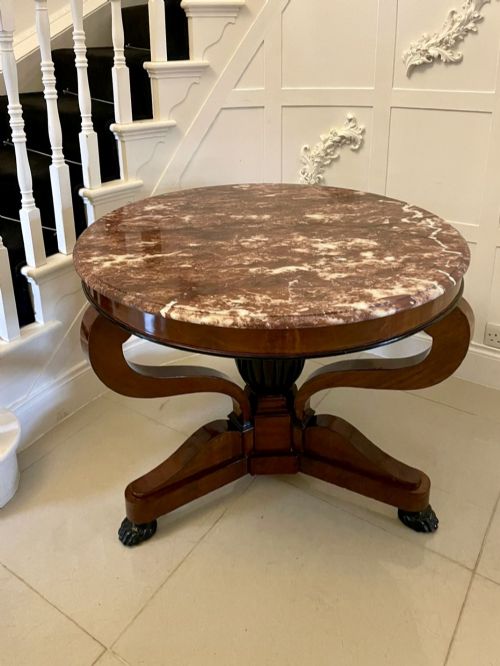
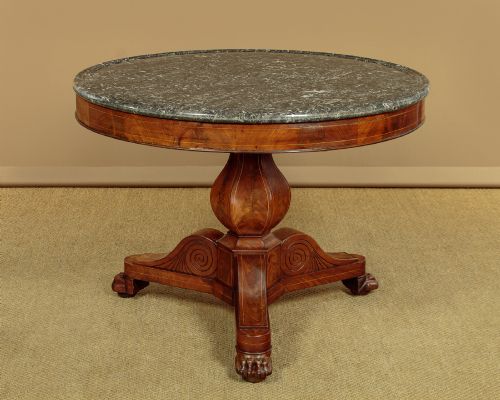
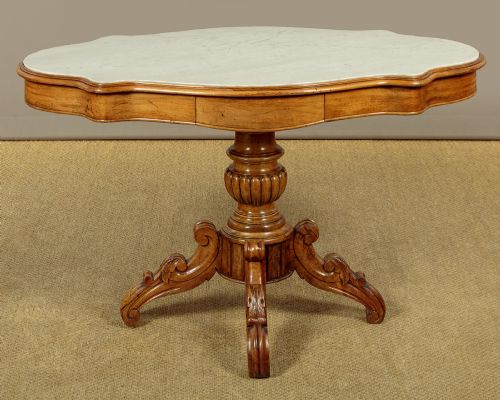
The versions most commonly encountered span the nineteenth century, utilising dense hardwoods beneath polished stone tops. Makers constructed these items in varied forms, including circular pedestal gueridons, octagonal shapes, and freestanding rectangular formats.
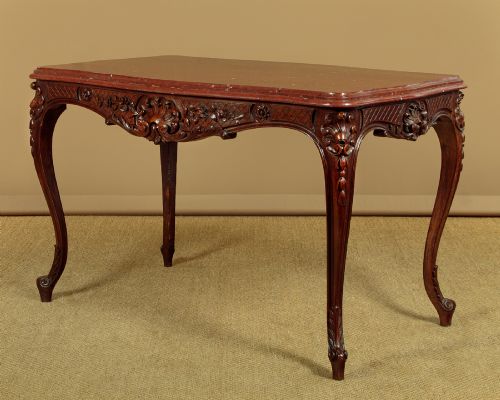
The evidence shows forms ranging from simple mahogany side tables to elaborate French rococo designs and specimen marble creations. Buyers often meet circular lamp tables supported by carved pedestals or architectural swan motifs.
Materials and Construction
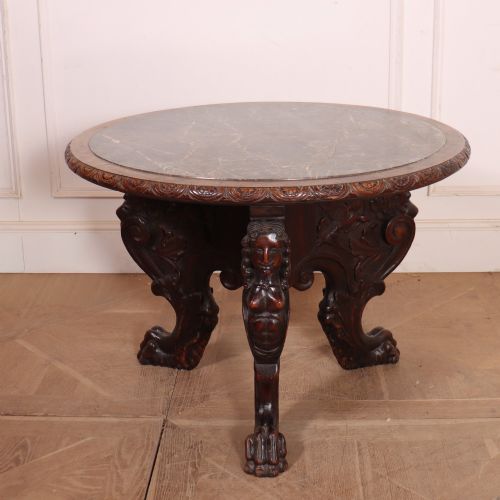
Makers built the structural frames using dense timbers such as mahogany, walnut, kingwood, rosewood, and oak, often incorporating carved details or moulded supports. These wooden bases provide the necessary strength to carry heavy stone slabs without warping.
Table surfaces utilise various forms of marble, including Italian white, rouge, grey, Derbyshire fossil marble, and intricate specimen marble compositions. Metal mounts in brass and ormolu frequently accent the timber frames, particularly on French-influenced pieces.
Listings demonstrate timber usage spanning mahogany, walnut, kingwood, rosewood, oak, and slate alongside varied marble types.
Judging Quality and Execution
Quality rests heavily on the ambition of the stone top and the crispness of the timber carving. Specimen marble tops, assembled from multiple geometric or mosaic pieces of coloured stone, demand greater labour than plain slabs.
The sophistication of the timber support separates standard production from superior pieces. Hand-carved walnut swan supports, gilt enrichment, and imported French kingwood framing indicate higher workshop investment than simpler mahogany designs.
the Woodley family
The Victorian Marble Centre Table Glossary
- Specimen Marble
- A table top composed of numerous small, geometric or pictorial segments of different coloured marbles fitted together. This technique often reflects Grand Tour influences from Italy.
- Gueridon
- A small, round pedestal table designed for freestanding placement in a room. Nineteenth-century examples frequently feature marble tops and central wooden columns.
- Ormolu
- Gilded bronze mounts applied to furniture for decorative effect. Makers used these brass-based enrichments to highlight French-derived revival styles.
- Derbyshire Fossil Marble
- A dark limestone quarried in England containing visible fossil fragments, polished to a smooth finish. It appears on distinctive nineteenth-century tables.
Victorian Marble Centre Table: Frequently Asked Questions
Where should a centre table go?
These tables function best freestanding in the middle of a room rather than pushed against a wall. They provide a stable surface for lamps, books, or decorative objects while allowing circulation around all four sides.
Placement depends on the room scale and the circular or rectangular footprint of the table. A pedestal gueridon works well in a hallway or library, whereas larger rectangular formats suit drawing rooms.
How do I care for marble tops?
Marble requires gentle cleaning with warm water and mild soap, avoiding acidic substances that can etch the polished surface. Regular dusting preserves the smooth finish of the stone.
Heavier items should be lifted rather than dragged across the timber base to protect both the stone and the supporting wooden framework.
Are these tables French or English?
The listings include both English cabinetmaker output and French-influenced designs. French pieces frequently utilise kingwood, rosewood, and ormolu mounts.
English workshops tended towards mahogany and walnut, employing carved pedestals or classical revival styles. Many incorporate imported Italian marble slabs regardless of where the timber frame was constructed.
What is the difference between a side table and a centre table?
Centre tables are finished on all sides for freestanding placement in open space. Side tables are traditionally built to stand flat against a wall.
Nineteenth-century makers occasionally used the terms interchangeably in historical descriptions, but the presence of all-around detailing generally indicates a table intended for the middle of a room.