


Antique German Pottery
Antique german pottery brings heavy stoneware, salt-glazed jugs, and decorative vessels into your home, prized for their centuries-old craftsmanship.
Antique German Pottery
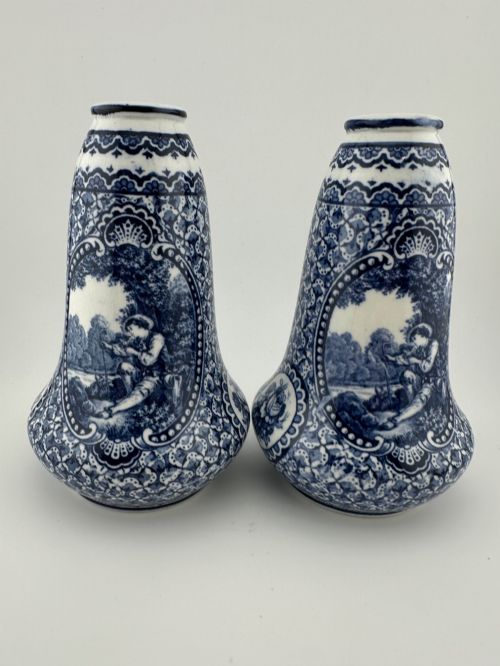
When you search for antique german pottery, you encounter heavy stoneware jugs, tankards, and decorative vases spanning from the sixteenth century through the Victorian era. The selection ranges from early salt-glazed Westerwald and Bartmann jugs to later Mettlach vases, Royal Bonn pieces, and German folk art.
You are most likely to meet eighteenth-century Westerwald tankards and salt-glazed wine bottles alongside nineteenth-century decorative pieces and beer steins. These utilitarian and decorative objects display centuries of ceramic tradition originating from distinct German production centres.
What varies in quality
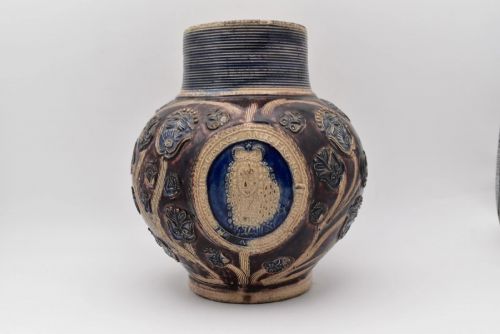
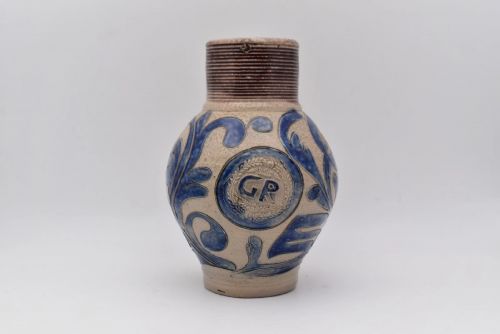
Quality in antique german pottery rests on the crispness of the moulded relief decoration and the depth of the cobalt blue colouration. Finer pieces display sharply defined royal ciphers, portraits, or floral motifs rather than blurred impressions.
The sophistication of the glaze and the precision of the hand-painted or tin-glazed finish distinguish superior examples. Early Siegburg and Westerwald pieces command attention through their historical significance and the complexity of their salt-glazed surfaces.
Listings feature stoneware, ceramic, and clay pieces spanning the sixteenth to the twentieth centuries, alongside pewter and cobalt materials.
Royal Bonn·Franz Anton Mehlem·Mettlach Pottery
The Antique German Pottery Glossary
- Stoneware
- A dense, hard ceramic fired at high temperatures until vitrified and non-porous. It forms the body of most traditional German jugs and steins.
- Salt glaze
- A glossy, slightly textured finish created by throwing common salt into the hot kiln during firing. This chemical reaction produces an orange-peel texture on the clay surface.
- Westerwald
- A historic German pottery region known for its grey stoneware decorated with cobalt blue and manganese purple incised designs. It produced vast quantities of export jugs and tankards.
- Bartmann jug
- A historic German stoneware vessel featuring a bearded mask applied to the neck. Also known as a Bellarmine, these jugs date primarily from the sixteenth and seventeenth centuries.
- Tin glaze
- An opaque white glaze made by adding tin oxide to lead glaze, providing a smooth background for painted decoration. It appears on German fayence and tin-glazed items.
Antique German Pottery: Frequently Asked Questions
What is a Westerwald tankard?
A Westerwald tankard is a historic German stoneware drinking vessel originating from the Westerwald region. These pieces typically feature grey bodies decorated with cobalt blue incisions and salt glazes.
Potters produced them extensively during the seventeenth and eighteenth centuries for domestic use and export. Their durable stoneware construction made them practical for daily dining.
How do I identify a Bartmann jug?
A Bartmann jug, or Bellarmine, is identified by the moulded bearded mask applied to the upper neck of the vessel. They date mainly from the sixteenth and seventeenth centuries and are made of salt-glazed stoneware.
Originating from production centres like Siegburg and Raeren, these jugs often feature globular bodies and medallion stamps. Their distinctive faces make them easily recognisable among early German ceramics.
What are salt-glazed stonewares?
Salt-glazed stonewares are ceramics fired with common salt introduced directly into the kiln at peak temperature. The salt vaporises and reacts with the silica in the clay to form a durable, glossy surface.
This technique protects the porous clay underneath, making the vessels watertight. It gives German stonewares their characteristic textured finish.
How were beer steins used?
Beer steins served as traditional German drinking vessels for beer, often fitted with hinged pewter lids. They protected the contents and maintained temperature during communal gatherings.
Victorian and later examples from makers like Mettlach became increasingly decorative. Collectors prize them today for their detailed ceramic reliefs and functional craftsmanship.