

Antique French Low Table
An antique french low table brings continental character to a room, offering practical surface space with period proportion.
Antique French Low Table
An antique french low table encompasses low-slung coffee tables, side tables, and occasional forms designed for domestic use. The pieces emerge from diverse traditions spanning provincial workshops to neoclassical salons.
Buyers encounter walnut and oak constructions frequently on this page, often topped with marble or detailed with inlay. Forms range from rustic farmhouse variants to ornate Louis revival pieces.
Materials and Construction
Cabinetmakers utilised dense timbers like walnut, oak, cherrywood, and satinwood for the structural frames. These woods were carved, turned, or polished to highlight natural grain.
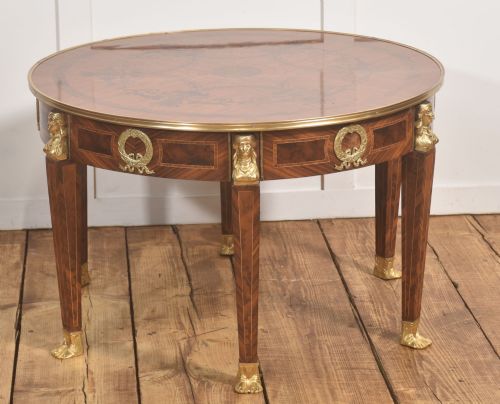
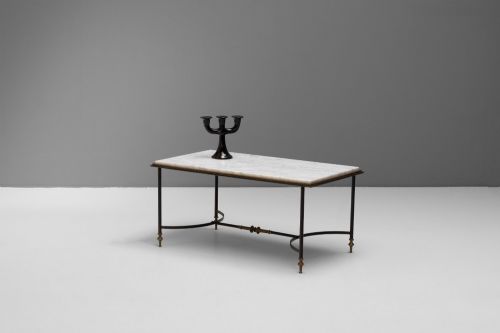
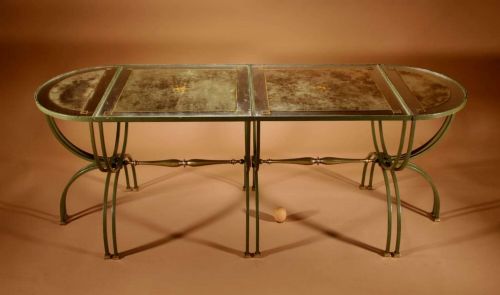
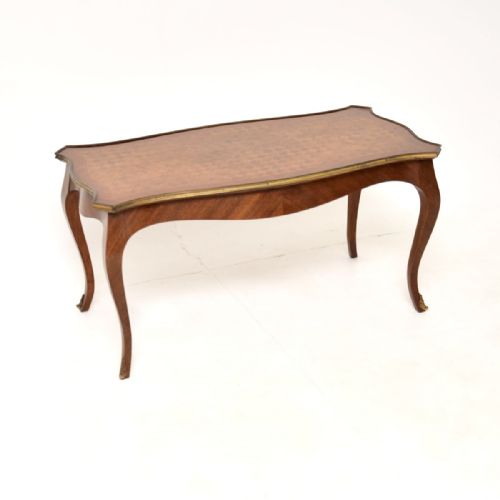
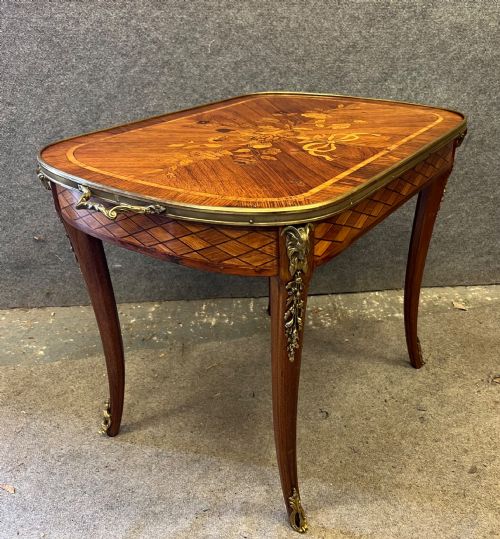
Surface ornamentation involved marble inserts, brass mounts, giltwood accents, and intricate parquetry or marquetry inlay. Wrought iron and painted finishes also appear on specific provincial and garden forms.
Antique French Low Table Retail Price Guide 2026
Typical asking prices for french low table among the pieces listed under this phrase on Sellingantiques today, from the lower quarter to the upper quarter. They describe what is for sale here now, not the wider market.
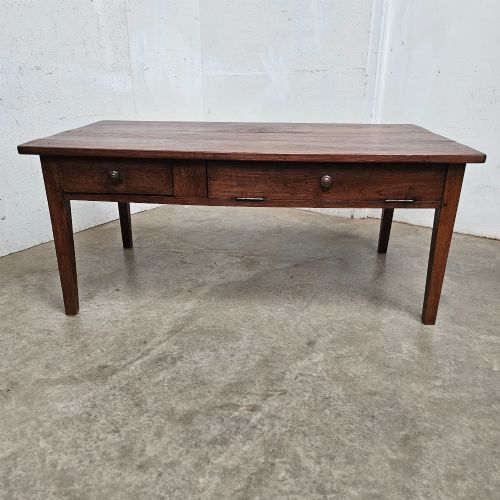
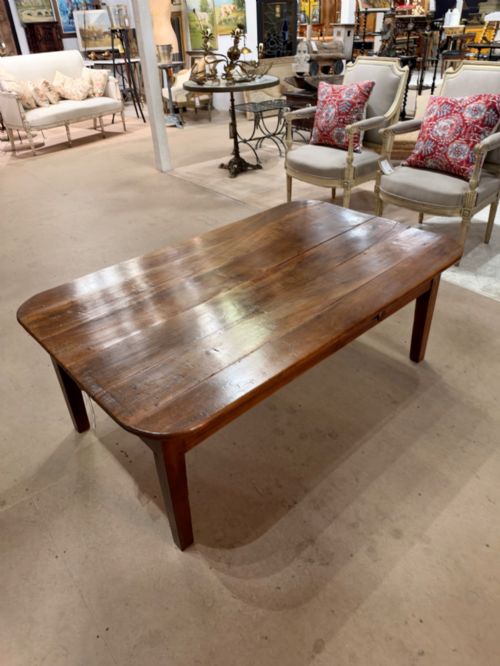
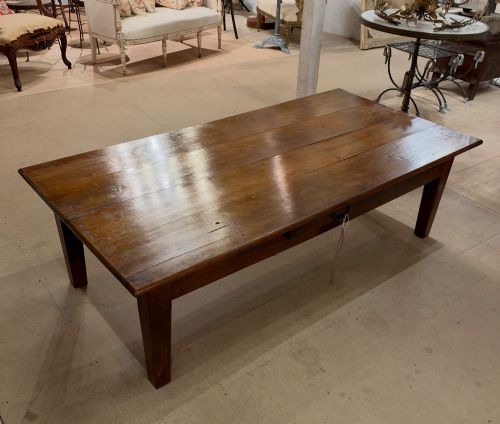
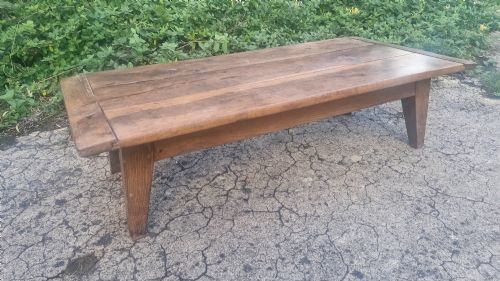
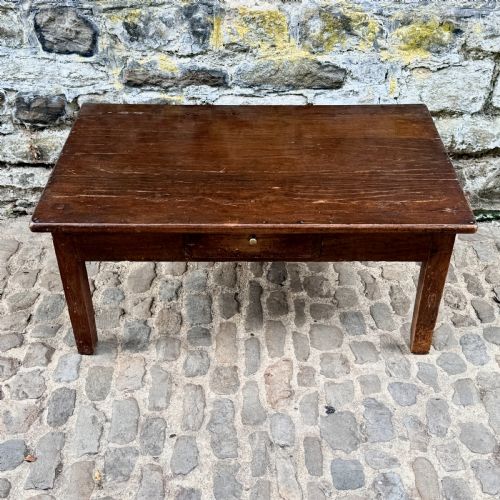
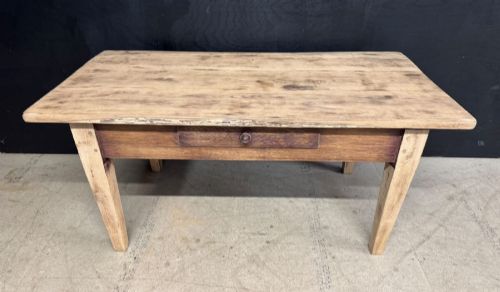
A rustic oak tailors shop display table finds new life as a low coffee surface.
Distinguishing Quality
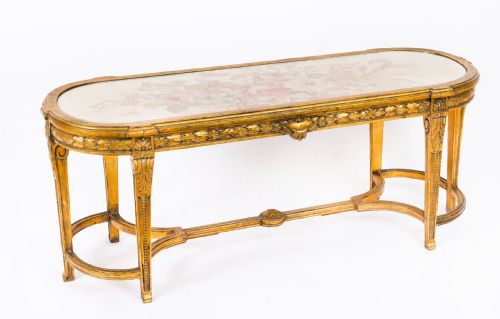
Quality rests in the precision of the joinery and the selection of timber veneers, such as burr walnut or fine fruitwood. Superior examples display crisp carving on giltwood frames and tightly fitted marble slabs.
The integration of original ormolu mounts and balanced proportions separate refined salon pieces from simpler provincial tables.
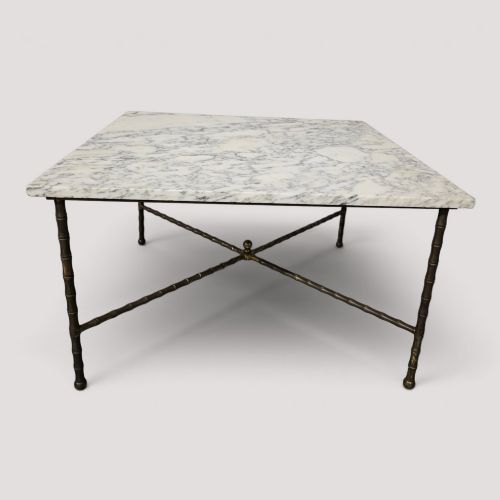
Maison Jansen
The Antique French Low Table Glossary
- Parquetry
- Geometric wood mosaic work used for tabletops. It creates precise patterns using contrasting timber pieces.
- Marquetry
- Elaborate veneer patterns depicting floral or pictorial scenes. Craftsmen assemble thin slices of coloured wood into the surface.
- Ormolu
- Gilded bronze mounts applied to furniture. This decorative technique adds metallic detail to table frames and legs.
- Giltwood
- Timber coated with gold leaf or gilt paint. It is common on revival style and neoclassical frames.
- Demi lune
- A half-moon shape characteristic of certain side and console tables. This profile allows the piece to sit flush against a wall.
Antique French Low Table: Frequently Asked Questions
What periods do these tables span?
The pieces originate primarily from the nineteenth and early twentieth centuries, including Edwardian examples and 1930s art deco designs.
Earlier centuries appear through occasional eighteenth-century walnut and fruitwood examples preserved in the record.
How were low tables used originally?
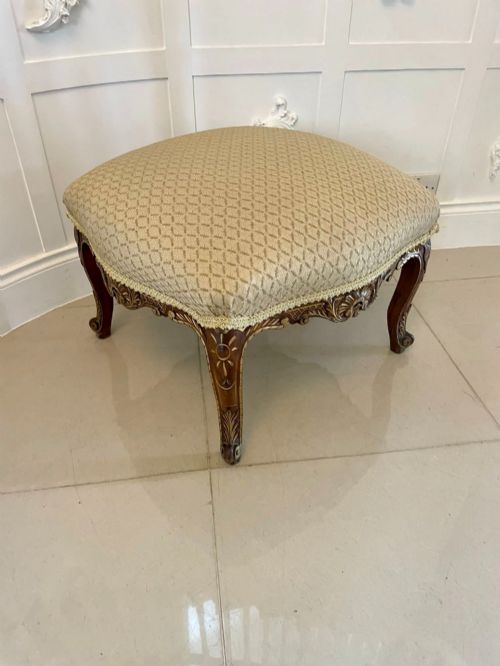
Many forms began as side tables, window seats, or serving tables before being adapted into coffee tables for modern domestic layouts.
Stools, benches, and ottomans also double as low surfaces in contemporary settings.
How do I identify a revival style?
Revival pieces borrow motifs from earlier monarchies, such as Louis XV and Régence curves or Rococo ornamentation.
Cabinetmakers in the nineteenth and early twentieth centuries reproduced these classic silhouettes using period timber and techniques.
What is the difference between provincial and chateau styles?
Provincial and farmhouse tables utilise simpler woods like oak, cherrywood, and chestnut with functional turned legs.
Chateau and neoclassical pieces feature giltwood, marble tops, ormolu mounts, and intricate marquetry.