


Antique Footed Punch Bowl
An antique footed punch bowl brings generosity to the room, standing raised on its base to serve traditional festive drinks.
Antique Footed Punch Bowl
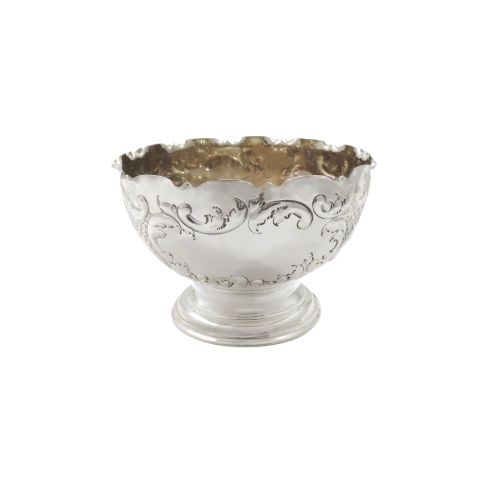
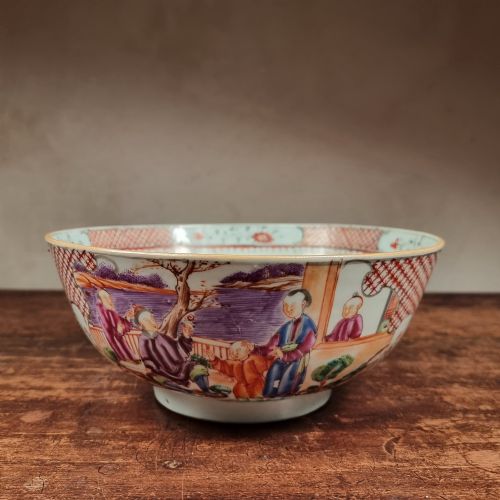
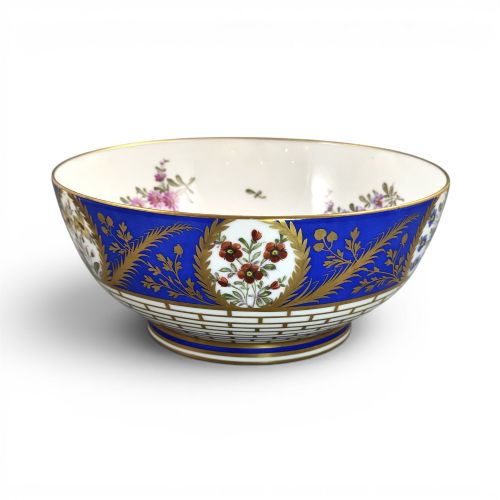
An antique footed punch bowl is a large vessel designed for communal gatherings, raised from the table by a pedestal or integral foot. The pieces on this page span the Georgian, Victorian, and later periods, capturing centuries of entertaining traditions.
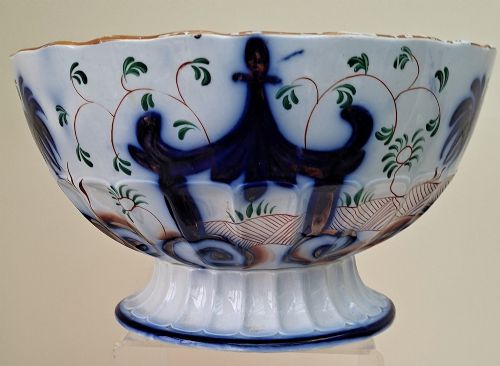
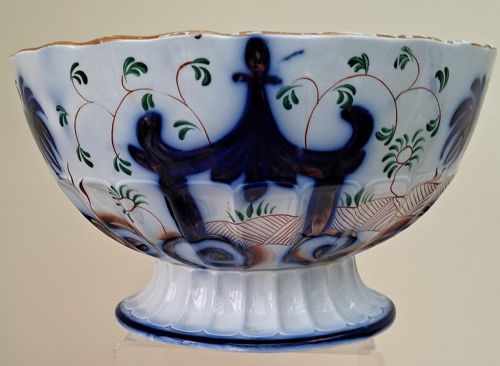
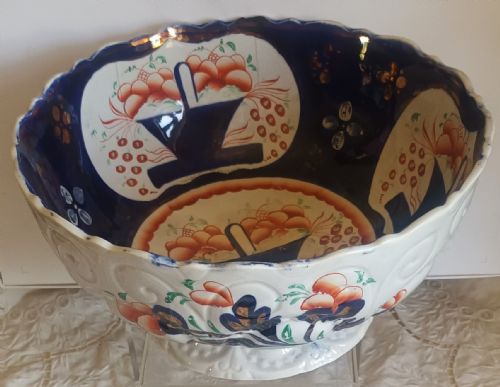
Most examples you meet here are ceramic or pottery, ranging from earthenware and porcelain to vibrant transfer-printed earthenware in patterns like the Gaudy Welsh Pagoda and Basket of Flowers. Alongside these earthenware forms appear sterling silver pieces, cobalt glaze ceramics, and heavy crystal vessels.
Origins vary across the listings from British potteries to continental European workshops and Chinese export production. The forms function as decorative bowls or centrepieces, maintaining their presence whether filled for an occasion or displayed empty on a sideboard.
How they were made
Pottery examples rely on traditional ceramic techniques, shaping clay bodies on the wheel or in moulds before applying glazes and hand-painted or transferred motifs. Earthenware and porcelain bodies require precise kiln firing to set cobalt glazes, enamel colours, and lustre details.
Silver and crystal punch bowls employ entirely different methods of skilled handcraft, utilising silversmithing techniques like hammering and chasing for sterling silver, or glass-cutting traditions for crystal production.
Decoration is integrated directly into the material structure, from the vibrant underglaze pigments of nineteenth-century pottery to the raised relief and facet cutting found in crystal and silver vessels.
Materials represented include earthenware, porcelain, cobalt glaze, enamel, lustre, and traditional Irish crystal.
What varies in quality
Quality in an antique footed punch bowl rests upon the crispness of the form and the skill executed in its decoration. Hand-painted enamel work and deep transfer printing display varying degrees of clarity and register across different makers and periods.
The weight of the material and the stability of the foot contribute significantly to the standing presence of the bowl. Sterling silver and thick crystal demonstrate substantial material weight, while fine porcelain and earthenware show varying degrees of translucency and potting fineness.
François-Eugène Rousseau·Baccarat·Samson Paris·Ridgway·Waterford
The Antique Footed Punch Bowl Glossary
- Footed bowl
- A vessel raised upon a pedestal, base, or small feet to elevate the main body above the surface of a table. This elevation gives the piece greater visual prominence in a room.
- Gaudy Welsh
- A style of brightly coloured pottery decoration featuring cobalt blue, copper lustre, and iron-red enamel. It was produced extensively in the nineteenth century for domestic use.
- Cobalt glaze
- A deep blue mineral pigment applied to ceramic pieces before firing to create rich underglaze decoration. It withstands high kiln temperatures without losing intensity.
- Japonism
- The influence of Japanese art on Western design, prominent in the late nineteenth century. It introduced asymmetrical compositions and natural motifs to European decorative arts.
- Sterling silver
- A silver alloy consisting of ninety-two point five percent pure silver by mass and seven point five percent other metals, usually copper. It provides durability while maintaining a bright metallic lustre.
Antique Footed Punch Bowl: Frequently Asked Questions
What were antique footed punch bowls used for?
These large vessels were historically used for mixing and serving communal punches during social gatherings and banquets.
Today they function equally well as decorative centrepieces or large fruit bowls within domestic interiors.
How do I date an antique punch bowl?
Dating relies on identifying the material, decorative style, and any maker marks or stamps present on the base.
Periods like the Georgian and Victorian eras exhibit distinct ceramic bodies, glaze types, and stylistic influences such as Japonism or traditional revival patterns.
Are these bowls safe for serving food?
While many ceramic and crystal bowls remain physically robust enough to hold food or drink, older pieces often display crazing or wear.
Buyers frequently choose to use them for dry display, floral arrangements, or cold presentation rather than heated or acidic liquids.
What is the difference between earthenware and porcelain bowls?
Earthenware is a porous, opaque pottery body that requires a glaze to become waterproof, typical of nineteenth-century decorative wares.
Porcelain is fired at much higher temperatures until vitreous, resulting in a denser, harder material that is often translucent.