
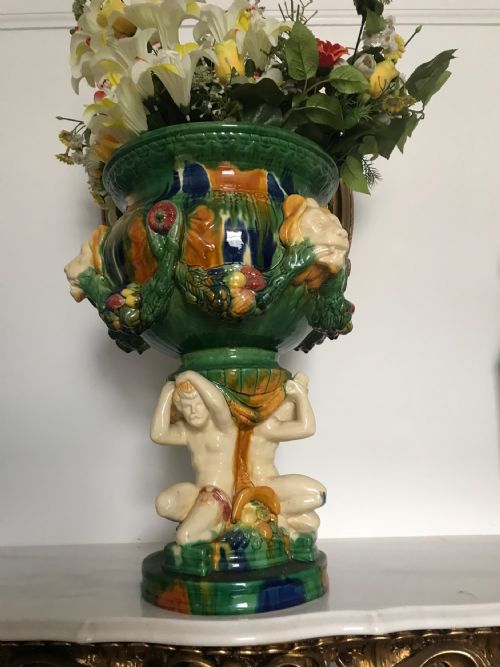


Antique Ceramic Centre Bowl
An antique ceramic centre bowl anchors a dining table or sideboard with grand proportions, offering a historic focal point for fruit or floral displays.
Antique Ceramic Centre Bowl
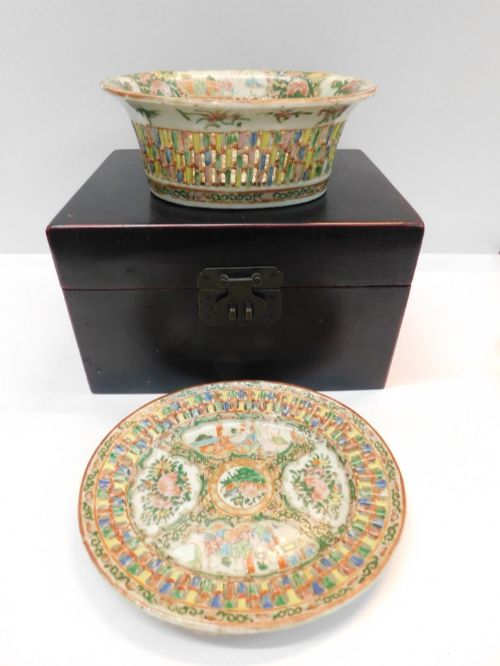
An antique ceramic centre bowl encompasses large footed vessels, comports, punch bowls, and ornamental planters designed to sit proudly in the middle of a room or table. These pieces emerge from periods spanning the Georgian era through the late nineteenth and early twentieth centuries, drawing upon diverse aesthetics like Victorian Rococo Revival, Qing Dynasty export wares, and Italian Renaissance Revival.
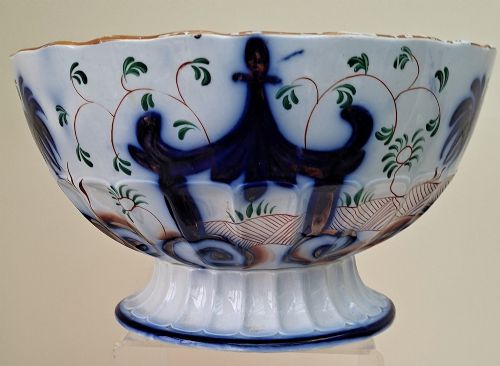
Most examples materialise as porcelain, ironstone, earthenware, or majolica, taking the form of open baskets, shell-shaped vessels, and deep circular bowls. English potteries, continental factories, and Chinese export kilns all contribute to the selection, providing everything from cobalt blue transferware to hand-painted floral comports.
Buyers seeking this search phrase encounter heavily decorated presentation items rather than simple utilitarian kitchenware. The forms range from footed comports on stands to massive planters resting on figural bases with lion head decorations.
How They Were Made
Potters shaped these vessels using traditional ceramic and porcelain bodies, often employing ironstone for durability or fine paste porcelain for delicate translucent walls. Moulded earthenwares and majolica bodies provided robust foundations for sculptural elements like cherubs, shell motifs, and figural stands.
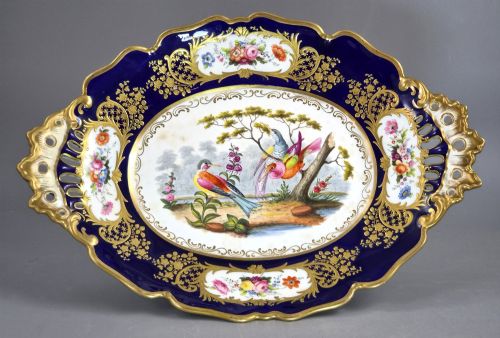
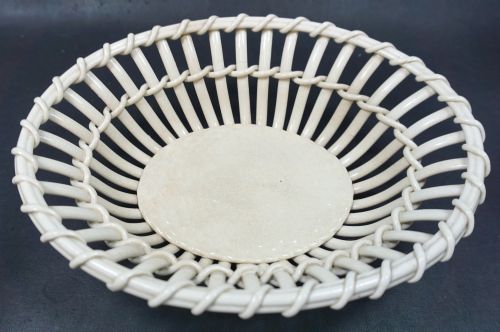
Decoration relied heavily on hand-painted enamels, cobalt blue underglazes, and applied gold leaf or gilding to highlight intricate surface patterns. Many pieces incorporated reticulated openwork, transfer printing, or elaborate ormolu mounts to elevate their decorative status.
Firing techniques varied from high-temperature porcelain kilns in China and Worcester to the earthenware and majolica kilns of England, France, and Italy. Artisans frequently combined moulded relief work with meticulous brushwork, as seen in painted fruit scenes and compartmentalised dragon motifs.
Materials appearing across these centre bowls range from delicate painted porcelain and earthenware to heavy ironstone, majolica, and gilt-mounted enamel.
What Varies in Quality
The standard of painting and gilding separates exceptional pieces from simpler production, distinguishing delicate hand-painted artistry from standard transfer printing. Master artists achieved remarkable depth in floral studies and figural groups, whereas lesser examples rely on repetitive stencilled motifs.
Structural complexity also defines the upper tiers of the range, particularly in vessels featuring reticulated baskets, intricate handles, ormolu mounts, and figural stands. The crispness of moulded details - such as shells, cherubs, and animal heads - indicates the wear condition of the original moulds and the care taken during finishing.
Maker attribution significantly influences standing, with documented works from notable factories like Coalport, Wedgwood, Worcester, and Mason's commanding greater recognition. The survival of matching stands, trays, or original fitted mahogany bases adds notable completeness to a piece.
Coalport·Wedgwood·Chamberlain Worcester·Flight Barr And Barr·Mason·Sevres·Royal Worcester·Royal Dux
The Antique Ceramic Centre Bowl Glossary
- Comport
- A shallow bowl raised on a high foot or pedestal, traditionally used for serving fruit or sweets on a formal dining table. These vessels often feature decorative handles and elaborate painted borders.
- Reticulated
- Openwork decoration formed by cutting or piercing patterns into the clay before firing. This technique creates a delicate basket-weave or lace-like effect.
- Imari
- A style of Japanese porcelain decorated in underglaze blue, iron red, and gold, which heavily influenced European factories. British makers frequently imitated this distinct palette.
- Majolica
- A type of earthenware coated with an opaque tin-glaze and painted with brightly coloured metal oxide glazes. It became immensely popular for large, sculptural Victorian and continental planters.
- Ironstone
- A patented heavy earthenware developed in England to imitate Chinese porcelain while offering greater durability. It provides a robust body for large footed bowls and comports.
Antique Ceramic Centre Bowl: Frequently Asked Questions
What is a centre bowl used for?
These large vessels were historically placed in the middle of formal dining tables to hold fruit, flowers, or sweetmeats during grand meals.
Today, they serve equally well as striking decorative centerpieces on sideboards, console tables, or dining surfaces without needing any contents at all.
How do I date a ceramic bowl?
Examine the base for factory backstamps, painted pattern numbers, and impressed marks that correspond to known registry dates or operational periods.
The style of the decoration, the weight of the ceramic paste, and the presence of crazing or wear also offer strong clues to the decade of manufacture.
What is the difference between porcelain and ironstone?
Porcelain is a fine, vitrified ceramic that is typically white and semi-translucent, fired at very high temperatures to create a glass-like body.
Ironstone is a heavy, opaque earthenware containing slag iron, designed to resist chipping while mimicking the appearance of expensive porcelain.