
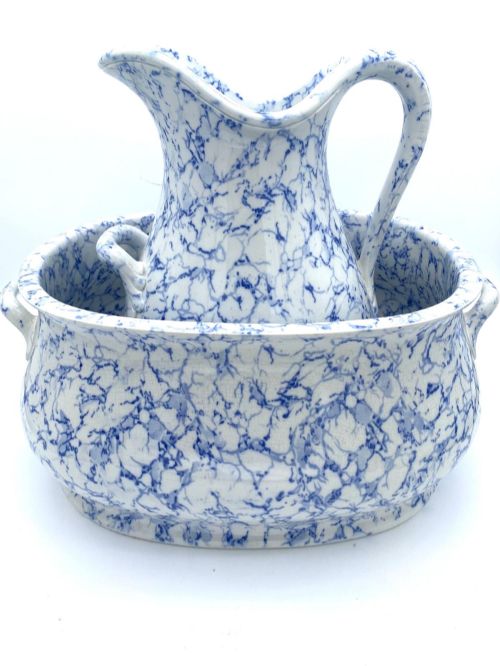
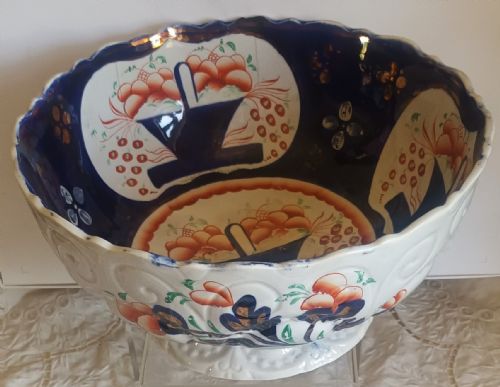
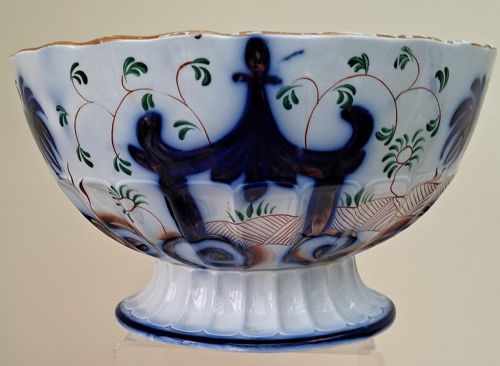
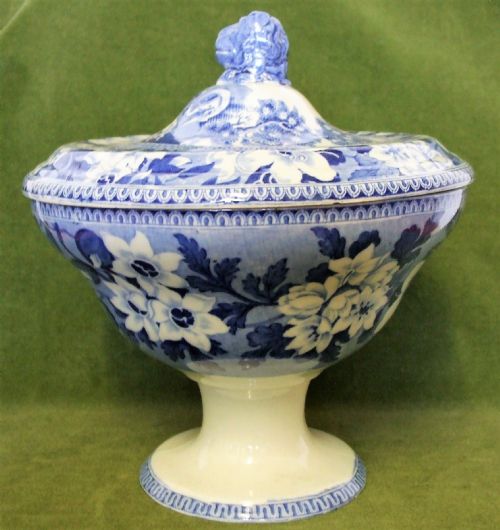


Earthenware Footed Bowl
These earthenware footed bowl pieces are raised vessels from the nineteenth and early twentieth centuries, prized for their decorative presence on any table or surface.
Earthenware Footed Bowl
An earthenware footed bowl is a raised ceramic vessel designed for display or service, combining a stable base with a rounded bowl. The selection spans the Georgian, Regency, and Victorian eras through to the 1920s and 1930s.
You will most frequently encounter nineteenth century examples featuring traditional transfer printed patterns or hand painted motifs. These range from substantial centrepiece bowls and fruit compotes to specialised footed pottery vessels.
Origins vary from English potteries to Japanese Satsuma production and Florentine Majolica workshops. Each piece reflects the decorative taste of its period, utilising distinct ceramic glazes and earthenware bodies.
How they were made
Potters shaped these vessels from earthenware clay before applying detailed ceramic glazes, cobalt glaze, or copper lustre. Many incorporate enamel decoration painted over or under the glaze to achieve rich surface patterns.
Techniques range from transfer printing blue and white designs onto earthenware to hand painting elaborate motifs on Japanese and Italian wares. The raised foot is typically formed as part of the primary body during shaping and prior to firing.
Elephants march across early nineteenth century transfer ware while floral baskets bloom in Welsh cottages.
What varies in quality
Quality rests upon the crispness of the transfer print or the precision of the hand painted enamel work across the earthenware surface. Superior examples display clear definition in patterns like the blue and white transfer or Gaudy Welsh motifs.
The sophistication of the glaze application and the proportion of the footed form dictate the visual balance of the piece. Finer items maintain smooth ceramic surfaces without distracting kiln flaws or uneven pooling.
John Rogers and Son·Ulisse Cantagalli
The Earthenware Footed Bowl Glossary
- Earthenware
- Porous pottery fired at lower temperatures than stoneware or porcelain. It requires a glaze to become impermeable to liquids.
- Footed bowl
- A vessel raised upon a pedestal or base ring. This elevation lifts the decorative body above the surface of a table.
- Transfer print
- A decorative technique where an engraved metal plate transfers a design onto paper and then onto the ceramic body. This allowed for intricate blue and white patterns to be produced consistently.
- Comport
- A shallow footed bowl or dish used for serving fruit or sweets. They often form the centrepiece of a nineteenth century table setting.
- Copper lustre
- A metallic glaze containing copper that creates a reflective, iridescent sheen. It was widely used on earthenware during the nineteenth century.
Earthenware Footed Bowl: Frequently Asked Questions
What is an earthenware footed bowl used for?
These elevated vessels primarily served as centrepieces for fruit, flowers, or sweetmeats on formal dining tables. In period homes, they functioned both as decorative display items and practical containers.
Today, they suit similar decorative roles on sideboards or tables. Their raised profile makes them ideal for catching the eye within a room.
How can I tell a Georgian bowl from a Victorian one?
Georgian and Regency examples often feature crisp blue and white transfer printing with distinct stylistic markers from the early nineteenth century. Maker attributions and specific blue and white patterns help anchor these dates.
Victorian pieces frequently embrace brighter polychrome palettes like Gaudy Welsh or revival styles such as Renaissance Revival and Chinoiserie. Examining the ceramic body and glaze characteristics provides further clues.
Are these bowls safe for serving food?
Most antique earthenware bowls feature historical glazes that may not meet modern food safety standards. Older glazes can occasionally contain materials unsuitable for acidic or wet foods.
It is generally wiser to reserve these pieces for dry display rather than daily culinary use. Enjoy them as historical decorative objects rather than tableware.