


Victorian Footed Centrepiece Bowl
A victorian footed centrepiece bowl anchors a dining table or sideboard with height and presence.
Victorian Footed Centrepiece Bowl
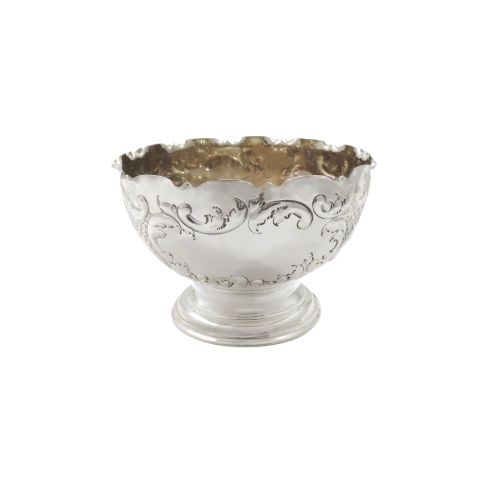
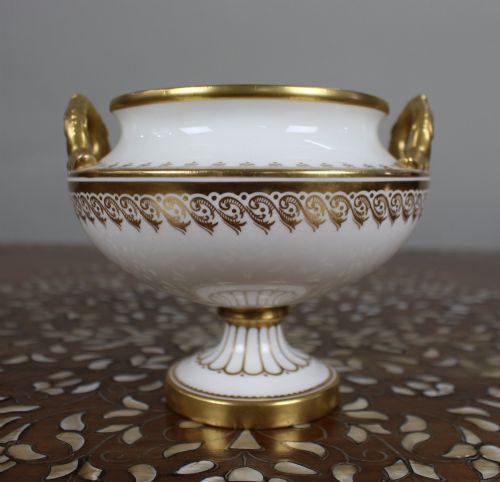
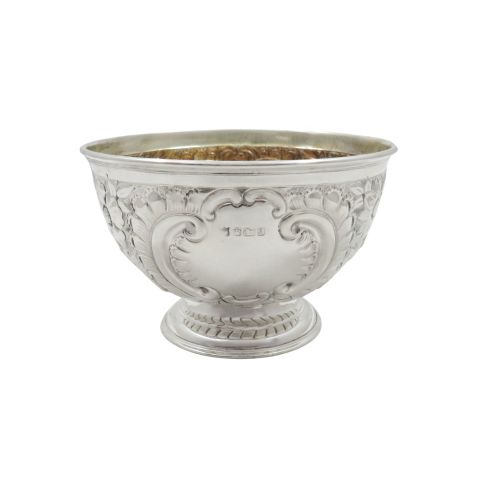
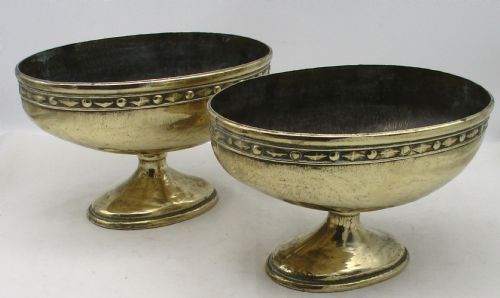
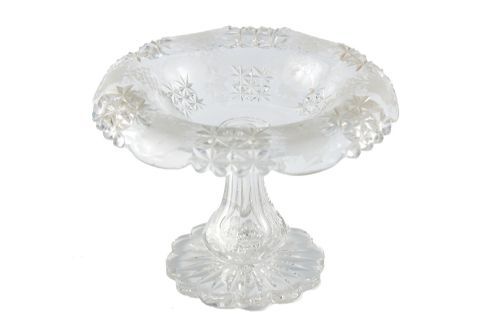
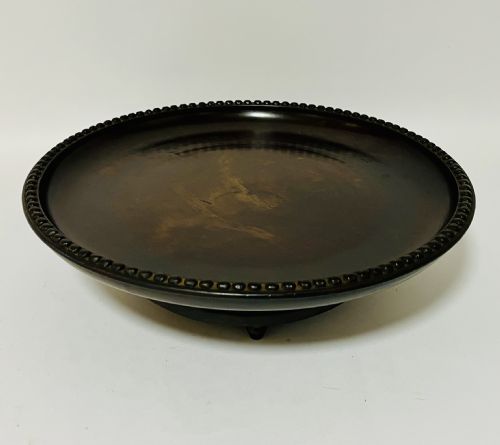
A victorian footed centrepiece bowl sits raised upon a pedestal, foot, or base to display fruit, flowers, or sweetmeats above the surface of a table. These pieces take the form of tazzas, comports, urns, and pedestal bowls originating from the nineteenth century.
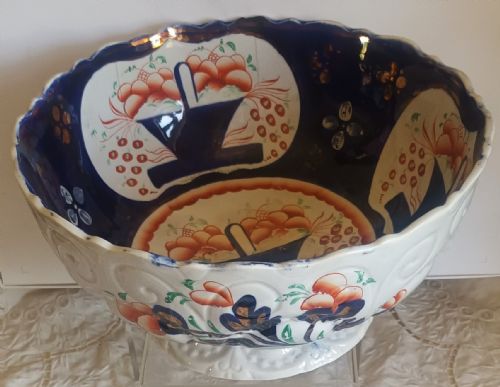
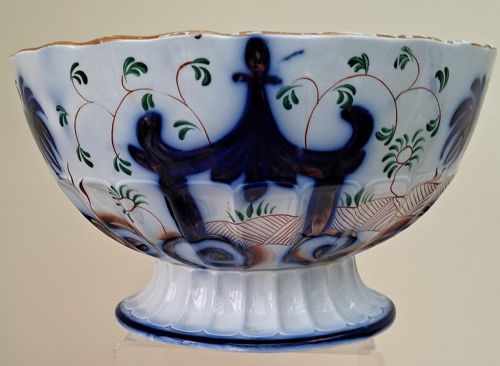
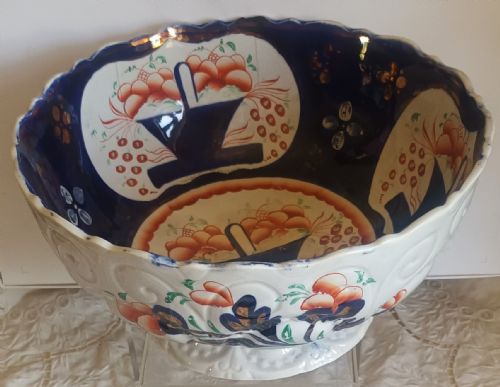
The version most commonly met on this page is the glass or ceramic bowl raised on a formal foot, often decorated with etching, cutting, gilding, or transfer printing such as the Gaudy Welsh patterns.
Makers and artisans adapted classical, gothic, and aesthetic movement ideals to these serving vessels, resulting in varied silhouettes ranging from shallow tazzas to deep fruit bowls.
Materials and construction
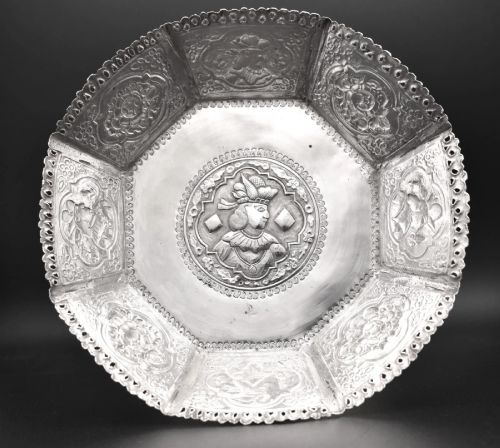
Glass pieces rely on hand-blowing, lead crystal casting, and deep wheel-cutting or etching to achieve surface pattern and weight. Metal examples utilise cast brass, repoussé silver, and heavy silver plating over bronze.
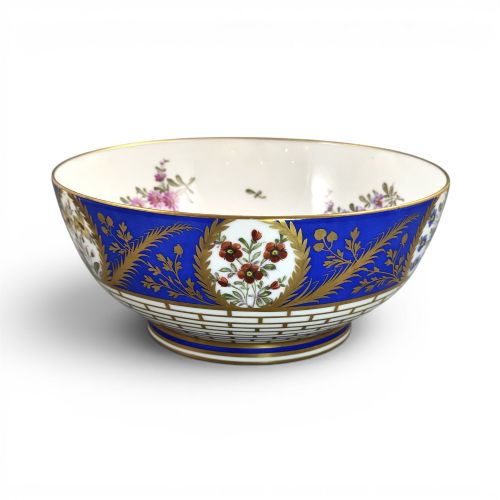
Ceramic forms employ porcelain, earthenware, and ironstone, finished with hand-applied gilding, enamel, and underglaze transfer printing. Bases and mounts are frequently pegged, screwed, or fused to the primary bowl during assembly.
Listings feature items spanning the 1800s, Victorian era, and Edwardian period, utilising porcelain, brass, cut glass, and sterling silver.
Distinctions in manufacture
Quality rests upon the crispness of the cutting in glass, the weight and purity of the metal in silver and brass, and the precision of the hand-painting in ceramics. Superior pieces display deep, sharp facets in crystal and flawless registration in transfer-printed or gilded earthenware.
The integrity of the join between the bowl and its foot separates standard production from finer examples. Heavy mounts, substantial metal gauge, and clear resonance in glass indicate superior execution.
Samson Paris·Stuart for Liberty·Baccarat·Royal Worcester Hadley·François Eugène Rousseau
The Victorian Footed Centrepiece Bowl Glossary
- Tazza
- A shallow bowl or plate mounted on a stem and foot, commonly used for serving fruit or sweetmeats.
- Comport
- A pedestal vessel used on the dining table for fruit or confections during the nineteenth century.
- Repoussé
- A metalworking technique where the artisan hammers the design from the reverse side to form raised relief work on the front.
- Lead crystal
- Glass containing lead oxide which increases brilliance, weight, and clarity, allowing for deeper wheel-cutting.
- Ironstone
- A dense, durable type of earthenware patented in the nineteenth century to imitate porcelain.
Victorian Footed Centrepiece Bowl: Frequently Asked Questions
What is a victorian footed centrepiece bowl used for?
These vessels were originally intended for holding fruit, floral arrangements, or sweetmeats at the centre of a formal dining table.
Today they function effectively as decorative focal points on sideboards or coffee tables without needing any contents at all.
How can I tell glass from lead crystal?
Lead crystal is noticeably heavier than standard glass and produces a clear, resonant ring when lightly tapped on the rim.
It also disperses light with greater brilliance due to the higher refractive index of the lead content.
Are brass church vases the same as domestic bowls?
Church vases and altar garnitures share the pedestal form and metal construction of domestic centrepieces but were originally cast for ecclesiastical settings.
Their robust brass construction and ecclesiastical motifs distinguish them from household tableware.