
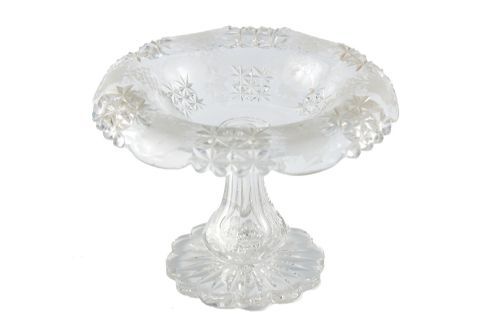
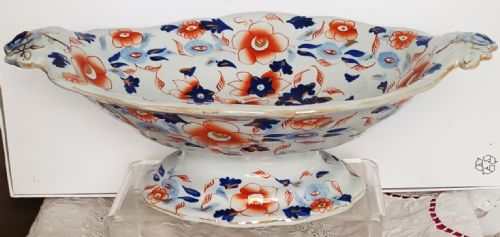
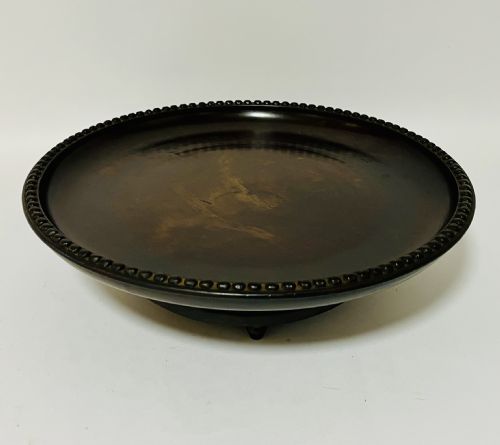
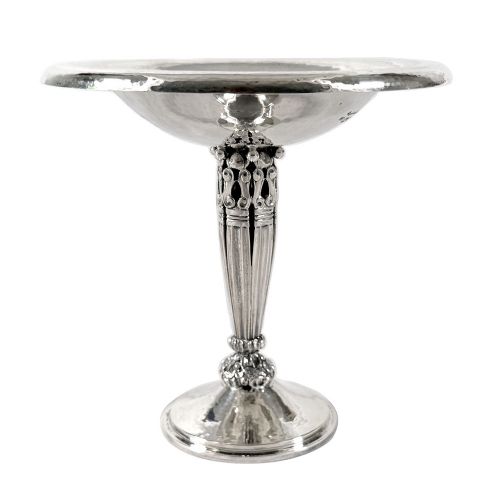
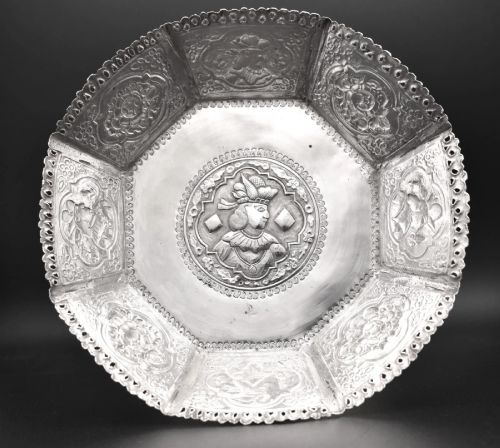


Footed Compote Bowl
A footed compote bowl brings height and presence to a table, offering a pedestal for fruit, flowers or display.
Footed Compote Bowl
A footed compote bowl elevates its contents above the surface of a table, serving as a focal point for dining rooms and sideboards. These pieces span centuries of design, taking the form of tazzas, pedestal bowls, and centrepieces.
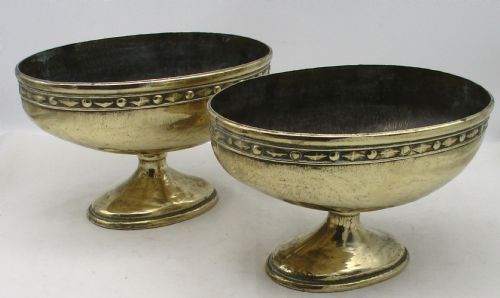
The selections available here range from heavy cut crystal and lead crystal to ironstone, porcelain, and sterling silver. Makers from Georgian, Victorian, and later periods shaped these vessels for utilitarian display and decorative ornamentation.
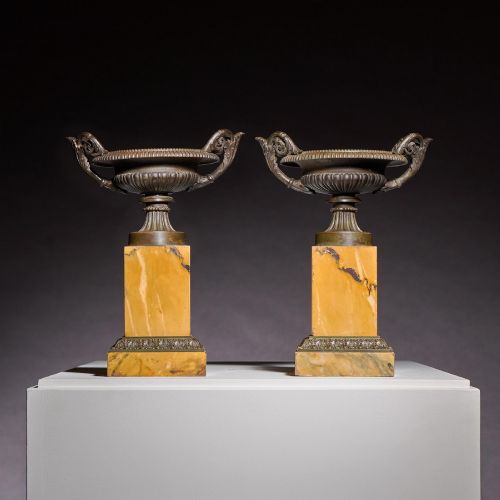
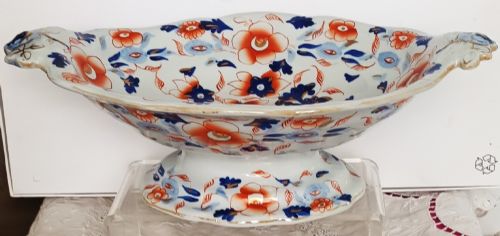
Buyers will encounter items manifesting diverse regional aesthetics, from English ironstone comports and Anglo-Indian silver repoussé to French bronze and Italian marble. Each configuration provides a distinct architectural profile suited to period and modern interiors alike.
How They Were Made
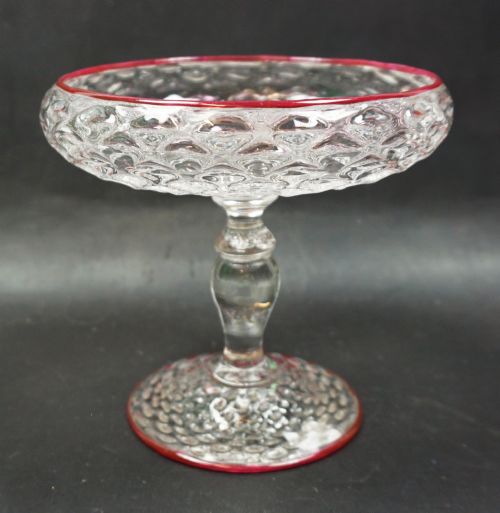
Glass vessels rely on hand-blowing, moulding, and wheel-cutting techniques to achieve deep facets, honeycomb patterns, and etched motifs. Crystal and lead crystal are shaped while molten, then cooled and polished to yield high-clarity surfaces.
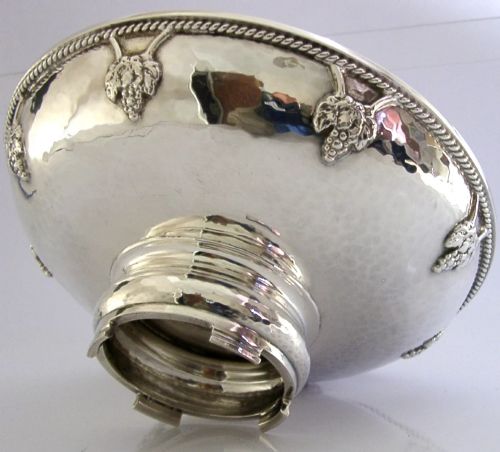
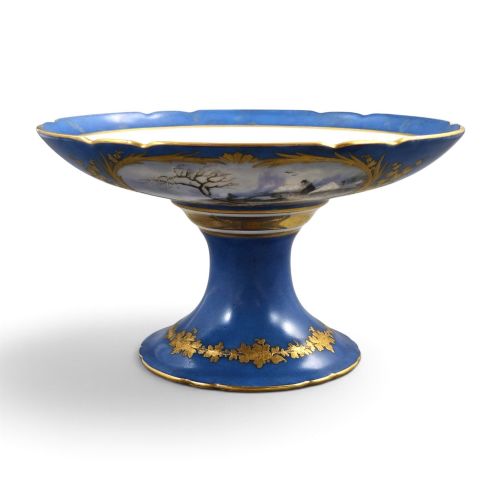
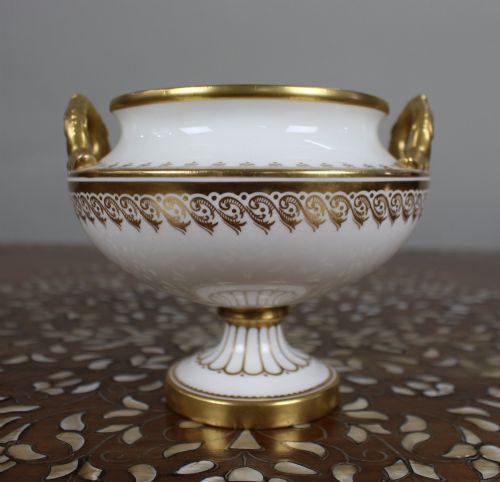
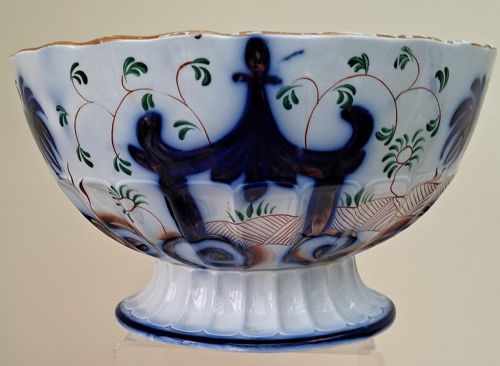
Ceramic comports and vases utilise ironstone, porcelain, and earthenware bodies finished with transfer printing, hand-painting, and polychrome glazes such as the Japan pattern or red scale. Silver and bronze pieces combine casting, repoussé work, and wirework to form intricate decorative pedestals.
Materials range from porcelain and lead crystal to sterling silver, bronze, and Siena marble.
What Varies in Quality
The definition and depth of cutting in crystal glass determine how light refracts across the surface, separating standard moulded glass from crisply wheel-cut lead crystal. Similarly, the precision of hand-painted enamel and gilding on porcelain defines the artistic merit of a piece.
Metalwork quality depends on the crispness of repoussé detailing and the substantial weight of the sterling silver or bronze used in the pedestal. Finer examples maintain structural balance and proportion between the elevated bowl and its supporting foot.
A E Jones·Ulisse Cantagalli·Schierholz Plaue·Minton·Charles Boyton
The Footed Compote Bowl Glossary
- Tazza
- A shallow bowl or vase mounted on a stem and foot, originating from Renaissance banquet service. These serve primarily for displaying fruit or sweetmeats.
- Comport
- A footed dish or bowl used on the dining table for serving fruit, nuts, or confectionery. The term is frequently used interchangeably with pedestal bowl.
- Ironstone
- A heavy, durable type of earthenware patented in the nineteenth century to imitate porcelain. It provides a robust body for transfer-printed and hand-painted tableware.
- Repoussé
- A metalworking technique where the artisan hammers the reverse of a sheet of silver or bronze to create a raised design on the front. This process creates tactile relief work on decorative bowls.
Footed Compote Bowl: Frequently Asked Questions
How are footed compote bowls used?
These elevated vessels serve to display seasonal fruit, flowers, or decorative objects on dining tables and sideboards. Their height introduces vertical dimension to tablescapes.
Historically, they held sweetmeats or desserts at the conclusion of formal meals. Today, they function equally well as standalone decorative ornaments.
How do I care for antique glass bowls?
Wash glass pieces by hand using lukewarm water and mild soap to protect fragile rims and cut surfaces. Avoid sudden temperature changes to prevent cracking.
Dry them immediately with a soft lint-free cloth to maintain the clarity of the crystal and prevent water spots.
How do I identify a Georgian ironstone comport?
Look for dense, heavy ceramic bodies decorated with hand-painted or transfer-printed patterns like Japan or gaudy Welsh motifs. The glaze often shows subtle crazing consistent with age.
Base markings, where present, help pinpoint the exact pottery and period of manufacture.