



Antique Floral Lattice Carpet
An antique floral lattice carpet brings rhythmic geometry and botanic motifs to a floor, offering structured elegance through time-tested weaving traditions.
Antique Floral Lattice Carpet
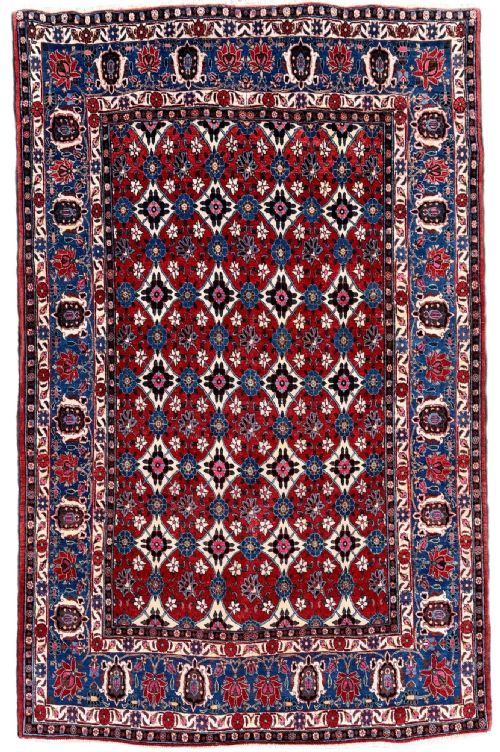
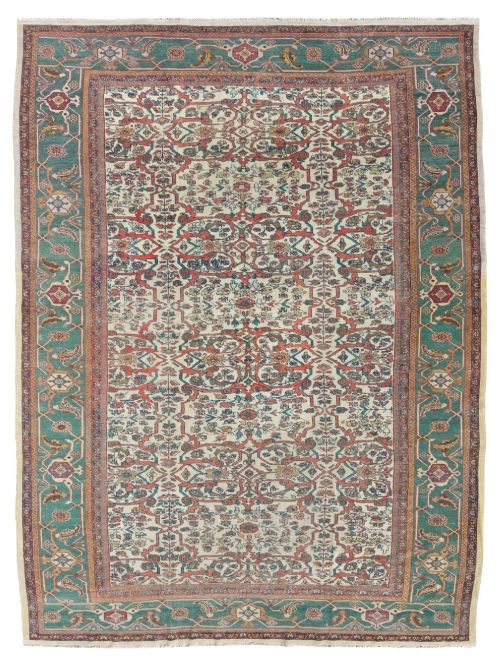
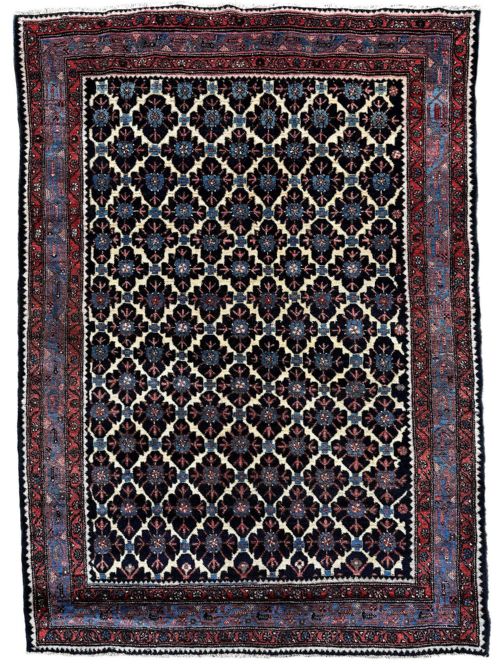
When searching for an antique floral lattice carpet, a buyer encounters woven floor coverings organised by repeating grid networks enclosing floral and vegetal motifs. These pieces span from the mid-nineteenth century through to the early twentieth century, incorporating Persian, Caucasian, and Mughal styles.
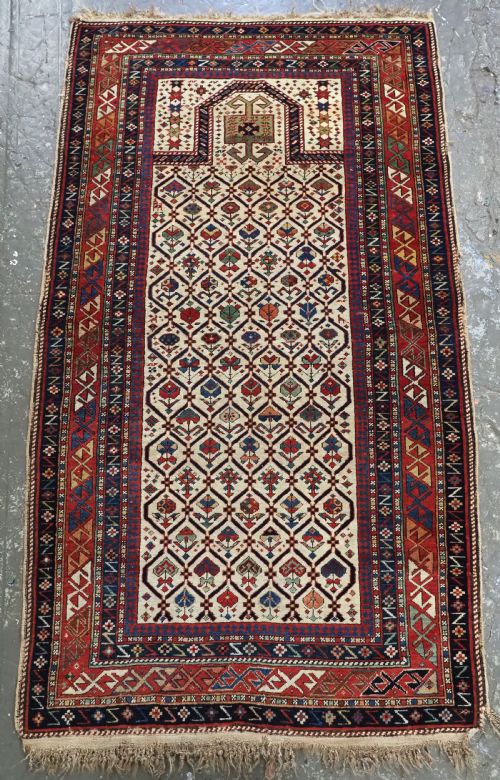
The most common forms on this page include room-sized carpets alongside smaller area rugs and narrow hallway runners. Regional expressions range from Caucasian prayer rugs with ivory grounds to large Persian carpets from centres such as Sultanabad, Veramin, and Mahal.
Makers and weavers across various villages and tribal districts applied distinct local interpretations to the lattice framework. Surviving examples demonstrate how traditional designs persisted across generations while adapting to changing formats from square room sizes down to long runners.
Materials and construction
The pieces recorded on this page rely fundamentally upon wool and cotton foundations and pile construction. Wool provides the durable, resilient surface pile suited to foot traffic, while cotton frequently serves for the structural warp and weft threads.
Weavers knotted these natural fibres by hand, utilising regional techniques specific to Persian workshops and Caucasian or tribal communities. The combination of sturdy cotton foundations with dense wool pile allowed the geometric lattice frameworks and intricate floral details to retain their definition over decades.
Antique Floral Lattice Carpet Retail Price Guide 2026
Typical asking prices for floral lattice carpet among the pieces listed under this phrase on Sellingantiques today, from the lower quarter to the upper quarter. They describe what is for sale here now, not the wider market.
One exceptionally narrow runner stretches out to just 81 centimetres wide, proving that nineteenth-century weavers could design a grand lattice pattern for even the tightest hallway.
Assessing quality and execution
Quality in these textiles rests upon the precision of the lattice geometry and the handling of the botanical motifs within the grid. Superior examples exhibit balanced proportions, crisp intersection points, and harmonious colour placement across the entire field.
The fineness of the knotting and the quality of the wool further separate standard production from exceptional work. Denser knotting permits sharper rendering of the floral lattice, while resilient wool ensures the pile maintains its tactile depth and visual clarity.
The Antique Floral Lattice Carpet Glossary
- Lattice
- A symmetrical network of intersecting bands or lines that creates a repeating grid across the carpet field. This framework typically encloses individual floral or vegetal motifs.
- Prayer rug
- A smaller format rug featuring a directional design, often incorporating a mihrab or arch motif at one end. These pieces were traditionally utilised for personal devotion.
- Runner
- A long, narrow carpet format designed specifically for corridors, hallways, and staircases. Dimensions emphasise length over width to suit linear architectural spaces.
- Ground
- The main background colour of the carpet field upon which the primary lattice pattern is laid. Ivory and saturated regional tones frequently serve this foundational role.
- Mina khani
- A traditional repeating pattern composed of daisy-like flowers linked by curved vines within a geometric lattice. This specific floral arrangement appears frequently in regional Persian and tribal weaving.
Antique Floral Lattice Carpet: Frequently Asked Questions
Where were these carpets made?
The pieces originate primarily from Persia and the Caucasus, encompassing specific weaving centres and villages such as Sultanabad, Veramin, Dagestan, and Shirvan. Additional examples reflect Mughal and broader regional traditions.
Production methods varied from village workshops to nomadic and tribal communities, each imparting distinct regional characteristics to the wool, palette, and lattice structure.
How do I choose the right size?
Size selection depends entirely upon the intended room and spatial function, ranging from large room-sized carpets down to compact area rugs and narrow runners. Measure your floor space carefully to ensure the rug allows adequate clearance around furniture.
Runners suit hallways and corridors, while larger area carpets anchor living spaces and dining rooms by defining specific zones within an interior.
How do I care for an antique wool rug?
Regular, gentle vacuuming without a rotating power brush helps remove grit and dust from the wool pile. Professional cleaning by specialists in antique textiles is recommended when deep maintenance is required.
Keep the carpet out of direct, intense sunlight to protect the natural dyes, and utilise an appropriate underlay to prevent slipping and reduce wear.
How are the different regional styles identified?
Regional attribution relies upon observing the specific geometry of the lattice, the drawing style of the florals, and the structural materials. Caucasian pieces often display crisp, graphic ivory grounds with distinct prayer arches, while Persian village carpets showcase softer curvilinear vines.
Comparing knot density, border arrangements, and colour palettes helps distinguish between pieces originating from centres like Bidjar, Hamadan, and Gendje.