





Kurdish Hall Runner Rug
These Kurdish hall runner rug examples bring geometric tribal patterns and hard-wearing wool into long, narrow corridors with genuine character.
Kurdish Hall Runner Rug
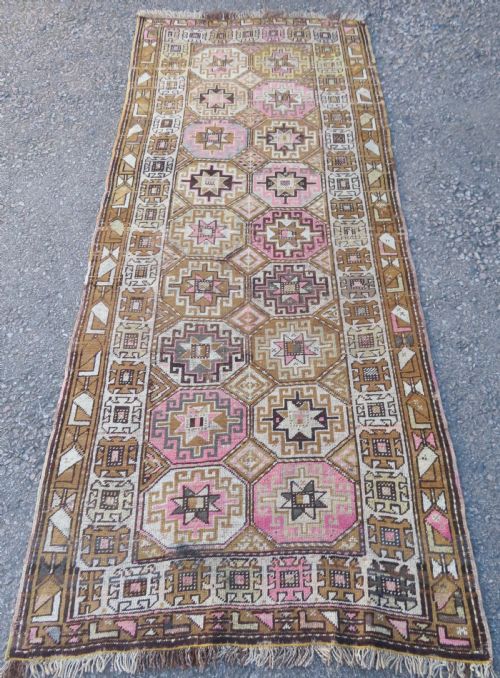
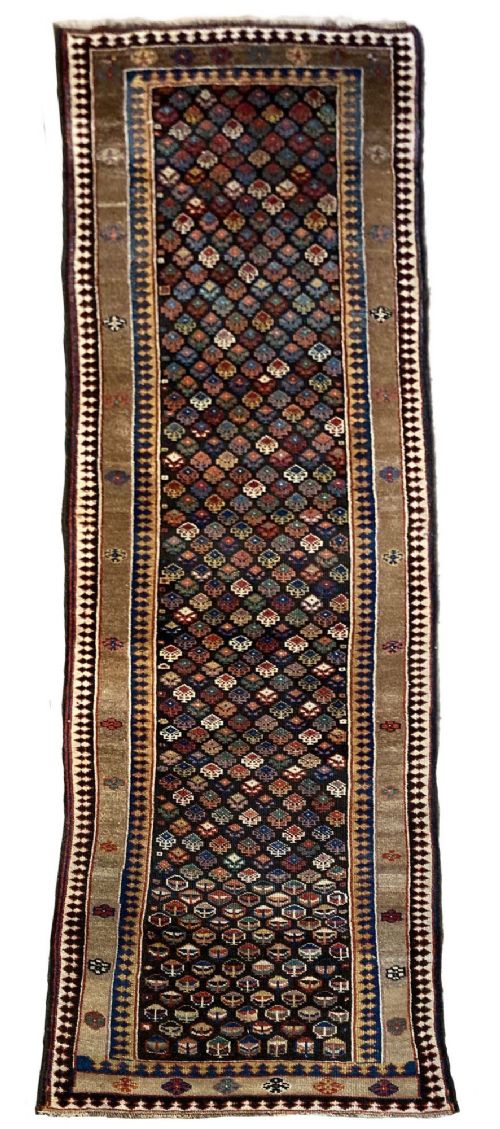
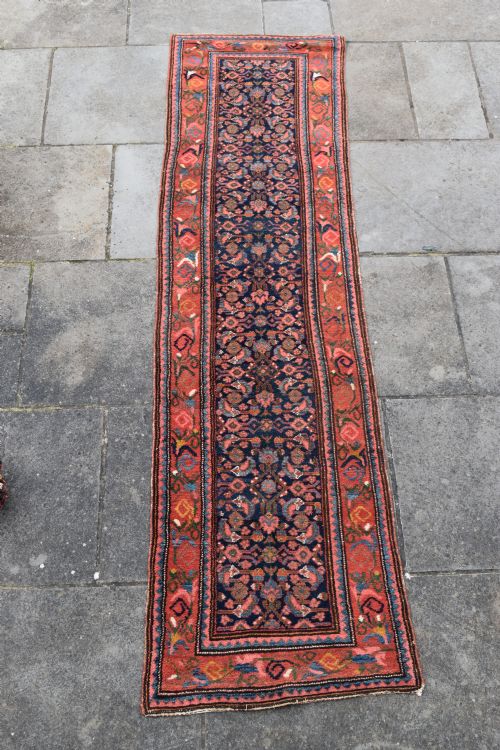
A kurdish hall runner rug is a long, narrow floor covering originating from the tribal weaving traditions of north-west Persia. These pieces are chosen specifically for hallways, corridors, and long gallery spaces where their extended rectangular proportions balance the architecture.
The pieces seen here date across the nineteenth and early twentieth centuries, spanning periods from eighteen fifty through to nineteen twenty. You will encounter formats ranging from under three metres up to over four metres in length, executed in styles described as Kurdish Tribal, Persian Bidjar, and Varamin.
How they were made
These floor coverings are built on sturdy foundations using wool and cotton materials spun by hand. The dense pile provides the durability required for hallway placement, while the underlying warps and wefts hold the narrow rectangular structure firm.
Weavers employed traditional knotting techniques combined with natural dyeing methods to produce the deep red and blue tones visible across the pieces. This construction method results in a robust textile capable of enduring decades of regular use.
Kurdish Hall Runner Rug Retail Price Guide 2026
Typical asking prices for kurdish hall runner rug among the pieces listed under this phrase on Sellingantiques today, from the lower quarter to the upper quarter. They describe what is for sale here now, not the wider market.
One exceptional narrow runner preserves a pair of distinct tribeswomen figures woven directly into the geometric field.
What varies in quality
The standard of a kurdish hall runner rug is defined by the tightness of the knotting and the precision of the geometric design. Finer execution yields crisper pattern outlines and a denser pile that resists crushing in high-traffic corridors.
Proportion and border execution also determine the visual success of the piece, with superior examples showing careful planning in the corner transitions of the borders. The consistency of the wool spin and the saturation of the dye contribute directly to the visual depth of the runner.
The Kurdish Hall Runner Rug Glossary
- Warp
- The stationary vertical threads stretched onto a loom that form the structural skeleton of the rug. All knots are tied around these foundational threads.
- Weft
- Horizontal threads passed through the warps after each row of knots to lock them securely in place. This technique creates the firm fabric characteristic of these runners.
- Pile
- The upright cut or looped wool surface that forms the soft top layer of the textile. A dense pile absorbs wear and protects the structural foundation underneath.
- Bidjar
- A style originating from a major Kurdish weaving centre known for producing exceptionally dense and heavy carpets. Pieces associated with this style utilise rigid construction methods.
- Varamin
- A regional design designation often featuring repeating floral or geometric motifs such as the Mina Khana pattern. These layouts provide structured symmetry across long formats.
Kurdish Hall Runner Rug: Frequently Asked Questions
Where should I place a long runner?
These narrow floor coverings suit hallways, corridors, and gallery spaces where their extended proportions soften hard flooring.
They function well in high-traffic areas because the dense wool pile absorbs daily footfall while protecting the boards underneath.
How do I measure for a hallway rug?
Measure the clear floor space of your corridor, leaving an equal margin of exposed wood or stone around the perimeter. Ensure doorways along the hallway clear the thickness of the pile.
Check both the length and the width carefully against the dimensions provided in the listing to maintain proper clearance.
Are these runners durable for daily use?
The combination of wool pile and cotton foundations creates a robust textile designed specifically for heavy domestic traffic. Tribal weaving traditions prioritised structural strength alongside decorative patterns.
Routine care such as gentle vacuuming without a rotating brush helps maintain the integrity of the wool fibres over time.
How do I identify a tribal design?
Tribal designs typically feature geometric motifs, stylised floral patterns, and repeated central medallions rather than courtly curves. These patterns reflect regional weaving traditions passed down through generations.
Examining the border work and the overall symmetry reveals the specific tribal origin of the piece.