





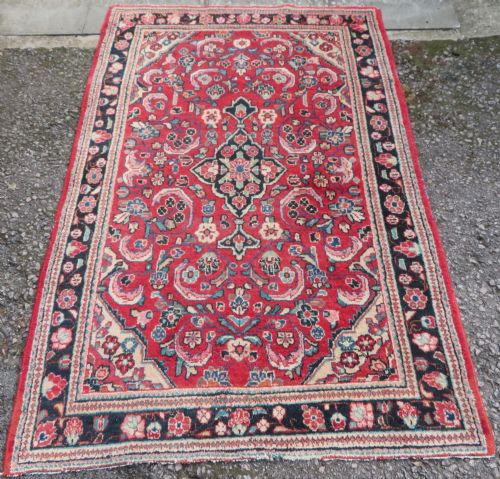
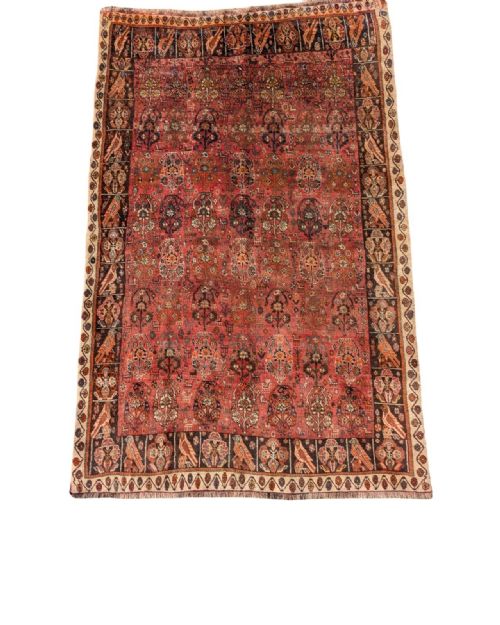
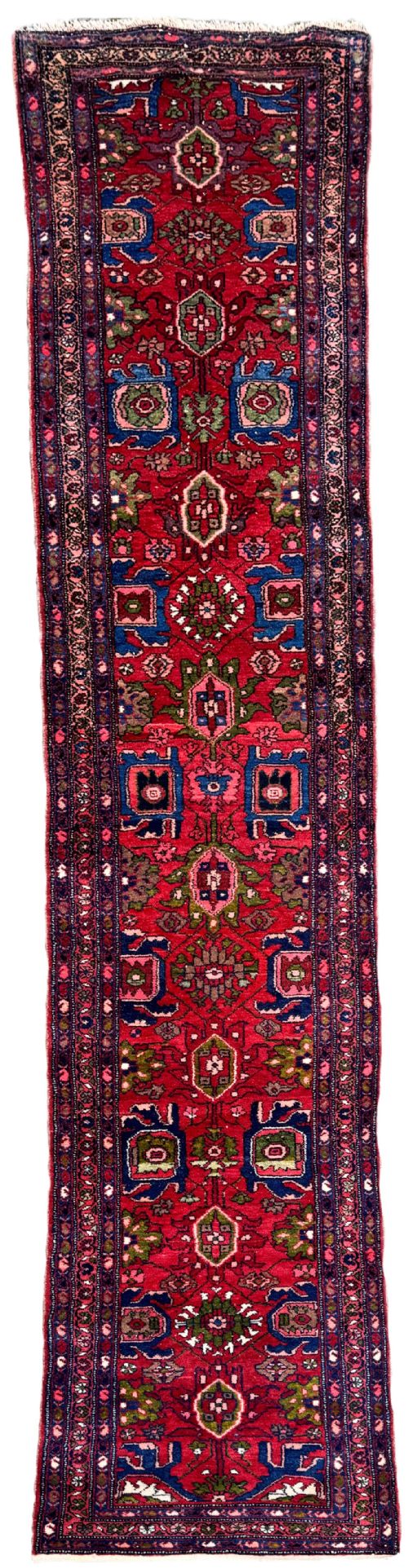
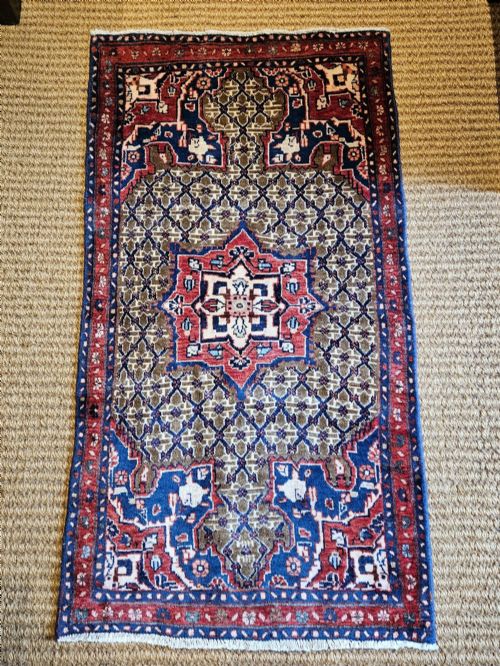
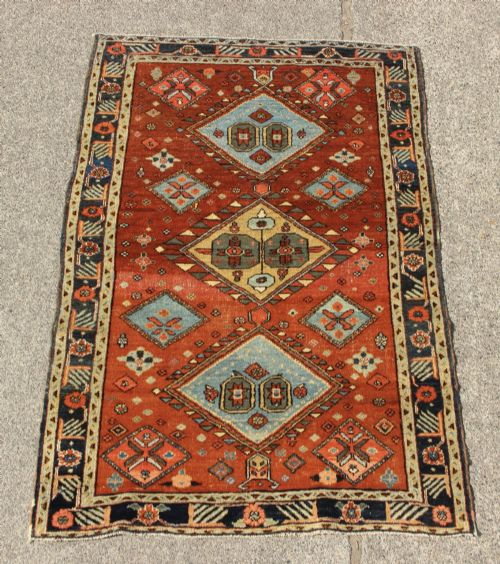

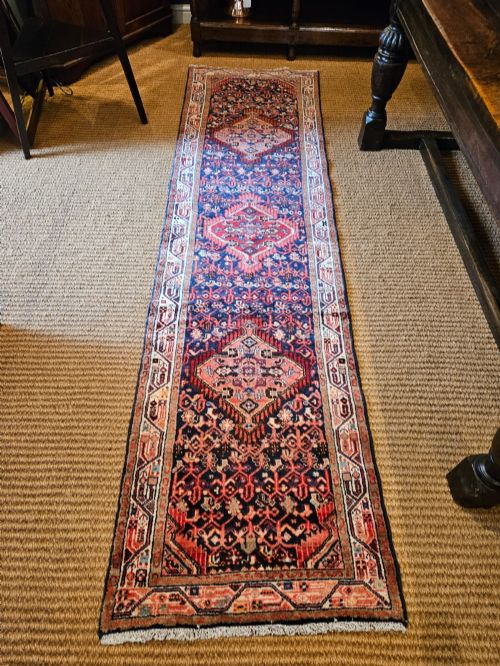
Red Wool Persian Runner
A red wool persian runner brings deep colour and durable texture to hallways and long spaces, built by traditional weavers using time-tested methods.
Red Wool Persian Runner
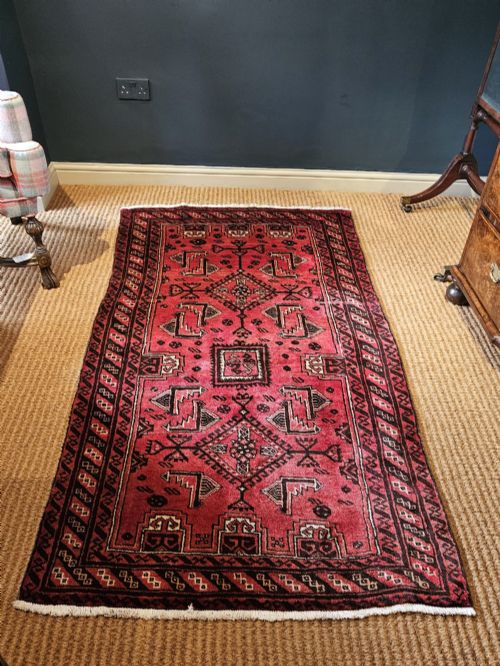
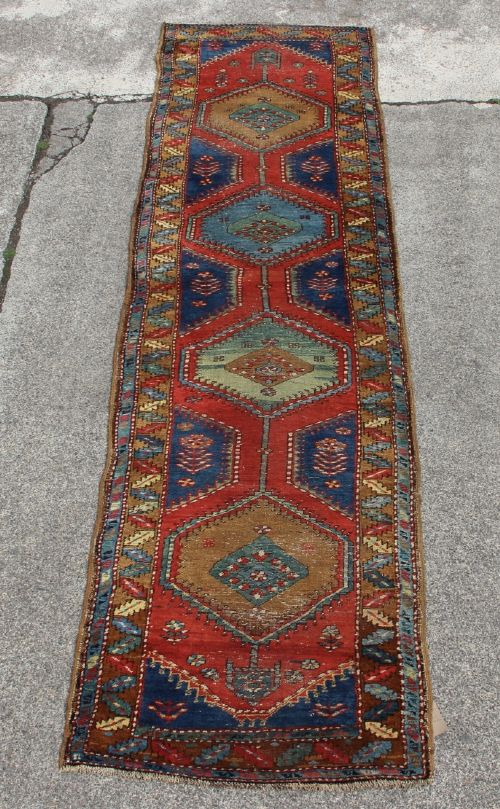
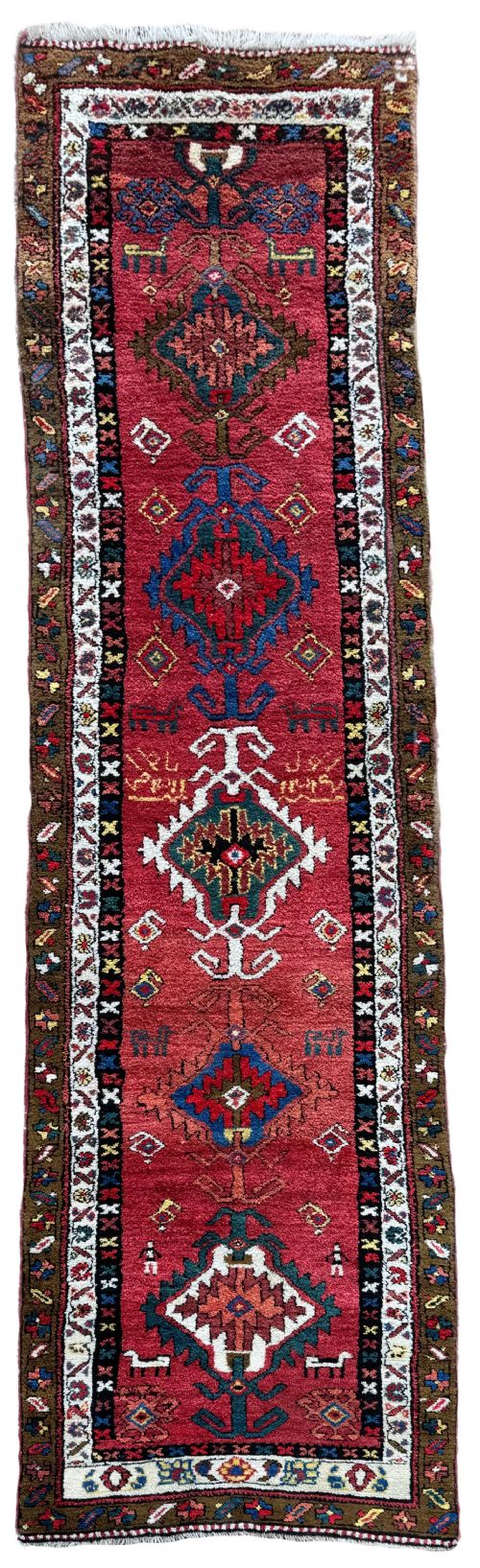
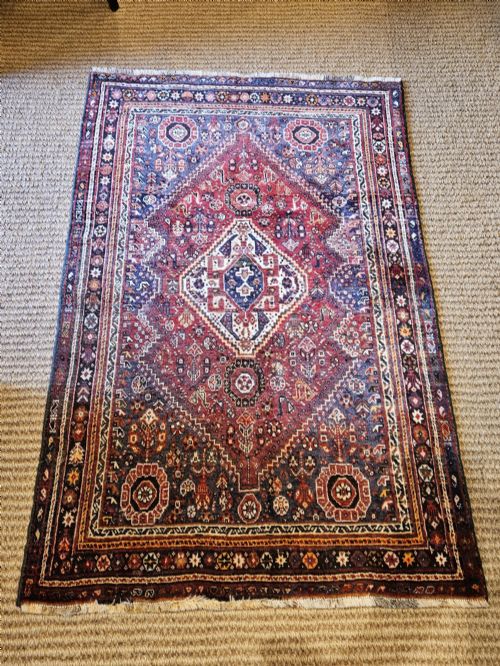
When searching for a red wool persian runner, you are looking at hand-knotted floor coverings designed specifically for corridors, hallways, and narrow spaces. The selection spans distinct regional styles such as Heriz, Hamadan, Saroukh, and Kurdish tribal designs originating from nineteenth and early twentieth century periods. These long formats were made to withstand heavy foot traffic while providing substantial warmth and rich hue to domestic interiors.
The pieces available here take the form of elongated hallway runners, long rugs, and narrow carpets measuring several metres in length. Most examples date from the late nineteenth century through to the 1930s, displaying traditional medallion and all-over geometric or floral patterns. Tribal and village workshops produced the vast majority of these long formats, utilising local wool and traditional vegetable dye palettes.
How they were made
Makers constructed these runners using hand-spun wool for the pile, foundation warps, and wefts, often incorporating cotton for added structural stability. Workers knotted the wool by hand onto the vertical loom, clipping the yarn to a uniform height to create a dense and resilient surface. Natural dyes derived from local plants and minerals supplied the characteristic red background tones seen across the pieces.
Weavers employed traditional Persian knotting techniques, tying each tuft individually around the warp threads before beating the rows down firmly with heavy combs. Finishing involves securing the side selvages and securing the ends to prevent unraveling. This laborious method ensures the pile remains tight and upright over decades of daily use.
Listings span production dates from the 1860s through to the 1960s, executed in pure wool and cotton materials.
What varies in quality
Knot density and structural tightness set finer examples apart from coarser village work, influencing the clarity of the underlying geometric or floral pattern. The quality of the wool determines the resilience and lustre of the pile, with dense, oily fleeces holding their form better under heavy wear. Natural dye saturation also dictates visual depth, where varied shading within the red wool creates rich tonal complexity.
Preservation of the original outer edges, side cordings, and ends marks the distinction between an intact survivor and a heavily restored runner. Greater care in the initial spinning and dyeing stages results in an even surface that ages gracefully without losing structural integrity along the narrow field.
Saroukh Mahal·Bakhtiar·Heriz·Hamadan·Kelardasht·Mazlaghan·Afshar·Karaja·Luri·Bidjar·Bakshaish
The Red Wool Persian Runner Glossary
- Runner
- A long, narrow carpet format traditionally woven for hallways, corridors, and staircases. These pieces measure significantly longer than they are wide.
- Pile
- The upright woolen surface of the carpet formed by the cut ends of knots. This layer absorbs foot traffic and displays the woven design.
- Warp
- The stationary vertical threads stretched onto the loom before knotting begins. The fringe at each end of the rug consists of these extended warp threads.
- Weft
- Horizontal threads passed back and forth between rows of knots to bind the structure together. They interlace with the warp to maintain the rectangular shape.
- Natural dye
- Colouring matter obtained from plants, roots, and insects rather than synthetic chemicals. These dyes yield rich, complex tones that mellow gracefully over time.
Red Wool Persian Runner: Frequently Asked Questions
Where should I place a long runner?
These narrow formats suit hallways, long corridors, and landings where extra floor protection and warmth are needed. Their elongated dimensions fit narrow architectural spaces that standard square rugs cannot accommodate.
Ensure you measure the corridor width and length carefully before choosing a piece, leaving exposed wood or stone flooring visible around the perimeter.
How do I care for antique wool?
Vacuum the surface gently using suction attachment without a rotating beater bar to protect the hand-knotted pile. Address spills immediately by blotting with a clean cloth rather than rubbing the fibres.
Professional cleaning should be undertaken periodically by specialists familiar with antique vegetable-dyed wool textiles.
How do I distinguish regional styles?
Regional types display distinct drawing styles, colour palettes, and structural densities specific to the villages and tribes that wove them. Heriz runners often feature bold geometric medallions, whereas Hamadan and Kurdish pieces utilise denser all-over patterns.
Examining the weave on the reverse side reveals clues about the knot count and foundation materials typical of each area.
Are these runners made with natural dyes?
Many examples from the nineteenth and early twentieth centuries rely on traditional natural dye sources for their distinct red backgrounds and secondary hues. These materials produce subtle variations in tone across the wool pile.
Subtle shifts in shade, known as abrash, indicate where dye batches changed during the long weaving process.